Garnet: The Ancient Gemstone of Vitality and Protection
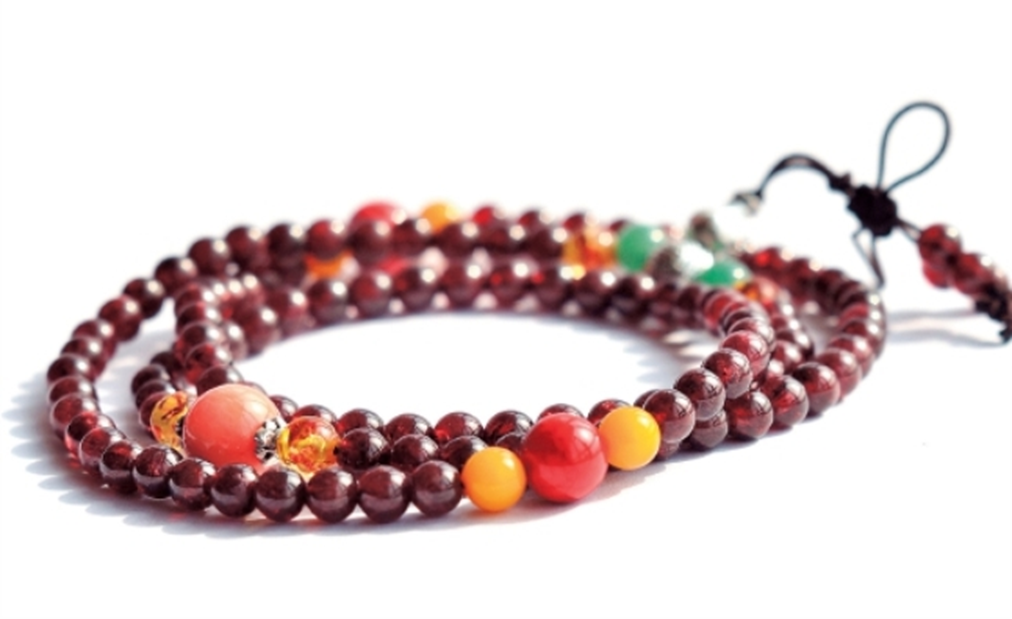
Garnet, historically known as “Ziyawu” (紫牙乌) in Chinese, serves as January’s birthstone and symbolizes constancy, integrity, and spiritual faith. Ancient Persian royalty revered garnet as a monarch’s talisman, while many cultures believed wearing it brought good fortune and protection. The name derives from Latin “granatum,” meaning “seed” or “grain,” referencing how the gem’s rounded red crystals resemble pomegranate seeds.
I. Fundamental Properties
Chemical Formula: A₃B₂(SiO₄)₃ (where A=divalent cations, B=trivalent cations)
Mohs Hardness: 6.5-7
Refractive Index: 1.72-1.75
Specific Gravity: 3.62-3.87 g/cm³
Colors: Red, purple, green, orange, yellow, brown
Luster: Vitreous to resinous
Transparency: Transparent to translucent
Fracture: Conchoidal
Fluorescence: Often strong under UV light
II. The Garnet Family Spectrum
Garnet represents not a single mineral but an isomorphous series with six primary varieties:
- Pyrope (Mg₃Al₂(SiO₄)₃) – Magnesium aluminum silicate
- Almandine (Fe₃Al₂(SiO₄)₃) – Iron aluminum silicate
- Spessartine (Mn₃Al₂(SiO₄)₃) – Manganese aluminum silicate
- Grossular (Ca₃Al₂(SiO₄)₃) – Calcium aluminum silicate
- Andradite (Ca₃Fe₂(SiO₄)₃) – Calcium iron silicate
- Uvarovite (Ca₃Cr₂(SiO₄)₃) – Calcium chromium silicate
Each variety displays unique colors and properties based on its chemical composition.
III. Global Occurrence
Garnets typically form in metamorphic environments including:
- Kimberlite serpentinites
- Crystalline schists
- Contact metamorphic zones
- Alluvial deposits
Major sources include South Africa, United States, Czech Republic, Brazil, Tanzania, Australia, Russia, and China.
IV. Notable Varieties
Pyrope Garnet
The most prized variety featuring rich red to orange-red hues from chromium (Cr²⁺). Characterized by high transparency, diamond-like luster, and minimal inclusions.
Spessartine Garnet
Valued for vibrant orange to reddish-orange colors from manganese (Mn²⁺). Often translucent with glassy luster, typically more affordable than pyrope.
Grossular Garnet
Encompasses several subtypes including hessonite and tsavorite. Often darker with more inclusions, though the rare green tsavorite represents an exception of exceptional value.
V. Yunnan Garnets
Mined from the Ailao Mountain region in Wenshan Prefecture, Yunnan garnets primarily occur in:
- Weathered residual deposits
- Alluvial river sediments
- Basic and ultrabasic rock veins
Local mining employs traditional panning methods without large-scale mining operations. Specimens typically measure 1-10 cm in diameter, displaying reddish-brown to pale red hues with excellent texture.
VI. Historical Significance and Modern Appeal
For millennia, garnet has been associated with healing properties. Historical records describe garnet powder used medicinally to reduce fever and treat jaundice. Native American warriors believed garnet offered protection in battle, while Persian travelers wore it as a safeguard during journeys.
Despite its rich history and symbolic importance, garnet remains accessible due to its relative abundance compared to other precious gems. This combination of cultural significance, diverse color range, and affordability makes garnet particularly appealing to collectors seeking meaningful acquisitions without excessive investment.
Modern appreciation focuses on garnet’s geological diversity, with rare varieties like demantoid (green andradite) and malaya (pink-orange hybrids) commanding premium prices among connoisseurs. Whether as January’s birthstone, a historical talisman, or a geological specimen, garnet continues to captivate with its deep colors and enduring legacy.
石榴石:活力與保護的古老寶石
石榴石,歷史上在中文中稱為「紫牙烏」,作為一月的誕生石,象徵堅貞、正直和精神信仰。古代波斯皇室尊崇石榴石為君主的護身符,而許多文化相信佩戴它帶來好運和保護。該名稱源自拉丁語「granatum」,意為「種子」或「穀粒」,指代寶石的圓形紅色晶體類似石榴籽。
一、基本特性
化學式:A₃B₂(SiO₄)₃(其中A=二價陽離子,B=三價陽離子)
莫氏硬度:6.5-7
折射率:1.72-1.75
比重:3.62-3.87 g/cm³
顏色:紅色、紫色、綠色、橙色、黃色、棕色
光澤:玻璃光澤至樹脂光澤
透明度:透明至半透明
斷口:貝殼狀
熒光:通常在紫外線下強烈
二、石榴石家族光譜
石榴石不代表單一礦物,而是具有六種主要品種的類質同像系列:
- 鎂鋁榴石 (Mg₃Al₂(SiO₄)₃) – 矽酸鎂鋁
- 鐵鋁榴石 (Fe₃Al₂(SiO₄)₃) – 矽酸鐵鋁
- 錳鋁榴石 (Mn₃Al₂(SiO₄)₃) – 矽酸錳鋁
- 鈣鋁榴石 (Ca₃Al₂(SiO₄)₃) – 矽酸鈣鋁
- 鈣鐵榴石 (Ca₃Fe₂(SiO₄)₃) – 矽酸鈣鐵
- 鈣鉻榴石 (Ca₃Cr₂(SiO₄)₃) – 矽酸鈣鉻
每種品種根據其化學成分顯示獨特的顏色和特性。
三、全球產地
石榴石通常在變質環境中形成,包括:
- 金伯利岩蛇紋岩
- 結晶片岩
- 接觸變質帶
- 沖積礦床
主要來源包括南非、美國、捷克共和國、巴西、坦桑尼亞、澳洲、俄羅斯和中國。
四、著名品種
鎂鋁榴石
最珍貴的品種,具有來自鉻(Cr²⁺)的濃郁紅色至橙紅色調。特點是高透明度、鑽石般光澤和最少內含物。
錳鋁榴石
因來自錳(Mn²⁺)的鮮豔橙色至紅橙色而受重視。通常半透明帶玻璃光澤,通常比鎂鋁榴石更實惠。
鈣鋁榴石
包括幾種亞型,如桂榴石和沙弗萊石。通常較暗帶更多內含物,儘管稀有的綠色沙弗萊石代表特殊價值的例外。
五、雲南石榴石
開採自雲南文山州哀牢山地區,雲南石榴石主要出現在:
- 風化殘積礦床
- 沖積河流沉積物
- 基性和超基性岩脈中
當地採礦採用傳統淘洗方法,無大規模採礦作業。樣本通常直徑1-10釐米,顯示紅棕色至淡紅色調,質地優良。
六、歷史意義和現代吸引力
幾千年來,石榴石與治療特性相關。歷史記錄描述石榴石粉末用於醫學上以減少發燒和治療黃疸。美洲原住民戰士相信石榴石在戰鬥中提供保護,而波斯旅行者在旅途中佩戴它作為保障。
儘管其豐富的歷史和象徵重要性,石榴石由於相對於其他珍貴寶石的相對豐富而仍然可及。這種文化意義、多樣顏色範圍和可負擔性的結合使石榴石對尋求有意義收購而無過度投資的收藏家特別有吸引力。
現代欣賞集中在石榴石的地質多樣性上,稀有品種如翠榴石(綠色鈣鐵榴石)和馬拉亞石榴石(粉橙混合品種)在鑑賞家中要求溢價。無論是作為一月的誕生石、歷史護身符還是地質樣本,石榴石繼續以其深沉的顏色和持久的遺產迷醉人心。