Peridot: The Evening Emerald with Cosmic Origins
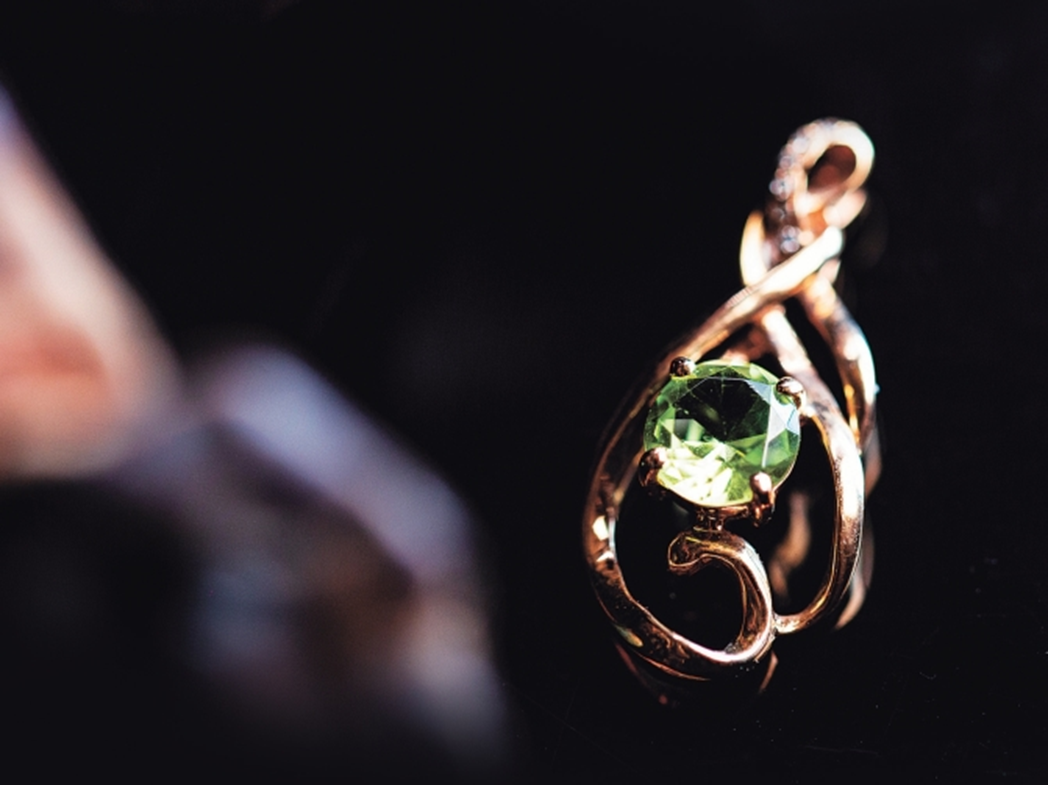
Peridot, a magnesium iron silicate mineral, displays nature’s most vibrant yellow-green hues through varying iron content within its orthorhombic crystal structure. Typically forming flattened prismatic crystals with vitreous luster and conchoidal fracture, this transparent to translucent gem has earned the poetic nickname “Evening Emerald” for maintaining its vivid color under artificial lighting.
Mineral Profile:
Chemical Composition: Magnesium Iron Silicate
Chemical Formula: (Mg,Fe)₂SiO₄
Mohs Hardness: 6.5-7
Luster: Vitreous
Transparency: Transparent to translucent
Colors: Olive green, yellowish-green, brownish-green
Specific Gravity: 3.27-3.48 g/cm³
Refractive Index: 1.654-1.690
Birefringence: 0.035-0.038
Dispersion: 0.020
Fluorescence: Inert under UV light
I. Geological Formation
Peridot primarily crystallizes in mafic and ultramafic igneous rocks including:
- Basalts (most gem-quality material)
- Peridotites
- Kimberlites
- Gabbros
- Norites
The finest gem specimens typically originate from alkali basalts where slow cooling allows optimal crystal development.
II. Color Chemistry
Peridot’s distinctive green spectrum results from iron (Fe²⁺) concentrations, with manganese, nickel, calcium, aluminum, and titanium as secondary trace elements. Higher iron content produces deeper olive to brownish-green tones, while lower concentrations create brighter yellowish-green hues. This direct color-to-chemistry relationship makes peridot particularly fascinating for mineral enthusiasts.
III. Identification Characteristics
1. Distinctive Inclusions
- “Lily pad” inclusions (chromite crystals surrounded by stress fractures)
- Round cleavage patterns
- Liquid and gas inclusions
2. Optical Properties
- Anisotropic with biaxial optical character
- Strong double refraction visible under magnification
3. Density Testing
In methylene iodide (specific gravity 3.32), peridot sinks while diopside (similar appearance) floats.
4. Absorption Spectrum
Three strong absorption bands in blue and blue-green regions (453, 473, 493 nm) confirm iron as the coloring agent.
IV. Chinese Peridot Sources
China’s significant peridot discoveries include:
1979 Hebei Discovery
Zhangjiakou region revealed major primary deposits yielding thousands of carats of 5mm+ quality stones annually. The “North China Star,” weighing over 130 carats, represents the most notable specimen from this source.
Additional Discoveries
Recent decades have identified gem-quality peridot in:
- Heilongjiang Province
- Jilin Province
- Shanxi Province
- Xinjiang Uygur Autonomous Region
These domestic sources supplement traditional Southeast Asian and Indian Ocean production, expanding availability for collectors. For those seeking to explore more about gemstones, check our jadeite jewelry collection and Chinese antiques.
V. Care and Considerations
As August’s birthstone, peridot requires mindful maintenance:
- Acid Sensitivity: Vulnerable to prolonged exposure to acids, including human perspiration
- Cleaning: Use only mild soap solutions; avoid ultrasonic and steam cleaners
- Storage: Separate from harder gems to prevent scratching
- Durability: Moderate hardness necessitates protection from sharp impacts
Peridot’s combination of geological accessibility, vibrant color consistency, and growing availability from Chinese sources makes it an excellent entry point for new collectors while maintaining appeal for seasoned enthusiasts. Its ability to retain brilliance under various lighting conditions ensures this “Evening Emerald” continues captivating admirers with its unique solar-powered glow. For more insights into natural gemstones, visit our blog.
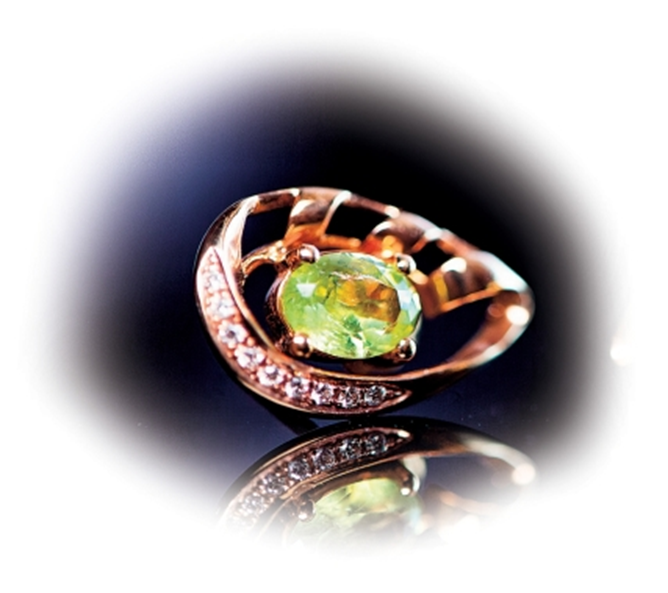
橄欖石:具有宇宙起源的黃昏祖母綠
橄欖石是一種鎂鐵矽酸鹽礦物,通過其斜方晶體結構內變化的鐵含量顯示大自然最鮮豔的黃綠色調。通常形成具有玻璃光澤和貝殼狀斷口的扁平稜柱晶體,這種透明至半透明的寶石因其在人造光下保持鮮豔顏色而贏得了詩意的綽號「黃昏祖母綠」。
礦物檔案:
化學成分:鎂鐵矽酸鹽
化學式:(Mg,Fe)₂SiO₄
莫氏硬度:6.5-7
光澤:玻璃光澤
透明度:透明至半透明
顏色:橄欖綠、黃綠色、棕綠色
比重:3.27-3.48 g/cm³
折射率:1.654-1.690
雙折射率:0.035-0.038
色散:0.020
熒光:紫外線下惰性
一、地質形成
橄欖石主要在基性和超基性火成岩中結晶,包括:
- 玄武岩(大多數寶石級材料)
- 橄欖岩
- 金伯利岩
- 輝長岩
- 蘇長岩
最優質的寶石樣本通常源自鹼性玄武岩,緩慢冷卻允許最佳晶體發育。
二、顏色化學
橄欖石獨特的綠色光譜由鐵(Fe²⁺)濃度產生,錳、鎳、鈣、鋁和鈦作為次要微量元素。較高的鐵含量產生更深的橄欖至棕綠色調,而較低濃度創造更亮的黃綠色調。這種直接的顏色-化學關係使橄欖石對礦物愛好者特別迷人。
三、鑑定特徵
1. 獨特內含物
- 「睡蓮葉」內含物(被應力裂縫包圍的鉻鐵礦晶體)
- 圓形解理圖案
- 液態和氣態內含物
2. 光学特性
- 各向異性帶雙軸光学特徵
- 強雙折射在放大下可見
3. 密度測試
在二碘甲烷(比重3.32)中,橄欖石下沉而透輝石(類似外觀)漂浮。
4. 吸收光譜
藍色和藍綠色區域的三條強吸收帶(453、473、493 nm)確認鐵作為著色劑。
四、中國橄欖石來源
中國重要的橄欖石發現包括:
1979年河北發現
張家口地區揭示了主要原生礦床,每年產出數千克拉5mm+優質寶石。重130克拉以上的「華北之星」代表此來源最著名的樣本。
其他發現
近幾十年已在以下地區識別寶石級橄欖石:
- 黑龍江省
- 吉林省
- 山西省
- 新疆維吾爾自治區
這些國內來源補充了傳統的東南亞和印度洋生產,擴大了收藏家的可用性。
五、護理和注意事項
作為八月的誕生石,橄欖石需要謹慎維護:
- 酸敏感性:易受酸長時間暴露影響,包括人體汗液
- 清潔:僅使用溫和肥皂溶液;避免超聲波和蒸汽清潔器
- 存放:與更硬的寶石分開以防止劃傷
- 耐久性:中等硬度需要保護免受急劇撞擊
橄欖石的地質可及性、鮮豔顏色一致性和來自中國來源日益增長的可用性的結合,使其成為新收藏家的優秀切入點,同時保持對經驗豐富愛好者的吸引力。其在各種照明條件下保持火彩的能力確保這種「黃昏祖母綠」繼續以其獨特的太陽能光澤迷醉欽佩者。
Read More
- Buying Guides (111)
- Collectors' Academy (192)
- Care Academy (8)
- Investment Academy (25)
- Jade Crafting Techniques (29)
- Michelle Au: The Gemstone Luminary (11)
- The Precious Metals & Jewels Compendium (54)
FAQ
What is peridot known for?
Peridot is known for its vibrant yellow-green color, which comes from iron content. It’s called the “Evening Emerald” because it retains its vivid hue under artificial light.
How should I care for peridot jewelry?
Clean peridot with mild soap and water, avoid ultrasonic cleaners, store it separately from harder gems, and protect it from acids and sharp impacts.