Lapis Lazuli: The Celestial Blue Stone of Ancient Royalty
Mineral Profile:
Chemical Formula: (Na,Ca)₄₋₈(AlSiO₄)₆(SO₄,Cl,S)₂
Mohs Hardness: 5-5.5
Luster: Vitreous to waxy
Cleavage: None
Colors: Deep blue, violet-blue, greenish-blue
Transparency: Translucent to opaque
Structure: Fine-grained to cryptocrystalline aggregate
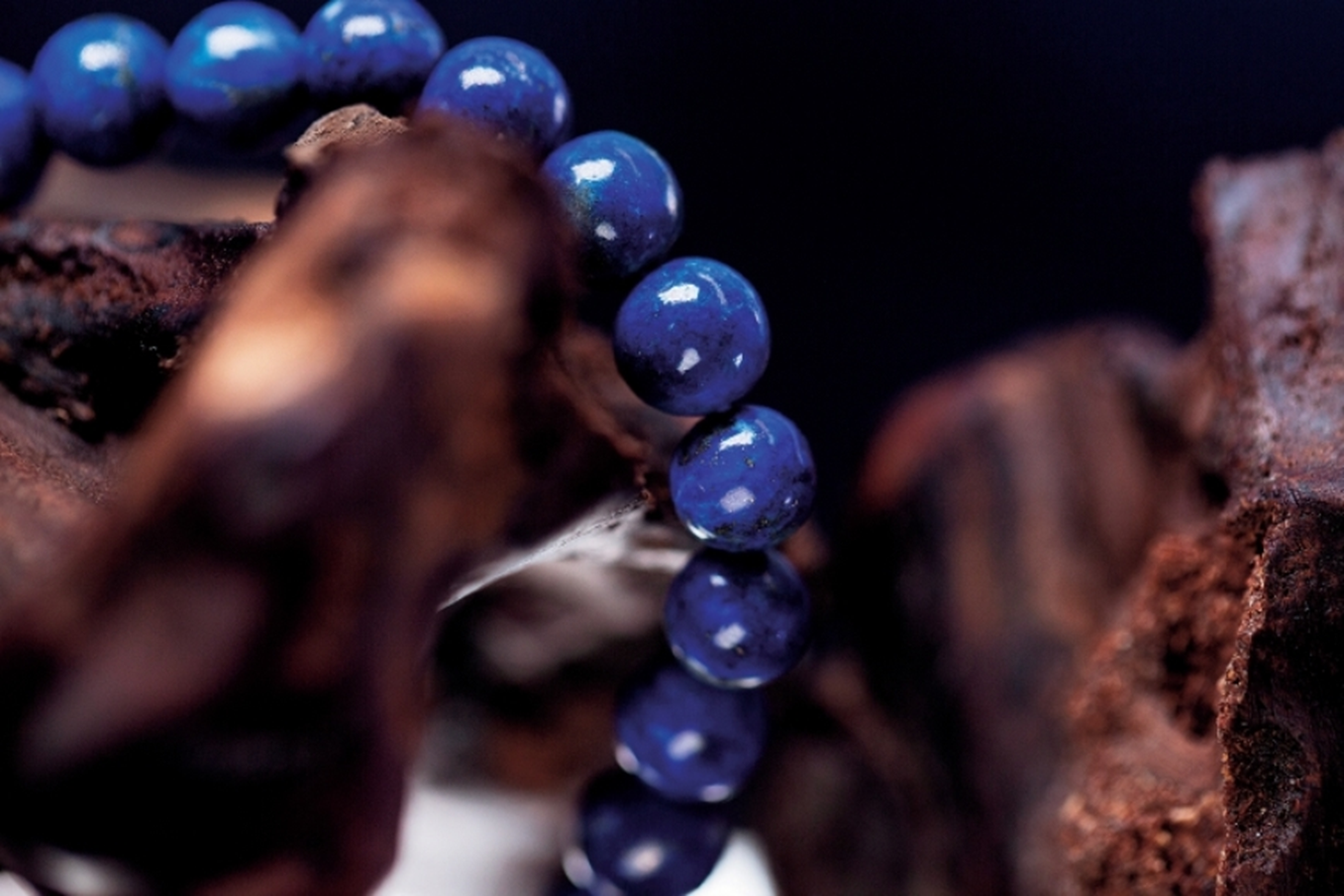
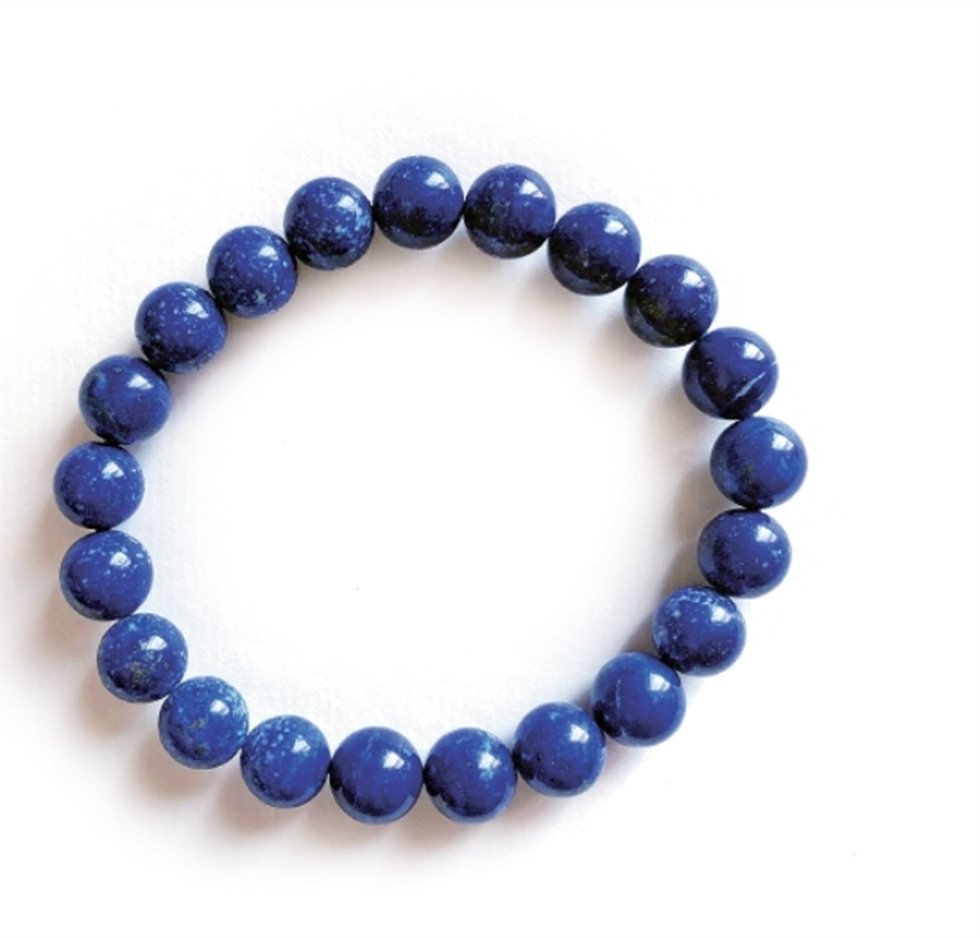
Lapis lazuli represents one of humanity’s oldest treasured gem materials—a rock composed primarily of lazurite mixed with calcite, pyrite, and other minerals. Formed in contact zones between alkaline and acidic rocks, this celestial blue stone has captivated civilizations for over 6,000 years with its resemblance to the night sky sprinkled with golden stars.
Geological Formation and Sources
Lapis lazuli typically forms in marble through contact metamorphism, featuring characteristic golden pyrite flecks against a deep blue matrix. Major sources include:
- Afghanistan: The legendary Sar-e-Sang mines, operational since 3000 BCE
- Chile: Secondary deposits with distinct coloration
- Russia: Lake Baikal region producing fine specimens
The finest material originates from Afghanistan’s Badakhshan province, where mining continues using methods remarkably similar to ancient techniques.
Historical Significance Across Civilizations
Ancient World
Afghan miners traded lapis along the Silk Road to Mesopotamia, Egypt, Persia, and India, where it equaled gold in value. Egyptians used powdered lapis for cosmetics and funeral masks, while Mesopotamians crafted cylinder seals from the stone.
Chinese Tradition
Archaeological finds include lapis artifacts from Eastern Han Dynasty (25-220 CE) tombs in Jiangsu and Northern Zhou Dynasty (557-581 CE) burial sites in Ningxia. Tang Dynasty records document Byzantine envoys presenting lapis lazuli gifts to Emperor Taizong in 643 CE.
Qing Dynasty Ritual Use
The “Qing Collected Statutes” meticulously prescribed imperial gem usage:
- Heaven Altar: Lapis lazuli beads
- Earth Altar: Amber beads
- Sun Altar: Coral beads
- Moon Altar: White jade beads
Emperors similarly wore corresponding gemstone belts for each altar’s ceremonies.
Official Ranking System
Qing official regalia used gemstones to denote rank:
1st Rank: Ruby | 2nd: Coral | 3rd: Sapphire | 4th: Lapis Lazuli
5th: Rock Crystal | 6th: White Marble | 7th: Plain Gold
Quality Grading and Selection
Premium Grade (“Heavenly Blue”)
- Uniform deep blue color with strong vitreous luster
- 99%+ lazurite content
- Minimal to no pyrite or calcite inclusions
- Traditional description: “Lapis without gold”
Fine Grade
- Pure blue to violet-blue tones
- 90%+ lazurite content
- Minor calcite veining and scattered pyrite flecks
- Considered excellent quality
Commercial Grade
- Uneven color distribution with dominant white calcite
- Minimal pyrite content
- Historically called “Labor-inducing stone” for purported medicinal properties
Modern Symbolism and Collectibility
Designated December’s birthstone in the United States (1912) and September’s in several European countries, lapis symbolizes truth, wisdom, and celestial connection. Japanese tradition maintains its December association, representing success and achievement.
Known historically as Qiúlín Liúlí, Qīngbì, and Bì Liúlí in Chinese texts, lapis lazuli continues enchanting collectors with its deep historical resonance and unparalleled celestial beauty—a stone that literally contains starlight within its deep blue matrix.
青金石:古代皇室的天堂藍寶石
礦物檔案:
化學式:(Na,Ca)₄₋₈(AlSiO₄)₆(SO₄,Cl,S)₂
莫氏硬度:5-5.5
光澤:玻璃光澤至蠟狀光澤
解理:無
顏色:深藍色、紫藍色、綠藍色
透明度:半透明至不透明
結構:細粒至隱晶質集合體
青金石代表了人類最古老的珍貴寶石材料之一——一種主要由青金石混合方解石、黃鐵礦和其他礦物組成的岩石。形成於鹼性和酸性岩石之間的接觸帶,這種天藍色石頭以其類似灑滿金色星星的夜空的外觀迷醉了文明超過6,000年。
地質形成和來源
青金石通常在大理岩中通過接觸變質作用形成,具有特徵性的金色黃鐵礦斑點對比深藍色基質。主要來源包括:
- 阿富汗:傳奇的薩雷散格礦,自公元前3000年運作
- 智利:具有獨特色調的次生礦床
- 俄羅斯:貝加爾湖地區生產優質樣本
最優質的材料源自阿富汗的巴達赫尚省,那裡的採礦繼續使用與古代技術驚人相似的方法。
跨文明的歷史意義
古代世界
阿富汗礦工沿絲綢之路將青金石交易到美索不達米亞、埃及、波斯和印度,在那裡它與黃金價值相等。埃及人使用青金石粉末用於化妝品和葬禮面具,而美索不達米亞人用這種石頭製作圓柱印章。
中國傳統
考古發現包括江蘇東漢(25-220年)墓葬和寧夏北周(557-581年)墓葬遺址中的青金石文物。唐代記錄記載了拜占庭使節在643年向唐太宗呈獻青金石禮物。
清代儀式用途
《清會典》細緻規定了皇室寶石使用:
- 天壇:青金石朝珠
- 地壇:琥珀朝珠
- 日壇:珊瑚朝珠
- 月壇:白玉朝珠
皇帝同樣為每個祭壇的儀式佩戴相應的寶石腰帶。
官階系統
清代官服使用寶石表示品級:
一品:紅寶石 | 二品:珊瑚 | 三品:藍寶石 | 四品:青金石
五品:水晶 | 六品:漢白玉 | 七品:素金頂
質量分級和選擇
頂級(「天藍」)
- 均勻的深藍色,具有強烈的玻璃光澤
- 99%以上青金石含量
- 極少至無黃鐵礦或方解石內含物
- 傳統描述:「青金不带金」
優質級
- 純藍色至紫藍色調
- 90%以上青金石含量
- 輕微方解石脈紋和分散的黃鐵礦斑點
- 被認為是優質
商業級
- 顏色分佈不均勻,白色方解石為主
- 極少黃鐵礦含量
- 歷史上稱為「催生石」,因其聲稱的藥用特性
現代象徵意義和可收藏性
在美國被指定為十二月的誕生石(1912年)和在幾個歐洲國家被指定為九月的誕生石,青金石象徵真理、智慧和天堂連接。日本傳統保持其十二月關聯,代表成功和成就。
在中文文獻中歷史上稱為璆琳琉璃、青碧和碧琉璃,青金石繼續以其深刻的歷史共鳴和無與倫比的天堂美麗迷醉收藏家——一種在其深藍色基質中包含星光的石頭。
Read More
Explore more about the world of natural jadeite and Chinese antiques on our jadeite jewelry collection. For related gemstones, check our gemstone beads and Chinese antiques categories.