Beyond the Carving: A Collector’s Guide to 13 Classical Chinese Auspicious Symbols
超越雕件:藏家必讀的十三種中國傳統吉祥符號解析
1. Double Happiness (囍)
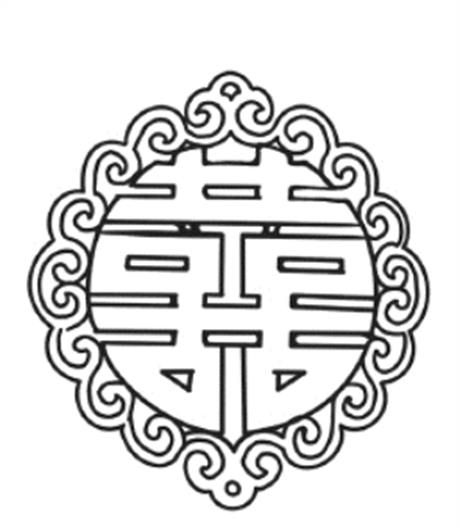
The character 囍, commonly known as “Double Happiness,” is a universally recognized symbol of joy and good fortune in Chinese culture. Legend attributes its creation to the great Song Dynasty literary figure, Wang Anshi. As the story goes, while traveling to the capital for the imperial examinations, Wang Anshi passed by a wealthy family’s house adorned with lanterns. One lantern displayed an elusive poetic couplet’s first line; the family promised their daughter’s hand in marriage to anyone who could successfully compose the matching second line, but none had succeeded. After his exams, Wang Anshi ingeniously completed the couplet, winning the bride. During his wedding ceremony, news arrived that he had also passed the imperial exams with high honors. Overwhelmed with this double portion of joy, Wang Anshi spontaneously wrote the combined character “囍” to express his elation. Since then, this symbol has become the quintessential emblem for double blessings, particularly ubiquitous in wedding decorations, representing the ultimate confluence of marital joy and prosperous fortune.
一、囍
「囍」,是一種家喻戶曉的吉祥符號,習慣稱為「雙喜」。傳說此字為宋代大文豪王安石所創。王安石進京赴考時,見一富貴人家門前張燈結綵,燈上懸有一幅上聯徵求下聯,對上者能娶得小姐,但始終無人成功。科考結束後,王安石對出了下聯,成了乘龍快婿。洞房花燭夜時,又得知金榜題名,王安石情不自禁揮毫寫下大大的「囍」字,表達喜上加喜的心境。從此,「囍」便成為「雙喜臨門」的喜慶吉祥圖案,尤其是婚嫁時常用的吉慶瑞符。
2. Auspicious Clouds (祥雲)
Clouds, formed from suspended droplets and ice crystals, held profound mystical significance in ancient China. The I Ching states, “Clouds follow the dragon,” linking them to celestial power. As clouds traverse the sky, they came to represent heaven itself. Ancient artifacts were often adorned with curling cloud patterns (雲頭紋), symbolizing the bestowal of blessings from the heavens. A classic motif features five bats flying amidst clouds, meaning “Heaven Bestows the Five Blessings.” The appearance of certain clouds, like dark blue clouds (青云), was considered an omen of a virtuous ruler and became a metaphor for high official rank—hence the phrase “平步青云” (ascend directly to the blue clouds) to wish someone rapid promotion. A motif of a shepherd boy flying a kite into the clouds represents “青雲得路” (finding a path to high office). The quintessential auspicious cloud is the five-colored cloud (五色雲), symbolizing multiplied happiness. It was seen as an auspicious response (景雲) to peace and virtuous rule. Patterns like “慈善祥雲” combine lotus flowers with arrowhead leaves amid five-colored clouds.
二、祥雲
雲是由水滴、冰晶聚集形成的空中懸浮物。在中國古代,祥雲被賦予許多神秘色彩。《易經》有云:「雲從龍,龍起則生雲。」雲行於天,故以雲代天。古時器物常飾以卷曲的雲頭紋,似有託瑞於天之意。畫有五隻蝙蝠在雲中飛翔的吉祥圖案,寓意「天賜五福」。據說有青雲出現,預示有好道之君。「青雲」後來喻指高官顯爵,祝頌官運亨通曰「平步青雲」。典型的祥雲為五色雲,代表加倍的幸福,也稱景雲,被視為太平瑞應。古人云:「德高至山陵則景雲現。」另有「慈善祥雲」圖案,為蓮花配以慈姑葉,周遭環繞五色雲紋。
3. Official Tablet (笏)
The Hu (笏) was a handheld tablet used by ancient Chinese officials during court audiences or meetings with superiors to note memoranda. According to ritual norms, all officials held their tablets during assemblies; they would hold it when speaking and tuck it into their belt when not. The material and design indicated the bearer’s rank: the Son of Heaven used jade, feudal lords used ivory, high ministers used bamboo with a fish-whisker pattern, and lower-ranking scholars used plain bamboo or wood. After the Western Wei period, ivory was standard for the fifth rank and above, while bamboo/wood was for the sixth rank and below. As a symbol of bureaucratic rank, authority, status, and wealth, the Hu was considered a potent auspicious object. It is one of the “Five Auspicious Emblems” (五瑞) in folk art, along with the chime stone, gourd, drum, and flower basket.
三、笏
笏是古代官吏上朝或謁見上司時所執的一種用具,用以記事。古制中,百官朝會時手執笏板,有事則執之於手而記奏,無事則插之於腰帶間。笏的形制、質地因官品高下而異:天子用白玉,諸侯用象牙,大夫用魚須文竹,士用竹木。西魏以後,五品以上通用象牙笏,六品以下用竹木笏。笏是官階與職權的標誌,也是地位與富貴的象徵,被視為祥瑞之物。民間所謂「五瑞」圖案,即包含笏、磬、葫蘆、鼓、花籃。
4. Ritual Wine Vessel (爵)
The Jue (爵) was an ancient Chinese ritual vessel, specifically a type of wine cup used in ancestral temple ceremonies by the nobility. By extension, “Jue” also refers to aristocratic rank (爵位), the five orders of nobility being Duke, Marquis, Earl, Viscount, and Baron. Consequently, the Jue vessel became a symbol of official rank, lofty status, and prosperous advancement. Wealthy families would display an ancient bronze Jue in their studies, both as an object of appreciation and a marker of the family’s prominence and prosperity. Gifting a Jue was considered a gesture of great honor. In auspicious patterns, a Jue often signifies promotion; for instance, a Jue paired with an ancient mirror (鏡) forms a pun for “晉爵” (advancement in rank). A common motif shows a boy presenting a Jue to the Heavenly Official (天官), symbolizing “加官晉爵” (receiving promotion and rank).
四、爵
爵為中國古代禮器,亦是酒器之通稱。古時宗廟之祭,貴族獻之以爵。爵又指爵位,古代帝王封爵分為公、侯、伯、子、男五等。後世,爵成為爵祿與崇高地位的象徵,是祝願官運亨通、飛黃騰達的吉祥物。較富裕之家,常在案几上陳設青銅古爵,既可欣賞,亦能標誌主人地位顯赫、家道昌盛。以爵贈人,顯得特別貴重。吉祥圖案中常以爵祝人升官,例如爵與古鏡在一起,諧音寓意「晉爵」。一幅「加官晉爵」圖案,常描繪童子向天官獻爵。
5. Egg (蛋)
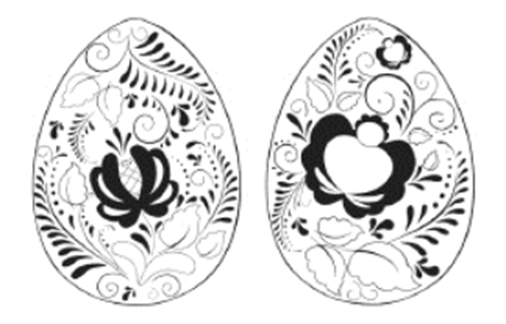
In ancient cosmology, the egg was a symbol of the universe. Myths claim that the creator goddess Nüwa was born from an egg, and all things in the world originated from eggs. The egg’s primary auspicious meaning is the blessing of bearing children (送子). In many regions, during weddings or after childbirth, hosts distribute dyed eggs (彩蛋) to guests and neighbors; consuming them is believed to bring good luck for the year. Some areas have traditions of eating eggs on birthdays or after narrowly escaping danger, symbolizing a turn from misfortune to good fortune (否極泰來). In some dialects, “egg” (蛋) is homophonous with a term for spring/rebirth (春). During the Spring Festival, eggs are dyed red and given as “bestowers of blessings” (送福). Among some southern ethnic minorities, beautifully painted eggs are used for divination, with the yolk’s shape interpreted for prophecy.
五、蛋
蛋在古代是宇宙的象徵。傳說女媧生於蛋,世上萬物皆出於蛋中。蛋的吉祥意義主要在於「生子送福」。不少地方在婚禮或產後,主人家會送彩蛋給客人與鄰居,吃了彩蛋者整年吉祥如意。有些地方逢生日或遇險化吉時會吃蛋,表示否極泰來。蛋在某些地方稱為「春」,春節時雞蛋被染成紅色,稱為「送福」。南方一些少數民族中,雞蛋也用於占卜,根據熟蛋蛋黃的形狀預言吉凶。
6. Auspicious Incense (吉祥香)
Auspicious Incense consists of slender sticks made from fragrant materials, believed to ward off evil spirits. While used for domestic air freshening, its primary function is in rituals for ancestral worship, Buddhist offerings, and deity veneration. The lit incense is placed in a burner before an altar, serving as a fragrant offering to ancestors and divinities and as a symbolic message inviting them to receive the worship. For convenience, a long table (香案) holding the incense burner and candlesticks is typically placed before the shrine. The use of incense extends beyond formal worship; it is burned as a mark of respect towards anything deemed worthy of veneration, as reflected in a Tang poem: “静焚香炷礼寒星” (Quietly burning incense sticks to honor the cold stars).
六、吉祥香
吉祥香是由香料製成的細小香棍,能辟邪惡,可用於庭屋熏香,但更多用於祭祖、供佛、祀神。人們將點燃的吉祥香插在祭壇前的香爐裡,既作為清香奉獻,也作為祭祀信號。為方便祭祀,神像前常設一張放置香爐燭台的長几,稱為香案。吉祥香不限於祭祀,凡人們認為應以禮敬之事物,皆可焚香禮之,如唐代詩人陸龜蒙所寫:「靜焚香炷禮寒星」。
7. Rhinoceros Horn (犀角)
The rhinoceros horn was one of the “Eight Treasures” of the literati and a recognized auspicious symbol. In antiquity, it was exchanged as a prestigious diplomatic gift, akin to white jade discs. Valued in traditional medicine for its purported efficacy against certain ailments, the horn was also used in divination practices by fortune-tellers. It was even believed to have the power to detect poison in liquids. Its rarity and attributed mystical properties cemented its status as a potent charm.
七、犀角
犀牛角是文人的八寶之一,也是吉祥標誌。在古代,犀角與白玉璧同被視為國禮互贈。犀角可入藥,據說對某些疾病有靈效。亦可用於占卜,測字先生常隨身攜帶。傳說犀角還能檢測湯水中是否有毒物。
8. Pearl (珠)
The pearl, another of the “Eight Treasures,” symbolizes wonder and purity. It was believed that pearls were conceived in shellfish by lightning and grew under moonlight. Lore abounds regarding magical pearls. One Tang Dynasty tale speaks of a “Water-Treading Pearl” that allowed its bearer to walk on waves. Another tells of a “Strength Pearl” that granted the eater Herculean power. A particularly famous legend involves the “Water-Cleansing Pearl.” A man obtained a black, lustrous pearl that could instantly purify muddy water. A foreigner, whose nation’s wells had turned foul since losing this treasure, recognized it and purchased it for a fortune, restoring his country’s water and health. The most enduring story is that of the “Suihou Pearl.” Lord Sui healed an injured snake, which later transformed into a child and presented him with a luminous pearl in gratitude. This tale emphasizes the virtue of gratitude and established the pearl as a protective amulet that brings peace and good fortune to its wearer, warding off evil with its light.
八、珠
珠是「八寶」之一,象徵神奇與純潔。人們相信珍珠因雷電孕育於貝殼中,在月光下長成。關於珠的神奇傳說很多:唐代有履水珠,可讓人行走波濤如平地;有力珠,含於口中能獲巨力;有清水珠,能化濁水為清泉。最著名的莫過於「隋侯珠」的故事:隋侯救治一條受傷的蛇,後來蛇化身童子贈以明珠報恩。寶珠被視為吉祥物,夜能發光、驅避妖邪,行善積德者常能得之。佩戴寶珠飾品被認為能使人平安吉利。
9. Longevity Noodles (長壽麵)
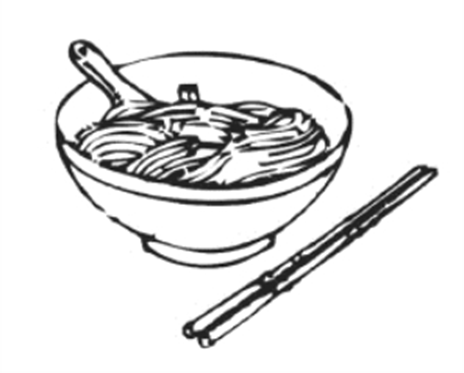
Noodles, made from wheat or rice flour, are inherently associated with long life due to their length. They are thus an indispensable element in birthday celebrations, especially for elders. In some southern regions, eating noodles during the Spring Festival is practiced to effectively petition for longevity. Flour is also shaped into “longevity peaches” (壽桃), dyed red, which serve as another quintessential birthday吉祥物.
九、長壽麵
麵粉可製成麵條。因麵條形長,人們將其與長壽聯繫起來。祝壽禮物中常包含長壽麵。南方一些地方,春節吃麵條以求長壽。人們也用麵粉製作壽桃,染上紅色,作為祝壽吉祥物。
10. Spring Couplets (春聯)
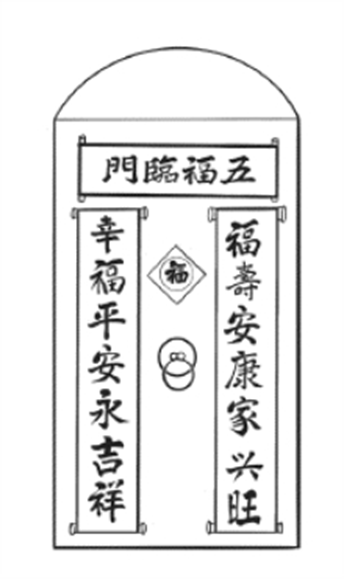
Spring Couplets are poetic verses pasted on doorways during Chinese New Year, evolving from the earlier “Peachwood Charms” (桃符). Legend tells of a giant peach tree on Mount Dushuo, whose peaches granted immortality. Beneath it lived two mighty door gods, Shentu and Yulei, who captured evil spirits for tigers to devour. To invoke their protection, people hung peachwood boards with their images or names on their doors—the original桃符. During the Five Dynasties, Meng Chang of Later Shu inscribed the first known poetic couplet on桃符. The custom was popularized nationwide by Emperor Zhu Yuanzhang in the Ming Dynasty, who decreed that every household display red-paper couplets on New Year’s Eve. This transformed from an elite practice to a universal folk custom, becoming an essential ritual to usher in luck and ward off evil for the new year.
十、春聯
春聯是中國人春節貼於門上的對聯,由桃符演化而來。傳說度朔山有大桃樹,樹下住著神荼、鬱壘二神,專捉惡鬼。人們遂以桃木板畫二神像或寫其名,懸於門戶兩側辟邪,此即「桃符」。五代時,後蜀孟昶在桃符上題寫「新年納餘慶,嘉節號長春」,被視為第一副春聯。明代朱元璋建都南京後,下令除夕各家須貼春聯,此時春聯已改用紅紙書寫。此俗從官府普及至民間,成為祈求吉祥的春節標誌性習俗。
11. Stone Guardian (石敢當)
In traditional communities, a stone slab inscribed with “泰山石敢當” (Taishan Stone Dare-All) or simply “石敢當” was embedded at street corners, T-junctions, or directly opposite roadways on walls. This practice aimed to suppress negative energies (煞) and ward off evil influences. Folklore personifies Shi Gandang as a fearless, heroic figure from the Taishan region who helped people confront bullies and supernatural threats. One story recounts how he used clever tactics with lights, drums, and children to drive away a malign spirit haunting a young woman. As the spirit fled to other regions, Shi Gandang grew weary of chasing it. He instructed stonemasons to carve “泰山石敢當” on stones from Mount Tai. These stones, when placed on walls, effectively repelled evil spirits wherever they appeared. This led to the widespread custom of embedding such stones during construction for protection and auspiciousness.
十一、石敢當
民間常在街巷拐角、三叉路口或路沖之处的牆上,嵌砌一塊刻有「泰山石敢當」或「石敢當」字樣的石碑,用以「制煞辟邪」。傳說石敢當是泰山地區一位勇敢無畏的人物,常幫助鄉民驅妖。一則故事講述他利用燈光、鑼鼓和童男童女智退糾纏女子的妖風。後來為免奔波,他請石匠雕刻泰山石,贈予求助人家嵌於牆上,妖邪遂不敢犯。此習俗因而流傳開來,成為民間建築中辟邪圖吉的常見設置。
12. Protective Talismans (護符)
Historically made from various materials, protective talismans later became primarily paper-based. These inscribed papers served as potent messages warning evil spirits not to harm the bearer. There were general平安符 for overall safety and specific ones for particular issues, like止血符 to stop bleeding or化骨符 to dissolve fish bones stuck in the throat. The designs varied immensely, depicting auspicious guardian beasts, divine immortals, or esoteric “ghost script” (鬼書) intelligible only to shamans or Taoist priests. In modern times, while paper talismans are still used, a commonly worn护符 is the bronze八卦太极图 amulet, sometimes inscribed with phrases like “福如東海,壽比南山.” Old almanacs (曆書) were also repurposed as protective charms, believed to safeguard livestock from illness when hung in pigsties or their ashes mixed into feed.
十二、護符
傳統護符材質多樣,後世多以紙符為主。紙符作為一種信息載體,用以警告邪靈勿傷佩戴者。種類繁多,有通用平安符,亦有專用符如止血符、化骨符等。符上內容多樣,或畫驅邪吉祥物、神仙像,或寫常人難懂的「鬼書」,僅巫師道士能解。現代除紙符外,常見佩戴的是銅鑄八卦太極護身符,有的還鑄有吉祥語。舊曆書也曾被當作護符使用,掛於豬圈或燒灰拌食,據稱可防豬疫、助長膘。
13. Bagua Taiji Diagram (八卦太极图)
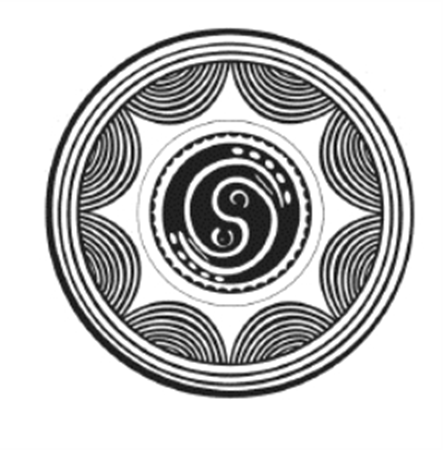
The Bagua (八卦) are eight trigrams from the I Ching, each formed by three stacked lines—either solid Yang (——) or broken Yin (——). Each has a distinct form, name, symbolic natural element, and attribute: Qian (Heaven, 健), Kun (Earth, 順), Zhen (Thunder, 動), Xun (Wind, 入), Kan (Water, 陷), Li (Fire, 麗), Gen (Mountain, 止), Dui (Lake, 悅). These eight trigrams can be combined into 64 hexagrams, representing all phenomena in the universe. The underlying philosophy posits that the cosmos originated from the Taiji (Supreme Ultimate), which generated Yin and Yang (兩儀), which in turn produced the Four Symbols (四象), and then the Bagua. The Bagua Taiji Diagram is a circular arrangement of the eight trigrams around a central Taiji symbol—the famous swirling Yin-Yang motif. This powerful diagram is a paramount auspicious symbol used to dispel inauspicious forces, attract benefits, and encourage virtuous alignment. It was so revered that figures like Jiang Ziya, the revered minister of the Zhou Dynasty’s founding king, were depicted wearing robes adorned with it.
十三、八卦太極圖
《易經》中以陰陽符號三疊而成的八種三畫卦形,稱為八卦。八卦各有卦形、卦名、象徵物與特定意義:乾(天,健)、坤(地,順)、震(雷,動)、巽(風,入)、坎(水,陷)、離(火,麗)、艮(山,止)、兌(澤,悅)。八卦可演為六十四卦,象徵宇宙萬物。其思想源自宇宙太極,太極生兩儀(陰陽),兩儀生四象,四象生八卦。八卦太極圖即為八卦均布於圓形八方,中央置太極陰陽圖的組合。此圖是重要的吉祥圖案,用於驅凶辟邪、趨利向善。傳說周朝開國功臣姜子牙便身著飾有此圖的服飾。
Read More
- Buying Guides (111)
- Collectors' Academy (192)
- Care Academy (8)
- Investment Academy (25)
- Jade Crafting Techniques (29)
- Michelle Au: The Gemstone Luminary (11)
- The Precious Metals & Jewels Compendium (54)