An In-Depth Guide to Famille Rose Porcelain: The Soft Charm of Chinese Ceramics
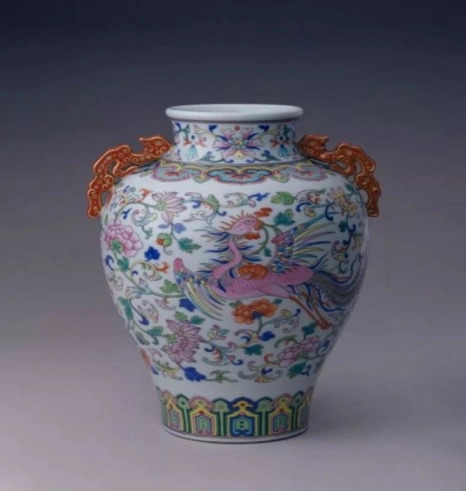
Famille Rose porcelain, known in Chinese as Fencai (粉彩) or “Soft Colors,” represents a celebrated category of overglaze enamel ceramics. This technique involves painting designs onto the already-glazed surface of a fired white porcelain body, known as a suqi. The piece is then fired again in a lower-temperature kiln, typically between 600 and 900 degrees Celsius, to fuse the enamels to the glaze. The defining characteristic of Famille Rose is its distinctive painterly effect. After outlining a design on the high-fired white porcelain, artisans apply a special opacified white ground called boli bai (玻璃白, “glass white”), which contains arsenic. Colors are then applied over this glass white base, and using a clean brush, the painter gently washes or blends them to create subtle gradations in tone. This technique allows for the depiction of light, shadow, and texture, giving flower petals and the folds of clothing a soft, three-dimensional quality.
The fusion of glass white with traditional Chinese painting techniques opened revolutionary possibilities for ceramic decoration. It introduced variations in color density and a slight sense of relief, vastly increasing the expressive power of the painted surface. The overall effect is fenrun herou (粉潤柔和, powdery, moist, and soft), closely resembling the aesthetic nuances of traditional Chinese ink-and-wash paintings, thus elevating porcelain decoration to a new artistic plane.
In fact, the art of Famille Rose painting began to develop in the late Kangxi period (1661-1722). It truly coalesced into a distinct style during the Yongzheng reign (1723-1735) and reached its peak of artistic refinement under Qianlong (1735-1796), celebrated for its elegance, refinement, and powdery softness. In the world of collecting, calligraphy and painting, alongside ceramics, form two major pillars. Famille Rose occupies a unique position at their intersection: it is first and foremost fine porcelain, yet it is adorned with the vibrant, sophisticated artistry of traditional painting. This powerful combination has ensured its enduring appeal and a distinctive status in the collectors’ market.
Defining Characteristics of Famille Rose Porcelain
1. Diverse Forms and Vessels
The range of Famille Rose shapes is remarkably diverse. Beyond traditional forms like vases (ping), jars (guan), dishes (pan), and bowls (wan), the Qianlong period saw ingenious innovations such as the revolving vase (zhuanxin ping), neck-revolving vase (zhuanjing ping), and lantern-shaped vase (denglong ping). Famille Rose from folk kilns (minyao) primarily featured utilitarian and decorative items like bowls, plates, vases, brush holders, incense burners, and figurines.
2. Body, Glaze, and Base
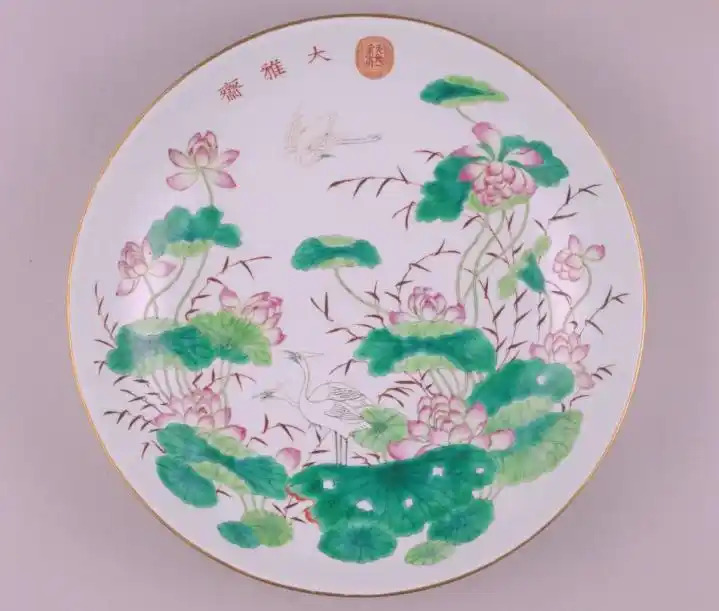
Famille Rose bodies can range from relatively thick and heavy (houzhong) to thin and light (qingbo). In terms of body quality (taizhi), high-quality pieces are renowned for their pure white and fine-grained (jiebai xini) porcelain, a hallmark of the finest Jingdezhen production. The use of glass white as a base allows for the signature graduated washes (xuanran) of color, creating smooth transitions from dense to faint. This makes it particularly suitable for rendering flowers and foliage with naturalistic depth and variation.
During the early Qianlong period, the porcelain body maintained the fine, smooth quality seen in Yongzheng wares. By the late Qianlong era, due to less effective supervision of the imperial kilns and economic factors, the body quality declined somewhat compared to the high standards of the early-mid Qing, though it remained superior to that of the late Qing.
The glaze quality (youzhi) of early Famille Rose was lustrous and moist, similar to Yongzheng pieces. Late Qianlong glazes gradually became slightly coarser. On exquisite pieces, the glaze is hard and compact (jianzhi), as fine and moist as grease or jade (xirun ru zhi si yu), and flawlessly smooth.
3. Marks and Identification
Most Qianlong imperial Famille Rose pieces bear the six-character seal script (zhuanshu) reign mark “大清乾隆年製”. A minority carry the four-character seal script mark “乾隆年製”. Fine folk kiln pieces may bear private hall names (sijia tangming kuan) or symbolic emblem marks (tuan biaoji). A notable example is a design painted in underglaze blue on the base depicting a brush (bi), an ingot (ding), and a ruyi sceptre, a visual pun for “必定如意” (biding ruyi, “certainly as you wish”).
For the brief Xuantong reign (1908-1911), many folk kiln Famille Rose pieces are unmarked. Their characteristics are so similar to those of the preceding Guangxu period or the following Republic era that unmarked pieces are often attributed to one of those later periods.
4. Evolution of Decorative Motifs
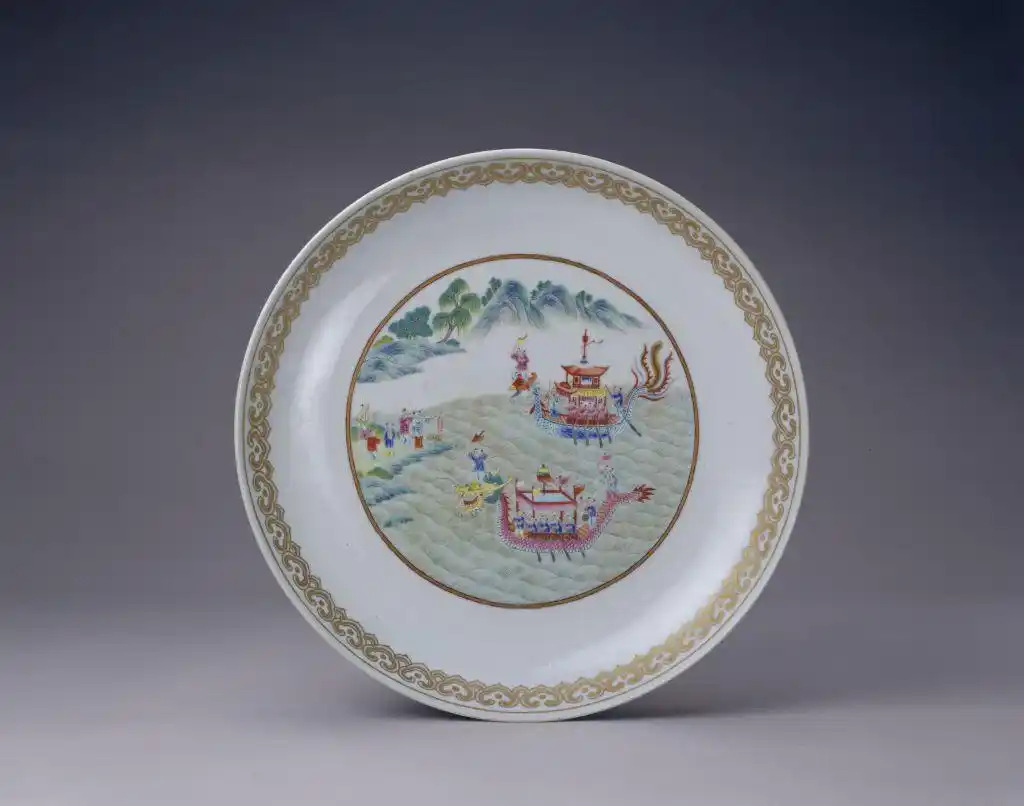
- Qianlong: Common motifs include landscapes, scenes of children at play (yingxi), nine peaches, melons and butterflies, a hundred deer, birds and flowers, ladies, “hundred flowers” (covering the entire surface, also called “百花不露地”), the Eight Immortals, bats amidst clouds, symbols of fortune and longevity, interlocking flowers, “ball” flowers, and butterflies.
- Jiaqing (1796-1820): Popular designs feature flowers, the Eight Buddhist Emblems, dragons and clouds, arhats, children at play, and pomegranates.
- Daoguang (1820-1850): Prominent patterns include lotus flowers, bitter melons, scenes of children at play, ladies in Qing dynasty attire, and various floral, butterfly, insect, and grass motifs.
5. The Republic Period (1912-1949)
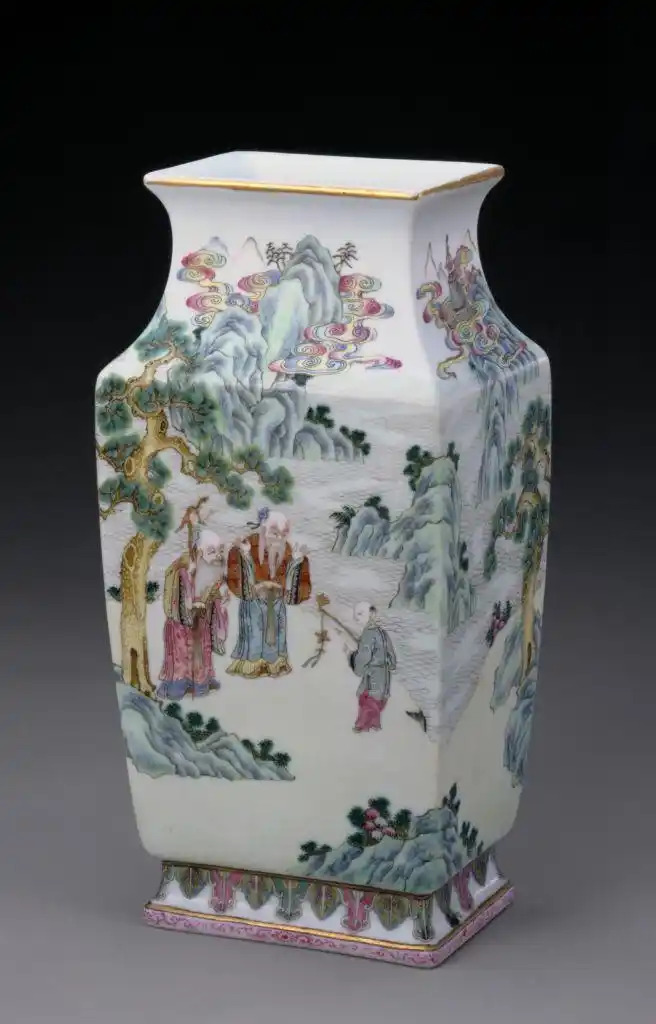
During his tenure as President, Yuan Shikai appointed Guo Baochang as the Supervisor of Ceramic Affairs in Jingdezhen, effectively the last of the imperial “督陶官” (Dutaoguan). The Famille Rose pieces imitating (fangzhi) Yongzheng and Qianlong styles under Guo’s supervision are noted for their pure white porcelain bodies, meticulous painting, and brilliant colors. Marks include red enamel seal or regular script inscriptions such as “居仁堂製”, “觯齋主人”, and “陶務監督郭葆昌謹製”.
Read More
Explore our curated collection of antique porcelain and Chinese antiques to find pieces that resonate with the beauty of Famille Rose. For those interested in complementary artistry, our jade jewelry collection offers a different yet equally captivating facet of Chinese craftsmanship.
FAQ
What is the difference between Famille Rose and other Chinese porcelain styles?
Famille Rose, or Fencai, is distinguished by its overglaze enamels that feature a soft, opaque white base called glass white, allowing for subtle gradations of color. This creates a painterly, soft effect unlike the more vibrant, opaque colors of Famille Verte or the monochrome glazes of other styles.
How can I identify authentic Famille Rose porcelain?
Look for reign marks on the base, typically in seal script for imperial pieces, and examine the body quality for fineness and whiteness. The presence of glass white with a soft, blended appearance is a key indicator. However, expert appraisal is recommended for authentication due to the prevalence of reproductions.
What are common motifs on Famille Rose porcelain?
Motifs vary by period: Qianlong pieces often feature landscapes, children at play, and hundred flowers; Jiaqing favors flowers and Buddhist emblems; Daoguang includes lotus and ladies in Qing attire. These motifs carry symbolic meanings of prosperity, longevity, and happiness.