The Collector’s Essential Guide: 5 Key Details for Authenticating Ming & Qing Yixing Teapots
藏家必修課:明清紫砂壺鑑定五大細節要點
Yixing, known in ancient times as Yangxian, is famed for its “rich earth” (fuguitu), a unique purple clay from which artisans shape exquisite teapots, giving birth to the art of Zisha (purple sand). In recent years, the works of the “Eight Masters of Modern Zisha,” particularly those of the legendary Gu Jingzhou, have fetched astronomical prices at auction. One might wonder if Master Gu, who lived a life marked by poverty and illness, would be surprised by the posthumous frenzy surrounding his name.teapot authentication
陽羨出富貴土,摶泥為器,乃號紫砂。近年來,紫砂八老,特別是顧景舟老先生的作品被炒成天價。不知顧老泉下有知,是否會為自己當年的貧病抱憾而感到一絲訝異。
Putting aside the speculative hype, the Yixing teapot itself possesses genuine收藏价值 (shoucang jiazhi, collectible value). First, it is实用 (shiyong, practical). In today’s world, whether in business or among friends, inviting someone for tea is considered far more refined than a mere feast. There’s a saying: “In the vast world of mortals, three cups of wine; for the great affairs of a millennium, one pot of tea.” Since tea drinking is now linked with大事 (dashi, significant matters), the ability to appreciate tea has become an unspoken social asset. Consequently, as more people aspire to大事 (dashi), the vessels for this ritual—the teapots themselves—have gained immense popularity. After all, a would-be magnate sipping tea from a common glass seems decidedly lacking in elegance, doesn’t it?
不說炒作,其實紫砂壺這玩意兒還真有收藏價值。第一,它實用。現今無論商務交流還是朋友相交,請你喝茶遠比請你喫魚肉更顯文雅。有言道:「萬丈紅塵三杯酒,千秋大事一壺茶。」既然喝茶與大事相連,懂茶、會品茶便成了無形的社交資本。因此,想成大事者一多,茶器自然備受熱捧。你想,這成大事者,連個好茶壺都沒有,拿個玻璃杯就喝上了,豈不有點不風雅?
From my own perspective, Zisha teapot文物 (wenwu, cultural relics) are truly worth collecting. I would never use them casually. Instead, for visits from close friends or, particularly, business associates, serving tea in a vessel crafted by a famous master from a bygone era subtly demonstrates the host’s refined taste and, perhaps inadvertently, hints at their status and heritage. It’s a multipurpose tool of social grace. This is precisely why Zisha teapots have been so fervently sought after in recent years. However, my focus here is not on modern “famous artists,” but on authentic Ming and Qing dynasty文物 (wenwu). This is not to diminish the skill of the “Eight Masters,” but to suggest that their artistic stature and market value are arguably on par with the “Eight Friends of Zhushan” from the Republic period. Among those eight, perhaps only Wang Qi can be considered a true master in the history of ceramics, comparable to the blue-and-white master Wang Bu. Their works, when placed alongside late Qing and Republic era giants like Ren Bonian or Wu Changshuo, are best described as masterful craftsmanship (dajiang) rather than the work of a visionary大师 (dashi, great master). This is, of course, a personal view.
小編自身認為,紫砂壺文物這玩意值得收藏,平時是不捨得用的。來了三五好友,特別是商場權貴,以名人名器泡茶招待,不經意間就顯示了主人的風雅和品味,稍微不注意就流露出主人的身家和地位,可謂一壺多用。所以這紫砂壺近年來頗為好事者追捧。但我說的不是所謂的現代名家,而是明清老紫砂文物。不是說紫砂八老的作品不好,而是紫砂八老這些老藝人,論藝術價值、論身價,最多也就是民國珠山八友的高度。珠山八友,其實也就一個王琦在陶瓷史上堪稱大家,和青花王步並稱二王。其作品,和晚清民國以降的大師級人物,如任伯年、吳昌碩等人相比,堪稱為大匠,不能稱為大師,這是沒有疑問的。(個人觀點)。
In fact, the current market for authentic antique Zisha still holds opportunities to find a bargain! The true titans of Zisha history are not Gu Jingzhou, but rather giants like Shi Dabin and Chen Mingyuan from the Ming and Qing dynasties. The art began with the monk of Jinsha Temple in the Ming dynasty, followed by Gong Chun. Later came the renowned “Three Great Masters of Teapot Art”: Shi Dabin, Li Zhongfang, and Xu Youquan. The late Ming saw many other famous names, too numerous to list here. By the Qing dynasty, Chen Mingyuan emerged as a master of his generation, celebrated in the saying, “Overseas, they compete for Mingyuan’s dishes; in the palace, they delight in talking of Dabin’s teapots.” His incense vessels fetching over 30 million RMB at auction is truly well-deserved. Compared to Master Gu Jingzhou, Chen Mingyuan’s work is on an entirely different level of significance. Chen was a founding figure of a school in Zisha history, yet his extant works likely number only a few dozen. Compare this to the hundreds of pieces attributed to Gu Jingzhou, and you can see that the true value of antique Zisha文物 (wenwu) is only now beginning to reassert itself.
其實目前紫砂收藏,還有漏可撿!紫砂壺界的泰山北斗不是顧景舟,而是時大彬、陳鳴遠等大匠。明代金沙寺僧始陶,後有供春。再後有壺家妙手稱三大「時大彬、李仲芳、徐友泉」。明末名家不少,在此不一一贅述。到了清代,陳鳴遠堪稱一代大師,當時人稱「海外爭求鳴遠碟,宮中豔說大彬壺」,其傳香之藝,拍出個三千多萬,還真是實至名歸。陳大師的作品相比顧景舟老先生,不是一個重量級的。陳鳴遠屬於紫砂史上開宗立派的人物,其作品還只值三千多萬,存世數量最多幾十把,和顧老動輒幾百的存世數量比,你可以想見老紫砂壺文物的價值正在回歸。
5 Key Authentication Details Every Collector Must Know
五大細節要點,藏家必看
Below, I will share some of the authentication methods I have found most useful over the years.
下面小編將為大家分享幾點我自身常用的一些鑑定方法!
Detail 1: Examining the Clay
要點一:泥料
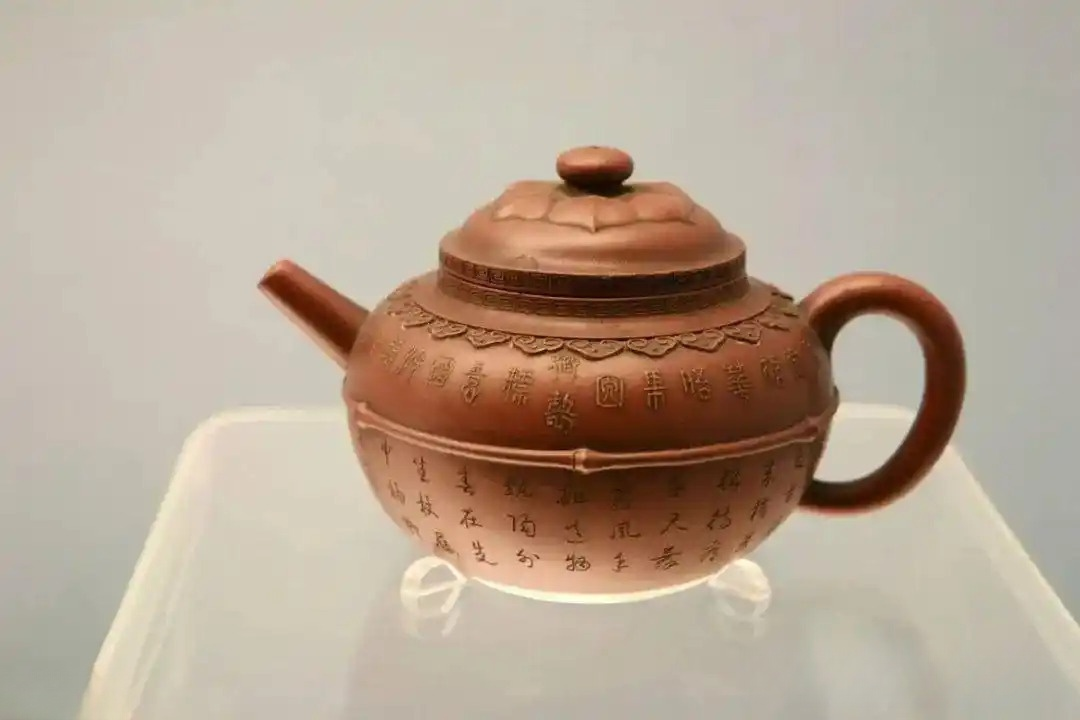
The appearance of Ming dynasty Zisha teapots is generally relatively粗糙 (cucao, rough) with a pronounced granular, sandy texture. This is due to the relatively primitive clay refining techniques of the time. In more technical terms, the mesh count (mushu), which refers to the particle size of the purple clay, was low, resulting in a more rustic and bold aesthetic.
明代的紫砂壺外觀都比較粗糙、砂礫感較明顯,這是由於當時的煉泥技術相對落後。用比較專業的說法是目數(紫砂泥料的顆粒度)較低,所以顯得較為粗獷。
By the Qing dynasty, clay refining techniques had improved significantly, and fine clay (xini) emerged. Consequently, Qing dynasty teapots appear much more细腻润泽 (xini runze, delicate and lustrous) compared to their Ming counterparts, with a smoother, more refined surface.
到了清代,紫砂煉泥工藝得到提高,出現了細泥。所以從外觀來看,清代紫砂壺要比明代紫砂壺更為細膩潤澤一些。
Detail 2: Analyzing the Craftsmanship
要點二:工藝
In the early Ming dynasty, Zisha成型 (chengxing, forming) was essentially a “hand-sculpting” skill. Teapots were primarily made by hand, pinching and shaping the clay. As a result, the finished vessels often retain traces of fingerprints on the body.
明代初期,紫砂成型可以說是「捏泥巴」的技藝,紫砂壺基本都是用手捏製成型為主,所以壺體會留有指紋的痕跡。
In the late Ming period, the legendary Shi Dabin pioneered the use of wooden molds for teapot construction. The body was shaped with the aid of wooden molds and bamboo slips, so the inside of a finished pot from this period will bear the marks of scraping with bamboo tools. Decorative techniques of the Ming dynasty primarily included sculpture, applied decoration (tiehua), openwork carving (loudiao), carved lacquer (tihong), and ceramic engraving (taoke).
明代晚期,時大彬首創了木模制壺方法,壺身主要藉助木模和竹片進行製作,所以成品壺內會留有竹片刮削的痕跡。另外,明代的紫砂裝飾主要運用雕塑、貼花、鏤雕、剔紅和陶刻等工藝。
The成型 (chengxing) techniques of the Qing dynasty are very similar to modern methods (or rather, modern techniques are a continuation of Qing practices). The typical process involved first beating a clay slab, then围身筒 (wei shentong, forming the body cylinder) and joining the sections. Masters like Chen Mingyuan and Yang Pengnian, however, still primarily used hand-pinching methods. Consequently, Qing teapots generally have walls of even thickness. In terms of decoration, the Qing dynasty innovated upon the Ming foundation by adding techniques such as tracing in gold (miaojin), clay painting (nihui), enameling (falangcai), famille rose (fencai), and炉均釉 (lujun you, a type of low-fired glaze).
清代的紫砂壺成型工藝跟現代比較接近(或者說現在的紫砂成型工藝是從清代傳承至今的),一般採用先打泥片、後圍身筒接壤的方式(陳鳴遠、楊彭年等仍以手捏製為主),所以壺胎厚薄均勻。而裝飾工藝方面,在明代的基礎上還新創了描金、泥繪、琺瑯彩、粉彩、爐均釉等。
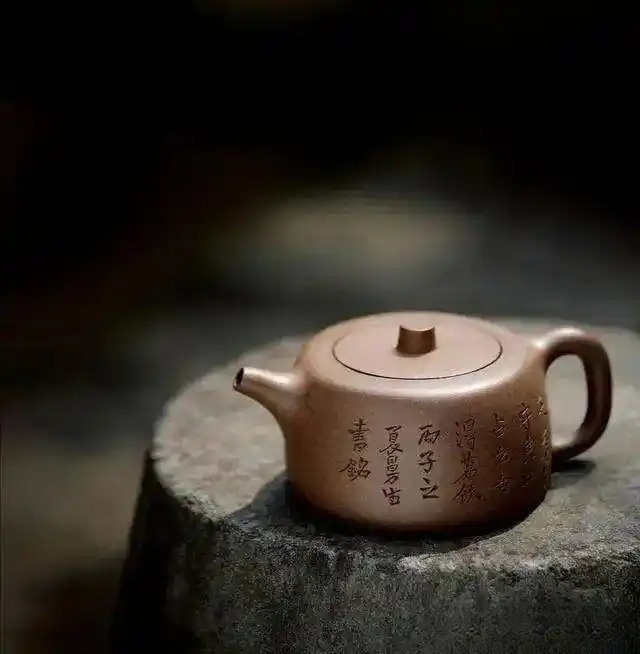
Detail 3: Listening to the Sound
要點三:聽聲音
Gently tap the body of the pot with the lid. If the sound produced is清脆悦耳 (qingcui yue’er, clear, crisp, and pleasing to the ear), and the sound stops immediately when the tapping stops, it is generally a sign of an authentic, well-fired antique teapot. The sound of a仿制壶 (fangzhi hu, imitation or replica pot) tends to be沉闷 (chenmen, muffled) and短暂 (duanzan, short-lived). If the sound is slightly too sharp, it might be a new pot. However, if the sound is excessively sharp and piercing, it is highly likely that the teapot was made from chemically altered industrial clay rather than natural Zisha.
用壺蓋輕輕敲擊壺身,發出來的聲音如果清脆悅耳,且敲擊停、則聲停,一般即為真壺。仿製壺的敲擊聲則是沉悶而又短暫的。如果聲音稍過尖銳,可能是新壺;但如果聲音過於尖銳清脆,則多半為化工泥料仿製而成。
Detail 4: The Water Absorption Test (浇水 Jiaoshui)
要點四:澆水
Pour water over the surface of a genuine Zisha teapot. The water will散开 (sankai, spread out) into a relatively uniform film across the surface, rather than forming distinct, raised droplets. After a short while, the water will be gradually absorbed by the porous clay. In contrast, when water is poured over a fake Zisha pot made from ordinary pottery clay, or over a porcelain vessel, it will form明显凸起 (mingxian tuqi, clearly raised) water beads that sit on the surface and only evaporate, rather than being absorbed, until they are完全风干 (wanquan fenggan, completely air-dried).
澆水在真紫砂壺上面,水會散開成比較均勻的一片,不會形成明顯的水珠,然後沒多久就逐漸被壺吸收。但是水澆在陶土的假紫砂壺和瓷器上面,都會形成明顯凸起的水珠,直到最後風乾。
Detail 5: Studying the Seal and Incised Signature
要點五:看圖章刻款
When a Zisha artist creates a teapot, they will invariably imprint their专属 (zhuanshu, exclusive) seal on the base, under the lid, or beneath the handle. Some may also incise a signature directly with a knife. The seals and signature styles of famous artists often remained unchanged for many years, even for their entire lives. Therefore, the seal or incised signature is the most direct evidence for identifying the maker of a teapot. However, modern仿制品 (fangzhipin, reproductions) also meticulously imitate these marks, and such high-quality fakes can easily deceive the unwary. Consequently, if you are considering purchasing a teapot attributed to a famous master, it is best to first thoroughly research the artist’s style and the characteristics of their seals on documented, authentic works. This will help you develop a discerning eye (huoyan jinjing, literally “fiery eyes and golden pupils”) to distinguish the genuine from the fake.
紫砂藝人製作紫砂壺時,都會在壺底、壺蓋或是柄下蓋上自己的專屬圖章,有的是用刀直接刻款。名人印章刻款在很多年裡,甚至終生都是不會改變的。可以說,印章款是鑑別紫砂壺作者最直接的依據。但是現在仿製品也會相應地去模仿刻章,這種高仿,很容易就會讓人受騙。所以要買名家壺,最好先去多了解一下作者的風格和以往作品的刻章款,做到火眼金睛。
From 首次公开!明清紫砂壶鉴定必修课,五大细节要点藏家必看
Read More
- Buying Guides (111)
- Collectors' Academy (192)
- Care Academy (8)
- Investment Academy (25)
- Jade Crafting Techniques (29)
- Michelle Au: The Gemstone Luminary (11)
- The Precious Metals & Jewels Compendium (54)