Nanhong Agate and the Sacred Sites of Tibetan Buddhism: The Crimson Spirit of the Snowy Land
南紅瑪瑙與藏傳佛教聖地:雪域高原的赤色靈光
Across the vast, windswept expanse of the Tibetan Plateau, a single, intense shade of crimson red has, for centuries, pierced through the snow and time itself. This color serves as a profound spiritual link between the secular world and the sacred. It is seen in the prayer beads clutched by devoted Buddhists, in the solemn gaze of enshrined Buddha statues, and in the prostrations of pilgrims at holy sites. This color emanates from a gemstone known as Nanhong agate. Within the sanctified realms of Tibetan Buddhism, Nanhong—often called “Crimson Jade” (Chiyu)—has long transcended its role as mere adornment. It embodies the millennium-old piety of the Tibetan people and their aspirations for a blessed existence, serving as a vibrant carrier of faith.
在青藏高原的遼闊大地上,一抹熾熱的紅色穿透了冰雪與時間,成為連接世俗與神聖的精神紐帶。當藏傳佛教信徒手捻佛珠,當寺廟佛像莊嚴凝視人間,當朝聖者俯身叩拜神聖之地,一種名為南紅的瑪瑙寶石總在信仰的核心處閃耀。這種被稱為「赤玉」的礦物,在藏傳佛教聖域中早已超越裝飾品的範疇,承載著藏族人民千年來對信仰的虔誠與對美好生活的祈願。
01. The Crimson That Connects with the Divine: Sacred Symbolism and Religious Status
01. 赤玉通神:神聖象徵與宗教地位
Within the vast pantheon of ritual objects and offerings in Tibetan Buddhism, Nanhong agate holds an irreplaceable and sacred position. It is revered as the “Red Pearl” (Chizhu), a title that places it among the most esteemed of the “Seven Treasures of Buddhism.” This designation is not merely a mark of its material preciousness, but a testament to its profound religious significance.
在藏傳佛教的法器與供物體系中,南紅瑪瑙佔據著不可替代的神聖地位。它被尊為佛教七寶中的「赤珠」,這一身份不僅彰顯其珍貴,更蘊含深遠的宗教象徵意義。
Tibetan culture perceives the color red as the very embodiment of the sun and compassion (Karuna). This hue, reminiscent of blazing fire and flowing lifeblood, is believed to凝聚 (ningju, concentrate) the most essential power of life itself. This belief is woven into the region’s folklore. One poignant legend tells of Nanhong’s origin: it is said to be the petrified blood of Padmasambhava, the great master who subdued demons and spirits in the Snowy Land, solidifying upon the earth where it fell. Consequently, each piece of Nanhong is imbued with this sacred genesis, transforming it into a protective talisman against evil and illness. The enduring power of this belief is captured in an ancient Tibetan proverb: “If the agate is not red, one will suffer poverty all their life.” The depth of its红色 (hongse, red color) is thought to be directly proportional to the spiritual potency it holds; the more vibrant and intense the red, the greater the auspiciousness and blessings it can bestow.
藏族文化視紅色為太陽與慈悲的化身,認為這種如火焰燃燒、如血液流淌的色彩,凝聚著生命最本質的力量。在藏地流傳著關於南紅起源的動人傳說——南紅瑪瑙是蓮花生大師降伏雪域妖魔鬼怪時,滴落人間的血液凝固而成。每一塊南紅因此被賦予神聖的基因,成為抵禦邪祟、祛除病痛的護身聖物。在西藏民間,一句古老的諺語「瑪瑙不紅,一生受窮」世代相傳,人們深信南紅的紅色濃度與其蘊含的靈氣成正比,越紅豔的南紅越能帶來吉祥與富足。
02. From Coral Substitute to Sacred Relic: The Journey of Nanhong
02. 聖域流轉:從紅珊瑚替代品到佛教聖物
The profound connection between Nanhong agate and Tibetan Buddhist sacred sites originated from a practical shift driven by religious doctrine. In early Tibetan Buddhist rituals, red coral was the most尊贵 (zungui, revered) crimson sacred object. However, obtaining coral was fraught with challenges. Primarily sourced from the seas around Japan and the Taiwan Strait, its trade was inconvenient. More critically, as an organic gem derived from a marine animal, its use came into conflict with the fundamental Buddhist precept of ahimsa (non-harm or non-killing).
南紅瑪瑙與藏傳佛教聖地的深厚淵源,始於一場宗教實用主義的變革。早期藏傳佛教法事中,紅珊瑚被視為最尊貴的赤色聖物。然而,產於日本與台灣海峽的紅珊瑚不僅貿易極其不便,更因其屬於海洋生物,與佛教「不殺生」的根本戒律產生衝突。
Around the 10th century, as Buddhism deepened its roots in Tibet, the religious community actively sought a substitute. The ideal material needed to satisfy the symbolic requirement for red, align with Buddhist ethics, and be relatively accessible. Nanhong agate, sourced from the Khampa Plateau and surrounding regions, perfectly fit this need. Its rich red color, hardness, and warm, gelatinous texture captured the attention of the religious hierarchy. Compared to coral, Nanhong offered three distinct advantages:
- As a mineral, its acquisition did not directly involve taking life.
- Its deposits were located within or near Tibetan cultural regions (like Yunnan and Sichuan), making it more accessible.
- Its stable physical properties made it more durable for daily wear and preservation.
公元10世紀左右,隨著佛教在西藏的深入傳播,教眾急需尋找一種既能滿足宗教象徵需求,又符合教義且便於獲取的紅色替代物。產於康藏高原及周邊地區的南紅瑪瑙因其濃郁的紅色、堅硬的質地以及溫潤的膠質感進入高僧大德的視野。與紅珊瑚相比,南紅瑪瑙具有明顯的三重優勢:
- 屬於礦物,採集不會直接傷害生命
- 礦脈分佈在藏區及鄰近的雲南、四川等地,獲取相對便利
- 穩定的物理性質更便於日常佩戴與保存
Thus, Nanhong agate gradually replaced coral, becoming the popularized and平民化 (pingminhua, accessible-to-all) sacred material of Tibetan Buddhism. This transition is vividly reflected in the artifacts and architecture of Buddhist sacred sites. The Yonghe Temple (Lama Temple) in Beijing and the sacred objects within the Potala Palace in Lhasa bear witness to this evolution. During the Qing Dynasty, Emperor Yongzheng’s devout faith in Tibetan Buddhism facilitated Nanhong’s journey into the imperial court. He not only treasured it personally but also decreed regulations restricting its use by rank, thereby institutionalizing its sacred status.
南紅瑪瑙由此逐漸取代紅珊瑚,成為藏傳佛教普及化、平民化的宗教聖物。這一轉變在藏傳佛教聖地的建築與法器中得到充分體現。雍和宮的佛光與布達拉宮的法器見證了這一轉變。在清代,由於雍正皇帝對藏傳佛教的虔誠信仰,南紅瑪瑙隨藏文化進入清宮皇室。雍正不僅個人鍾愛南紅,更頒布律法限制南紅的使用等級,將其神聖地位制度化。
Table: Primary Ways and Meanings of Wearing Nanhong in Tibetan Culture
表:藏族佩戴南紅瑪瑙的主要方式與意義
| 佩戴方式 | 使用場景 | 象徵意義 |
|---|---|---|
| Long strand mixed with copper beads | Worn during festivals | Symbol of wealth and status |
| Small multi-bead necklace | Daily decoration | Protective amulet, brings good fortune |
| Buddhist mala spacer beads & guru bead | Religious practice &修行 (xiuxing, spiritual cultivation) | Enhances Buddhist blessing, connects with the divine |
| Large bead on the back of the robe | Ceremonial attire | Displays devotion to faith |
03. Sacred Light: The Spiritual Application of Nanhong at Holy Sites
03. 聖地靈光:佛教聖地的靈性應用
At the three great sacred sites of Tibetan Buddhism—the Potala Palace (Lhasa), Samye Monastery, and Kumbum (Ta’er) Monastery—the application of Nanhong agate permeates both religious practice and daily life, manifesting in diverse and spiritually charged forms.
在藏傳佛教三大聖地——布達拉宮、桑耶寺與塔爾寺,南紅瑪瑙的應用貫穿於宗教實踐與日常生活的方方面面,呈現出豐富多樣的形態與功能。
Offering to Buddha Images and Empowerment
In major monasteries, Nanhong is frequently inlaid on the forehead or chest of Buddha statues. Tibetan Vajrayana Buddhism holds that statues empowered by Nanhong possess enhanced spiritual force, serving as a sacred medium connecting devotees’ aspirations with the Buddhas. The Nanhong镶嵌 (xiangqian, inlaid) on the famed 12-year-old likeness of Shakyamuni Buddha at Lhasa’s Jokhang Temple is considered a pivotal sacred object linking the human realm with the Buddha-fields. Within the Red Palace of the Potala, the chorten (stupa) tombs of successive Dalai Lamas are adorned with Nanhong, turquoise, and coral, creating a unique Tibetan religious aesthetic. These are not merely artistic masterpieces; they are vessels of spiritual energy, drawing countless pilgrims from afar.
佛像供養與加持
在各大寺院,南紅常被鑲嵌於佛像眉心或胸前。藏傳密宗認為,經過南紅加持的佛像能增強靈力,成為信眾願望通達諸佛的神聖媒介。拉薩大昭寺釋迦牟尼12歲等身像上鑲嵌的南紅,被視為溝通人間與佛國的關鍵聖物。在布達拉宮的紅宮內,歷代達賴喇嘛靈塔上鑲嵌的南紅瑪瑙與綠松石、珊瑚交相輝映,形成獨特的藏式宗教美學。這些聖物不僅是藝術的結晶,更是信仰能量的載體,吸引著無數朝聖者不遠萬里前來瞻仰。
Ritual Object and Mala Bead Production
Nanhong holds a central place in crafting Buddhist ritual objects. At Samye Monastery—the first monastery in Tibetan history to ordain monks—Nanhong is used to create Vajra ritual implements like甘露瓶 (ganluping, amrita bottles) and vajra (thunderbolt) scepters, symbolizing the union of wisdom and compassion. Devotees believe that reciting mantras with a Nanhong mala purifies the mind, elevates one’s spiritual practice, and can even grant protection from deities. At Kumbum Monastery, during lively philosophical debates in the assembly courtyard, the malas spinning in the monks’ hands often feature Nanhong spacers. That flash of red, moving in rhythm with chanted scriptures, transforms faith into a visible spectrum of light.
法器與念珠製作
南紅瑪瑙在佛教法器製作中佔據核心地位。在桑耶寺——這座藏傳佛教史上第一座剃度僧人出家的寺院,南紅被用於製作甘露瓶、金剛杵等密宗法器,象徵著智慧與慈悲的結合。信徒們相信,通過持誦南紅瑪瑙手珠,能夠淨化心靈,提升修行境界,甚至獲得神靈的庇護。在塔爾寺的辯經場上,僧人們手中轉動的念珠常有南紅作為隔珠或三通,那一抹紅色隨著經文的誦念而流轉,彷彿將信仰轉化為可見的光譜。
Medicine and Holistic Healing
In traditional Tibetan medicine (Sowa Rigpa), Nanhong is ascribed actual therapeutic value. Monastic physicians would grind it into powder for use in remedies to stop bleeding and promote blood circulation. It is believed that长期佩戴 (changqi peidai, long-term wearing) can dispel impurities from the body, improve complexion, and alleviate joint pain. Ancient formulas for using Nanhong in medicine can still be found in texts preserved at the Dege Printing House in Garzê Prefecture. On pilgrimage routes, elderly Tibetans often clutch their Nanhong malas not just for counting prayers, but also to harness the stone’s warmth to ease the joint pain brought on by the high-altitude cold.
醫藥與身心療癒
在藏族傳統醫學中,南紅被賦予實際醫療價值。寺院醫僧將其研磨入藥,用於止血和促進血液循環;信徒相信長期佩戴能祛除體內濁氣,改善氣色,緩解關節疼痛。甘孜州德格印經院保存的醫典中,仍可查到南紅入藥的古老配方。在朝聖途中,年邁的藏民手中緊握南紅念珠,不僅為計數,更為藉助其溫熱特性緩解高原寒冷帶來的關節疼痛。
04. Veins of the Earth, Lineage of the Dharma: Geological Characteristics and Spiritual Genealogy
04. 礦脈與法脈:地質特性與精神譜系
Nanhong’s exalted status in Tibet stems not only from its spiritual symbolism but also from its rarity and unique beauty. Mineralogically, Nanhong is a variety of agate. Its intense red coloration is due to a high density of microscopic iron oxide (Fe₂O₃) particles. These tiny “cinnabar dots” are clearly visible under strong light and are a key identifying feature that distinguishes Nanhong from other red agates.
南紅瑪瑙在藏地的崇高地位,不僅源於其精神象徵意義,也與其稀有特性和獨特美感密切相關。從礦物學角度看,南紅屬於瑪瑙的一個變種,其濃烈的紅色源於內部高密度的三氧化二鐵微粒。這些微小的「硃砂點」在強光下清晰可見,構成南紅區別於其他紅色瑪瑙的鑑定特徵。
The Nanhong used in Tibet historically came from several key deposits, each possessing unique aesthetic qualities and religious value. Tibetan Buddhist culture has endowed Nanhong with a value system that transcends the material. For Tibetans, a fine piece of Nanhong represents over a hundred million years of geological evolution—a漫长的 (manchang, long and slow) gestation process that is itself imbued with sanctity. Nanhong used in ritual objects and for佛像 (foxiang, Buddha statues), especially after undergoing empowerment rituals, is believed to achieve a spiritual “rebirth,” becoming a physical载体 (zaiti, vessel) for faith.
藏地使用的南紅主要來自幾個重要礦脈,每個產地的南紅都具有獨特的美學特徵和宗教價值。藏傳佛教文化賦予了南紅瑪瑙超越物質的價值體系。在藏族人心中,一塊上好南紅的形成需要上億年的地質演變,這種漫長孕育過程本身就具有神聖意味。而藏傳佛教法器與佛像使用的南紅,更因經過開光加持而獲得靈性上的「重生」,成為精神信仰的物質載體。
Table: Comparison of Nanhong Agate from Different Origins
表:不同產地南紅瑪瑙特點對比
| 產地類型 | 顏色特徵 | 質地特點 | 宗教文化地位 |
|---|---|---|---|
| Gansu Diebu Mine (Gannan Hong) | Pure, bright color; orange-red to vivid red | Strong sense of mass and depth; few cloudy structures | Mines depleted before Qing dynasty; extant old beads mostly from monastery传承 (chuancheng, heritage) |
| Yunnan Baoshan Mine (Diannan Hong) | Vivid but with a greyish undertone; wide color range | Many cracks; prone to cloudy structures and white cores | Imperial tribute in Qing dynasty, often used for inlaying Buddha statues |
| Sichuan Liangshan Mine (Chuannan Hong) | Rich colors like brocade red, rose red | High integrity, less cracking; heavier “stone” feel | Main raw material for modern Buddhist art |
| Mongolian Nanhong | Dark persimmon red or persimmon yellow | Heavy “stone” feel; many cracks requiring stabilization | Low-end substitute; no religious status |
| African Nanhong | Dull,偏向灰 (pian xiang hui, greyish) | Lacks oily texture; feels raw | Raw material for market fakes; no religious value |
05. The Crimson Spread Eastward: A Witness to Sino-Tibetan Cultural Exchange
05. 赤玉東漸:漢藏文化交流的見證者
The cultural migration path of Nanhong agate clearly traces a route of Sino-Tibetan cultural exchange. The Qing Dynasty was a pivotal period in this exchange, as Tibetan Buddhism, under imperial patronage, spread eastward into central China. Emperor Yongzheng’s devout faith facilitated Nanhong’s entry into the Forbidden City, transforming it into an imperial treasure. During this cultural transmission, Nanhong’s identity underwent a subtle yet profound shift. In Tibet, it remained a universally accessible sacred object of faith—an indispensable spiritual anchor for both贵族 (guizu, aristocrats) and common herders.
南紅瑪瑙的文化遷徙軌跡,勾勒出一條清晰的漢藏文化交流路線。清代成為這一文化交流的關鍵時期,藏傳佛教在皇室的大力推崇下向中原地區傳播。雍正皇帝對藏傳佛教的虔誠信仰,使南紅瑪瑙隨藏傳佛教文化進入清宮,成為皇室珍寶。這一文化傳播過程中,南紅瑪瑙的身份發生了微妙而深刻的變化——在藏地,它始終是全民性的信仰聖物,無論貴族或普通牧民,都將南紅視為不可或缺的精神寄託。
In central Chinese culture, however, Nanhong gradually evolved into a treasure possessing both religious sanctity and artistic收藏价值 (shoucang jiazhi, collectible value). The Qing Dynasty Nanhong Phoenix-Head Cup, treasured in the Beijing Palace Museum, exemplifies this. Its exquisite carving and ingenious design reveal a全新的诠释 (quanxin de quanshi, entirely new interpretation) of Nanhong’s beauty by Han Chinese artisans. This divergence in artistic expression is particularly evident in the court necklace (chaozhu) system. Qing regulations stipulated that the use of Nanhong in official court necklaces strictly corresponded to rank. Only high-ranking ministers were permitted to wear Nanhong in their chaozhu. This institutionalized分级 (fenji, stratification) stands in stark contrast to the Tibetan tradition where anyone could wear it.
而在中原文化中,南紅逐漸演變為兼具宗教神聖性與藝術收藏價值的珍品。北京故宮博物院珍藏的清代南紅鳳首杯,精雕細琢的工藝與巧妙的設計,展現了漢地工匠對南紅之美的全新詮釋。這種藝術表達的差異在朝珠制度中尤為明顯。清代典制規定,朝珠中南紅的使用嚴格對應官階,能在朝珠之中佩戴南紅瑪瑙的都是朝中的重要大員。這種制度化的分級,與藏地全民皆可佩戴的傳統形成鮮明對比。
It is important to note that while the perceived value of Nanhong shifted in different cultural contexts, its core religious symbolism remained intact. Whether it is the simple, worn prayer beads in a Tibetan’s hand or the exquisitely carved piece in the imperial collection, that flash of赤色 (chise, crimson) has always been regarded as the spiritual thread connecting the secular and the sacred. In the scripture colleges of Kumbum Monastery, a monk from Mongolia can instantly recognize a Nanhong ritual object made by a central Chinese artisan. The craftsmanship may differ, but the understanding of the compassion and wisdom symbolized by that red color is identical.
值得注意的是,儘管在不同文化語境中南紅的價值重心有所偏移,但其核心的宗教象徵意義始終未變。無論是藏民手中樸素的念珠,還是清宮珍藏的精美雕件,那一抹赤色都被視為連接世俗與神聖的靈性紐帶。在塔爾寺的經學院中,來自蒙古的僧人也能一眼認出中原工匠製作的南紅法器,儘管工藝不同,但對那抹紅色象徵的慈悲智慧的理解卻毫無二致。
06. The Eternal Red: Contemporary Heritage and Cultural Challenges
06. 永恆的紅:當代傳承與文化挑戰
As times change, Nanhong’s role in Tibetan Buddhist culture continues to evolve, balancing the preservation of its traditional essence with adaptation to new contemporary realities. In the heartland of Tibet, Nanhong steadfastly retains its nature as a religious圣物 (shengwu, sacred object). Devout Tibetans, “remaining true to their original aspiration,” continue to use Nanhong for traditional religious practices: dharma传承 (chuancheng, transmission), Buddha image empowerment, and warding off evil. A touching cultural phenomenon is that, no matter how difficult life becomes, Tibetan families will not sell their heirloom Nanhong. For them, it is not merely material property, but the spiritual寄托 (jituo, sustenance) and protection of their lineage.
隨著時代變遷,南紅瑪瑙在藏傳佛教文化中的角色既保持傳統精髓,又呈現出新的時代特徵。在藏區核心地帶,南紅依然保持著其宗教聖物的本質。虔誠的藏民「不忘初心」,依然將南紅用於佛法傳承、佛像加持、驅邪避禍等傳統宗教實踐。一個動人的文化現象是——無論生活多麼艱難,藏族同胞都不會變賣祖傳的南紅,因為在他們看來,這不僅是物質財產,更是家族的精神寄託與守護。
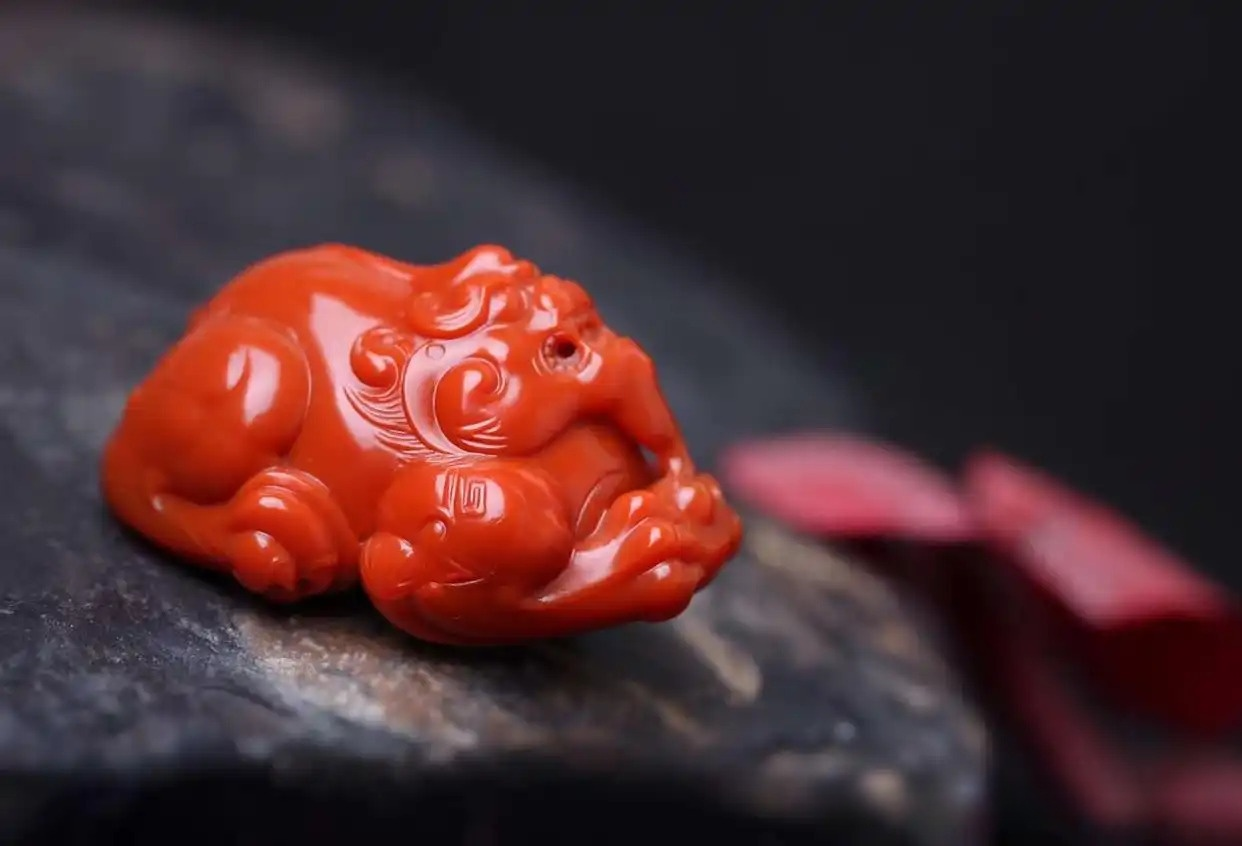
The flourishing of the contemporary art market has endowed Nanhong with new forms of expression. Carvings featuring modern icons like Hello Kitty alongside traditional motifs appeal to younger generations of collectors and wearers. While seemingly a departure from tradition, this innovation actually延续 (yanxu, continues) Nanhong’s core function as an amulet—the对象 (duixiang, object of protection) has simply expanded from traditional faith to encompass modern lifestyles.
當代文玩市場的繁榮賦予了南紅新的表現形式。雕刻有Hello Kitty、機器貓等時尚形象的南紅掛件,吸引著年輕一代藏家和佩戴者。這種創新看似與傳統背離,實則延續了南紅作為護身符的核心功能——只是護佑的對象從傳統信仰擴展至現代生活方式。
The price surge driven by resource scarcity presents a new challenge. High-quality Nanhong now often costs more than gold, and the market is flooded with仿品 (fangpin, fakes) made from Mongolian and African material. Amidst this commercialization, however, the attitude towards Nanhong within Tibetan Buddhist sacred sites remains one of spiritual purity. At ceremonies in Tashilhunpo Monastery, the high lamas’ malas are still adorned with imperfect but deeply worn Nanhong spacers. This transcendence of material value precisely highlights Nanhong’s most authentic meaning in Tibetan Buddhist culture—it is not just a mineral from the earth, but the spiritual blood flowing in the veins of the faith.
資源稀缺性帶來的價格飆升形成了新的挑戰。高品質南紅的價格如今已遠超黃金,市場上充斥著蒙古料、非洲料等仿品。這種商業化浪潮下,藏傳佛教聖地對南紅的態度卻依然保持著信仰的純粹性。在扎什倫布寺的法會上,高僧的佛珠上依然鑲嵌著並不完美但飽經滄桑的南紅隔珠。這種對物質價值的超越,恰恰彰顯了南紅在藏傳佛教文化中最本真的意義——它不僅是地底的礦物,更是流淌在藏傳佛教血脈中的精神血液。
In the contemporary context, Nanhong agate faces three cultural challenges:
- Balancing commercialization with the purity of faith: How to maintain religious sanctity in a high-priced market.
- Reconciling resource protection with cultural传承 (chuancheng, heritage): How to sustain religious demand amidst depleting mines.
- Integrating traditional symbolism with modern aesthetics: How to innovate while preserving core cultural genes.
在當代語境下,南紅瑪瑙面臨著三重文化挑戰:
- 商業化與信仰純粹性的平衡:如何在高價市場中保持宗教神聖性
- 資源保護與文化傳承的矛盾:如何在礦源枯竭情況下維持宗教需求
- 傳統象徵與現代審美的融合:如何在創新中保持核心文化基因
07. Conclusion: A Millennium of Crimson, An Eternal Faith
07. 結語:赤玉千年,信仰永恆
From the ancient monasteries of the Tibetan Plateau to the antique markets of modern metropolises; from the legend of Padmasambhava subduing demons to the meticulous carvings of contemporary artisans—Nanhong agate carries the spiritual genes of Tibetan Buddhism’s sacred sites. Traversing a thousand years, its fire remains as intense as ever. It is the foremost of the Seven Treasures of Buddhism, and a witness to Sino-Tibetan cultural exchange. It is the mineral结晶 (jiejing, crystallization) of geological movements, and the spiritual relic of凝聚 (ningju, condensed) faith.
從藏地高原的古老寺院到現代都市的文玩市場,從蓮花生大師的降魔傳說到當代匠人的精雕細琢,南紅瑪瑙承載著藏傳佛教聖地的精神基因,穿越千年時光依然熾熱如初。它既是藏傳佛教七寶之首,又是漢藏文化交流的見證者;既是地質運動的礦物結晶,又是信仰凝聚的精神舍利。
On the pilgrimage road to Mount Kailash, on the circumambulation path around Lake Manasarovar, and before the eternal butter lamps of the Potala Palace, Nanhong agate, with its warm, moist red, connects heaven and earth, divinity and humanity, the past and the present. The worn, shining Nanhong mala in an elderly Tibetan’s hand records a lifetime of devout prayers. The Nanhong inlaid on the brow of a Buddha statue at Samye Monastery凝聚 (ningju, condenses) a millennium of faith. The Nanhong phoenix-head cup treasured in the Palace Museum bears witness to the deep交融 (jiaorong, fusion) of Han and Tibetan cultures. When the高原的阳光 (gaoyuan de yangguang, plateau sunlight) pierces that crimson凝结 (ningjie, congealed) for hundreds of millions of years, we see not merely a beautiful stone, but a cultural血脉 (xuemai, bloodline) traversing time and space—an eternal spiritual light that will never fade.
在岡仁波齊的朝聖路上,在瑪旁雍錯的轉湖途中,在布達拉宮的長明燈前,南紅瑪瑙以其溫潤的紅色,連接著作天與地、神與人、過去與現在。藏族老人手中磨得發亮的南紅念珠,記錄著半生的虔誠祈禱;桑耶寺佛像眉心的南紅鑲嵌,凝聚著千年的信仰力量;故宮博物院珍藏的南紅鳳首杯,見證著漢藏文化的深度交融。當高原的陽光穿透那抹凝練了億萬年的紅,我們看到的不僅是一塊美麗的石頭,更是一種跨越時空的文化血脈,一種永不褪色的精神之光。
Read More
- Buying Guides (111)
- Collectors' Academy (192)
- Care Academy (8)
- Investment Academy (25)
- Jade Crafting Techniques (29)
- Michelle Au: The Gemstone Luminary (11)
- The Precious Metals & Jewels Compendium (54)