Aquamarine: The Serene Gemstone of the Sea
Mineral Profile:
Chemical Composition: Beryllium Aluminum Silicate
Formula: Be₃Al₂(SiO₃)₆
Optical Character: Uniaxial
Refractive Index: 1.570-1.580
Birefringence: 0.006
Pleochroism: Distinct dichroism
Luster: Vitreous
Transparency: Opaque to Transparent
Mohs Hardness: 7.5-8
Density: 2.68-2.73 g/cm³
Color Chemistry Explained:
- Cr replaces Al: Emerald green → Emerald
- Fe²⁺ replaces Al: Light blue → Aquamarine
- Fe³⁺ replaces Al: Golden yellow → Heliodor
- Mn replaces Al: Pink to red → Morganite
I. Unique Characteristics and Lore
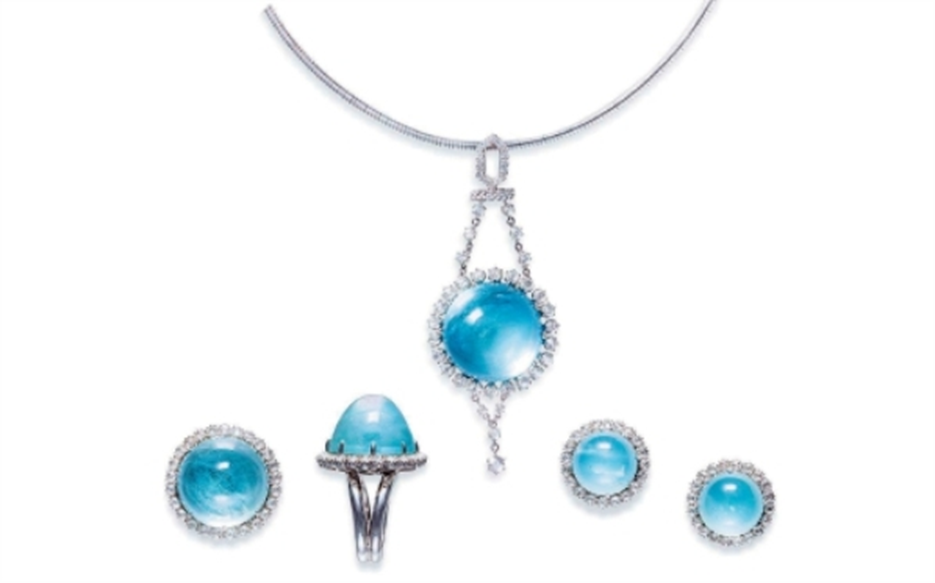
Aquamarine shares the beryl mineral family with emerald, distinguished by iron ions (Fe²⁺) that create its characteristic sea-blue coloration. Western tradition has long cherished aquamarine for its alleged ability to grant foresight and clarity. A fascinating Roman legend tells of an insomniac who accidentally fell asleep with an aquamarine in his mouth, dreaming of demons who provided solutions to his troubles. This established aquamarine’s reputation as a protective talisman against evil forces.
II. Optical Properties and Treatments
Natural aquamarines typically display light blue tones, though heat treatment can enhance color saturation to more desirable sea-blue hues—a widely accepted practice in the gem trade. A curious 1971 Brazilian discovery yielded aquamarines that faded dramatically after sun exposure, leading to the mine’s closure. Modern radiation techniques can temporarily restore color in such stones, though the results remain unstable.
III. Global and Chinese Sources
Aquamarine primarily forms in pegmatites, where acidic magmas provide beryllium and rock fractures create crystal growth spaces. Major producers include Brazil, Russia, United States, and India, with Brazil historically dominating the market. Recent discoveries in Sri Lanka and Nigeria have expanded global supply.
Chinese Aquamarine Deposits:
- Xinjiang Altai Region: Produced a remarkable 16.7kg crystal of exceptional color and transparency
- Yunnan Honghe Prefecture: Yielded specimens up to 5kg, including rare “water-vesicle” aquamarine containing liquid inclusions
IV. Distinguishing Aquamarine from Look-alikes
1. Blue Quartz
Often mistaken for aquamarine due to similar coloration, but differs in optical properties.
2. Blue Topaz
Requires specific gravity and optical testing for accurate identification.
3. Blue Tourmaline
Distinguishable through refractive index and density measurements.
4. Spinel & Sapphire
Knowledge of each gem’s characteristic properties enables reliable differentiation.
5. Fluorite
Sometimes fraudulently cut into beryl-like shapes; best examined in daylight to avoid deception.
Aquamarine’s enduring appeal lies in its perfect blend of geological fascination, historical mystique, and timeless beauty—a gemstone that captures the ocean’s tranquility in crystalline form while offering collectors both aesthetic pleasure and scientific interest.
海藍寶石:海洋的寧靜寶石
礦物檔案:
化學成分:鈹鋁硅酸鹽
化學式:Be₃Al₂(SiO₃)₆
光性特徵:一軸晶
折射率:1.570-1.580
雙折射率:0.006
多色性:明顯二色性
光澤:玻璃光澤
透明度:不透明至透明
莫氏硬度:7.5-8
密度:2.68-2.73 g/cm³
顏色化學解釋:
- Cr替代Al:翠綠色 → 祖母綠
- Fe²⁺替代Al:淺藍色 → 海藍寶石
- Fe³⁺替代Al:金黃色 → 金綠柱石
- Mn替代Al:粉紅色至紅色 → 摩根石
一、獨特特性與傳說
海藍寶石與祖母綠共享綠柱石礦物家族,由鐵離子(Fe²⁺)區分,創造其特徵性的海洋藍色。西方傳統長期珍視海藍寶石,因為其被聲稱能授予遠見和清晰度。一個迷人的羅馬傳說講述一個失眠者意外含著海藍寶石入睡,夢見惡魔提供他麻煩的解決方案。這建立了海藍寶石作為對抗邪惡力量護身符的聲譽。
二、光学特性與處理
天然海藍寶石通常顯示淺藍色調,雖然熱處理可以增強顏色飽和度至更理想的海洋藍色調——寶石貿易中廣泛接受的實踐。一個奇怪的1971年巴西發現產出海藍寶石在陽光暴露後顯著褪色,導致礦山關閉。現代輻射技術可以暫時恢復此類寶石的顏色,儘管結果仍然不穩定。
三、全球和中國來源
海藍寶石主要形成於偉晶岩中,酸性岩漿提供鈹,岩石裂縫創造晶體生長空間。主要生產國包括巴西、俄羅斯、美國和印度,巴西歷史上主導市場。最近在斯里蘭卡和尼日利亞的發現擴大了全球供應。
中國海藍寶石礦床:
- 新疆阿爾泰地區:生產了非凡的16.7公斤晶體,具有特殊顏色和透明度
- 雲南紅河州:產出標本達5公斤,包括含有液態內含物的稀有「水膽」海藍寶石
四、區分海藍寶石與相似品
1. 藍色水晶
由於相似顏色經常被誤認為海藍寶石,但在光学特性上不同。
2. 藍色托帕石
需要比重和光学測試以進行準確識別。
3. 藍色碧璽
可透過折射率和密度測量區分。
4. 尖晶石和藍寶石
了解每種寶石的特徵特性能夠可靠區分。
5. 螢石
有時欺詐性地切割成綠柱石狀形狀;最好在日光下檢查以避免欺騙。
海藍寶石的持久吸引力在於其完美結合地質迷戀、歷史神秘和永恆美麗——一種以晶體形式捕捉海洋寧靜的寶石,同時為收藏家提供美學愉悅和科學興趣。