Carved Ceramics: The Unrivaled Legacy of Sgraffito in Chinese Pottery
The vast landscape of Chinese ceramic art is home to countless technical and aesthetic innovations. Among these, carved wares—known in Chinese as tihua (剔花)—stand as a particularly radiant and distinctive bloom. Born from the bold, unconstrained spirit of the Northern folk kilns, this technique transforms humble clay into sculptural masterpieces through the deliberate removal of surface material. It is an art of减法 (jianfa, subtraction), where emptiness defines form and contrast creates poetry.
中國陶瓷藝術博大精深,剔花瓷器以其獨特的裝飾技法和古樸奔放的風格,成為其中一朵耀眼的奇葩。這種源自北方磁州窯的傳統工藝,不僅展現了古代工匠的智慧與創造力,更承載了多元文化的交融與民間藝術的蓬勃生命力。這是一門減法的藝術——以剔除塑造形象,以留白營造詩意。
Part I: Origins and Development — An Artistic Awakening on the Northern Plains
The technique of tihua emerged during the late Five Dynasties to early Northern Song period at the Cizhou kilns in Hebei province. It subsequently spread across a vast network of Northern kilns in Shanxi, Henan, Shandong, and beyond. Its formal language drew inspiration from the chased reliefs of金銀器 (gold and silver wares) and the carved lacquer technique known as tihong (剔红). Equally influential were the bold, linear aesthetics of folk arts: woodblock printing, stone carving, and architectural ornamentation.
一、起源與發展:北方大地的藝術覺醒
剔花瓷器誕生於五代晚期至北宋早期的磁州窯,流行於山西、河南、河北、山東等北方窯系。其工藝靈感源於金銀器的浮雕紋飾與漆器的「剔紅」技法,同時吸收了木刻、石刻等民間建築裝飾的精髓。北方瓷胎厚重粗獷的特性,為剔刻工藝提供了天然優勢。工匠們通過剔除紋飾外的胎土或化妝土,形成深淺對比的浮雕效果,賦予瓷器強烈的視覺張力。
The coarse, sturdy stoneware bodies of Northern China—a sharp contrast to the fine, thin porcelains of the South—proved ideally suited to deep carving. By excising the ground around a motif, potters created crisp, shadow-casting relief. A quintessential early example is the Northern Song Cizhou white-glazed carved pillow, its surface layered with undulating scrolling vines and geometric borders, already demonstrating the full vocabulary of the mature tihua aesthetic.
北宋磁州窯的白釉剔花枕,以卷草紋與幾何紋的層疊組合,展現了早期剔花的典型風格。其刀鋒所過之處,紋飾躍然而出,深淺起伏,光影交錯。
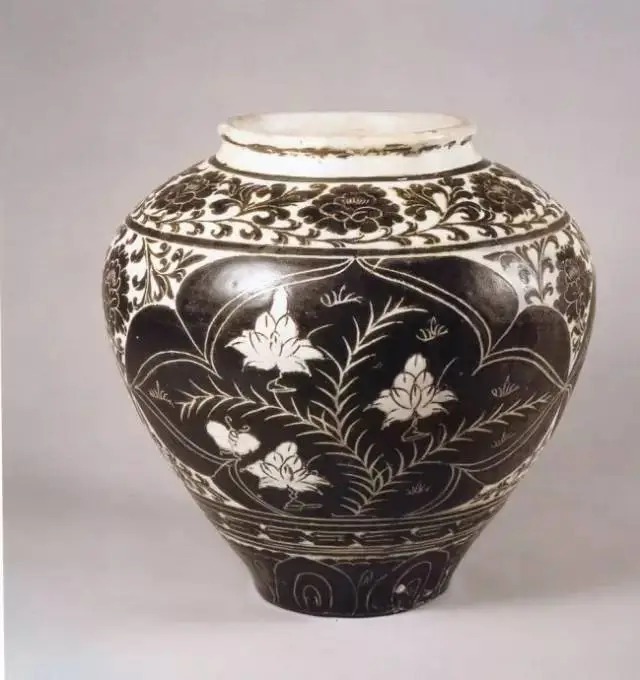
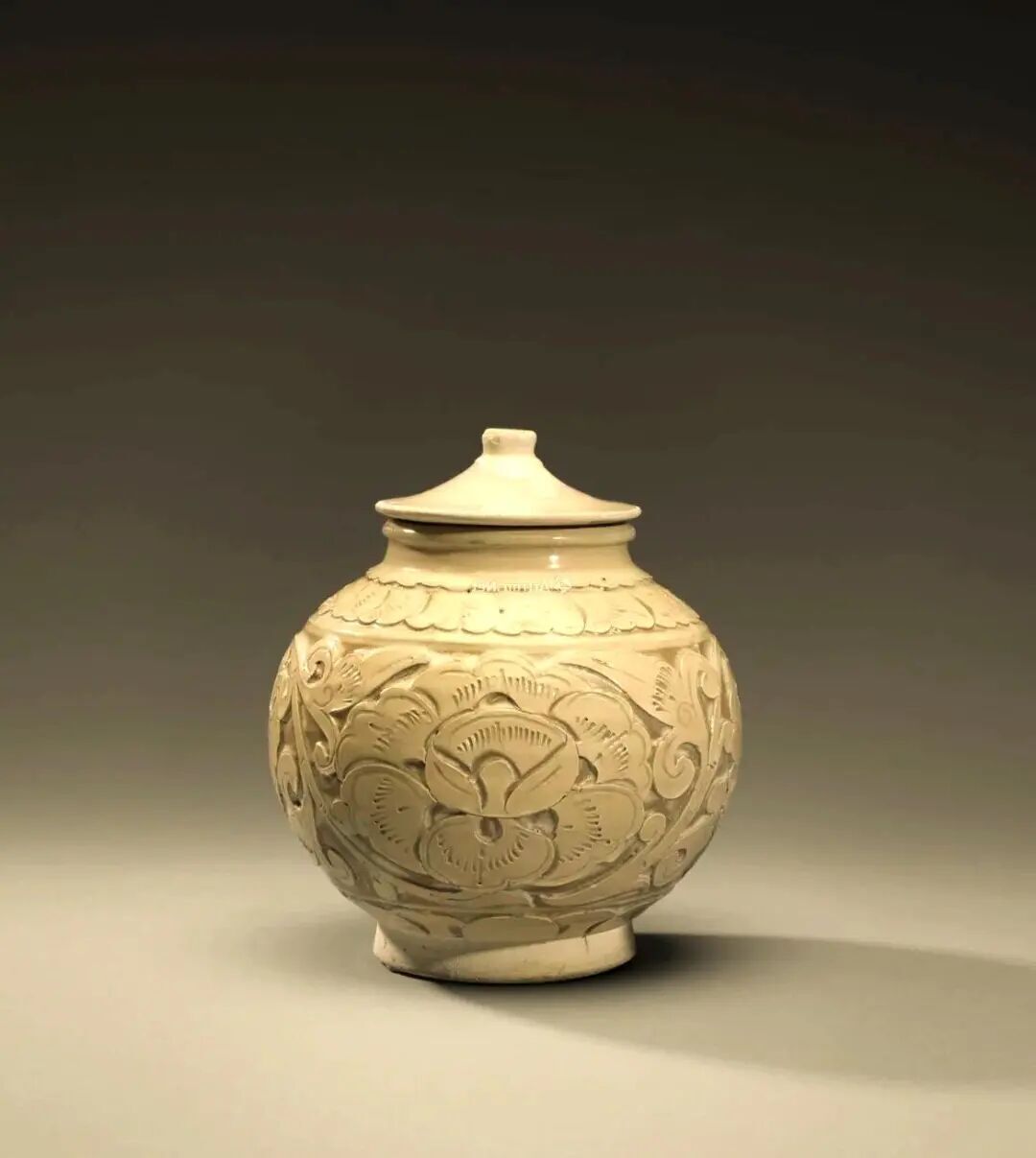
Image: Dangyangyu Kiln, White-Glazed Carved Vase.
圖片:當陽峪窯白釉剔花瓶
Part II: Technical Mastery — The Virtuosity of the Blade
The essence of tihua lies in “removing the ground to reveal the flower” (减地露花). It can be broadly classified into three principal techniques, each demanding distinct skill and yielding radically different visual effects.
二、工藝特色:刀尖上的匠心獨運
剔花工藝的核心在於「減地露花」,主要分為三大類,每一類都要求截然不同的技藝,並呈現出迥異的視覺效果。
1. Sgraffito through Slip (剔化妆土)
A layer of white or black slip (huazhuang tu) is applied to the raw body. The potter then carves through this slip to create contrasting imagery: white motifs on a black ground, or black on white. The most demanding variant is white-ground black-sgraffito (白地黑剔花). This complex process requires applying white slip, then a layer of black slip. The artisan must incise through the precise thickness of the black layer without disturbing the white beneath—a feat of extraordinary control. After carving, the vessel is coated with transparent glaze and fired. The masterpieces of Henan’s Dangyangyu kiln, such as the interlocking peony jar, represent the apex of this technique.
1. 剔化妝土
在坯體上施白色或黑色化妝土,剔去多餘部分,形成白地黑花或黑地白花的對比。其中「白地黑剔花」工藝最為複雜:需先施白化妝土,再覆黑化妝土,而後精準剔除黑土而不傷底層白土。最終罩透明釉燒成。河南當陽峪窯的纏枝牡丹紋罐,便是此技法的巔峰之作。
2. Body Carving (剔胎)
Here, the blade cuts directly into the clay body itself, creating deep, three-dimensional relief. This technique was pioneered at the Yaozhou kilns during the Five Dynasties, notably on ewers. However, deep carving inevitably weakened the vessel walls, leading to high rates of firing failure. Consequently, this method gradually declined.
2. 剔胎
直接在胎體上深刀剔刻,形成立體浮雕。此技法多見於五代耀州窯的執壺。然而,深剔削弱胎體強度,燒製極易變形開裂,故逐漸式微。
3. Glaze Carving (剔釉)
In this method, a dark glaze is applied, and the design is carved through the glaze layer to expose the raw body beneath. Shanxi black-glazed carved jars are exemplary: their glaze, deep as lacquer, contrasts starkly with the exposed clay, creating an aesthetic of rugged, unrestrained power.
3. 剔釉
施深色釉後剔刻露胎。山西窯口的黑釉剔花罐堪稱代表:釉色如漆,露胎處呈赭褐色,紋飾粗獷豪邁,氣勢懾人。
In addition, the production of ceramic pillows involved a pragmatic innovation: artisans pierced small vents in the greenware to prevent steam explosions during firing—a subtle yet crucial union of artistry and engineering.
此外,瓷枕製作中需在坯體上戳孔以防燒裂,這一細節體現了工藝與實用性的巧妙結合。
Part III: Artistic Character — A Symphony of Archaic Strength and Lyrical Grace
The allure of tihua ceramics lies in their bold contrasts and vivid, unmediated expressiveness. Cizhou’s landscapes, flowers, and birds pulse with the vitality of daily folk life. A Jin dynasty black-glazed carved jar in the Palace Museum collection, its black scrolling florals set against a yellowish-white ground, exhibits lines as forceful and fluid as ink wash painting.
三、藝術風格:古樸與靈動的交響
剔花瓷器的藝術魅力在於其鮮明的對比與生動的表現力。磁州窯的山水花鳥紋飾充滿民間生活氣息,如故宮博物院藏金代黑釉剔花罐,以黃白地子襯托黑色纏枝紋,線條遒勁如墨繪。
Dangyangyu kilns innovated geometric ancillary patterns. On white-glazed carved vases, grids and foliate forms interlock in rhythmic, almost architectural complexity—dense yet never chaotic. Liao dynasty carved wares, by contrast, pursue a gentler, more refined lyricism. A white-glazed yuhuchun vase, its surface adorned with five registers of phoenixes and scrolling tendrils, exemplifies this delicate Northern sensibility.
當陽峪窯則獨創幾何輔助紋飾,如白釉剔花瓶上的網格紋與花葉紋交錯,形成繁複而不失秩序的韻律。遼代剔花瓷器則追求平和柔美,如白釉玉壺春瓶以五層紋飾展現鳳紋、卷草紋的細膩組合。
Part IV: Representative Kilns and Canonical Works
1. Cizhou Kiln (磁州窑)
Renowned for white-glazed carved wares, with motifs drawn directly from nature. The Northern Song interlocking peony meiping in Taipei’s Chang Foundation is a paragon of the craft. Each petal of the deeply incised peonies is rendered with startling clarity—a testament to the carver’s absolute command of blade and clay.
四、代表窯口與經典作品
1. 磁州窯
以白釉剔花為主,紋飾多取材自然。臺北鴻禧美術館藏北宋纏枝牡丹紋梅瓶,牡丹花瓣纖毫畢現,刀鋒所至,形神兼備,堪稱剔划工藝的巔峰。
2. Dangyangyu Kiln (当阳峪窑)
Here, white-glazed carving achieved an unparalleled sophistication. The Palace Museum’s Song dynasty interlocking peony jar is a masterwork of composition: bands of回纹 (key-fret) separate primary and secondary registers, the whole arranged with the disciplined elegance of a handscroll.
2. 當陽峪窯
白釉剔花獨樹一幟。故宮博物院藏宋代纏枝牡丹罐,以回紋分隔主次紋飾,佈局嚴謹如畫卷,刀法流暢如行雲。
3. Shanxi Kiln Complex (山西窑系)
Black-glazed carving reached its zenith here. A small-mouthed black-glazed vase excavated from a Jin tomb in Tianzhen County, Shanxi, displays层叠的菊瓣与卷叶纹 (overlapping chrysanthemum petals and scrollwork) against a lustrous, mirror-like black ground. It is the Northern aesthetic distilled: heavy, dark, and profoundly beautiful.
3. 山西窯系
黑釉剔花尤為突出。山西天鎮金墓出土的黑釉小口瓶,釉色烏亮如鏡,菊瓣紋與卷葉紋層疊交錯,盡顯北方渾厚之美。
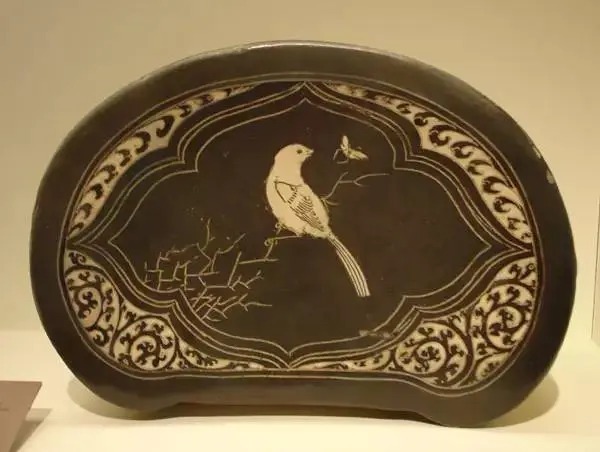
圖片:金代黑底白剔花枕
Part V: Cultural Legacy — An Art Form Across Time and Borders
Tihua ceramics are more than functional vessels; they are vivid testaments to cultural confluence. During the Liao and Jin dynasties, Khitan and Jurchen peoples imbued the technique with草原审美 (steppe aesthetics). A Liao phoenix yuhuchun vase features a phoenix with简洁刚健 (simple, powerful) tail plumage—a hybrid form marrying Han Chinese iconography with nomadic vigor.
五、文化影響:跨越時空的藝術傳承
剔花瓷器不僅是實用器物,更是文化融合的見證。遼金時期,契丹、女真等民族將草原審美融入剔花工藝。遼代鳳紋玉壺春瓶,鳳尾簡潔剛健,兼具遊牧與漢文化的特徵。
The Xixia (Tangut) Lingwu kilns produced brown-glazed carved meiping distinguished by大块面剔地 (large, boldly excavated grounds), a style radiating the untamed spirit of the Northwest. Though gradually supplanted by painted wares in the Ming and Qing dynasties, the plastic, relief-based aesthetic of tihua continued to influence later ceramic decoration. To this day, kilns in Shanxi and Henan perpetuate this ancient lineage, their artisans keeping the thousand-year dialogue between hand and clay alive.
西夏靈武窯的褐釉剔花經瓶,以大塊面剔地展現西北的粗獷豪放。明清以降,剔花技法雖漸被彩繪取代,但其浮雕式裝飾理念仍影響後世。至今山西、河南等地窯口仍在延續這一傳統工藝,千年的窯火,未曾熄滅。
Image: Dangyangyu Kiln, White-Glazed Carved Vase.
圖片:當陽峪窯白釉剔花瓶
Conclusion: The Eternal Blade
Tihua porcelain embodies the very essence of手工精神 (the spirit of handcraft). Every incision records a decision; every excised fragment testifies to the potter’s irreversible commitment. It is an art of courage and consequence. From its genesis at Cizhou to its flourishing across Liao, Jin, and Xixia, carved ceramics have endured through millennia of窑火 (kiln fire). With its primal, unadorned power and its endlessly inventive lexicon of form, tihua remains one of the most vital and distinctive voices in the grand symphony of Chinese ceramics.
結語:不朽的刀痕
剔花瓷器是中國陶瓷史中不可忽視的瑰寶。它以刀刻斧鑿的力度與紋飾流動的韻律,訴說著北方工匠因地制宜的智慧,映照著多元文明碰撞交融的歷史。從磁州窯的初創,到遼金西夏的百花齊放,剔花瓷器以其古樸奔放之美,在千年的窯火中淬煉出永恆的生命力。每一道刀痕,都是不可逆轉的決定——這是一門關於勇氣與信念的藝術。
From 剔花瓷器:中国陶瓷里的一朵奇葩