Mastering Xieyi: A Step-by-Step Guide to Wang Mengbai’s Freehand Flower-and-Bird Painting
Wang Mengbai (1888–1934), originally named Wang Yun, with the courtesy name Mengbai and studio names ‘Master Pozhai’ and ‘Three Daoist,’ was a pivotal figure in modern Chinese painting. A native of Fengcheng, Jiangxi, he was born in Quzhou, Zhejiang. Renowned for his depictions of natural subjects—especially flowers, birds, insects, and notably lifelike monkeys—he forged a distinctive path in the xieyi (freehand or expressive) tradition. Largely self-taught in his early years, he later received invaluable guidance from masters like Wu Changshuo, which accelerated his artistic growth. His journey into art began while working as an apprentice in a Shanghai bank, where he developed a passion for flower-and-bird painting. Later, after moving to Beijing for a clerical position in the Ministry of Justice, he was recommended by the esteemed painter Chen Shizeng to become the head and professor of the Chinese Painting Department at the Beijing Fine Art School (now the Central Academy of Fine Arts).
王夢白(1888–1934),原名王雲,字夢白,號破齋主人、三道人,江西豐城人,出生於浙江衢州。他是中國現代繪畫史上的關鍵人物,以描繪自然主題——尤其是花、鳥、草蟲,以及極其傳神的猴子——而聞名,在寫意傳統中開闢了一條獨特的道路。早年主要自學,後得吳昌碩等大師的悉心指導,畫藝迅速精進。他的藝術之路始於在上海錢莊當學徒期間,當時他對花鳥畫產生了濃厚興趣。後來北上北京,在司法部任錄事,經著名畫家陳師曾推薦,出任北京美術專門學校(現中央美術學院)中國畫系主任、教授。
Wang’s painting style broke through convention. Characterized by what contemporaries described as “three fasts”—fast eye, fast hand, fast mind—he pursued artistic effects that were vivid, robust, and grand. His masterpieces, such as Pod with Grasshopper, Crabapple and Cricket, and Red Trees and Two Gibbons, are now housed in the National Art Museum of China. During the Republican era, he was ranked alongside masters like Qi Baishi and Chen Shizeng, exerting a profound influence on later generations and cementing his status as a major representative of Chinese flower-and-bird painting. However, his life was also marked by hardship and turbulence, and he ultimately died in poverty and illness in Tianjin at the young age of 47.
王的繪畫風格突破了傳統。其特點被同代人概括為「三快」——眼快、手快、心快——他追求生動、厚重、大氣的藝術效果。其代表作《豆莢螞蚱圖》、《海棠蟋蟀圖》、《紅樹雙猿圖》等現藏於中國美術館。在民國時期,他與齊白石、陳師曾等大師齊名,對後世畫家影響深遠,奠定了其作為中國花鳥畫重要代表的地位。然而,他的一生也充滿坎坷與波折,最終在天津窮困潦倒中病逝,年僅47歲。
Part I: Analyzing Wang Mengbai’s Xiaoxieyi (Small Freehand) Technique
The following case study and notes are shared from the archives of Dapeng Chinese Painting Institute, under the guidance of instructor Wen Qiang.
以下案例解析與筆記來自大鵬國畫院的分享,由文強老師指導。
Materials Preparation:
- Brushes: One each of large, medium, and small jianhao (mixed hair) brushes; one each of medium and small yanghao (goat hair) brushes.
- Ink: One bottle of liquid ink.
- Pigments: One set of traditional Chinese mineral/vegetable pigments.
- Dishes: Several small dishes for mixing, one larger dish or plate.
- Paper: Several sheets of draft paper (around 10), and raw xuan paper sized approximately 40 x 100 cm (a 2:5 ratio is suitable).
工具準備:
- 毛筆:大、中、小號兼毫筆各一支;中、小號羊毫筆各一支。
- 墨:墨汁一瓶。
- 顏料:傳統中國礦物質/植物顏料一套。
- 調色碟:小碟若干,大碟(或小盤)一個。
- 紙:草稿紙若干(約10張),生宣紙一張,尺寸約40 x 100 釐米(2:5的比例皆可)。
Step-by-Step Process & Key Points:
步驟圖示與繪畫要點:
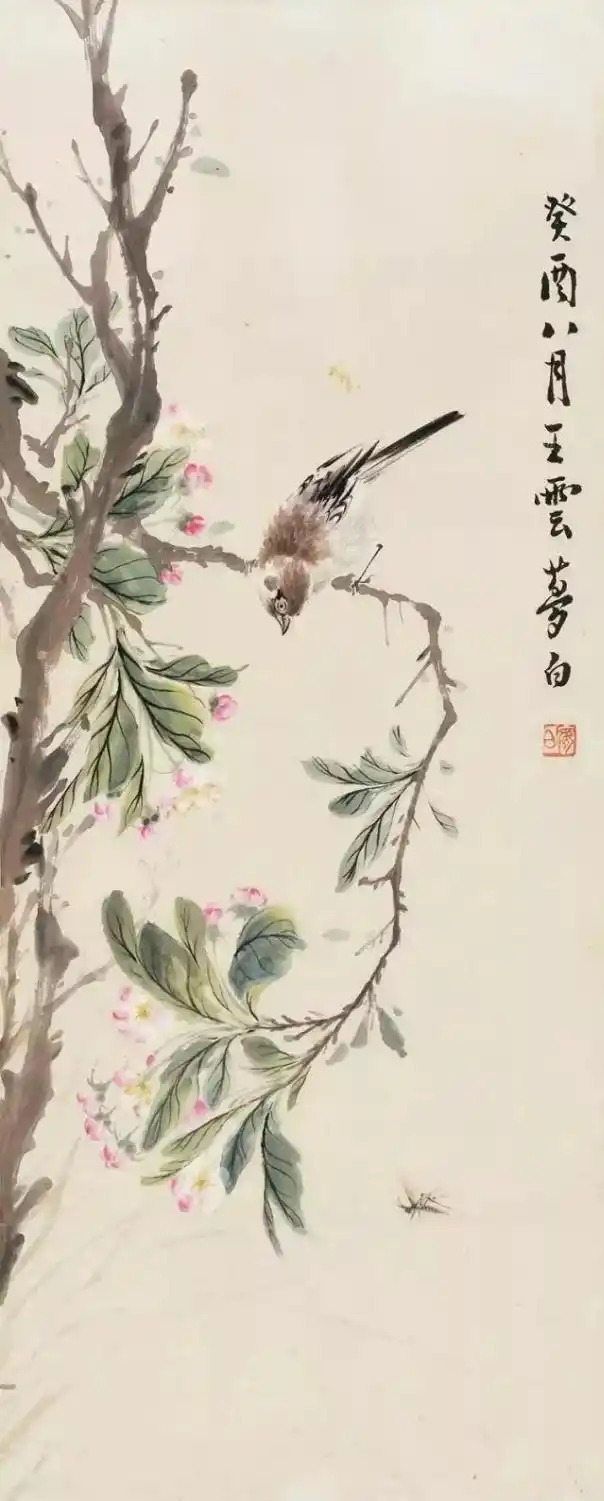
1. Rendering the Sparrows (重點難點之一)
Using a small or medium jianhao brush, employ techniques of dian (dotting), du (pouncing), and si (fine line drawing) to outline and texture the sparrows, suggesting their feathers. Mix burnt sienna (zheshi) with light ink for the base color. Utilize both dry and wet brushwork to capture the lively posture and subtle variations in the sparrows’ stance.
1. 麻雀的繪製(重點難點之一)
使用中或小號兼毫筆,運用點、厾、絲等技法勾勒並表現麻雀的形態與羽毛質感。以赭石調和淡墨作為基色。運用乾濕並用的筆法,捕捉麻雀生動的姿態與細微的動勢變化。
2. Drawing the Crabapple Branches (重點難點之二)
Mix burnt sienna with ink. Using a medium brush held in centered-tip position (zhongfeng), paint the crabapple branches. The strokes should be rhythmic, with deliberate pauses and turns, conveying strength and maintaining a continuous, flowing energy (qixi). This establishes the foundational composition and spatial dynamics of the scene.
2. 海棠枝幹的繪製(重點難點之二)
以赭石調墨。使用中號筆,以中鋒行筆,畫出海棠枝幹。用筆需有頓挫起伏,富有節奏感,筆力遒勁且氣息連貫。此步構成了畫面的骨架與基本開合關係。
3. Painting the Crabapple Leaves (重點難點之三)
Mix a grassy green (caolü). Depict the leaves, paying close attention to their varied forms—wide and narrow, long and short, facing forward or sideways, upright or drooping. While painting, be mindful of the rhythmic flow of energy, seeking rich variation within a unified whole. Use a finer brush with precise, forceful lines to ink the leaf veins, following the natural posture of each leaf.
3. 海棠葉片的繪製(重點難點之三)
調和草綠色。描繪葉片,需仔細刻畫其多變的形態——寬窄、長短、正側、偃仰。運筆時注意氣息的流轉,在統一中求豐富變化。以細筆勾勒葉脈,線條需細勁有力,順應每片葉子的姿態。
4. Adding the Crabapple Blossoms (重點難點之四)
Mix titanium white (tai bai) with a touch of crimson (shu hong). Use rounded, supple brushstrokes to paint the petals, noting subtle shifts in color saturation. For flower buds, aim for a plump, full effect. Strategically arrange the blossoms, creating focal points and areas of dispersal to establish visual hierarchy within the composition.
4. 海棠花的點綴(重點難點之四)
以鈦白調和少許曙紅。用圓潤柔和的筆觸點寫花瓣,注意顏色的濃淡變化。繪製花苞時,要表現出飽滿的形態。花朵的佈局需有主次、聚散,形成畫面節奏。
5. Depicting the Bees
Using a small brush with dry, light ink, sketch the dynamic posture of the bees. Then, with darker, concentrated ink, add the legs and antennae. Finally, tint the wings lightly with burnt sienna.
5. 蜜蜂的描繪
以小筆蘸淡乾墨,勾勒出蜜蜂的飛動姿態。再以濃墨畫出腳與觸鬚。最後,用赭石輕染翅膀。
6. Inscription (落款)
The finishing touch is the inscription, which integrates poetry, date, and signature into the composition: “Deep courtyard, no one, the spring day long; / Bees come and go, swallows fly busy. / The crabapple, exceedingly delicate, turns shy and modest, / Relying on the east wind to urge her morning adornment. Autumn month of the Renyin year, Wen Qiang.”
6. 題款(落款)
最後進行題款,將詩文、紀年、名號融入畫面:「深院無人春日長,游蜂來往燕飛忙。海棠嬌甚成羞澀,憑仗東風催曉妝。壬寅秋月,文強。」
Part II: Procedure for Copying Wang Mengbai’s Daxieyi (Large Freehand) Technique
Case study and notes also shared from Dapeng Chinese Painting Institute, instructor Wen Qiang.
案例與筆記同樣來自大鵬國畫院,文強老師指導。
Step-by-Step Process & Key Points:
步驟圖示與繪畫要點:
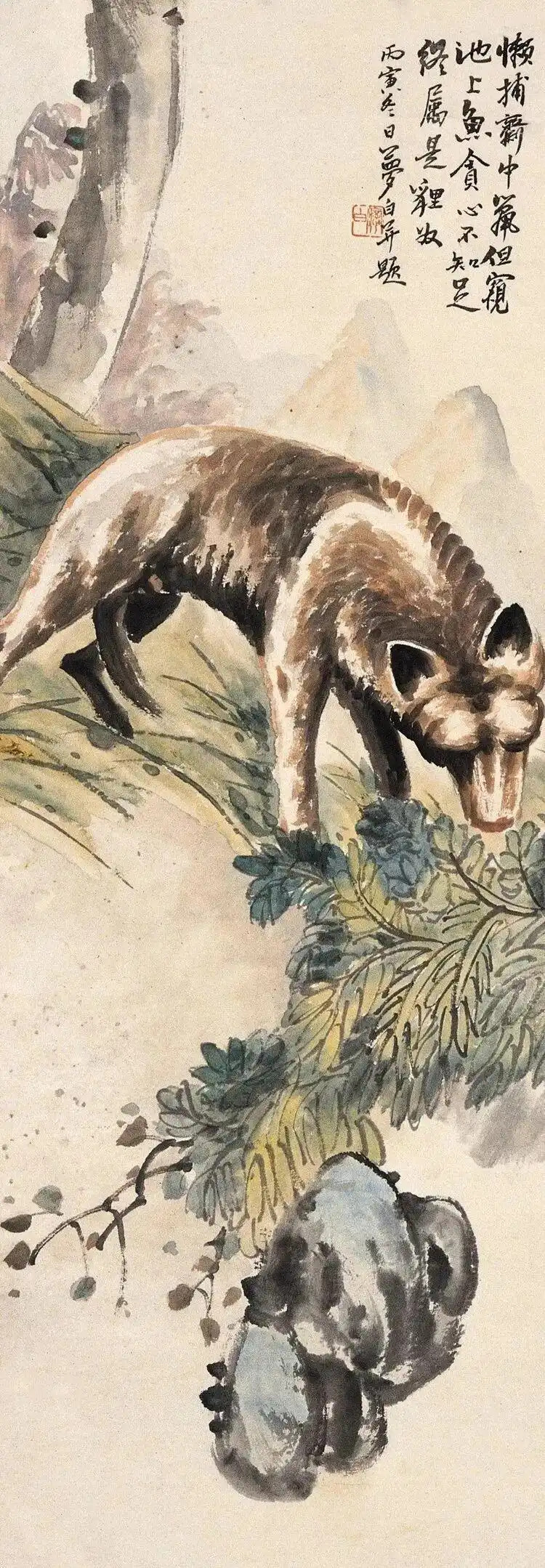
1. Capturing the Bird’s Spirit (重點難點之一)
Begin by boldly painting the small bird using dotting, pouncing, and feather-texturing techniques. Employ both dry and wet brushwork freely. The brushstrokes should be confident, decisive, and substantial in ink load, all while accurately capturing the bird’s animated posture.
1. 鳥的氣韻表現(重點難點之一)
首先大膽落筆,以點厾絲毛之法繪製小鳥。乾濕筆法並用,揮灑自如。用筆需果斷肯定,墨色飽滿厚重,同時準確把握鳥的生動姿態。
2. Expressing the Plantain Leaves (重點難點之二)
Use centered-tip strokes to outline the main ribs of the plantain leaves. Then, with a large brush, paint the broad leaf surfaces. Vary the ink tone from wet/washy to dry, applying the brush with steady, “painfully quick” yet controlled force, ensuring the energy flows unbroken. Outline the leaf veins with concentrated, dark ink.
2. 芭蕉葉的表達(重點難點之二)
以中鋒勾勒芭蕉主葉筋。繼而用大筆觸揮寫寬大的蕉葉。墨色需有乾濕濃淡變化,用筆沉著痛快,氣息一以貫之。以濃墨勾勒葉脈。
3. Composing Spatial Relationships (重點難點之三)
Pay special attention to the interweaving and grouping of all the plantain leaves within the picture space. The arrangement must clearly distinguish between front and back layers, creating a convincing sense of depth and three-dimensionality.
3. 空間關係的組織(重點難點之三)
特別注意所有芭蕉葉片在畫面空間中的穿插與組合關係。佈局必須前後層次清晰,營造出深遠的空間感與立體感。
4. Adding Rocks and Grass
With bold strokes, paint the rock forms. Then, wash them with a mix of burnt sienna and ink. Using lighter grassy green, add the small grasses. The brushwork for the grass should feel substantial and rooted, avoiding any sense of frivolity or superficiality.
4. 山石與小草的增加
以豪放的筆觸寫出山石形態,再以赭墨色渲染。以淡草綠色添畫小草。畫草的筆意需厚重沉穩,避免輕飄。
5. Inscription (落款)
“In sketching from life, reaching Zhao Chang’s level means not only capturing the form but directly conveying the spirit of the flowers. Moreover, he personally added literary birds and beasts. Critics said this was not his forte, yet the marvelous essence was already present. Autumn month of the Renyin year in Quancheng, written by Wen Qiang.”
5. 題款(落款)
「寫生至趙昌不特取其形似,直與花傳神者也。又親以文禽獸屬,議者謂非其所長,然妙處已在。壬寅秋月於泉城,文強寫之。」
Appreciating Wang Mengbai’s Artistry
Wang Mengbai excelled in painting flowers, birds, gibbons, and fowl. His most successful works stemmed from keen observation and sketching from life, and he possessed the ability to transcend the constraints of conventional brush methods. As his student Wang Xuetao recalled, Wang Mengbai did not rigidly adhere to any single brush technique while painting. Instead, he “transformed and applied them with ease,” using whatever brush method suited the subject matter and his artistic intent. Wang Xuetao summarized Wang Mengbai’s process with the “three fasts”: eye fast, hand fast, mind fast.
王夢白擅長繪畫花鳥猿禽。其得意之作皆源於敏銳的觀察與寫生,且能超脫傳統筆法的束縛。正如其學生王雪濤回憶,王夢白作畫時並不拘泥於某一固定筆法,而是「轉運自如」,根據表現內容與作者之意,「該用什麼筆法就用什麼筆法」。王雪濤將王夢白的創作特點概括為「三快」:眼快、手快、心快。
In representative works like Pod with Grasshopper and Crabapple and Cricket (housed in the National Art Museum of China), the instantaneous movements of the insects are rendered with such vivid vitality that one can feel the “swiftness of wind and rain when his hand moves, the energy already engulfing where the brush hasn’t yet reached.” In truth, within Wang Mengbai’s creative practice, the “fast eye” and “fast hand” were merely surface manifestations; the “fast mind” was the true key. He was adept at observation and possessed an astonishing ability for painting from memory (molin). When sketching at the zoo, he would often squint one eye, observe intently until satisfied, then turn around and paint from memory, capturing the essence perfectly. It was precisely this innate quality that allowed him to wield the brush without a trace of affectation, enabling his hand to follow his heart’s intent and imbue every stroke with spontaneity and charm.
在其代表作如《豆莢螞蚱圖》、《海棠蟋蟀圖》(藏於中國美術館)中,草蟲的瞬間動態被描繪得活靈活現,令人感受到「當其下手風雨快,筆所未到氣已吞」的精熟暢快。事實上,在王夢白的創作中,「眼快」與「手快」只是表象,「心快」方是真正的訣竅。他善於觀察,並擁有驚人的默寫能力。在動物園寫生時,他常眯起一眼,靜觀良久,然後轉身背臨,盡得神韻。正是這種素質,使他在放筆落墨時毫無雕琢之氣,能夠筆隨心運,涉筆成趣。
From 王梦白写意花鸟:临摹步骤与绘画要点解析