The Cobalt Code of Millennia: Decoding the Chromatic DNA of Blue-and-White Porcelain Across Dynasties
穿越千年的青色密碼:解碼各朝青花瓷的色譜基因
The blue of blue-and-white porcelain has never been a monotonous, uniform sea. Rather, it is a palette that carries the密码 (mima, coded secrets) of time and space. From the bold, ink-splash intensity of the Yuan dynasty to the elegant, understated azure of the Qing, each subtle shift in the coloration of cobalt ore tells a hidden story of imperial aesthetics, technological breakthroughs, and cross-cultural trade. Let us use the hues of the glaze as our guide, connecting the most moving color symphony in the history of Chinese ceramics.
青花瓷的藍色從來不是千篇一律的汪洋,而是承載著時空密碼的調色盤。從元代的濃墨重彩到清代的淡雅幽藍,每一抹鈷料發色的微妙變化,都在訴說著帝王審美、技術革新與貿易往來的隱秘故事。讓我們以釉色為經緯,串聯起中國陶瓷史上最動人的色彩交響。
01. Yuan Blue-and-White: The Verdant Imprint of a Globalized Era
一、元青花:全球化浪潮下的濃翠印記
As the Mongol cavalry carved out a vast empire spanning Eurasia, the kiln workers of Jingdezhen were holding in their hands a transformative material from Persia: “Sumeriani” cobalt (苏麻离青). This imported ore, rich in manganese, was quietly酝酿 (yunniang, brewing) a blue revolution that would alter the course of Chinese ceramic history. Under the intense heat of the kiln, it transformed into a vivid, almost翡翠般的 (feicui ban de, jade-like) blue. Like a stallion galloping across the steppe, it left deep, saturated projections on the white porcelain body. On the walls of a Yuan dynasty jar decorated with scrolling peonies, the dark crystalline spots that emerge from the depths of the blue resemble exotic stars twinkling in the night sky, bearing witness to the bustling prosperity of the Maritime Silk Road. This aesthetic—a blue so breathtakingly intense—is not only a material manifestation of the nomadic people’s bold and unbridled spirit but also a brilliant spark ignited by the collision of Eastern and Western civilizations.
當蒙古鐵騎踏出橫跨歐亞的版圖時,景德鎮窯工手中來自波斯的「蘇麻離青」料,正醞釀著改變中國瓷器史的藍色革命。這種含錳量高的進口鈷料,在高溫下幻化成濃豔的翡翠般的藍,如同草原上奔騰的駿馬,在白釉上留下深邃的投影。元代纏枝牡丹紋罐上,藍紋深處泛出的黑色結晶斑,恰似夜空中閃爍的異域星辰,見證著海上絲綢之路的繁華。這種「藍得驚心動魄」的審美,既是遊牧民族豪邁氣韻的物化表達,也是東西方文明碰撞出的絢麗火花。
02. Ming Yongle to Xuande: The Sapphire Blue Brought Back by Zheng He’s Treasure Ships
二、明永樂至宣德:鄭和寶船帶回的寶石藍
The mystery of the cobalt used in the Yongle and Xuande periods (1403-1435) conceals a grand epic of maritime exploration. As Admiral Zheng He’s treasure fleet voyaged to the “Western Oceans” seven times, a new material from West Asia—”Muslim blue” (回青料 Huiqing liao)—crossed the oceans and, in the kilns of Jingdezhen, blossomed into an unprecedented gemstone-like luster. On the Xuande “Dragon in Waves” bowl, the cobalt blue displays a clarity and质感 (zhigan, texture) reminiscent of a precious gem, as if the azure waves of the Indian Ocean had been condensed onto the porcelain body. This precious material, which required kiln temperatures exceeding 1300°C to achieve perfect coloration, elevated Xuande blue-and-white to the status of the “sapphire” of Ming porcelain. The purity of its color was so exquisite that later craftsmen, even when using identical formulas, found it nearly impossible to replicate, marking it as the pinnacle of blue-and-white firing技艺 (jiyi, artistry).
永宣時期青花的鈷料之謎,藏著一段壯闊的航海史詩。隨著鄭和船隊七下西洋,來自西亞的「回青料」穿越重洋,在景德鎮窯爐中綻放出前所未有的寶石光澤。宣德海水龍紋缽的波濤間,鈷藍呈現出寶石般的明澈質感,宛如將印度洋的碧波凝練於瓷胎之上。這種需要1300℃以上高溫才能完美發色的珍貴原料,使得宣德青花成為明代瓷器中的「藍寶石」。其發色之純正,讓後世工匠即便使用相同配方也難以企及,堪稱青花燒造的巔峰技藝。
03. Mid-Ming Dynasty: Indigenous Wisdom Solves the Color Crisis
三、明中期:本土智慧破解色彩困局
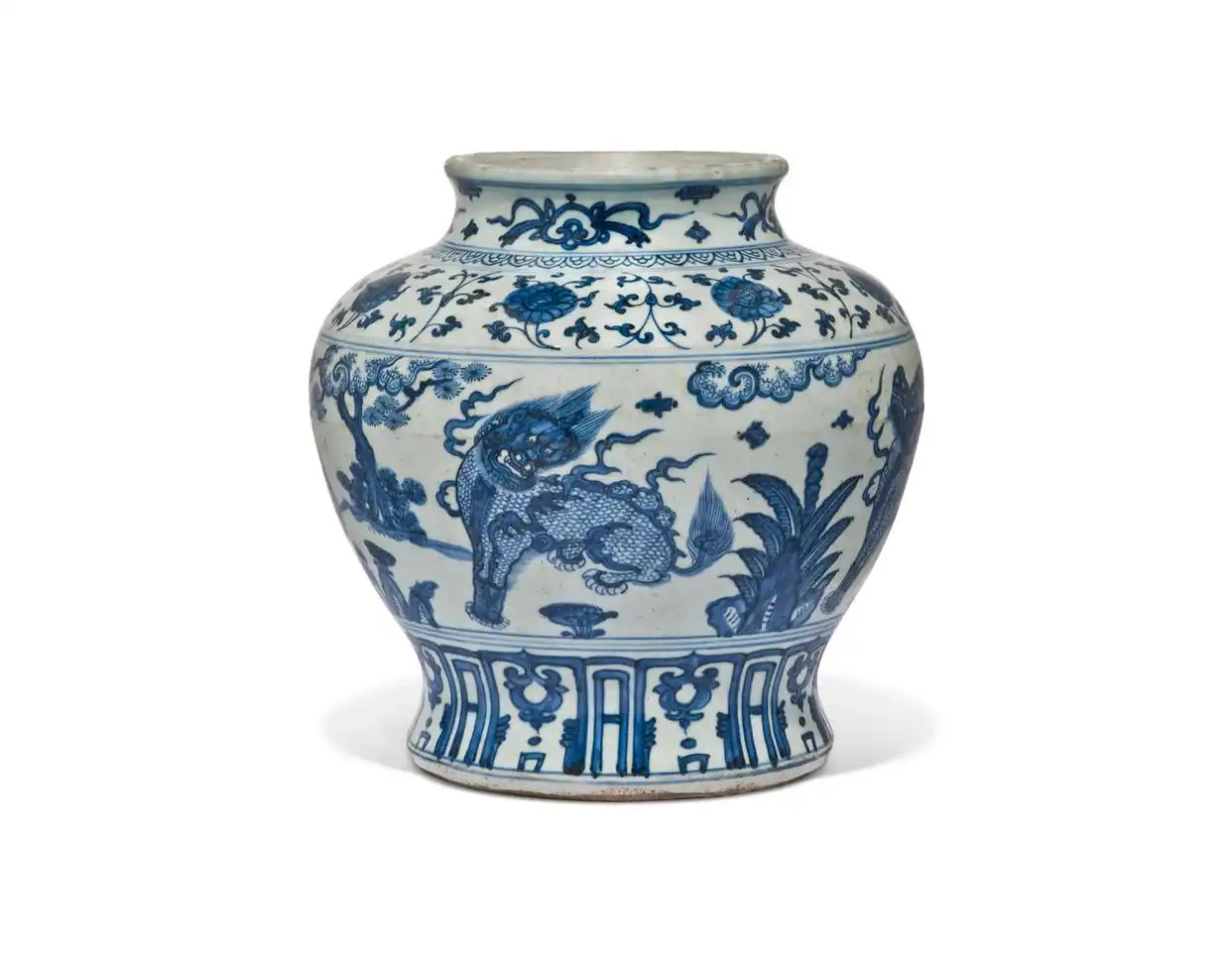
When the supply of high-quality Muslim blue was interrupted, the artisans of Jingdezhen displayed remarkable creativity. The “stone-blue” (石子青 Shiziqing) adopted during the Zhengde period (1506-1521), sourced from Ruizhou in Jiangxi, produced a color that was greyish-blue, like misty rain. However, this material inadvertently开创 (kaichuang, pioneered) a new aesthetic—the “light makeup school.” The clever blending of this local cobalt with the remaining Muslim blue, much like a Jiangnan literati mixing ink, evolved during the Jiajing and Wanli periods into a technique with rich layering known as “water-division” (混水 Hunshui). On the blue-and-white bowl with穿花龙纹 (chuan hua long wen, dragons amidst flowers) in the Palace Museum collection, the tonal transitions—blue tinged with purple—are a perfect example of this “native-foreign”工艺 (gongyi, craftsmanship). By refining the water-division technique, artisans allowed a single cobalt material to演绎 (yanyi, interpret) the artistic conception of ink wash painting through gradations of濃淡 (nongdan, light and shade).
當優質回青料供應中斷,景德鎮匠人展現出驚人的創造力。正德年間採用的江西瑞州「石子青」,雖色澤青灰如煙雨朦朧,卻開創了「淡妝派」的新審美。這種本地鈷料與回青料的巧妙配比,猶如江南文人調配墨色,在嘉靖萬曆時期發展出層次豐富的「混水技法」。故宮藏青花穿花龍紋碗上,青中泛紫的色調過渡,正是這種「土洋結合」工藝的絕佳例證。匠人們通過分水技法的精進,讓單一青料在濃淡之間演繹出水墨畫般的意境。
04. Qing Kangxi: Imperial Aesthetics and the Mastery of “Jadeite Blue”
四、清康熙:帝王美學與「翠毛藍」的極致
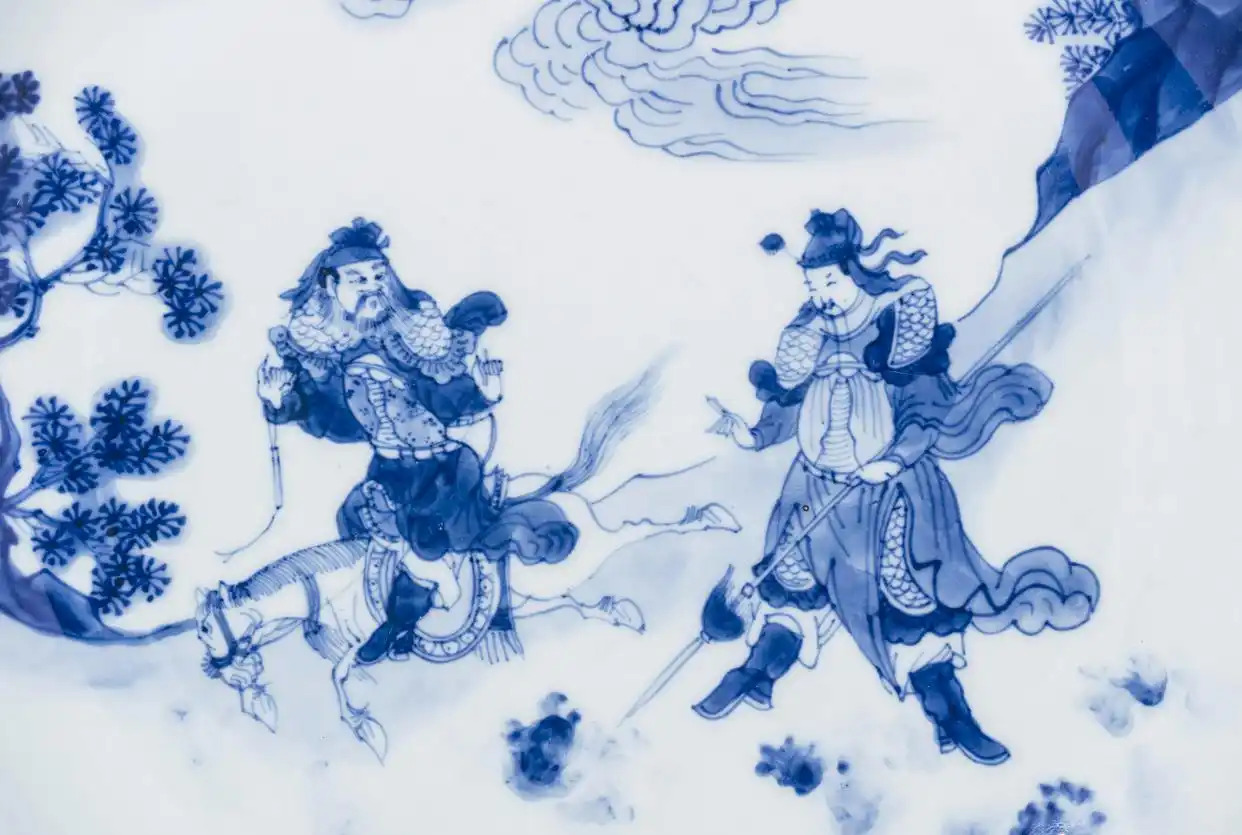
The ambitious Kangxi Emperor elevated the aesthetics of blue-and-white to new heights. The imperial kilns, building upon Ming formulas, refined the cobalt material to fire a color of典雅 (dianya, elegant)气质 (qizhi, temperament) known as “Jadeite Blue” (翠毛蓝 Cuimao lan). This hue, approaching an ideal blue, subtly resonated with the Manchu nobility’s identification with and innovation upon central Chinese literati culture. On the Kangxi blue-and-white dish depicting scenes from the Water Margin in the Palace Museum collection, the深浅 (shenqian, depth) of the blue on the figures’ robes is effortless, and the tonal gradations on the rocks and mountains demonstrate the artistic achievement of宫廷画师 (gongting huashi, court painters)参与 (canyu, participating) in the design. At this point, blue-and-white was no longer a mere釉色 (youse, glaze color) decoration; it had become a three-dimensional canvas承载 (chengzai, carrying) the artistic conception of literati painting.
雄才大略的康熙帝將青花審美推向新高度,御窯廠在明代配方基礎上改良的青料,燒出了「翠毛藍」的典雅氣質。這種接近理想藍色的呈色,暗合滿清貴族對中原雅文化的認同與創新。故宮所藏康熙青花水滸人物盤上,人物衣紋處的青料深淺自如,山石皴染處的色階過渡,展現著宮廷畫師參與設計的藝術成就。此時的青花不再是單純的釉色裝飾,而是成為了承載文人畫意的立體畫布。
05. The Civilization Code Behind Technological Evolution
五、技術迭代背後的文明密碼
The history of the evolution of blue-and-white coloration is, in essence, a history of the evolution of technological civilization. The “black spot”缺陷 (quexian, flaw) of Yuan dynasty imported cobalt was, in the Ming dynasty, deliberately pursued and transformed into a desired effect known as “tin light” (锡光 xiguang). The challenges of high-temperature firing during the Yongle-Xuande period spurred the breakthrough of the “binary配方 (peifang, formula)” for porcelain body clay. The极致 (jizhi, ultimate pursuit) of cobalt washing, proportioning, and water-division techniques during the Kangxi, Yongzheng, and Qianlong reigns elevated empirical knowledge into a scientific system. Behind these technological advancements lay both the pressure of傳承 (chuancheng, inheritance) within the imperial kiln’s artisan household system and the动力 (dongli, driving force) of innovation stimulated by the market economy. By the time “Pearl Material” (珠明料 Zhuming liao) was rejuvenated in the late Ming, Jingdezhen had already established a complete industrial chain covering原料开采 (yuanliao kaicai, raw material mining),配方调制 (peifang tiaozhi, formula preparation), and烧造工艺 (shaozao gongyi, firing techniques).
青花呈色的演變史,本質上是一部技術文明的進化史。元代進口料的「黑斑」缺陷,在明代被轉化為刻意追求的「錫光」效果;永宣時期的高溫燒造難題,催生出「二元配方」的工藝突破;康雍乾三朝對青料淘洗、配比、分水技術的極致追求,更將經驗上升為科學體系。這些技術演進背後,既有官窯匠籍制度的傳承壓力,也包含市場經濟刺激下的創新動力。當珠明料在晚明煥發新生時,景德鎮已然建立起覆蓋原料開採、配方調製、燒造工藝的完整產業鏈。
Color Authentication: Reading a Dynasty’s Genetic Code in the Glaze
辨色鑑真:從釉色窺見時代基因
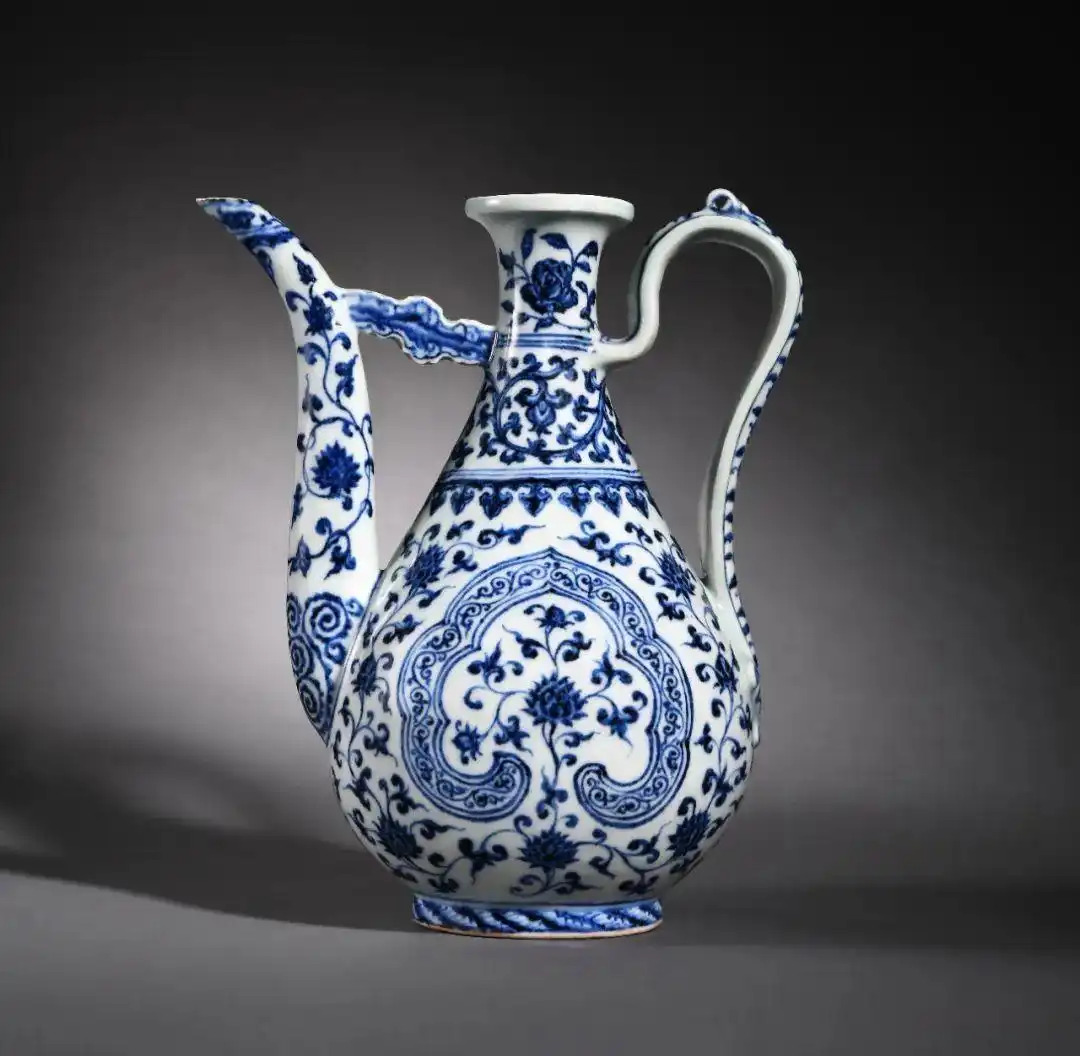
The key to authenticating blue-and-white porcelain lies in those subtle色相 (sexian, hue) differences that are often imperceptible to the untrained eye. On the sweet white glaze of Yongle ware, the outlines of the blue decoration show a gradient effect due to varying depths of cobalt渗透 (shentou, penetration). On Jiajing period wares, starlike crystalline spots can be seen where the Muslim blue has accumulated thickly. Late Kangxi blue-and-white, set against its white glaze, emits a hazy,朦胧光晕 (menglong guangyun, soft halo). These细微特征 (xiwei tezheng, minute characteristics) are like the DNA图谱 (tupu,图谱) of an artifact, recording the specific technical parameters of a particular historical period. In the eyes of seasoned collectors, the “透气感 (touqigan, breathability)” and “润泽度 (runzedu, moistness)” of the blue often hold greater authenticating value than textbook年代特征 (niandai tezheng, period features). As the old saying in the antiques trade goes, “A fine blue-and-white speaks for itself.” A true, treasured heirloom needs no仪器检测 (yiqi jiance, instrumental analysis); its color alone eloquently narrates the story of a hundred years of history.
青花鑑定的核心密鑰,藏在那些肉眼難察的色相差異裡。永樂甜白釉上的青花輪廓線,因鈷料滲透深度不同呈現漸變效果;嘉靖器的「回青積料」處可見星點狀結晶;康熙晚期青花在白釉映襯下會泛出朦朧光暈。這些細微特徵如同文物的DNA圖譜,記錄著特定歷史時期的工藝參數。資深藏家眼中,青花發色的「透氣感」與「潤澤度」,往往比教科書式的年代特徵更具鑑別價值。正如古玩行當那句老話:「好青花自己會說話」,真正的傳世精品無需借助儀器檢測,其色澤已將百年光陰的故事娓娓道來。
Looking back from a contemporary perspective, the evolution of blue-and-white coloration is a缩影 (suoying, microcosm) of the course of civilization. As chemical element analysis technology unveils the mysteries of ancient配方 (peifang, formulas), we should cherish even more the warmth凝结 (ningjie, condensed) with the匠心 (jiangxin, ingenuity) of the artisans. Each piece of blue-and-white porcelain is a living historical text. Its glaze is not only a展示 (zhanshi, display) of technical achievement but also a material witness to the Chinese civilization’s pursuit of and steadfastness to beauty. The essence of collecting, ultimately, is a dialogue with the hands of the past—listening, in the韵律 (yunlv, rhythm) of cobalt’s深浅 (shenqian, light and shade), to the共鸣 (gongming, resonance) of aesthetics跨越时空 (kuayue shikong, across time and space).
站在當代視角回望,青花呈色的演變恰似文明進程的縮影。當化學元素分析技術揭開古人配方的神秘面紗時,我們更應珍視那份凝結著匠人心血的溫度。每件青花器物都是活著的歷史典籍,它們的釉色不僅是工藝成就的展示,更是中華文明對美的追求與堅守的物質見證。收藏之道,終究是與先人手作對話的過程,在鈷藍深淺的韻律中,聆聽跨越時空的審美共鳴。
Conclusion: The Enduring Legacy of the Blue Code
結語:青色密碼的永恆傳承
Collecting Chinese porcelain is not merely a pursuit of beauty; it is a传承 (chuancheng, inheritance) of history and a respect for culture. As we decode the cobalt secrets of millennia, we are reminded that the true value of these objects lies not in their market price, but in their power to connect us with the ingenuity, aspirations, and global exchanges of our ancestors. The blue-and-white porcelain of each dynasty is a unique chapter in the grand narrative of Chinese civilization, a story written in the language of cobalt and fire, waiting for us to listen, to learn, and to cherish.
收藏中國瓷器,不僅是對美的追求,更是對歷史的傳承和文化的尊重。當我們解碼千年的青色密碼,應當銘記,這些器物真正的價值不在於市場價格,而在於它們將我們與祖先的智慧、抱負以及全球交流的歷史緊密相連的力量。每一朝的青花瓷,都是中華文明宏大敘事中的獨特篇章,是用鈷料與火焰書寫的故事,等待我們去傾聽、去學習、去珍惜。