The Complete Compendium of Classic Yixing Teapot Forms: A Collector’s Essential Guide
Yixing zisha (purple sand) teapots are celebrated worldwide for their unique clay, exquisite craftsmanship, and profound cultural heritage. As you stroll through antique markets or browse online collections, you’ve likely encountered these elegant vessels but may not have known their names or the stories behind their forms. This comprehensive guide introduces sixteen of the most iconic and enduring Yixing teapot shapes, demystifying their origins, design philosophies, and aesthetic appeal. Whether you are a novice collector or a seasoned enthusiast, understanding these classic forms is the first step toward appreciating the art of zisha.
宜興紫砂壺以其獨特的泥料、精湛的工藝和深厚的文化底蘊聞名於世。當您漫步於古玩市場或瀏覽線上藏品時,或許曾邂逅這些優雅的器皿,卻未必知曉其名,或了解其造型背後的故事。本篇大全將為您介紹十六款最具代表性、流傳最廣的紫砂壺經典器型,為您解析其淵源、設計理念與審美意趣。無論您是初入門的收藏新手,還是資深的紫砂愛好者,了解這些經典器型,都是欣賞紫砂藝術的第一步。
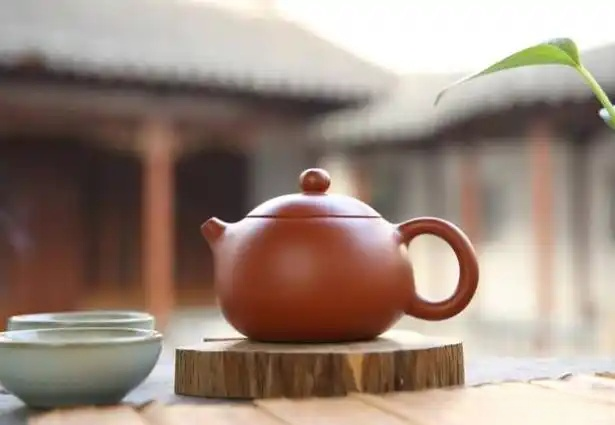
1. Xishi Teapot (西施壺) – The Beauty of Simplicity
Originally named “Xishi’s Breast” (Xishi Ru), this teapot is said to derive its form from the voluptuous contours of Xi Shi, one of ancient China’s Four Great Beauties. Its defining features include a short, slightly thick spout, an inverted-ear-shaped handle, and a flush-mounted lid that sits seamlessly with the body. The base gently curves inward, ending in a subtle, pressed bottom. Later generations found the original name overly direct and renamed it “Inverted-Handle Xishi Teapot” (Daoba Xishi Hu). Its rounded, feminine silhouette embodies understated elegance and tactile comfort.
1. 西施壺 – 簡約之美
原名「西施乳」,言壺之形若美女西施之豐乳。其特徵包括:流短而略粗,把為倒耳之形,蓋採截蓋式,與壺身渾然一體,壺底近足處內收,為一捺底。後人覺「西施乳」不雅,改稱「倒把西施壺」。其造型圓潤豐滿,蘊含含蓄的優雅與舒適的握感。
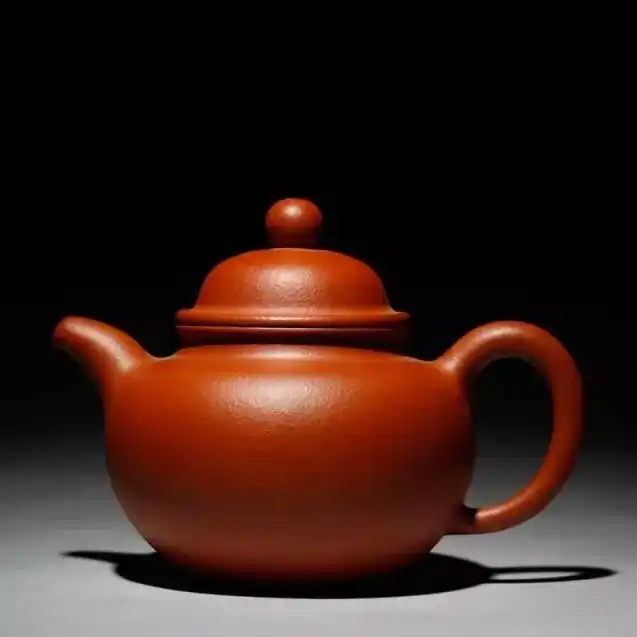
2. Duoqiu Teapot (掇球壺) – Stacked Spheres
Duo means “to stack” or “to pile up”; qiu means “sphere.” The Duoqiu teapot, a masterpiece of the Qing dynasty master Shao Daheng, is one of the most celebrated representatives of traditional geometric round teapots. Its basic composition consists of three progressively larger spheres: the壶钮 (knob) as the smallest, the壶盖 (lid) as the intermediate, and the壶身 (body) as the largest. The visual effect is that of a small sphere resting gracefully upon a larger one—hence the name. Its harmonious proportions and rhythmic circularity exemplify the principle of “unity within variety.”
2. 掇球壺 – 疊球成韻
「掇」意為疊起,「球」即圓球。掇球壺為清代巨匠邵大亨原創,是典型的幾何形傳統圓壺,亦是紫砂壺最優秀的代表款式之一。其基本造型由壺鈕、壺蓋、壺身三個由小至大順序排列的球體組成:壺腹為大球,壺蓋為小球,宛若小球掇於大球之上,故名掇球壺。其比例和諧,圓韻流轉,體現了「統一中求變化」的美學原則。
3. Shipiao Teapot (石瓢壺) – The Stone Dipper
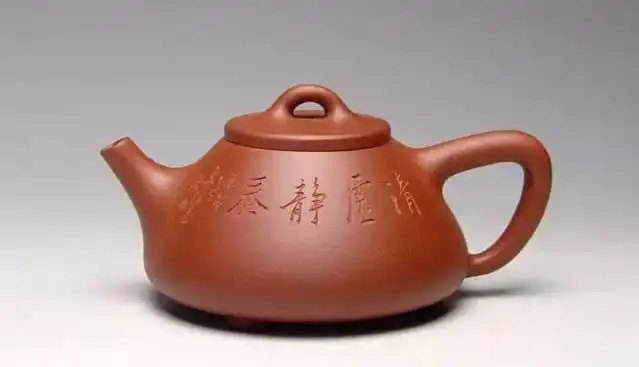
Originally known as the “Stone Diaо” (Shi Diao), a diao being a small cooking vessel with a handle and spout, this form evolved significantly by the time of Chen Mansheng and Yang Pengnian in the Qing dynasty. The “Mansheng Stone Diao” features a distinctive pyramid-like silhouette: wide at the base, narrow at the top, with a low center of gravity for exceptional stability. Its spout is short, powerful, and直筒形 (straight cylindrical), ensuring smooth water flow. The renowned master Gu Jingzhou later advocated renaming it Shipiao, citing the classical phrase, “Of the vast expanse of water, I drink but a dipperful.” This elegant allusion has since become standard. The Shipiao embodies serene strength and scholarly restraint.
3. 石瓢壺 – 弱水一瓢
石瓢最早稱「石銚」,銚為一種有柄有流的小烹器。至陳曼生、楊彭年時期,此式已發生重大變化。「曼生石銚」主要特色為上小下大,重心下垂,使用穩當;壺嘴為矮而有力的直筒形,出水暢順;壺身呈「金字塔」式,端莊沉穩。近代紫砂泰斗顧景舟引古文「弱水三千,僅飲一瓢」,建議將「石銚」改稱「石瓢」,從此相沿至今。石瓢壺體現了沉靜的力量與文人的內斂。
4. Pan Teapot (潘壺) – The Cantonese Connoisseur’s Choice
According to the Yangxian Sand Pottery Illustrated, Pan Shicheng, a native of Panyu, Guangdong, during the Daoguang reign, was a devoted tea connoisseur. He commissioned custom zisha teapots in Yixing for personal use and as elegant gifts. The Pan family pots followed a fixed form, with the seal consistently impressed on the盖沿 (lid rim) rather than the base or body—a distinctive feature. The seal was always the阳文篆字 (raised seal-script character) “Pan.” This standardized form gained such renown that it became known simply as the “Pan Teapot.” Variations include the “Short Pan” (flattened柿形), “Medium Pan” (slightly taller,近扁球形), and “Tall Pan” (pear-shaped).
4. 潘壺 – 粵商雅好
據《陽羨砂壺圖考》記載,清道光廣東番禺人潘仕成,字德畲,家傳嗜茶,特赴宜興訂製專屬砂壺,一則自用,一則饋贈。潘氏訂製之壺形制固定,且慣將印款落於蓋沿之上,壺底及他處反而不落款;所用印款均為陽文篆字「潘」印。因潘氏聲名遠播,世人遂將此一形制稱為「潘壺」。壺腹作扁柿形者,曰「矮潘」;器身稍高,近扁球形者,曰「中潘」;器身高,近梨形者,是為「高潘」。
5. Fanggu Teapot (仿古壺) – Homage to Antiquity
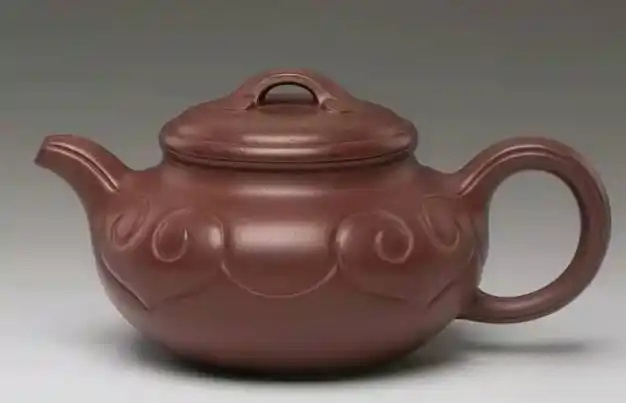
One tradition attributes this form to the Qing master Shao Daheng, who based his design on the shape of a war drum. Later generations仿制 (imitating) this design, and the name Fanggu—literally “imitating antiquity”—came to signify reverence for classical models. Another account credits Zhao Songting of the modern era, who created this form at the behest of Wu Dazheng. Characteristic features include a slightly flattened body, a鼓腹 (drum-like belly), a high neck, and a smooth, flat lid that fits precisely with the mouth rim. The扁钮 (flattened knob) is forceful, the arched handle poised, and the overall silhouette balances fullness and restraint with effortless流畅 (continuity).
5. 仿古壺 – 追摹古意
一說此式為清代邵大亨初创,原意是壺體仿照鼓型,後人仿製,遂成「仿古」之名。另說近代趙松亭按吳大澂授意所作。其特徵為:身扁、腹鼓、頸高,蓋板平滑,壺蓋與口沿子母線吻合嚴密,合成圓線飽滿;扁鈕有力,虹鈕有勢,二彎流胥出自然;圓圈把勻勢而起,有些款把圓下有垂,富於靈動。整體骨肉亭勻,收展有度,有一氣呵成之暢。
6. Dezhong Teapot (德鐘壺) – The Virtuous Bell
The Dezhong form is austere and noble, its name evoking the resonance of an ancient bell—a symbol of virtue and order. This particular example is crafted from Dicaoqing clay, a prestigious ore sourced from the lowest stratum of the Huanglong Mountain vein in Yixing. Revered by generations of potters and the favorite clay of the late master Gu Jingzhou, Dicaoqing yields a warm,沉稳 (steady and deep) hue and a refined, jade-like texture. The Dezhong teapot embodies disciplined elegance and quiet dignity.
6. 德鐘壺 – 德音如鐘
德鐘壺造型端莊古樸,其名取意於鐘——古代禮樂重器,象徵德行與秩序。此款以底槽青泥製成。底槽青產於江蘇宜興黃龍山系紫泥最底層,質佳者歷代陶人推崇為首,亦為已故顧景舟大師最鍾愛之名泥。其色沉樸,質如古玉,溫潤內斂。德鐘壺體現了內省的優雅與莊重的氣度。
7. Rongtian Teapot (容天壺) – The Belly of Tolerance
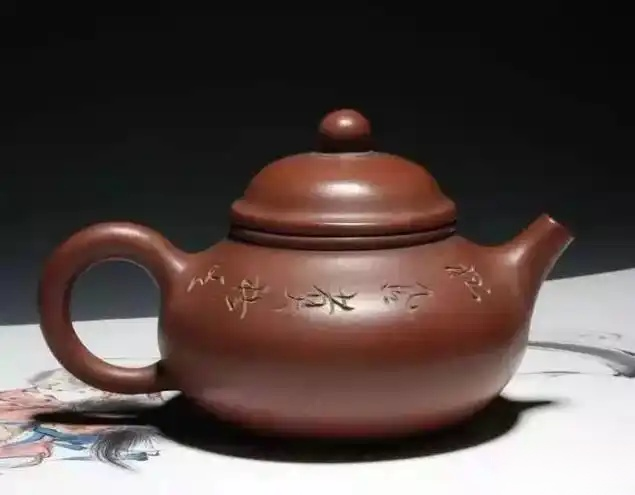
Inspired by the Laughing Buddha (Budai) of Buddhist lore, whose large belly symbolizes包容 (tolerance) and the ability to “accommodate all under heaven,” this form was pioneered by Master Lü Yaochen, a National Master of Chinese Arts and Crafts. Early versions featured a lower body, while later iterations became taller. Capturing its essence requires deep contemplation from the maker. A slightly raised neck and a hemispherical lid impart a touch of childlike simplicity. Its water flow is excellent, making it highly functional, while its visual presence is稳重 (steadfast and magnanimous)—profound simplicity clothed in unadorned form.
7. 容天壺 – 大肚能容
容天壺取材於佛教中的大肚羅漢,其名源於「肚大能容天下事」。中國工藝美術大師呂堯臣首創。早期作品壺形偏低,後期壺形較高。要體現此壺氣韻實屬不易,需做壺之人用心體會。在氣韻飽滿的壺身上添加一微微矮頸,壺蓋增高成半球狀,平添拙樸童趣。出水效果極佳,使用方便舒適。視覺上穩重大度,在質樸中見深厚。
8. Xiaoying Teapot (笑櫻壺) – The Smile That Dispels Sorrow
The Xiaoying teapot is beloved for its dynamic tension and harmonious poise. At first glance, its form appears unremarkable, yet every contour, proportion, and detail is meticulously calibrated. Legend associates its shape with the典故 (historical allusion) of Yingning, a maiden whose laughter could dissolve a thousand worries. The fluid interplay of lines and volumes in the Xiaoying pot mirrors this spirit of reconciliation and grace. It embodies the Confucian ideal of “gentle harmony amidst diversity”—a quiet smile cast in clay.
8. 笑櫻壺 – 一笑千愁解
笑櫻壺是紫砂壺中的經典壺型之一,流傳甚廣,皆因其張力十足,為人所喜愛。初看或許平淡無奇,但由於形體輪廓、結構比例、尺度的細部處理安排得當,恰如其分。據傳「笑櫻壺」的造型出自「嬰寧一笑」的歷史典故——「嬰寧一笑千愁解」。笑櫻壺以交融而又諧調之態漫流的幾種色彩,恰如「嬰寧一笑」,表現出傳統文化中「君子和而不同」的精神內質。
9. Wendan Teapot (文旦壺) – The Scholar’s Pomelo
Created during the late Ming and early Qing dynasties, the Wendan predates the similar Xishi and Guifei forms, which emerged in the mid-to-late Qing and emphasize delicate charm. Wendan, by contrast, favors古拙 (archaic simplicity), reflecting the aesthetic sensibilities of its time. The Qing scholar Wu Meiding praised it: “In capturing form and essence, it rivals the美人肩 (Beauty’s Shoulder) in charm and surpasses Xishi in grace.” Indeed, the Wendan’s flowing silhouette evokes the柔若无骨 (supple elegance) of a beauty’s shoulder—natural, poised, and effortlessly refined.
9. 文旦壺 – 文人清供
文旦創於明末清初,形與西施、貴妃壺相近,後兩者為清中末後所創,重玲瓏嬌秀;前者則重古拙,這也與當時藝術審美相關。清代文人吳梅鼎曾稱讚文旦壺曰:「至於摹形象體,殫精畢異;韻敵美人,格高西子。」在文人眼中,文旦壺的韻味風格堪比美人之肩,柔若無骨;又似西施那動人的曲線,豐神綽約,俊俏天成。
10. Handuo Teapot (漢鐸壺) – The Han Bell
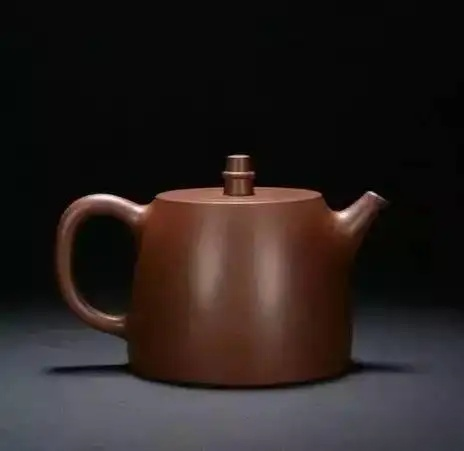
Duo refers to a large bell with a clapper, used in ancient China for promulgating orders and signaling. The Handuo teapot takes its form from this ritual instrument, resembling a small甬钟 (yongzhong, a type of bell) but more compact. The most historically significant example bears an inscription by Mei Diaoding (1839–1906), a renowned calligrapher of the Qing dynasty. His汉铎壶 stands as a pinnacle of scholarly taste, merging epigraphic elegance with functional design.
10. 漢鐸壺 – 金聲玉振
漢鐸,即漢朝之鐸。《說文》云:「鐸,大鈴也。」為古代宣佈政教法令之用,形似甬鐘而體量較小。梅調鼎(1839–1906),字友竹,號赧翁,慈溪人,被譽為清代書法家中成就最高者之一。其為之作銘的漢鐸壺,堪稱紫砂歷史上最具研究價值的漢鐸壺典範。壺身挺括,線條剛勁,蘊含金石之韻。
11. Pozun Teapot (匏尊壺) – The Bitter Gourd Vessel
Po denotes a variety of gourd—round, flat, and large. A pozun is a wine vessel made from a dried gourd. This form carries profound literary resonance, evoking Su Dongpo’s timeless lines from his Former Ode to the Red Cliff: “I steer a light skiff, raising a pozun to toast my companions.” The great poet’s exile in Huangzhou mirrors the bitter fate of the gourd—humble yet resilient. Chen Mansheng’s canonical十八式 (Eighteen Forms) includes four gourd-inspired designs; the classic Pozun teapot is an升华 (artistic distillation) of his vision, transforming a symbol of hardship into one of quiet dignity.
11. 匏尊壺 – 苦匏為尊
匏,葫蘆的一種,圓大而扁。匏尊,以乾匏製成的酒器。此壺型承載深厚的文學意境,遙應蘇東坡《前赤壁賦》:「駕一葉之扁舟,舉匏尊以相屬。」一代文豪的黃州生涯與「匏尊」的命運何其相似?紫砂「匏尊」壺的形象,創意來自這隻有苦意的匏瓜。陳曼生設計的十八式中有四款壺與匏瓜相關;經典的「匏尊」壺,正是其「匏壺」的藝術昇華。
12. Hanbian Teapot (漢扁壺) – The Flattened Han Vessel
The Hanbian teapot features a扁圆 (flattened-rounded) body with a full, mellow base. A distinct rounded ridge defines the shoulder, which flows smoothly into the mouth. The flat lid is edged with a subtle反弧线 (reversed curve), and a扁圆钮 (flattened-round knob) creates a dynamic interplay of sizes. The sharp, angular transition at the shoulder generates a taut, tensile energy, while the expansive flat lid anchors the composition. The spout curves gently outward, balanced by a generously pulled handle. An invisible yet palpable流线 (streamline) connects spout, shoulder, and handle, lending the vessel an air of spontaneous vitality. The Hanbian is质朴大气 (unpretentious yet grand).
12. 漢扁壺 – 扁而不塌
形體扁圓,底部圓韻而豐滿,肩有圓稜,口與肩平滑舒展。平蓋,蓋邊飾反弧線,扁圓鈕,形成大小對比。腹肩口產生曲折剛勁的張力,大平蓋穩住架勢。嘴微曲,大把向外拉出,嘴側肩與把側形成一條氣貫全壺的流線,相互呼應,生動而自然。漢扁壺質樸大氣,扁而不塌,張弛有度。
13. Jinglan Teapot (井欄壺) – The Well Railing
As its name suggests, this form derives from the围栏 (railing) surrounding an ancient well—also known as the well-bed or well-frame. Beyond its literal origin, “Well Railing” appears across traditional Chinese culture, from命理之学 (metaphysical studies) to classical martial arts forms. Ancient wells were often equipped with rails, covers, pavilions, and roofs, serving both practical and aesthetic functions. The Jinglan teapot crystallizes this everyday object into timeless form: its straight, upright lines convey stability and rectitude, while its understated proportions speak of quiet usefulness.
13. 井欄壺 – 欄護清泉
顧名思義,其造型源於井欄。「井欄」一詞,傳統文化中多見,如命理之學中有「井欄」一格,陳式太極拳老架二路第四十一式為「回頭井欄直入」。現實生活中之井欄即井之護欄,亦名井床、井幹。古人掘井多置井欄,有的還置井蓋、井頂、井亭,既可護井,又能美化環境。井欄壺將平凡器物升華為永恆造型:線條挺秀,端莊穩健,蘊含樸素實用的美德。
14. Hanjun Teapot (漢君壺) – The Gentleman of Han
The Hanjun teapot emerged during the early 1960s, a period when zisha artistry faced challenges and potters sought to serve a broader public. Consequently, many Hanjun pots were produced as日用商品 (daily commodities). However, owing to vast differences in makers’ cultivation and skill, extant examples vary enormously in quality—a classic instance of “a slight discrepancy in the beginning leads to a vast error in the end.” The Hanjun form likely evolved from Mansheng’s扁石壶 (Flat Stone Teapot). Its design was largely finalized during the late Qing and early Republican era as the平盖汉君 (flat-lidded Hanjun). Collectors must exercise discerning judgment.
14. 漢君壺 – 君子之風
漢君壺是六十年代初,紫砂陶趨於低谷時所製,為服務大眾之茗壺。因此,漢君壺曾以商品大量湧現。然而,由於壺藝家學養不同,所製器物差別甚大,有失之毫釐、謬以千里之感。漢君壺原似曼生扁石壺之式,至清末民初定型為平蓋漢君壺。現今一壺一款,良莠不齊,藏家需具慧眼。
15. Qieduan Teapot (茄段壺) – The Eggplant Segment
Deriving its造型灵感 (formal inspiration) from a ripe eggplant hanging on the vine, the Qieduan teapot achieves its highest artistic expression when crafted from premium ziqie ni (purple eggplant clay). The knob, shaped like an eggplant stem, is delightfully lifelike. The body swells with controlled tension, poised delicately between fullness and restraint. Spout and handle respond to each other in natural counterpoint,静止如动 (stillness within motion). The clay surface exhibits zisha‘s finest virtues: a deep, subdued luster, like amethyst in twilight or ancient jade worn smooth by centuries.
15. 茄段壺 – 枝頭秋色
茄段壺,造型靈感來自枝頭成熟的茄子。若要達到較高的藝術表現力,最佳須使用特級紫茄泥。以茄蒂為壺紐,生動有趣;氣度飽滿,將張力處理在欲破不破之間;流、把的呼應自然順暢,靜動如一。壺面充分表現出紫砂的種種優越屬性:色澤暗淡沉樸,如紫水晶深邃,如古玉溫潤。
16. Hanwa Teapot (漢瓦壺) – The Han Tile
The Hanwa belongs to the圆器 (roundware) category of zisha. Over the years, countless artisans have reproduced this form, yet Yang Pengnian’s rendition remains the most memorable. Its body is cylindrical,宽口窄底 (wide mouth, tapered base), with a short, relatively直挺 (upright) spout. The lid is nearly flat, slightly arced, surmounted by a bridge-shaped knob incised with a crabapple pattern on its surface. The clay is dense and robust, its sandy texture暗红 (deep red). A remarkable feature: the lid fits snugly yet can be rotated freely; lifting the knob alone lifts the entire pot—a testament to exquisite workmanship.
16. 漢瓦壺 – 秦磚漢瓦
漢瓦壺屬於圓器當中的一種。歷來多位藝人都有仿製此種款型,而楊彭年的一款漢瓦壺尤為令人印象深刻。其壺體為圓筒形,上侈下斂,短流勢較直。蓋平略見弧,橋式鈕,鈕面陰刻海棠紋樣。泥質堅結,砂色暗紅。壺蓋子口製作圓而不規,轉捻即緊,拈鈕可以翕起全壺——工藝精絕,令人稱奇。