The Crimson Tide of History: A Complete Guide to Antique Red Coral
歷史的緋紅潮汐:古玩紅珊瑚全面解析
In the Buddhist realm, there exists the concept of the “Three Jewels”: the Buddha, the Dharma (his teachings), and the Sangha (the monastic community). Within this tradition, the “Seven Treasures” (Sapta Ratna) are frequently mentioned—gold, silver, amber, coral, giant clam, crystal (or glass), and agate. Among these, coral holds a uniquely profound distinction: it is the only living being, a sacred organism that has grown in the depths of the sea for millennia.
佛界有「三寶」:佛、法、僧。佛家亦有所謂「七寶」:金、銀、琥珀、珊瑚、硨磲、琉璃、瑪瑙。在這七寶之中,珊瑚佔據著一個獨特而深刻的地位:它是其中唯一有生命的千年靈物,在海洋深處,以生命鑄就傳奇。
Across different civilizations, coral’s value is universally acknowledged. In the West, it is revered as one of the three great organic gems, standing alongside pearls and amber. In the sacred texts of Eastern Buddhism, coral is enshrined as one of the “Seven Treasures,” a symbol of wealth and auspiciousness since time immemorial. Notably, the vast majority of the world’s finest red coral is found in the waters surrounding Taiwan, earning the island the distinguished title, “The Kingdom of Coral.”
在不同的文明體系中,珊瑚的價值皆備受肯定。在西方,它與珍珠、琥珀並列為三大有機寶石。在東方佛典中,珊瑚被列為「七寶」之一,自古即被視為富貴與祥瑞的象徵。值得一提的是,全世界絕大多數優質的紅珊瑚都產自台灣海域,台灣因此亦有「珊瑚王國」之美譽。
Defining the Antique: What is Old Red Coral?
何為古玩?定義老紅珊瑚
When we speak of “antique red coral” in the context of collecting, we refer to coral artifacts that possess a certain age, historical significance, or artistic value. These are not merely old pieces of coral; they are remnants of human artistry, commonly found in the form of ancient jewelry, intricate carvings, and ornamental display pieces. Because red coral has been a precious gem material since ancient times, it has long been coveted by collectors in cultural spheres from China to Europe and Japan.
在收藏領域,當我們談論「古玩紅珊瑚」時,指的是那些具有一定年代、歷史價值或藝術價值的紅珊瑚製品。它們不僅僅是古老的珊瑚材料,更是人類工藝的遺存,常見於古代首飾、精細雕刻以及觀賞擺件之中。由於紅珊瑚自古以來便是珍貴的寶石材料,它在中國、歐洲及日本等地的收藏家心中,始終佔據著特殊的位置。
Its historical pedigree is illustrious. During China’s Qing Dynasty, red coral was designated as the symbolic material for the hat finial of a Second Rank official, marking it unequivocally as “Imperial Treasure.” In Tibetan Buddhism, as one of the “Seven Treasures,” it was extensively used in the creation of prayer beads (malas) and ritual implements, imbued with profound religious significance. Beyond the court and the monastery, it also found its way into the homes of the wealthy, who treasured it in the form of hairpins, court necklaces, bracelets, and decorative objects, all serving as emblems of good fortune and prosperity.
其歷史淵源極為顯赫。在清代,紅珊瑚被定為二品官員頂戴的象徵材料,是名副其實的「皇家珍寶」。在藏傳佛教中,作為「佛教七寶」之一,它被廣泛用於製作佛珠和法器,承載著深厚的宗教意涵。在宮廷與寺廟之外,富貴人家亦將其珍藏,用以製作髮簪、朝珠、手鐲及各類裝飾品,象徵著吉祥與財富。
A Journey Through Civilizations: Red Coral Across Cultures
文明之旅:紅珊瑚在不同文化中的軌跡
The story of red coral is a global one, its crimson hues weaving through the tapestries of numerous great civilizations.
紅珊瑚的故事,是一部全球性的傳奇,其緋紅的色澤編織進無數偉大文明的錦緞之中。
The Western World: From Roman护身符护身符 to Renaissance Art
西方世界:從羅馬護身符到文藝復興藝術
In ancient Rome, coral was so highly valued that it was被称为被称为 (bei cheng wei, known as) “Red Gold.” It was not merely decorative; the Romans attributed powerful protective properties to it, commonly crafting it into amulets (fūlu护身符护身符) to ward off evil and danger, especially for children. They also adorned their贵族贵族 (guizu, nobility) jewelry with it, believing it could bring wisdom and protect against illness.
在古羅馬時期,珊瑚價值極高,被稱為「紅色黃金」。它不僅僅是裝飾品;羅馬人賦予它強大的保護力量,常將其製成護身符,用以驅邪避禍,尤其保護孩童。貴族們也將其鑲嵌在首飾上,相信它能帶來智慧,抵禦疾病。
During the Renaissance, a golden age for decorative arts, Italian artisans became masters of coral carving. They skillfully transformed this precious material into deeply religious works of art, including intricate statues of the Virgin Mary (Madonna) and crucifixes, merging the material’s natural beauty with the era’s profound spiritual expression.
到了文藝復興時期,這個裝飾藝術的黃金時代,意大利的工匠成為了珊瑚雕刻的大師。他們巧妙地將這種珍貴材料轉化為充滿宗教情懷的藝術品,包括精細的聖母像和十字架,將材料的自然之美與時代深沉的宗教情感完美融合。
Japan: The Aesthetic of the Edo Period
日本:江戶時代的雅緻
In Japan, the cultural pinnacle of red coral use arrived during the Edo period. Here, coral was integrated into the refined aesthetic of the time. It became a favored material for elaborate hair ornaments (kanzashi), including intricately carved hairpins and combs. It was also used to adorn inrō (印笼), the small, decorative boxes worn suspended from the obi (sash) of a traditional kimono to carry medicine or seals. Japanese connoisseurs particularly prized the deep red variety known as “Aka” coral, a preference that continues to this day.
在日本,紅珊瑚文化的巔峰出現在江戶時代。珊瑚被融入當時精緻的美學之中,成為製作華麗髮飾(如精巧雕刻的髮簪與梳子)的寵兒。它也被用於裝飾印籠——一種穿和服時懸掛在腰帶上的小型雕漆盒子,用以盛放藥物或印章。日本的鑑賞家們尤其偏愛一種被稱為「阿卡」的深紅色珊瑚,這種偏好延續至今。
China: The Imperial Symbol from Court to Temple
中國:從宮廷到寺廟的皇家象徵
In China, the use of red coral reached its zenith of symbolic power during the Qing Dynasty. Its presence was meticulously codified by imperial decree. A court necklace (chao zhu) made of 108 red coral beads, often accented with jadeite and amber, was a standard part of formal court attire. The hairpins and headdresses of noblewomen were frequently adorned with finely carved coral motifs of dragons, phoenixes, and flowers, showcasing both status and artistic skill.
在中國,紅珊瑚作為權力象徵的地位在清代達到了巔峰。其使用被朝廷以法令形式詳細規定。由108顆紅珊瑚珠串成的朝珠,常配以翡翠、蜜蜡等,是正式宮廷服飾的重要組成部分。貴族婦女的髮簪、頭飾上,也常見雕刻精細的龍、鳳、花卉等珊瑚紋飾,彰顯著地位與工藝之美。
Beyond the secular world, red coral prayer beads (fo zhu) and rosaries (nian zhu) were, and still are, highly valued in Tibetan Buddhism. Often paired with turquoise and amber, these coral beads were not just ornaments but sacred objects, their deep red color symbolizing life force and the fiery energy of transformation, embodying the majesty of the Buddhist dharma.
在世俗世界之外,紅珊瑚佛珠與念珠在藏傳佛教中一直備受珍視。它們常與綠松石、蜜蠟搭配使用,這些珊瑚珠不僅是裝飾,更是神聖的法器,其深紅色象徵著生命力與轉化的熾熱能量,體現著佛法的莊嚴。
Forms of Antique Red Coral: A Collector’s Taxonomy
古玩紅珊瑚的形態:收藏家的分類學
For the novice collector, understanding the typical forms in which antique red coral appears is the first step. These artifacts generally fall into several categories:
對於入門的收藏者來說,了解古玩紅珊瑚的典型形態是第一步。這些器物通常可分為以下幾類:
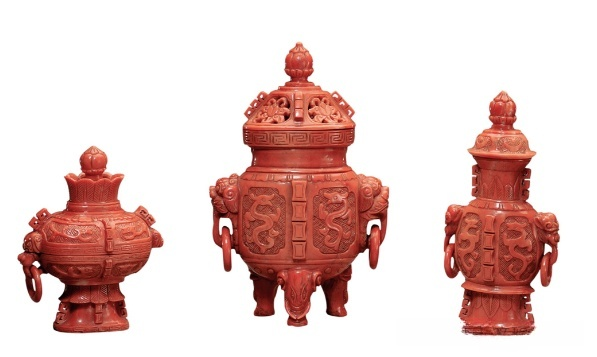
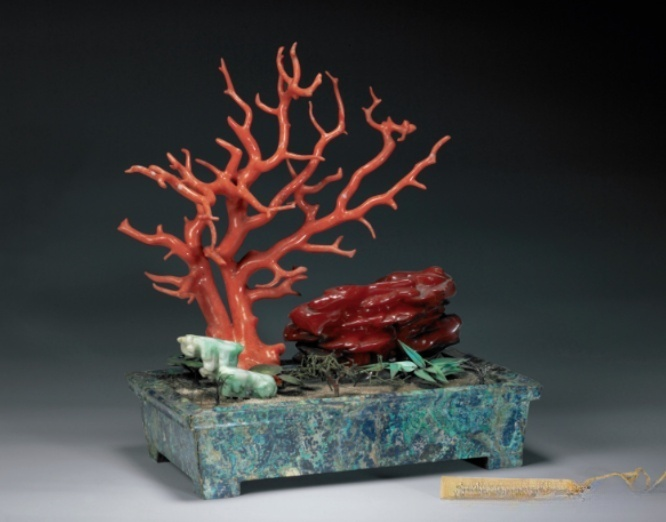
- Ornamental Carvings / 摆件 (Baijian): These are three-dimensional display pieces. Common subjects include religious figures like Guanyin (the Goddess of Mercy) or the God of Longevity (Shouxing), auspicious beasts such as the dragon and phoenix, and symbolic motifs representing the three stellar gods of福禄寿福禄寿 (Fu Lu Shou – Blessings, Salary, Longevity).
- 擺件 / 雕刻: 這類是三維的觀賞性作品。常見題材包括宗教人物如觀音、壽星,瑞獸如龍、鳳,以及象徵「福祿壽」的吉祥圖案。
- Jewelry:
- Court Necklaces (Chao Zhu): Formal necklaces worn by Qing dynasty officials, often consisting of 108 coral beads.
- Prayer Beads (Fo Zhu / Nian Zhu): Strings of beads used for counting mantras in Buddhist practice, commonly incorporating coral with other materials like turquoise.
- Hairpins (Fa Zhen) & Hair Ornaments: Intricately carved coral pieces used to adorn the elaborate hairstyles of noblewomen.
- Rings (Jie Zhi) & Earrings (Er Shi): Often set in silver or gold, these are common in both Chinese and European antique jewelry, showcasing the gem’s beauty in a more intimate form.
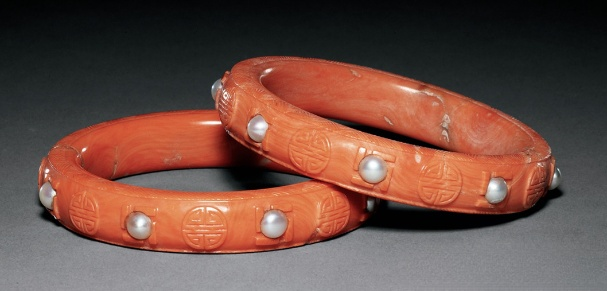
- Bracelets (Shou Zhuo): Either carved from a single piece or composed of carved coral beads.
- 首飾:
- 朝珠: 清代官員佩戴的正式項飾,常見由108顆珊瑚珠串成。
- 佛珠 / 念珠: 佛教修行中用於計數的珠串,常以珊瑚搭配綠松石、蜜蠟等。
- 髮簪 / 頭飾: 用於裝飾貴族婦女華美髮型的精細雕刻珊瑚件。
- 戒指 / 耳飾: 常鑲嵌於銀或金之上,在中西古董珠寶中皆為常見,以更親密的形式展現寶石之美。
- 手鐲: 或由整塊珊瑚雕成,或由雕刻的珊瑚珠串聯而成。
Each of these pieces carries within it not just the beauty of the coral, but the echoes of the culture, belief, and social structure that brought it into being. To collect antique red coral is to hold a piece of that vast, crimson-tinted history in your hands.
每一件古玩紅珊瑚,其內部所承載的不僅是珊瑚本身的美,更迴盪著創造它的那個時代的文化、信仰與社會結構的回音。收藏古玩紅珊瑚,便是將那浩瀚歷史中,一抹被緋紅浸染的片段,握於掌心之中。