Top 10 Ancient Chinese Cold Weapons: A Collector’s Guide
To understand the might of ancient Chinese military forces, one must examine their weaponry. While modern warfare revolves around advanced technology, China’s history spanning thousands of years was predominantly shaped by the era of cold weapons. These arms, crafted for close combat, are not only instruments of war but also profound symbols of culture, craftsmanship, and strategic thought. For collectors and enthusiasts, they represent a tangible connection to a legendary past. This article delves into ten iconic cold weapons from ancient China, exploring their design, history, and legacy in a manner accessible to university students and newcomers to the world of Oriental antiquities.
要理解中國古代軍事力量之強大,必須審視其兵器。雖然現代戰爭依賴先進科技,但中國數千年的歷史主要由冷兵器時代所塑造。這些為近身戰鬥打造的武器,不僅是戰爭工具,更是文化、工藝與戰略思想的深刻象徵。對收藏家與愛好者而言,它們代表著與傳奇歷史的有形連結。本文深入探討十種中國古代標誌性冷兵器,以適合大學生及東方古董新手的角度,解析其設計、歷史與傳承。
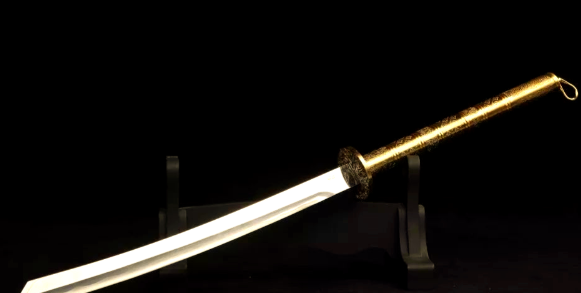
Dao (刀) – The Sabre
Type: Short weapon with a single-edged, long blade.
Characteristics: Regarded as the foremost among the nine short weapons, the Dao is a versatile tool designed for cutting, slicing, chopping, and stabbing. Its earliest form resembled a battle-axe (Yue) before evolving into a primary weapon for infantry, such as the iconic Ring-Pommel Sabre (Huanshou Dao).
Historical Context: In primitive societies, ancient humans crafted knives from stone, shells, and animal bones. By the Spring and Autumn and Warring States periods, the Dao’s form underwent significant transformation. The Han Dynasty saw the emergence of various long-handled Dao. Throughout history, different designs like the broadsword, curved sabre, and short knife served specific purposes. Its techniques primarily emphasize powerful chopping and slashing motions, making it a highly aggressive weapon.
刀 – 單刃利器
類型: 單面長刃的短兵器。
特點: 刀為九短之首,泛指可用於切、削、割、剁、刺的工具。其最初形態與鉞接近,後逐漸發展為步兵的主戰兵器之一,如環首刀。
歷史背景: 原始社會,古人類就用石頭、蚌殼、獸骨打製成各種形狀的刀。到春秋戰國時期,刀的形狀發生巨大變化。兩漢時,出現了許多不同形式的長柄刀。歷史上發展出不同形制與用途的刀,例如大刀、彎刀、短刀等。其使用方法也各有特點,主要以劈砍為主,具有較強的攻擊性。
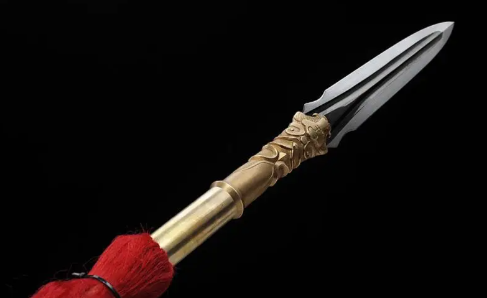
Qiang (槍) – The Spear
Type: Long-handled thrusting weapon.
Characteristics: Comprising a sharp blade mounted on a long shaft, the spear’s reach and versatility earned it the title “King of All Weapons.”
Historical Context: Known as Mao (矛) in ancient times, the spear is a long, sharp, and agile piercing weapon with remarkable lethal power. Its sophisticated and unique combat techniques were considered unmatched by other arms, hence its regal nickname. The martial arts spear evolved from the ancient Mao. Famous historical figures adept with the spear include the legendary generals Zhao Yun, Ma Chao, and Yue Fei.
槍 – 百兵之王
類型: 長柄的刺擊兵器。
特點: 槍由利刃加棍棒組成,柄長於刃,綜合威力大,被稱為「百兵之王」。
歷史背景: 槍是中國古代兵器之一,在古代稱作矛,為刺兵器,長而鋒利,使用靈便,殺傷力很大,其取勝之法精微獨到,其他兵器難以與之匹敵,故被稱為「百兵之王」。武術長器械的槍由古代兵器矛演變而來。中國古代用槍名家有趙雲、馬超、岳飛等。
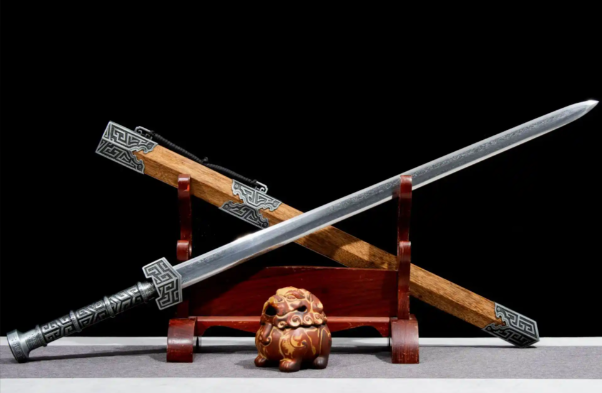
Jian (劍) – The Double-Edged Sword
Type: Straight, double-edged weapon with a pointed tip.
Characteristics: The Jian can inflict injury with both horizontal and vertical strikes; its thrust can pierce armor. Exceptionally lethal, it was “born for killing.”
Historical Context: The sword boasts a long history. Its earliest forms were dagger-like short swords, later giving way to the popularity of longer blades. Long swords facilitated combat, while short swords were better for self-defense. Typically made of metal, the Jian is long and straight with a sharp point, a short hilt, and edges on both sides.
劍 – 雙刃之君
類型: 雙刃身直頭尖的兵器。
特點: 劍橫豎可傷人,擊刺可透甲,兇險異常,生而為殺。
歷史背景: 劍的歷史源遠流長,早期是匕首式短劍,後流行長劍。長劍便於戰鬥,短劍利於護身。劍由金屬製成,長條形,前端尖,後端安有短柄,兩邊有刃。
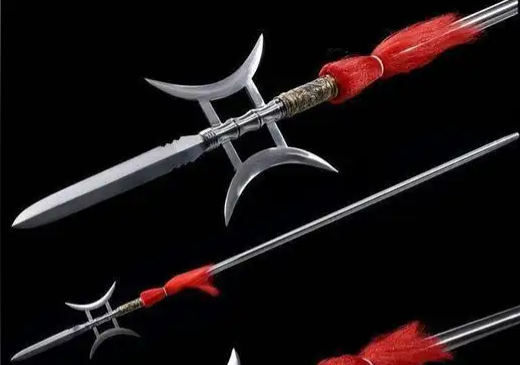
Ji (戟) – The Halberd
Type: A multi-purpose weapon capable of hooking, pecking, and thrusting.
Characteristics: The Ji is a hybrid of the Ge (dagger-axe) and the Mao (spear). It combines the functions of hooking, pecking, stabbing, and slicing, offering greater lethality than its parent weapons.
Historical Context: The advent of the Ji contributed to the onset of the Warring States period in China. It served both as a ceremonial weapon and as standard-issue military equipment from the pre-Qin era through the Qin, Han, and Wei-Jin periods.
戟 – 鉤啄並用
類型: 可勾、可啄、可刺的多用兵器。
特點: 戟是戈和矛的合成體,具有鉤、啄、刺、割等多種用途,殺傷力勝過戈和矛。
歷史背景: 戟的出現在中國推動了戰國時期的到來。它一方面作為儀仗兵器,一方面作為從先秦至秦漢魏晉軍中裝備的制式裝備。
Ge (戈) – The Dagger-Axe
Type: A horizontally-bladed weapon.
Characteristics: The Ge was not an exceptionally powerful killing instrument; its techniques focused on hooking, pecking, swinging, and pushing.
Historical Context: Numerous varieties of the Ge were popular from the Xia Dynasty through the Han Dynasty. It largely fell out of use by the Sui and Tang periods.
戈 – 橫刃兵器
類型: 橫刃兵器。
特點: 戈並不是殺傷很強的武器,以鉤、啄、揮、推為主。
歷史背景: 戈的種類繁多,從夏朝至漢朝都一直在流行,到隋唐基本絕跡。
Mao (矛) – The Lance
Type: An offensive weapon for stabbing enemies.
Characteristics: The Mao is a long-shafted weapon with a blade designed to pierce the enemy.
Historical Context: A common weapon in ancient warfare, early Mao were simple, often with wooden or bamboo shafts and bronze heads. With advances in iron smelting, iron Mao became widespread, and their design and craftsmanship continuously improved. By the Tang and Song dynasties, its military application evolved, often used in conjunction with other weapons. During the Ming and Qing, the Mao persisted in civilian martial arts but was gradually supplanted on the battlefield by firearms.
矛 – 刺敵長兵
類型: 刺殺敵人的進攻性武器。
特點: 矛為長柄兵器,有刃,用以刺敵。
歷史背景: 矛是古代戰爭中常用的兵器之一。早期的矛較為簡單,多以木、竹為桿,青銅矛頭。隨著冶鐵技術發展,鐵矛逐漸普及,其形制和工藝不斷改進。到了唐宋時期,矛在軍事中的應用有所變化,與其他兵器結合使用。明清時期,矛在民間武術中仍有傳承,但在戰場上的地位逐漸被火器取代。
Fu (斧) – The Battle-Axe
Type: A long weapon for chopping and splitting.
Characteristics: The axe is heavy, conveying an awe-inspiring ferocity and serving as a symbol of raw power and dominance.
Historical Context: The axe appeared during the Spring and Autumn period and saw extensive use in the Warring States period. As its lethality was considered inferior to the Ge and Mao, its practical role in combat diminished during the Spring and Autumn era. It was later used more for ceremonial and decorative purposes.
斧 – 威猛剛烈
類型: 劈砍的長兵器。
特點: 斧頭沉重,自有一股威猛剛烈之勢,是力量與霸主的象徵。
歷史背景: 斧出現於春秋時期,在戰國時期大量使用。由於其殺傷力不如戈矛,在春秋時期實戰中的地位已大大降低,後多用於儀仗、裝飾之需。
Yue (鉞) – The Ceremonial Battle-Axe
Type: A large axe-class weapon.
Characteristics: The Yue features a broad, crescent-shaped blade and was used more frequently as a ceremonial weapon.
Historical Context: The larger version is called Yue, the smaller Fu. During the Xia, Shang, and Western Zhou dynasties, the Yue was a formidable heavy weapon on chariots and also a weapon of the Son of Heaven. Its excessive weight led to its eventual obsolescence in battle, relegating it to ceremonial use. The Fu, however, saw more continuous development. Used throughout Chinese history in many forms—from the “Flower-Wheel Axe” wielded by Cheng Yaojin to the twin axes used by Li Kui—it could be used single or double-handed. Primarily a chopping weapon, it was highly lethal and classified as a heavy weapon.
鉞 – 禮儀重兵
類型: 大斧類兵器。
特點: 鉞的刃部寬闊,呈半月形,更多地用作禮兵器。
歷史背景: 大者為鉏,小者為斧。鉞在夏商西周是戰車上的具有巨大威懾力的重武器,也是天子的武器,後來因過於笨重而被淘汰,之後只能作為禮儀武器。斧的發展則較為順利,中國歷代都有人使用斧,種類很多,既有程咬金使用的宣花車輪大斧,也有李逵使用的板斧,可單手使用也可雙手握持,以劈砍為主,殺傷很強,屬於重兵器。
Bian (鞭) – The Iron Whip
Type: Short weapon.
Characteristics: Bian come in hard and soft varieties. Hard Bian are usually made of bronze or iron, while soft Bian are often woven from leather.
Historical Context: The Bian discussed here is not a pliant, rope-like whip, but a solid weapon akin to an iron rod, used for hacking, sweeping, and thrusting. Resembling steel bamboo joints, it is also called the Bamboo-Joint Steel Whip. Prevalent since the Spring and Autumn and Warring States periods, it was used by historical figures like Wu Zixu, General Yuchi Gong of the Tang Dynasty, and the Huyan family of the Song Dynasty. Developed to penetrate armor sturdier than chainmail, it is immensely powerful and classified as a heavy weapon. Compared to the Jian (mace), the Jian has greater killing power but less armor-piercing capability than the Bian.
鞭 – 鋼節破甲
類型: 短兵器械。
特點: 鞭有軟硬之分,硬鞭多為銅製或鐵製,軟鞭多為皮革編製而成。
歷史背景: 這裡所說的鞭不是軟質像繩子一樣的鞭子,而是一種類似鐵棍、以劈、掃、捅等為主要攻擊方式的兵器,像鋼鐵做成的竹節,所以又叫竹節鋼鞭。這種武器在春秋戰國時期就已經很盛行了,像歷史上的伍子胥、大唐元帥尉遲恭以及宋朝的呼延家族都使用過鞭。鞭是為了對付比鎖子甲更堅固的盔甲而產生的,威力極大,屬於重武器。鞭有軟硬之分,人們現在常說的鞭通常為軟鞭。與鐧相比,鐧的殺傷力比鞭大,但破甲能力不如鞭。
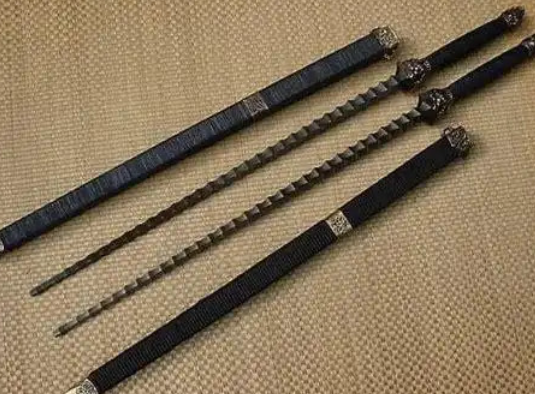
Jian (鐧) – The Mace
Type: A whip-class short weapon.
Characteristics: The Jian (mace) is long, edgeless, with a quadrangular prism shape, slightly tapered towards the top and fitted with a hilt at the bottom. It is heavy, delivering considerable lethal force capable of injuring or killing an opponent even through armor.
Historical Context: A short weapon, it typically has four edges and measures about four Chi in length (approximately 1.2 meters in the Song system), often used in pairs. Its weight requires significant strength to wield effectively. Its techniques are similar to those of the sword. Originating between the Jin and Tang dynasties, it is made of bronze or iron, resembling a hard whip but without joints or a sharp point. Its cross-section is square, often with a groove, earning it the name “Concave-Faced Jian.” Sizes vary, generally between 65-80 cm. Often employed as an auxiliary weapon to deliver surprising, fatal blows—hence the saying “杀手鐧” (killer mace, meaning a trump card). The Tang general Qin Qiong was famous for using dual Jian, as was Niu Gao, a general in Yue Fei’s army during the Southern Song. In folklore, the Eighth Prince Zhao Defang wielded a concave-faced golden Jian.
鐧 – 殺手重器
類型: 鞭類短兵器。
特點: 鐧長而無刃,有四稜,上端略小,下端有柄。鐧的分量重,殺傷力十分可觀,即使隔著盔甲也能將人砸傷。
歷史背景: 屬於短兵器,有四稜,長為四尺(宋制四尺為一米二),多雙鐧合用。它分量重,非力大之人不能自如運用,殺傷力可觀,即便隔著盔甲也能將人砸死。技法與劍法接近,出於晉唐之間,以銅或鐵製成,形似硬鞭,但鐧身無節,鐧端無尖。鐧體斷面成方形,有槽,故有「凹面鐧」之稱。其大小長短可因人而異,一般在65~80釐米之間。通常作為輔助武器,能出其不意地給敵人致命殺傷,所以有「殺手鐧」之說。唐初的戰將秦瓊善使雙鐧,南宋岳家軍將領牛皋也擅長雙鐧,評書中八賢王趙德芳使的則是凹面金鐧。
Beyond the Top Ten: The “Eighteen Martial Arts”
The common phrase “十八般武藝” (Eighteen Martial Arts) traditionally refers to proficiency with eighteen classic weapons. Beyond the ten discussed, this list typically includes:
Gun (棍) – The Staff: Also called “Bang,” it is a blunt weapon known as the “Leader of All Weapons.” With a history stretching back to primitive societies where it served as a tool, it was also among the earliest weapons of war. Length varies from about 1 meter (short staff) to up to 3 meters (long staff), made from wood or metal. Its techniques—chopping, sweeping, poking, lifting, and provoking—are diverse, offering lightness, flexibility, and ease of use.
弓 – The Bow: A quintessential ancient projectile weapon. Composed of a flexible bow arm and string, it was made from materials like bamboo, wood, and sinew. Requiring strength and skill to draw and release, it could shoot arrows over long distances with sudden force, offering a strategic advantage in war. Designs, materials, and craftsmanship varied across regions and dynasties.
弩 – The Crossbow: A mechanized bow that uses mechanical force to launch projectiles. The composite bow of a crossbow, often made from laminated bamboo and wood, resembles a carrying pole, hence its nickname “弩擔” (crossbow pole). A testament to ancient Chinese ingenuity, the most famous example is the repeating crossbow (Zhuge Nu) attributed to Zhuge Liang of the Three Kingdoms period.
盾 – The Shield: A defensive weapon, typically crafted from wood, leather, or metal, used to block enemy attacks. It provided vital protection for soldiers, with its form and decoration varying across periods and regions.
殳 – The Shu: An ancient weapon, often made of bamboo or wood, with edges but no blade. Initially used in chariot warfare, it was later adopted in infantry combat.
錘 – The War Hammer: Consisting of a heavy head mounted on a handle, it delivered devastating blows in close combat and was particularly common during the Sui and Tang eras.
叉 – The Trident: Featuring multiple prongs, it could be used for both attack and defense. Seen in folk martial arts and some military applications, it was valued for its versatility.
钯 – The Rake: Shaped like a garden rake with multiple tines, it was used for hooking, pulling, and blocking in combat, appearing in Ming Dynasty military equipment.
這些冷兵器在中國歷史上都有著重要的地位和作用,它們的發展和演變反映了中國古代軍事技術和戰爭方式的變化。同時,冷兵器的使用也與當時的社會文化、戰術需求等因素密切相關。在不同的歷史時期和戰爭場景中,各種冷兵器都發揮了各自的優勢和特點。
隨著時間的推移和科技的進步,冷兵器逐漸被熱兵器所取代,但它們在中國歷史和文化中的重要價值仍然不可忽視。對於收藏家而言,每一件保存下來的冷兵器都是承載著故事、工藝與精神的歷史瑰寶。
These cold weapons held significant positions and roles in Chinese history. Their development and evolution reflect changes in ancient Chinese military technology and warfare tactics. Moreover, their usage was closely tied to the social culture and tactical needs of their times. Across different historical periods and combat scenarios, each weapon leveraged its unique advantages.
With the march of time and technological progress, cold weapons were gradually replaced by firearms. However, their profound value within Chinese history and culture endures. For collectors, each preserved cold weapon is a historical treasure, embodying stories, craftsmanship, and the spirit of an era.