Tourmaline: The Rainbow Gemstone with Electrifying Properties
I. Fundamental Characteristics of Tourmaline
Chemical Composition: Complex borosilicate mineral
Chemical Formula: (Na,K,Ca)(Mg,Fe,Mn,Li,Al)₃(Al,Cr,Fe,V)₆(BO₃)₃(Si₆O₁₈)(OH,F)₄
Mineral Name: Tourmaline
Mohs Hardness: 7-7.5
Density: 3.01-3.10 g/cm³
Luster: Vitreous
Optical Properties: Uniaxial negative
Cleavage: None, brittle nature
Refractive Index: 1.624-1.644
Birefringence: 0.020
Pleochroism: Intensity increases with deeper body color
Tourmaline’s intriguing history dates back to 18th-century Amsterdam, where children playing with colorful stones brought by sailors discovered their unique ability to attract or repel dust and straw particles when warmed by sunlight. This remarkable “pyroelectric” property earned them the nickname “Aschentrekker” (ash-puller) among Dutch traders.
In Chinese culture, tourmaline’s name “碧玺” (Bìxǐ) phonetically resembles “避邪” (avoiding evil), establishing its reputation as a protective talisman. The gem features prominently in traditional Chinese literature, including the classic film “The Jade Hairpin,” which revolves around a missing tourmaline-adorned hairpiece and its dramatic recovery.
II. Distinctive Properties and Identification
Tourmaline’s unique characteristics make identification relatively straightforward:
1. Pyroelectric Effect
When exposed to sunlight or temperature changes, tourmaline generates electrical charges that attract dust particles, often making specimens appear dustier than other gems even when unworn.
2. Strong Pleochroism
All tourmalines display pronounced color variations when viewed from different angles, typically showing strong transparency in one direction and semi-transparency or opacity in another.
3. Visible Birefringence
Under magnification, the double refraction creates apparent doubling of facet junctions when viewing through the table facet.
III. Key Characteristics for Collectors
1. Crystal Growth Patterns
Tourmaline’s elongated crystal structure often results in included bases with reduced transparency, while terminations typically display better clarity.
2. Durability Considerations
Despite good hardness, tourmaline lacks cleavage and exhibits brittleness, requiring careful handling during cutting, setting, and daily wear.
3. Clarity Expectations
Most tourmalines contain characteristic inclusions and fractures. Eye-clean specimens command significant premiums due to their rarity.
4. Color Spectrum and Value
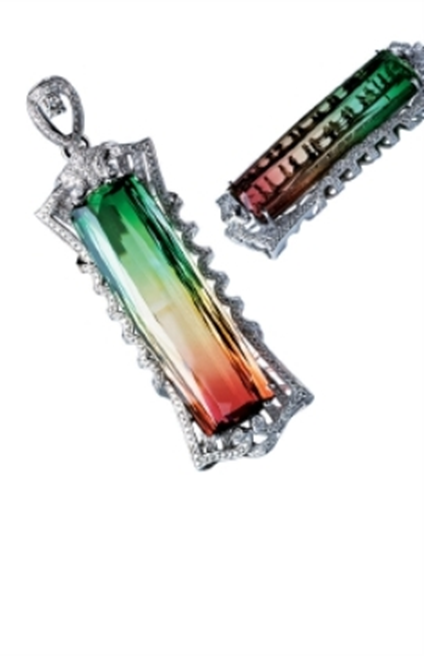
Tourmaline’s incredible color range—from vibrant pinks and greens to exotic bi-color and watermelon varieties—caters to diverse preferences. Prices increase exponentially above 1 carat, with larger clean stones representing exceptional value.
IV. Global and Chinese Sources
Major Global Deposits: Brazil, United States, Sri Lanka, Madagascar, Tanzania, Myanmar, Russia
Chinese Sources: Inner Mongolia, Xinjiang’s Altai Mountains, Yunnan’s Ailao Mountains
Yunnan produces particularly prized specimens, including pure green and vibrant red tourmalines renowned for their exceptional color saturation and transparency.
V. Cultural Significance and Marketing
Tourmaline’s history in Yunnan dates to the Ming Dynasty, when it was known as “碧霞玺” (Bìxiáxǐ). The gem earned the nickname “Stone of Contentment” for its believed ability to promote peace and satisfaction.
Modern marketing effectively leverages tourmaline’s cultural associations:
- Phonetic connection to “avoiding evil” resonates with protection-seeking consumers
- Diverse color palette symbolizes hope and positive futures
- Historical significance enhances collectibility and emotional value
The gem’s unique combination of scientific intrigue, cultural significance, and breathtaking beauty makes tourmaline increasingly popular among collectors seeking both aesthetic appeal and geological fascination in their acquisitions.
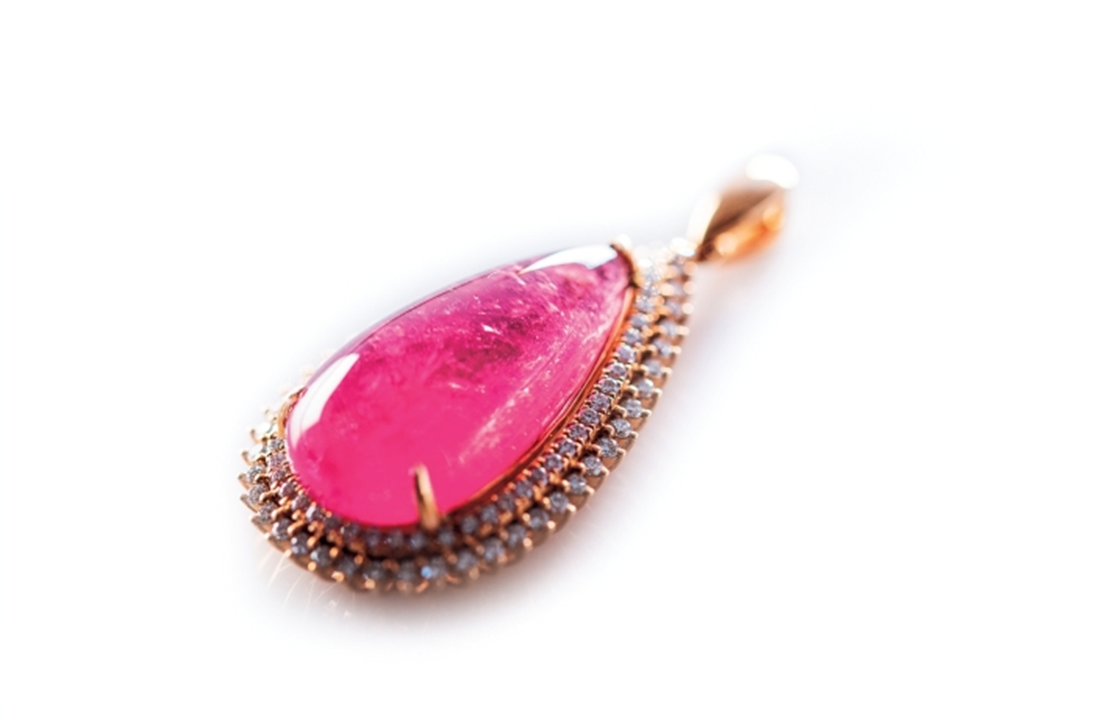
碧璽:具有帶電特性的彩虹寶石
一、碧璽的基本特性
化學成分:複雜的硼硅酸鹽礦物
化學式:(Na,K,Ca)(Mg,Fe,Mn,Li,Al)₃(Al,Cr,Fe,V)₆(BO₃)₃(Si₆O₁₈)(OH,F)₄
礦物名稱:電氣石
莫氏硬度:7-7.5
密度:3.01-3.10 g/cm³
光澤:玻璃光澤
光学性質:一軸負光性
解理:無,脆性
折射率:1.624-1.644
雙折射率:0.020
多色性:隨體色加深而增強
碧璽迷人的歷史可追溯至18世紀的阿姆斯特丹,孩子們玩耍水手帶回的彩色石頭時,發現它們在陽光加熱時具有吸引或排斥灰塵和草屑的獨特能力。這種卓越的「熱電」特性為其在荷蘭貿易商中贏得了「吸灰石」的綽號。
在中國文化中,碧璽的名稱「碧玺」在發音上類似「避邪」,建立了其作為護身符的聲譽。這種寶石在傳統中國文學中佔有突出地位,包括經典電影《碧玉簪》,圍繞丟失的碧璽裝飾髮簪及其戲劇性找回展開。
二、獨特性質與鑑定
碧璽的獨特特性使鑑定相對直接:
1. 熱電效應
當暴露於陽光或溫度變化時,碧璽產生電荷吸引灰塵顆粒,通常使樣本即使未佩戴也比其他寶石顯得灰塵更多。
2. 強多色性
所有碧璽從不同角度觀看時顯示明顯的顏色變化,通常在一個方向顯示強透明度,在另一個方向顯示半透明或不透明。
3. 可見雙折射
在放大下,雙折射透過檯面刻面觀看時產生刻面接合處的明顯重影。
三、收藏家的關鍵特徵
1. 晶體生長模式
碧璽的拉長晶體結構通常導致底部有內含物且透明度降低,而頂部通常顯示更好的淨度。
2. 耐久性考慮
儘管硬度良好,碧璽缺乏解理並表現脆性,在切割、鑲嵌和日常佩戴期間需要小心處理。
3. 淨度期望
大多數碧璽含有特徵內含物和裂縫。由於其稀有性,肉眼無瑕樣本要求顯著溢價。
4. 顏色光譜和價值
碧璽令人難以置信的顏色範圍——從鮮豔的粉色和綠色到奇特的雙色和西瓜品種——迎合多樣偏好。價格在1克拉以上指數增長,較大潔淨寶石代表特殊價值。
四、全球和中國來源
主要全球礦床:巴西、美國、斯里蘭卡、馬達加斯加、坦桑尼亞、緬甸、俄羅斯
中國來源:內蒙古、新疆阿爾泰山、雲南哀牢山
雲南生產特別珍貴的樣本,包括以卓越顏色飽和度和透明度聞名的純綠色和鮮豔紅色碧璽。
五、文化意義與營銷
碧璽在雲南的歷史可追溯至明代,當時被稱為「碧霞玺」。這種寶石因其被認為促進和平和滿足的能力而贏得了「安樂石」的綽號。
現代營銷有效利用碧璽的文化關聯:
- 與「避邪」的語音連接引起尋求保護的消費者共鳴
- 多樣顏色調色板象徵希望和積極未來
- 歷史意義增強可收藏性和情感價值
這種寶石科學趣味、文化意義和驚人美麗的獨特組合,使碧璽在尋求收購中既有美學吸引力又有地質迷戀的收藏家中日益流行。