圖片:宋代 耀州窯纏枝花卉紋執壺
Yaozhou Kiln: The Crown Jewel of Song Dynasty Incised Celadon
Yaozhou Kiln stands as the preeminent representative of northern Chinese celadon ware. It reached its zenith during the Northern Song Dynasty (960-1127 AD), continued to develop through the Jin (1115-1234) and Yuan (1271-1368) periods, and gradually declined thereafter. Its production began in the Tang Dynasty, initially firing black, white, and celadon glazes. However, it was during the Song and Jin dynasties that Yaozhou truly distinguished itself, specializing in exquisite青瓷 (celadon).
耀州窯是中國北方青瓷的傑出代表。其鼎盛於北宋(960-1127年),在金(1115-1234年)、元(1271-1368年)時期持續發展,其後逐漸沒落。其生產始於唐代,最初燒造黑釉、白釉及青釉。然而,直到宋金時期,耀州窯才真正確立其特色,專精於燒造精美的青瓷。
Tang Dynasty Yaozhou wares were characterized by simplicity, robustness, and an unadorned aesthetic. This period saw a remarkable diversity in techniques, forms, glaze types, and styles. A significant transformation occurred during the Five Dynasties period (907-960), when the kiln underwent a major stylistic shift, refocusing its production almost exclusively on monochrome celadon.
唐代耀州窯瓷器以簡潔、渾厚、質樸的美感為特徵。這一時期在工藝、器型、釉色和風格上呈現出驚人的多樣性。一次重大的轉變發生在五代時期(907-960年),耀州窯經歷了重要的風格轉向,幾乎將生產完全集中於單色青瓷。
Among the celadon kilns of northern China during the Song era, Yaozhou was the most celebrated and distinguished. It even held the prestigious commission to produce貢瓷 (tribute ware) for the imperial court during the reigns of Emperor Shenzong to Emperor Huizong in the late Northern Song period.
在宋代中國北方的青瓷窯場中,耀州窯是最負盛名、最為傑出的。它甚至在北宋晚期神宗至徽宗年間,獲得了為宮廷燒造貢瓷的崇高榮譽。
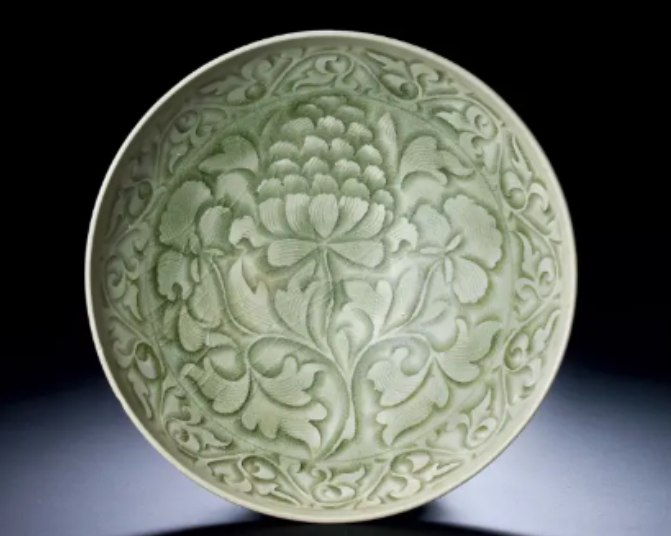
Image: Northern Song / Jin Dynasty, Yaozhou Kiln Celadon ‘Conical’ Bowl with Incised Interlocking Flower Scrolls.
圖片:北宋/金 耀州窯青釉刻纏枝花卉紋笠式碗
Yaozhou Kiln reached its peak in the late Northern Song. Wares from this golden age are notable for their diverse vessel forms, thin yet robust bodies, and a lustrous, translucent glaze. The glaze color is typically a distinctive olive-green, with areas where the glaze is thinner appearing as a ginger-yellow.
耀州窯的巔峰在北宋晚期。這一黃金時期的瓷器以其多樣的器型、胎薄質堅的坯體,以及瑩潤透明的釉質而著稱。其釉色通常是獨特的橄欖綠,釉層較薄處則呈現薑黃色。
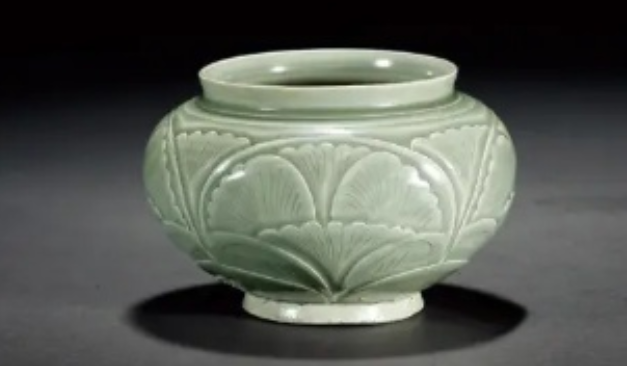
Yaozhou porcelain is renowned primarily for its exquisite incised (kehua) and molded (yinhua) decoration, earning it the accolade “Crown Jewel of Song Dynasty Incised Celadon.” Its carving technique is exceptionally犀利 (sharp),流畅 (fluent), and刚劲有力 (vigorously powerful). The cuts are deep and decisive, often described as “every stroke reaching the clay body” (daodao jian ni), creating a bold, sculptural effect.
耀州瓷以其精美的刻花與印花裝飾而聞名,贏得了「宋代刻花青瓷之冠」的美譽。其刻花技法異常犀利、流暢、剛勁有力。下刀深峻果斷,常被形容為「刀刀見泥」,創造出一種大膽而富有雕塑感的效果。
圖片:五代-北宋 耀州窯剔刻牡丹紋罐
The decorative motifs on Yaozhou ware are rich and varied, often covering both the interior and exterior of a vessel. The designs are intricate yet never chaotic, embodying a风格粗放健美 (style that is vigorous, robust, and healthy), appearing生动自然 (vivid and natural).
耀州瓷的裝飾紋樣豐富多樣,常滿布器物的內外壁。紋飾繁密卻絲毫不亂,體現出一種粗放健美的風格,顯得生動自然。
Through its distinctive firing technology and decorative techniques, Yaozhou Kiln carved out a unique and highly influential niche within the world of Song ceramics. Its style was so coveted that it was widely imitated and reproduced by numerous other kiln complexes across China.
憑藉其獨特的燒造工藝與裝飾技法,耀州窯在宋瓷世界中開創了一個極具影響力的獨特門類。其風格備受追捧,以至於中國各地的許多其他窯場都紛紛仿燒。
Image: Song Dynasty, Yaozhou Kiln Double-Fish Pattern Dish.
圖片:宋代 耀州窯雙魚紋盤
The heart of the Yaozhou production was centered on Huangbao Town. Kilns were densely clustered along both banks of the Qi River, historically described as the “Ten Li of Potteries” (Shili Taofang). This massive complex, with its kilns extending for hundreds of li, constituted one of the famous “Six Great Kiln Systems” of the Song Dynasty.
耀州窯的生產核心位於黃堡鎮。窯場沿漆河兩岸密集分佈,史稱「十里陶坊」。這龐大的窯業體系,其窯場綿延百里,構成了宋代著名的「六大窯系」之一。