World-Famous Diamonds: Legendary Gems That Shaped History
I. The Cullinan Diamond: A Serendipitous Discovery
The story of the Cullinan Diamond begins with an ordinary evening in 1905 at South Africa’s Premier Mine. A mine worker, washing his feet in a pond after work, noticed something extraordinary gleaming in the moonlight. Initially terrified by what he thought was a supernatural apparition, he fled before alerting his supervisor. Together, they returned to discover not a ghost, but the largest gem-quality diamond ever found – measuring the size of a chicken’s egg.
The Transvaal government (now part of South Africa) purchased the 3,106-carat behemoth for approximately $1 million USD, presenting it to King Edward VII of England. Master cutter Joseph Asscher spent months studying the crystal structure before attempting the first cleavage. Legend claims the initial blow shattered his blade while leaving the diamond intact; the second attempt successfully split the stone, but the tension reportedly caused Asscher to faint.
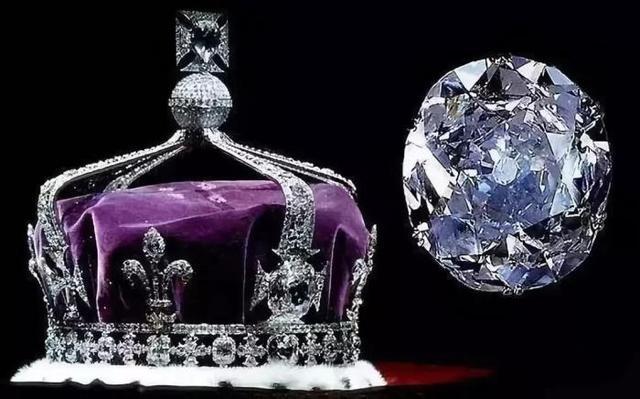
The Cullinan yielded nine major stones and 96 smaller brilliants totaling 1,064 carats:
- Cullinan I (530.2 carats): The “Great Star of Africa,” adorns the Sovereign’s Sceptre
- Cullinan II (317.4 carats): Set in the Imperial State Crown’s front band
- Cullinan III & IV (95 & 63.7 carats): Decorating the Crown’s circlet and apex
These magnificent stones remain central to British Crown Jewels, symbolizing both geological wonder and imperial legacy.
II. The Excelsior Diamond: A Miner’s Moral Dilemma
Discovered in 1893 by an unnamed Black laborer at South Africa’s Jagersfontein Mine, the 995.2-carat Excelsior presented its finder with an ethical crossroads. Rather than smuggling the blue-white crystal, he courageously delivered it directly to the mine manager. His reward—a horse, saddle, and £500—seems modest by modern standards, but represented significant compensation in its era.
Despite its impressive size, the Excelsior’s internal flaws limited its yield to 373.75 carats across 21 stones. The largest, Excelsior I (69.68 carats), and nine other 10+ carat diamonds vanished from public record after initial cutting. One fragment mysteriously reappeared at a 1939 exhibition, while the majority remain missing, fueling ongoing speculation among gemologists and historians.
III. The Star of South Africa: A Shepherd’s Lucky Find
In 1869, a pastoral scene unfolded that would transform a nation’s economy. A young shepherd boy, tending his flock near the Orange River, noticed an unusually brilliant stone glittering in the sunlight. After failed attempts to trade what locals dismissed as a “pretty rock,” he encountered Schalk van Niekerk, who recognized the 83.5-carat crystal’s true value.
Van Niekerk traded his entire assets—an ox-wagon, 10 oxen, and 500 sheep—for the stone, reselling it for £11,200. Cut into a 47.75-carat pear brilliant, the gem ignited South Africa’s diamond rush, catalyzing the nation’s transition from agricultural struggle to industrial prosperity. The diamond’s journey from riverbed to economic catalyst demonstrates how single discoveries can alter national destinies.
IV. The Indore Pears: Royal Romance in Platinum
Mined from India’s legendary Golconda region, these matched pear-shaped diamonds gained fame through scandalous romance. In 1926, Maharaja Tukoji Rao III of Indore captivated international society by abdicating his throne for a dancer’s love. His subsequent marriage to Nancy Miller, daughter of a American gold magnate, saw the 44.62 and 44.17-carat diamonds gifted as wedding presents.
After Harry Winston acquired and recut the internally flawless stones, they achieved auction history in 1970, selling for $7.3 million. The Indore Pears exemplify how royal provenance and perfect craftsmanship combine to create legendary value, with their symmetrical beauty representing one of jewelry history’s most celebrated pairs.
V. The Hope Diamond: Cursed Beauty
Discovered in 17th-century India’s Kollur Mine, the 112-carat blue diamond’s journey intertwines magnificence with tragedy. Its rare saturated blue color results from trace boron atoms, while its famous red phosphorescence under UV light creates an otherworldly glow.
The 45.52-carat cushion cut gem’s ownership history reads like a Shakespearean tragedy:
- Louis XIV: His heir died of smallpox
- Marie Antoinette: Guillotined in French Revolution
- Henry Philip Hope: Family bankruptcy
- Evalyn Walsh McLean: Son killed in traffic, daughter suicide
Now peacefully residing at the Smithsonian Institution, the Hope continues captivating millions with its mysterious beauty and cautionary legacy, reminding us that even nature’s most perfect creations carry complex histories.
VI. The Changlin Diamond: China’s Modern Treasure
December 21, 1977, marked a milestone in Chinese gemology when 21-year-old Wei Zhenfang discovered a glittering stone while washing soil from her feet in Shandong’s Changlin village. Her 158.786-carat diamond—the largest found in modern China—sparked national celebration.
The pale yellow octahedral crystal, completely transparent and inclusion-free, joined China’s national treasures. While the larger 217.75-carat “Golden Chicken” diamond was lost during Japanese occupation, the Changlin represents China’s growing prominence in gem discovery. Together with the 119.01-carat “Mengshan No.1” found in 1983, these national treasures secure China’s place in diamond history while symbolizing hopeful futures rather than haunted pasts.
Each legendary diamond embodies unique intersections of geological奇迹, human drama, and cultural significance—transforming carbon crystals into enduring symbols of our complex relationship with nature’s most concentrated form of beauty.
世界名鑽傳奇:塑造歷史的傳奇寶石
一、庫里南鑽石:偶然的發現
庫里南鑽石的故事始於1905年南非普雷米爾礦山的一個平常傍晚。一名礦工下班後在池塘洗腳時,注意到月光下有異常閃亮的物體。最初被他誤認為超自然現象而驚恐逃離,隨後他告知主管。兩人返回後發現的不是鬼魂,而是有史以來發現最大的寶石級鑽石——尺寸相當於雞蛋大小。
德蘭士瓦政府(現屬南非)以約100萬美元購得這顆3,106克拉的巨鑽,獻予英國國王愛德華七世。首席切割師約瑟夫·阿瑟花費數月研究晶體結構後嘗試第一次劈開。傳說首次敲擊使他的刀片破裂而鑽石完好無損;第二次嘗試成功分裂原石,但緊張據稱導致阿瑟昏厥。
庫里南鑽石產出9顆主要寶石和96顆小鑽石,總重1,064克拉:
- 庫里南一號(530.2克拉):「非洲之星」,裝飾於英王權杖
- 庫里南二號(317.4克拉):鑲嵌在帝國皇冠前沿
- 庫里南三號與四號(95及63.7克拉):點綴皇冠頂端與邊緣
這些華麗寶石仍是英國王室珠寶的核心,象徵著地質奇蹟與帝國遺產。
二、艾克沙修鑽石:礦工的道德抉擇
1893年南非亞格斯豐坦礦場一名匿名黑人礦工發現的995.2克拉艾克沙修鑽石,給發現者帶來了道德十字路口。他沒有走私這顆藍白晶體,而是勇敢地直接交給礦場經理。他的獎勵——一匹馬、馬鞍和500英鎊——以現代標準看似微薄,但在當時代表著重大補償。
儘管尺寸驚人,艾克沙修的內部瑕疵限制其產出僅21顆鑽石總重373.75克拉。最大的艾克沙修一號(69.68克拉)和其他九顆10+克拉鑽石在初次切割後從公開記錄中消失。一顆碎片在1939年展覽中神秘重現,而大多數仍然失踪,引發寶石學家和歷史學家的持續推測。
三、南非之星:牧羊人的幸運發現
1869年,一個田園場景展開了將改變國家經濟的篇章。一名年輕牧羊人在奧蘭治河附近放牧時,注意到陽光下異常閃耀的石頭。在當地人拒絕交易這顆「漂亮石頭」後,他遇到了識別這顆83.5克拉晶體真實價值的沙爾克·范尼凱克。
范尼凱克用全部財產——牛車、10頭牛和500隻羊——換取這顆石頭,後以11,200英鎊轉售。切割成47.75克拉梨形明亮式鑽石後,這顆寶石點燃了南非鑽石熱潮,催化該國從農業困境到工業繁榮的轉變。這顆鑽石從河床到經濟催化劑的旅程展示了單一發現如何改變國家命運。
四、茵多爾梨形鑽:白金中的皇家浪漫
開採自印度傳奇戈爾康達地區,這些匹配的梨形鑽石因轟動的浪漫故事而聞名。1926年,印多爾王公土可奇三世為舞女的愛情放棄王位,吸引了國際社會關注。他隨後與美國金礦大亨之女南茜·米勒的婚姻中,將44.62和44.17克拉鑽石作為結婚禮物贈送。
哈利·溫斯頓獲得並重新切割這些內部無瑕的寶石後,它們在1970年創下拍賣歷史,以730萬美元成交。茵多爾梨形鑽例證了皇家淵源與完美工藝如何結合創造傳奇價值,其對稱之美代表了珠寶史上最著名的配對之一。
五、希望鑽石:被詛咒的美麗
發現於17世紀印度科勒礦山,112克拉藍鑽的旅程將華麗與悲劇交織在一起。其罕見的飽和藍色來自微量硼原子,而在紫外線下著名的紅色磷光創造出超凡光芒。
45.52克拉枕形切割寶石的擁有者歷史讀起來如同莎士比亞悲劇:
- 路易十四:繼承人死於天花
- 瑪麗·安托瓦內特:法國大革命中被處決
- 亨利·菲利普·霍普:家族破產
- 艾芙琳·沃爾什·麥克林:兒子車禍身亡,女兒自殺
如今平靜存放於史密森尼博物館,希望鑽石繼續以其神秘美麗和警示傳承吸引數百萬人,提醒我們即使自然最完美的造物也承載複雜歷史。
六、常林鑽石:中國的現代寶藏
1977年12月21日標誌著中國寶石學的里程碑,21歲的魏振芳在山東常林村洗腳時發現一顆閃耀石頭。她的158.786克拉鑽石——中國現代發現的最大鑽石——引發全國慶祝。
這顆淡黃色八面體晶體完全透明且無內含物,成為中國國家寶藏。雖然更大的217.75克拉「金雞」鑽石在日佔時期遺失,常林鑽石代表中國在寶石發現領域日益突出的地位。與1983年發現的119.01克拉「蒙山一號」一起,這些國家寶藏確保了中國在鑽石歷史中的地位,同時象徵著充滿希望的未來而非陰暗的過去。
每顆傳奇鑽石體現了地質奇蹟、人類戲劇和文化意義的獨特交匯——將碳晶體轉化為我們與自然最美麗濃縮形式複雜關係的持久象徵。
Read More
- Buying Guides (111)
- Collectors' Academy (192)
- Care Academy (8)
- Investment Academy (25)
- Jade Crafting Techniques (29)
- Michelle Au: The Gemstone Luminary (11)
- The Precious Metals & Jewels Compendium (54)