Sapphire: The Celestial Gem of Wisdom and Serenity
Sapphire, known in mineralogy as corundum, shares its fundamental composition with ruby while displaying nature’s most captivating blues through titanium and iron trace elements. Like autumn skies and tranquil oceans, its mesmerizing hues inspire profound contemplation and wonder. Western tradition celebrates sapphire as the ‘stone of wisdom,’ while Eastern cultures revere it as a protective talisman for the virtuous. Explore our sapphire collection to experience this celestial gem firsthand.
I. Global Sapphire Origins
1. Sri Lankan Sapphires
Metamorphic-origin stones characterized by light tones and distinctive inclusions of biotite, zircon, apatite, and rutile needle formations.
2. Indian Sapphires
Historically significant, exemplified by the 543-carat ‘Star of India’ housed at New York’s Museum of Natural History, featuring tourmaline, mica, and zircon inclusions.
3. Burmese Sapphires
Renowned for vibrant color purity, containing feldspar, zircon, and pyrrhotite inclusions within their crystalline structures.
4. Nigerian Sapphires
African production center producing blue and yellow varieties with strong color zoning and characteristic albite/uranpyrochlore inclusions.
5. Chinese Sapphires (Shandong Changle)
Among the world’s newest discoveries, featuring deep blue tones with pronounced dichroism and parallel color bands in basalt formations. Identifiable through zircon, feldspar, and niobite-tantalite inclusions.
II. Sapphire Identification Guide
Natural Sapphire vs. Common Simulants:
Blue Spinel
- Color: Grayish-blue undertones vs. sapphire’s pure blue
- Hardness: 8 vs. sapphire’s 9
- Optics: Single refraction (1.72) vs. double refraction
- Chelsea filter: Appears reddish vs. sapphire’s greenish-gray
Blue Tourmaline
- Hardness: 7 vs. 9
- Specific Gravity: 3.1 vs. 4.0
- X-ray: Opaque vs. transparent
Tanzanite
- Hardness: 6.5-7 vs. 9
- Dichroism: Extremely strong (purple/blue) vs. moderate
- Heat treatment often required for blue coloration
Blue Topaz
- Fluorescence: Apricot under UV vs. pale yellow/green
- Dichroism: Strong vs. subtle
Synthetic Sapphire
- Curved color bands and gas bubbles
- Lack of natural mineral inclusions
III. Marketing Sapphire’s Symbolism
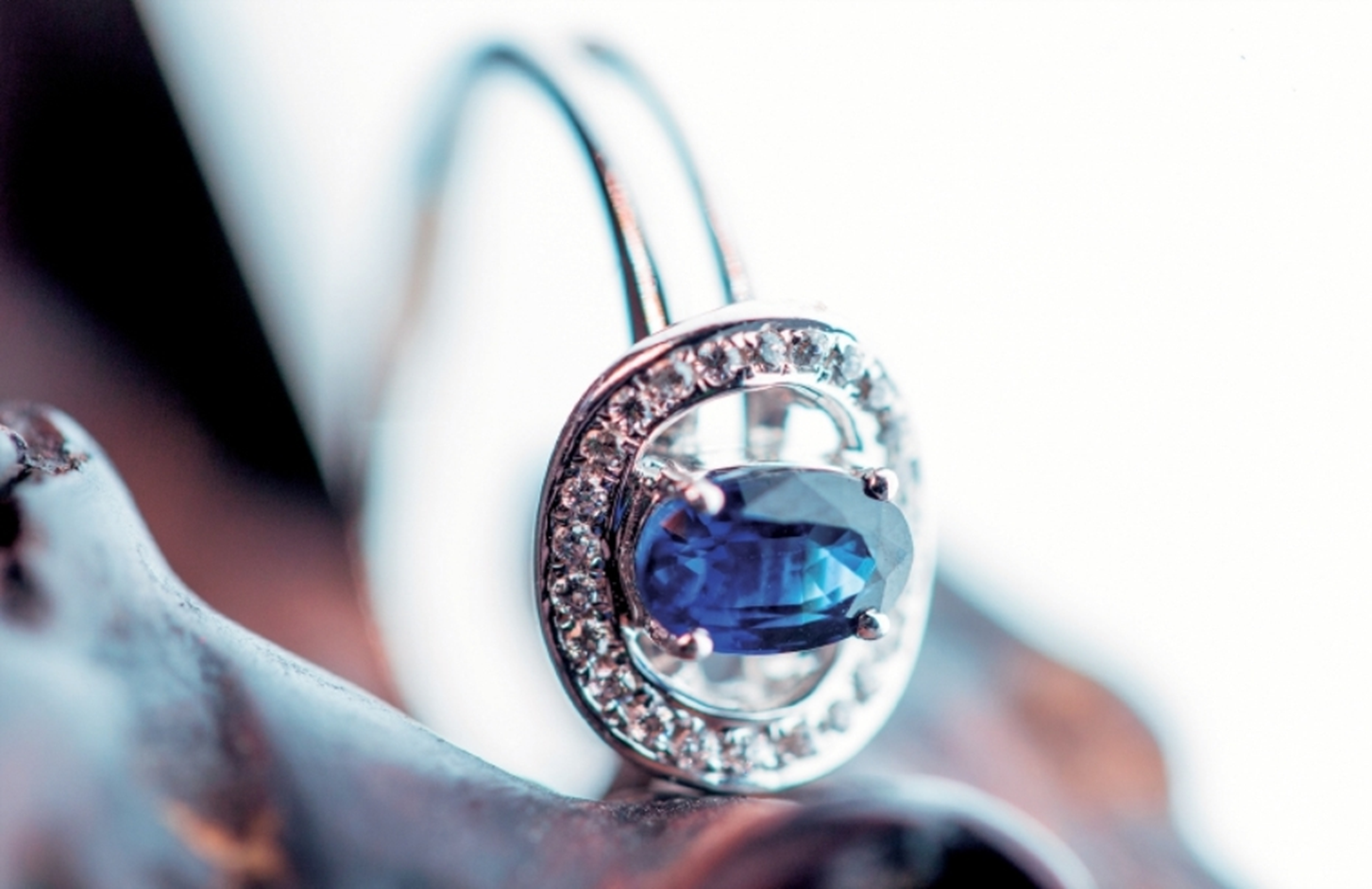
As September’s birthstone, sapphire represents tranquility and wisdom. Historically, Qing Dynasty officials wore sapphire-adorned rank badges, while Western tradition considers it a monarch’s protector. Legend attributes healing properties, with Charles V owning a sapphire believed to cure eye ailments. For a meaningful gift, consider a blue sapphire ring that symbolizes enduring love.
Star sapphires carry particular significance: ‘Stone of Destiny’ in the West, ‘Guiding Stone’ in the East. For impulsive personalities, sapphire promotes calm decision-making. Couples celebrating 45th anniversaries traditionally exchange sapphire jewelry, representing enduring love and wisdom gained through shared experience.
IV. Common Misconceptions Clarified
1. ‘Flawless Sapphires Are Best’
Most natural sapphires contain characteristic inclusions – their absence may indicate treatment or synthesis.
2. ‘Burmese Sapphires Are Always Superior’
Quality varies within all mining regions; origin doesn’t guarantee quality.
3. ‘Glass-Scratching Equals Authenticity’
Most gem materials scratch glass – this test proves little about natural origin.
4. ‘Uniform Color Indicates Quality’
Natural sapphires typically show color banding at 60°/120° angles – uniformity may suggest treatment.
5. ‘Darker Blue Means Better’
Premium sapphires display vivid medium blue tones – excessive darkness diminishes value.
6. ‘Sri Lankan Sapphires Are Supreme’
While producing fine gems, all origins yield quality variations.
Understanding sapphire’s geological diversity and cultural significance enables collectors to appreciate both its scientific marvel and symbolic power – a gem that bridges nature’s artistry with human aspiration for wisdom and peace. For more insights, visit our blog.
FAQ
What is the difference between natural and synthetic sapphire?
Natural sapphires form over millions of years and contain distinctive mineral inclusions, color zoning, and slight imperfections. Synthetic sapphires are lab-created, often showing curved color bands and gas bubbles, and lack natural inclusions. Synthetic stones are also typically flawless, unlike natural gems.
Which sapphire origin is considered the best?
No single origin is universally best. Burmese, Sri Lankan, and Kashmir sapphires are famous for quality, but each region produces a range of qualities. The value of a sapphire depends more on its individual color, clarity, cut, and carat weight than its origin. Always judge each stone on its own merits.
How can I identify a natural sapphire without special equipment?
You can look for slight color banding, natural inclusions (like tiny crystals or silk), and a double refractive effect when turned under light. However, professional gemological testing is recommended for a definitive identification. Many synthetic stones can mimic natural appearance.
What does a sapphire symbolize?
Sapphire symbolizes wisdom, serenity, and nobility. It is the birthstone for September and the traditional gift for 45th wedding anniversaries. Throughout history, it has been associated with royalty and protection, believed to bring mental clarity and spiritual insight to its wearer.