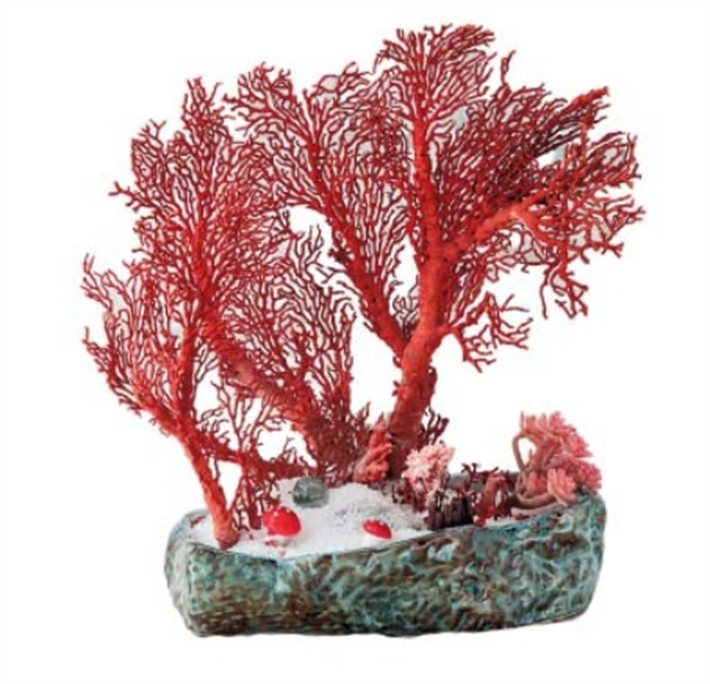
Coral: The Ocean’s Living Gemstone with Millennial History
Mineral Profile:
Classification: Organic Gemstone
Chemical Composition: CaCO₃ (Calcium carbonate with conchiolin)
Refractive Index: 1.49-1.66
Mohs Hardness: 3.5-4
Luster: Vitreous to waxy
Specific Gravity: 2.68 g/cm³
Colors: Red, pink, white, blue, black (Note: The original text incorrectly references tanzanite colors—coral typically displays organic reds, pinks, and whites)
I. Coral in Cultural Heritage
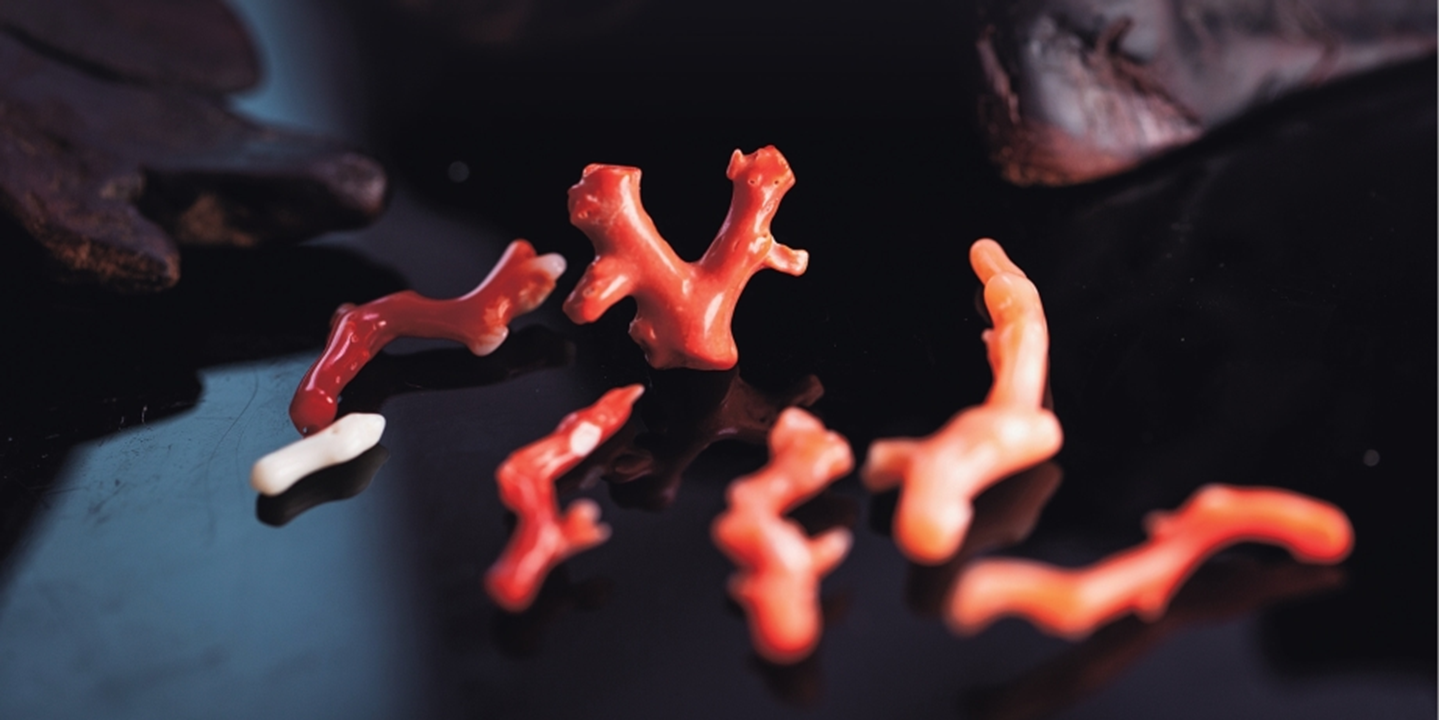
In Buddhist tradition, coral stands among the Seven Treasures alongside gold, silver, pearl, amber, tridacna shell, and lapis lazuli. The Chinese name “珊瑚” (Shānhú) derives from Persian, reflecting its ancient trade route origins. Scientifically, coral represents the calcified skeletal remains of colonial marine invertebrates called coral polyps—making it one of few gemstones of biological origin.
II. Geological and Biological Formation
Coral begins as tiny polyps (approximately rice-grain sized) that:
- Extract calcium carbonate from seawater
- Secrete calcified exoskeletons
- Form interconnected colonies through generations
- Create massive reef structures over centuries
Classification Systems:
- Biological: Stony corals (Scleractinia), Soft corals (Alcyonacea), Hydrocorals (Stylasteridae)
- Ecological: Hermatypic (reef-building with zooxanthellae) vs Ahermatypic (non-reef-building)
The most precious gem-quality coral typically comes from slow-growing, deep-sea species that develop dense, finely textured skeletons.
III. Historical Sources and Harvesting
Ancient Mediterranean, Red Sea, and Persian Gulf regions supplied coral for both decorative and medicinal purposes. Historical Chinese texts like《翻译名义》(Translation Terminology) document sophisticated harvesting techniques where divers used weighted nets to carefully extract coral colonies from seabeds.
Traditional harvesting observations noted coral’s color transformation: white in first year, yellowing in second, developing red hues in maturity—a natural aging process reflecting mineral absorption from seawater.
IV. Authentication of Natural Coral
Genuine Coral Characteristics:
- Unique Patterns: Natural cross-hatching textures unique to each piece
- Organic Imperfections: Characteristic white spots, dark inclusions, and color variations
- Biological Structure: Visible growth patterns resembling tree rings under magnification
- Chemical Reactivity: Effervesces when exposed to hydrochloric acid
- Temperature Sensitivity: Feels warm to touch compared to glass or plastic imitations
V. Common Imitations and Their Identification
1. Sea Bamboo/Sea Willow Carvings
Show uniform parallel grooves lacking coral’s organic randomness; acetone rub test reveals dye transfer.
2. Dyed Marble
Exhibits granular crystalline structure and evenly distributed color.
3. Synthetic Materials
Plastic/resin imitations show no acid reaction and lack natural imperfections.
4. Gilson Synthetic Coral
Displays uniform granular texture without natural banding patterns.
VI. Cultural Significance and Modern Appreciation
Beyond its Buddhist ceremonial importance, coral carries layered symbolism:
- Wealth Attraction: Traditional belief in prosperity enhancement
- Emotional Resonance: Red varieties symbolize passion in relationships
- Holistic Awareness: Believed to heighten intuition and clarity
- Child Development: Historically given to children for skeletal health
- Health Indicator: Color variations supposedly reflect wearer’s physiological changes
Scientific Perspective:
While some traditional beliefs lack empirical support, coral’s porous structure does create unique hygroscopic properties. Color variations with humidity, temperature, and wearer physiology result from microscopic water absorption within the calcium carbonate matrix—a natural phenomenon that indeed makes each piece uniquely responsive to its environment.
From ancient Persian traders to contemporary collectors, coral’s appeal endures through its perfect intersection of natural artistry, biological wonder, and cultural depth—a gemstone that literally grew from life itself, carrying ocean memories within its calcified embrace.
珊瑚:具有千年歷史的海洋活寶石
礦物檔案:
分類:有機寶石
化學成分:CaCO₃(碳酸鈣與貝殼素)
折射率:1.49-1.66
莫氏硬度:3.5-4
光澤:玻璃光澤至蠟狀光澤
比重:2.68 g/cm³
顏色:紅色、粉色、白色、藍色、黑色(註:原文錯誤引用坦桑石顏色—珊瑚通常顯示有機紅色、粉色和白色)
一、文化遺產中的珊瑚
在佛教傳統中,珊瑚與黃金、白銀、珍珠、琥珀、硨磲和青金石並列為七寶。中文名稱「珊瑚」源自波斯語,反映其古老的貿易路線起源。科學上,珊瑚代表了稱為珊瑚蟲的殖民地海洋無脊椎動物的鈣化骨骼遺骸——使其成為少數生物來源的寶石之一。
二、地質和生物形成
珊瑚始於微小的珊瑚蟲(約米粒大小),它們:
- 從海水中提取碳酸鈣
- 分泌鈣化外骨骼
- 通過世代形成互連的群落
- 經過幾個世紀創建巨大的礁石結構
分類系統:
- 生物學:石珊瑚(Scleractinia)、軟珊瑚(Alcyonacea)、水螅珊瑚(Stylasteridae)
- 生態學:造礁珊瑚(與蟲黃藻共生) vs 非造礁珊瑚
最珍貴的寶石級珊瑚通常來自緩慢生長的深海物種,這些物種發展出緻密、質地細膩的骨骼。
三、歷史來源和採集
古代地中海、紅海和波斯灣地區為裝飾和藥用目的供應珊瑚。歷史中國文獻如《翻譯名义》記載了複雜的採集技術,潛水員使用加重網從海床仔細提取珊瑚群落。
傳統採集觀察注意到珊瑚的顏色轉變:第一年白色,第二年變黃,成熟時發展紅色調——反映從海水中吸收礦物質的自然老化過程。
四、天然珊瑚的鑑定
真正珊瑚特徵:
- 獨特圖案:每件作品獨特的交叉陰影紋理
- 有機瑕疵:特徵的白色斑點、深色內含物和顏色變化
- 生物結構:放大下可見類似樹輪的生長圖案
- 化學反應性:暴露於鹽酸時起泡
- 溫度敏感性:觸感比玻璃或塑料仿製品溫暖
五、常見仿製品及其識別
1. 海竹/海柳雕刻
顯示均勻的平行凹槽,缺乏珊瑚的有機隨機性;丙酮擦拭測試顯示染料轉移。
2. 染色大理石
顯示粒狀結晶結構和均勻分佈的顏色。
3. 合成材料
塑料/樹脂仿製品顯示無酸反應且缺乏自然瑕疵。
4. 吉爾森合成珊瑚
顯示均勻的粒狀紋理,無自然帶狀圖案。
六、文化意義和現代欣賞
除了佛教儀式重要性,珊瑚帶有層層象徵意義:
- 財富吸引:傳統上相信增強繁榮
- 情感共鳴:紅色品種象徵關係中的激情
- 整體意識:據信提高直覺和清晰度
- 兒童發展:歷史上給予兒童以促進骨骼健康
- 健康指標:顏色變化據稱反映佩戴者的生理變化
科學觀點:
雖然一些傳統信仰缺乏實證支持,但珊瑚的多孔結構確實創造了獨特的吸濕特性。隨著濕度、溫度和佩戴者生理變化的顏色變化是由碳酸鈣基質內的顯微吸水引起的自然現象——確實使每件作品對其環境獨特響應。
從古代波斯貿易商到當代收藏家,珊瑚的吸引力通過其自然藝術、生物奇觀和文化深度的完美交叉而持久存在——一種從生命本身生長的寶石,在其鈣化懷抱中承載著海洋記憶。
Read More
- Buying Guides (111)
- Collectors' Academy (192)
- Care Academy (8)
- Investment Academy (25)
- Jade Crafting Techniques (29)
- Michelle Au: The Gemstone Luminary (11)
- The Precious Metals & Jewels Compendium (54)