Introduction
Jadeite, the most precious form of jade, has been revered for centuries in Chinese culture and beyond. Its stunning colors—from imperial green to lavender and tricolor patterns—make it a coveted gemstone for collectors and jewelry lovers. However, the market is flooded with imitations, from dyed quartz to resin-filled stones. Knowing how to spot fake jadeite is essential to avoid costly mistakes. This guide provides seven expert tips to help you authenticate jadeite with confidence, backed by gemological standards from the Gemological Institute of America (GIA). Whether you’re shopping for a jadeite piece from VirtuCasa or elsewhere, these tips will protect your investment.
7 Expert Tips to Spot Fake Jadeite
1. Check Color Distribution and Intensity
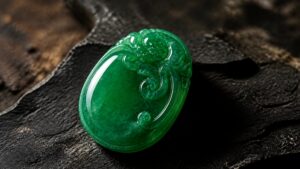
Natural jadeite rarely shows perfectly uniform color. Look for subtle variations—natural “floating” patterns, slight color gradations, or a mix of hues. Fake stones often have unnaturally even dye or an artificial neon glow. For example, the Natural Full-Green Jadeite Saddle Ring ($2437) displays a dense yet translucent green that remains even but not plastic-like. In contrast, dyed imitations bleed into cracks or appear blotchy under a loupe.
2. Assess Transparency and Texture
According to GIA’s jadeite quality factors, transparency is a key value driver. Real jadeite ranges from opaque to translucent (“ice-type”). Hold the piece to light: natural jadeite lets light pass through its fine, interlocking crystal structure. Imitations like aventurine quartz are often too transparent or have a sugary texture. VirtuCasa’s Natural Ice-type Jadeite Bracelet with Floating Green Patterns ($1517) shows a cool, glassy sheen with distinct floating green patterns—a hallmark of authentic high-transparency jadeite.
3. Test the Temperature and Weight
Natural jadeite feels cool to the touch initially and warms slowly, due to its high specific gravity (3.25–3.35). Fakes like glass or resin feel warmer and lighter. Hold the piece in your palm for 10 seconds; if it heats up rapidly, it’s likely not jadeite. VirtuCasa’s Natural Jadeite Bracelet ($1008) weighs 30g with 19 beads—a substantial feel for its size. Imitations often weigh noticeably less.
4. Listen for a Distinctive Sound
Striking two jadeite pieces gently together produces a clear, musical, bell-like ring that lingers. Fake jadeite (e.g., serpentine, quartzite) yields a dull thud. This test works best for beads or bangles. You can try it with VirtuCasa’s Natural Ice-type Tricolor Jade Necklace ($825)—the 5.3mm beads will produce a crisp tone.
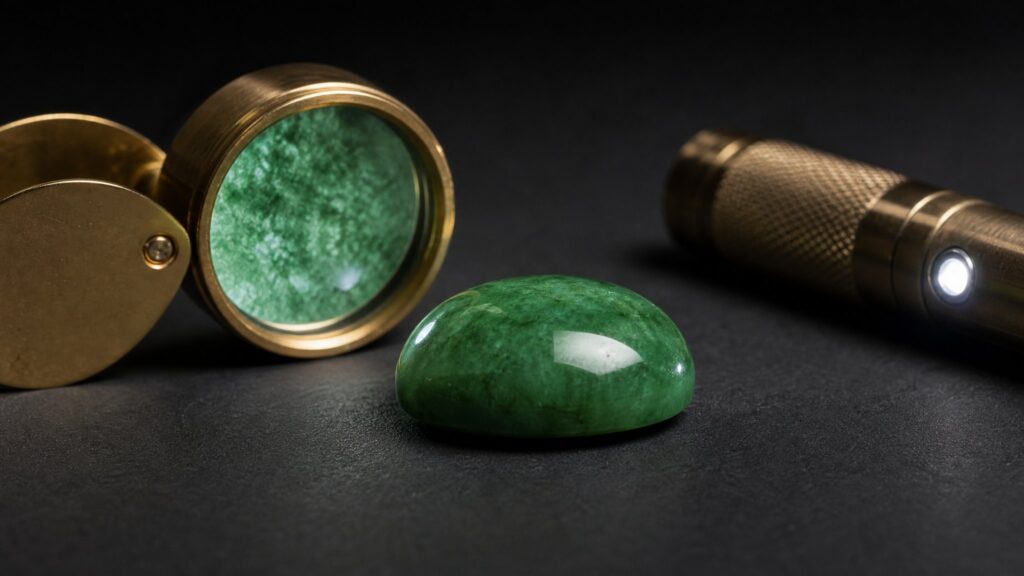
5. Inspect Under Magnification (10x Loupe)
Natural jadeite shows a fine, granular “sugary” texture with natural inclusions like tiny feathers or pits. Fake jadeite may exhibit bubbles (glass), dye concentration in fractures, or a plastic-looking surface. Pay special attention to carved details—real jadeite maintains sharp edges; resin fakes soften. VirtuCasa’s Natural Jadeite Saddle Ring with Floating Green ($719) has a finely carved saddle with a smooth, natural surface.
6. Check for Price Red Flags
If a deal seems too good to be true, it usually is. High-quality jadeite commands premium prices: a natural ice-type violet necklace can cost $6,649 (VirtuCasa’s Natural Ice-type Violet Jade Bead Necklace). Conversely, a full-green saddle ring at $2,437 is reasonable for top color. Be suspicious of “jade” items under $100—they are likely dyed or treated stones. Always request a certificate from a lab like GIA or SSEF.
7. Verify Certification and Seller Reputation
Only buy from reputable sellers who provide transparent origin and gemological reports. VirtuCasa lists detailed germplasm descriptions for each piece, ensuring you know exactly what you’re getting. For extra assurance, consult educational resources like Pala International’s jadeite buying guide for more authentication techniques.
Understanding Quality Factors
Color
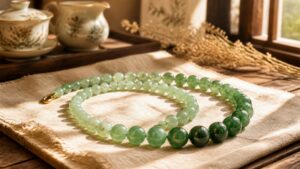
Color is the most important quality factor. The most valuable jadeite has vivid, even color with high translucency. Imperial green is top-tier, but lavender, yellow, and tricolor pieces are also prized. VirtuCasa’s Natural Ice-type Tricolor Jade Necklace ($740) features harmonious transitions of green, yellow, and orange—a unique color combination that’s highly sought after.
Transparency
Ice-type jadeite is the most translucent, with a glassy appearance. The Natural Ice-type Violet Jadeite Cabochon Ring Set with 18K White Gold, Sapphires, and Diamonds ($1926) exemplifies this, with a vivid violet hue and excellent transparency that creates a soft, gem-like glow.
Texture
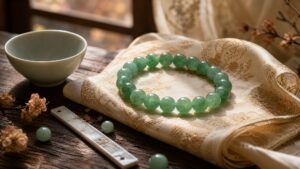
Fine, smooth, and compact texture indicates high-quality jadeite. VirtuCasa’s Natural Three-Color Jadeite Bracelet ($668) has a warm, gentle luster from its fine texture. Coarse or granular surfaces suggest lower quality or a fake.
Types & Styles
Jadeite comes in many forms: bangles, beads, cabochons, saddle rings, and earrings. VirtuCasa offers a range of styles, from classic bracelets like the Natural Jadeite Bracelet ($1008) to statement pieces like the Natural Jadeite Tassel Earrings ($852). Tricolor designs featuring yellow, green, and white or orange are rare and especially valued. Ice-type pieces with floating patterns or lavender hues are also popular among collectors.
How to Choose the Right Size & Fit
For bracelets, measure your wrist circumference and compare to the product’s listed size. VirtuCasa’s bracelets like the lavender-white beaded bracelet (18cm circumference) fit wrists 16–19cm. Rings come in sizes 15 to 26; check the specific ring size. Necklaces have varying bead diameters and lengths—the tricolor necklace with 3.5mm beads is lightweight for layering, while the 10–12mm violet beads in the 158g necklace are substantial for a bold look.
Price & Value
Prices for authentic jadeite at VirtuCasa range from entry-level pieces like the three-color bracelet ($668) to premium collectibles like the violet bead necklace ($6649). Key drivers: color intensity (full green commands $2437), transparency (ice-type costs more), and rarity (tricolor varieties). The ice-type tricolor necklace ($825) offers excellent value for a unique pattern. Remember, high prices reflect natural quality—imitations sell for a fraction but lack investment potential.
Common Mistakes to Avoid
- Assuming all green stones are jadeite—many are quartz, serpentine, or dyed stones.
- Relying solely on a photo; always check in person or request videos under different lighting.
- Skipping certification—a gemological report is your best protection.
- Ignoring texture and weight—glass and resin feel different.
- Falling for low prices that seem too good for “natural jade.”
Top Picks
Here are five outstanding pieces from VirtuCasa, each suited to different buyers:
- For budget-conscious collectors: Natural Three-Color Jadeite Bracelet ($668) – a blend of yellow, white, and light green with a warm luster.
- For the modernist: Natural Ice-type Tricolor Jade Necklace ($825) – rare tricolor (green, yellow, white) in a delicate bead strand.
- For everyday elegance: Natural Jadeite Saddle Ring with Floating Green ($719) – comfortable and classic.
- For a statement piece: Natural Ice-type Violet Jade Bead Necklace ($6,649) – a luxurious investment.
- For a romantic gift: Natural Ice-type Violet Jadeite Cabochon Ring Set ($1,926) – combines jadeite with diamonds and sapphires.
Final Tips
Arming yourself with these seven expert tips will drastically reduce the risk of buying fake jadeite. Always buy from trusted sellers like VirtuCasa, who provide detailed, transparent product descriptions. Remember, authentic jadeite is not just a gemstone—it’s a piece of cultural and natural history that holds its value. Happy hunting!
FAQ
What is the most reliable test to spot fake jadeite?
The sound test (ringing like a bell when tapped) and specific gravity (cool feel, slow warm-up) are quick field tests. For definitive proof, use a 10x loupe to check for bubbles or dye concentrations, and always request a gemological certificate.
Can dyed jadeite be considered natural?
No. Dyed jadeite (Type B or C) is treated with colorants or polymer impregnation and is not considered natural Type A jadeite. Always check for disclosure of treatments.
Are tricolor jadeite pieces more valuable?
Yes, tricolor jadeite (combining green, yellow, white, or orange) is rare and highly prized. The natural three-color bracelet ($668) and ice-type tricolor necklaces ($740 and $825) from VirtuCasa are excellent examples of this sought-after variety.
How can I tell if a jadeite price is fair?
Compare with reputable sellers’ prices. For example, a natural full-green saddle ring at $2,437 is reasonable; a similar piece for under $200 is likely fake. Use GIA’s quality factors—color, transparency, texture—to judge value.