Introduction
Natural jadeite is one of the most treasured gemstones in Chinese culture, symbolizing purity, virtue, and prosperity. Yet buying jadeite can be daunting for newcomers. The market is filled with treated stones, misrepresented grades, and confusing terminology. Many shoppers unknowingly make mistakes that cost them both money and the chance to own a genuine, high-quality piece. This guide covers the five most common jadeite buying mistakes and how to avoid them, using real products from VirtuCasa’s jadeite collection as examples. Whether you’re seeking a delicate bracelet or a statement ring, understanding these pitfalls will help you shop with confidence.
Understanding Quality
Jadeite quality is determined by a combination of color, transparency, texture, and craftsmanship. According to GIA’s jade quality factors, the most important attribute is color — vivid, even green or lavender hues command higher value. Transparency (or “ice” quality) comes next: highly translucent jadeite, often called “ice-type,” is rarer and more prized. Texture refers to the fineness of the crystal structure; a smooth, compact feel indicates superior grade.
Color
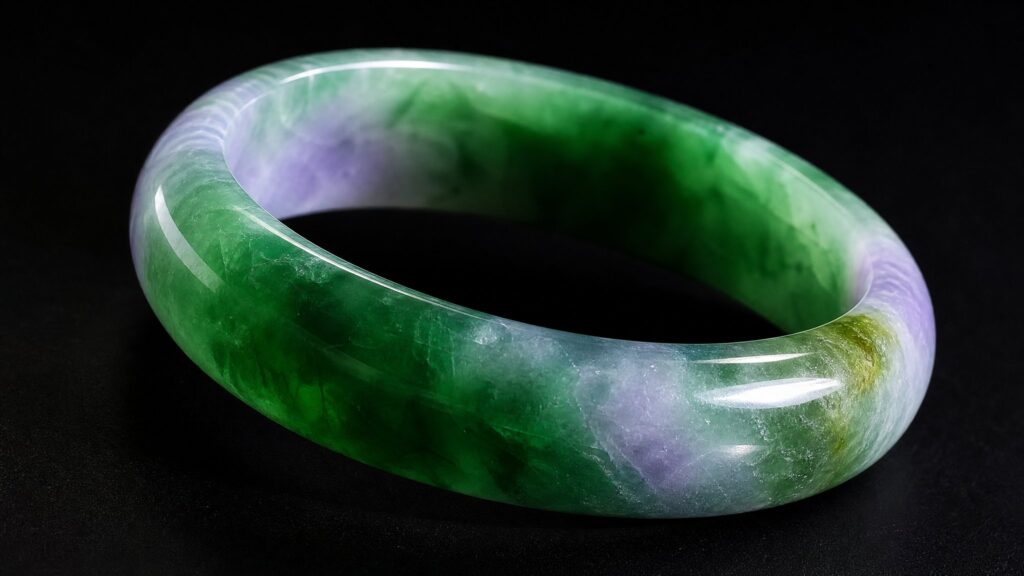
Green is classic, but jadeite also appears in lavender, yellow, white, and even tricolor combinations. For instance, VirtuCasa’s Natural Full-Green Jadeite Saddle Ring ($2437) showcases a dense, even green hue with a vitreous luster. Meanwhile, the Natural Ice-type Violet Jade Bead Necklace ($6649) displays a soft lavender tone with excellent translucency — a hallmark of high-quality ice-type jade.
Transparency
Transparency ranges from opaque to almost glass-like. The Natural Ice-type Jadeite Bracelet with Floating Green Patterns ($1517) exemplifies a transparent, crystalline structure with floating green inclusions. As noted by Pala International’s buying guide, stones that are too dark or not translucent are less valued.
Texture and Craftsmanship
Fine texture means the jadeite feels smooth and looks even under magnification. Carving and setting also affect quality. The Natural Ice-type Violet Jadeite Cabochon Ring Set ($1926) demonstrates how a well-polished cabochon in a quality setting can elevate the piece.
Types & Styles
Jadeite jewelry comes in various styles: bracelets (bangles or bead strands), earrings, rings, and necklaces. Bead bracelets are popular for daily wear, while saddle rings offer a classic Chinese aesthetic. Authentic jade sellers emphasize that only natural Type A jadeite is structurally stable for long-term wear.
VirtuCasa offers several types: Bracelets — the Natural Jadeite Bracelet ($1008) features lavender-white beads with a gentle luster; the Natural Three-Color Jadeite Bracelet ($668) combines yellow, white, and light green. Earrings — the Natural Jadeite Tassel Earrings ($852) boast deep green beads on 18K gold-plated chains. Rings — the Natural Jadeite Saddle Ring with Floating Green ($719) is an affordable entry to saddle rings. Necklaces — the Natural Ice-type Tricolor Jade Necklace ($825) and another at $740 offer subtle color transitions.
How to Choose the Right Size & Fit
Size is crucial for comfort and wearability. VirtuCasa lists specific dimensions for each item. For bead bracelets, the Natural Jadeite Bracelet has 19 beads of 10mm diameter and a circumference of about 18cm, fitting wrists 16-19cm. The Ice-type bracelet uses 13 beads of 16mm diameter and weighs 101g — a substantial feel. For rings, the Full-Green Saddle Ring is size 24, while the Floating Green Saddle Ring is size 26. Always measure your finger or wrist against the listed sizes; adjustable cords on some bracelets offer flexibility.
Price & Value
What drives jadeite prices? Color intensity, transparency, size, and craftsmanship. Premium pieces like the Natural Ice-type Violet Jade Bead Necklace ($6649) justify their high price through large, translucent beads with uniform lavender color. Mid-range items such as the Natural Ice-type Tricolor Jade Necklace ($825) offer excellent value with three-color ice-type jadeite. Entry-level pieces like the Natural Three-Color Jadeite Bracelet ($668) allow new collectors to own natural jadeite without a huge investment. Remember that treated or synthetic jadeite can be cheaper but lacks the cultural and aesthetic value of natural stone.
Common Mistakes to Avoid
- Mistake 1: Confusing jadeite with nephrite or serpentine. Only genuine jadeite (Type A) has the hardness, translucency, and luster that collectors prize. Always buy from reputable sources that verify natural origin.
- Mistake 2: Ignoring transparency. Opaque jadeite is less valuable. Look for ice-type or translucent pieces like the Natural Ice-type Bracelet with Floating Green Patterns.
- Mistake 3: Overlooking size and fit. A beautiful ring that doesn’t fit or a bracelet that slides off is a waste. Check measurements carefully.
- Mistake 4: Buying solely on price. Very low prices often indicate treated or synthetic material. Natural jadeite at VirtuCasa’s price points reflects genuine quality.
- Mistake 5: Not checking the setting and craftsmanship. Poorly set stones can fall out or damage the jade. VirtuCasa’s pieces, like the Tassel Earrings with 18K gold-plated chains, combine durability with elegance.
As Jewea’s jadeite buying guide advises, understanding these terms and factors helps you make informed decisions.
Top Picks
Based on quality and value, here are our top recommendations from VirtuCasa’s collection:
- Best for collectors: Natural Ice-type Violet Jade Bead Necklace ($6649) — a rare, large-bead necklace with outstanding transparency and color. Ideal for serious collectors.
- Best statement piece: Natural Ice-type Violet Jadeite Cabochon Ring Set ($1926) — a luxurious ring set with 18K gold, sapphires, and diamonds. Perfect for special occasions.
- Best everyday earrings: Natural Jadeite Tassel Earrings ($852) — lightweight and elegant, suitable for daily wear or gifting.
- Best beginner bracelet: Natural Three-Color Jadeite Bracelet ($668) — affordable, adjustable, and showcases the beauty of natural multicolored jade.
- Best classic ring: Natural Full-Green Jadeite Saddle Ring ($2437) — a timeless piece with rich, even color.
Final Tips
Always request certification for natural jadeite, especially for high-value purchases. Trust your instincts: if a deal seems too good, it likely is. Study product descriptions carefully — VirtuCasa provides detailed information on germplasm, size, weight, and setting for every item. Start with a modest piece like the Natural Jadeite Bracelet ($1008) to learn the feel of genuine jadeite. Finally, remember that jadeite is not just a gemstone; it carries deep cultural significance. Buying wisely means you’ll enjoy your piece for generations.
FAQ
What is the most common mistake when buying jadeite?
The most common mistake is confusing natural jadeite with treated or imitation stones. Many buyers assume all green stones are jade, but only natural Type A jadeite has the hardness and beauty that make it valuable. Always buy from a trusted seller who verifies the jade’s origin.
How can I tell if jadeite is high quality?
High-quality jadeite exhibits vivid, even color, good transparency (ice-type or translucent), and a fine, smooth texture. Check for vitreous luster and uniform bead sizes. VirtuCasa’s Natural Ice-type Violet Jade Bead Necklace is a good example of premium quality.
Are all jadeite bracelets the same size?
No, bracelets vary in bead diameter, number of beads, and total circumference. For example, VirtuCasa’s Natural Jadeite Bracelet has 10mm beads and an 18cm circumference, while the Ice-type Bracelet has 16mm beads. Always measure your wrist against the listed dimensions.
What does ‘ice-type’ jadeite mean?
‘Ice-type’ refers to jadeite with high transparency, resembling ice. It is considered premium because light passes through it, revealing internal patterns or color. VirtuCasa’s Natural Ice-type Tricolor Jade Necklaces are examples of this category.