Introduction
The jadeite saddle ring is a classic symbol of Eastern elegance and understated luxury. Unlike modern mass‑produced rings, each saddle ring is carved from a single piece of natural jadeite, preserving the stone’s unique internal patterns and colors. For collectors and jewelry lovers alike, understanding the nuances of jadeite quality, sizing, and craftsmanship is essential to making a wise investment. At VirtuCasa, we offer a curated selection of natural jadeite saddle rings that showcase the remarkable beauty of this revered gemstone.
Understanding Quality
Jadeite quality is evaluated based on several key factors. According to gemological grading standards from the Gemological Institute of America (GIA), color, transparency, texture, and cut all influence value. For saddle rings, the carving style also plays a role.
Color
The most prized jadeite color is a vivid, even green known as “Imperial” green. Our Natural Full-Green Jadeite Saddle Ring exemplifies this ideal with an even “full green” coloration that is dense yet translucent. Other desirable hues include lavender, white, and multicolored combinations. The intensity and uniformity of color significantly affect a ring’s desirability.
Transparency & Texture
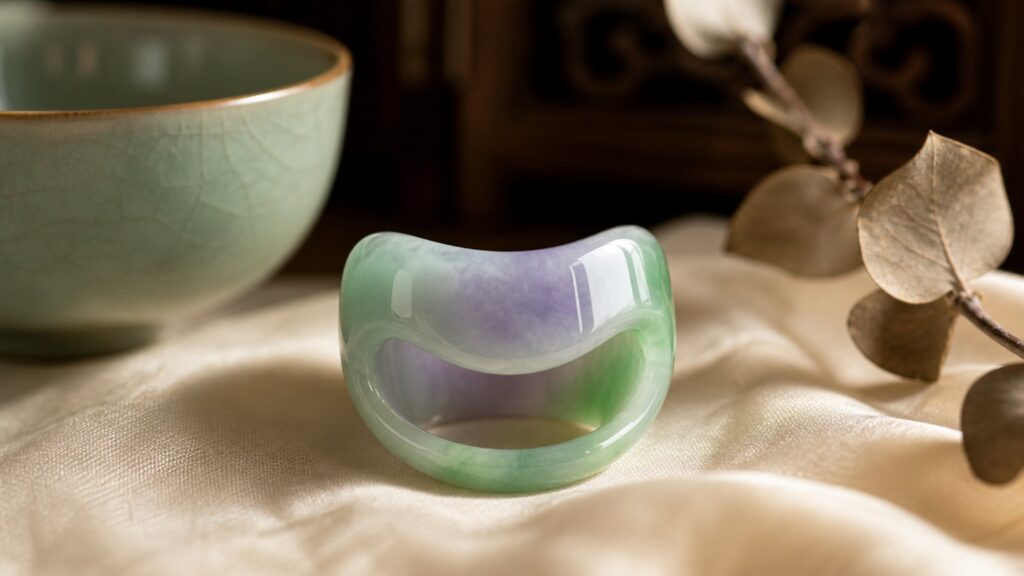
High‑quality jadeite is translucent, allowing light to pass through and create a soft glow. The GIA notes that “ice‑type” jadeite with high transparency is especially valued. A fine, smooth texture with a vitreous luster indicates dense crystallization. For example, the Natural Jadeite Saddle Ring with Floating Green features a light base with moderate transparency, highlighting floating green patches that add character.
Carving & Setting
Saddle rings are traditionally carved from a single piece of jadeite, with a curved top surface that rests comfortably on the finger. The setting is minimal – often just the polished stone itself – to let the jade speak. No metal prongs or bezels are used, ensuring an uninterrupted view of the gem’s beauty.
Types & Styles
Jadeite saddle rings come in a variety of colors and patterns. The two main types available at VirtuCasa are:
- Solid Color Saddle Rings: The Natural Full-Green Jadeite Saddle Ring ($2,437) offers a uniform deep green with a warm vitreous sheen. It’s a classic choice for those who want a bold, monochromatic statement.
- Floating Pattern Saddle Rings: The Natural Jadeite Saddle Ring with Floating Green ($719) features elegant green patches on a lighter background, giving each ring a one‑of‑a‑kind landscape effect. This style appeals to buyers who appreciate natural variation.
While other jadeite jewelry like bracelets and necklaces offer different expressions, the saddle ring’s compact form makes it ideal for daily wear.
How to Choose the Right Size & Fit
Saddle rings are typically sized numerically. Our product data provides ring sizes: the full‑green saddle ring is a 24‑ring size (suitable for fingers with a moderate circumference), while the floating green saddle ring is a 26‑ring size. It’s crucial to measure your finger accurately. A properly fitted saddle ring should slide on comfortably but not spin loosely. Because the stone is rigid, resizing is not possible, so always verify your size before purchase. At VirtuCasa, you can refer to the specific measurements listed for each ring to ensure a perfect fit.
Price & Value
The price of a jadeite saddle ring varies widely based on color quality, transparency, and size. At VirtuCasa, you’ll find entry‑level options like the Natural Jadeite Saddle Ring with Floating Green at $719, which offers excellent craftsmanship and natural beauty at an accessible price. Premium examples such as the Natural Full‑Green Jadeite Saddle Ring at $2,437 command higher values due to their even, intense green color and superior transparency. For comparison, other jadeite items like a cabochon ring set with precious metals ($1,926) show how settings can elevate cost. However, a saddle ring’s value lies primarily in the jade itself, not metalwork. When budgeting, prioritize color and translucency over size.
Common Mistakes to Avoid
- Confusing jadeite with nephrite: Jadeite is rarer and more valuable than nephrite. Always verify your ring is natural jadeite, not a lower‑grade substitute.
- Ignoring size: Buying a ring without confirming finger circumference can lead to an unwearable piece. Use a ring sizer or measure an existing ring’s inner diameter.
- Overlooking natural inclusions: Slight “floating” patterns or color variations are natural and desirable; they do not indicate flaws but rather authenticate the jade.
- Assuming all green jade is alike: The shade, saturation, and evenness of green dramatically affect value. A “full green” ring is far more rare than one with light patches.
Top Picks
Based on our collection, here are three standout saddle rings for different preferences:
- Best for Classic Elegance: Natural Full‑Green Jadeite Saddle Ring – $2,437. Its even, translucent green and traditional saddle shape make it a heirloom piece for collectors who demand the finest.
- Best for Daily Wear & Unique Character: Natural Jadeite Saddle Ring with Floating Green – $719. Lightweight at 13.5g, with a size 26 fit, it offers comfortable everyday use and an artistic aesthetic.
- Alternative – If You Prefer a Cabochon Ring: For a more modern look, consider the Natural Ice‑type Violet Jadeite Cabochon Ring Set – $1,926. While not a saddle ring, it showcases ice‑type jade with diamond and sapphire accents, ideal for those seeking a contemporary design.
Final Tips
When purchasing a jadeite saddle ring, always buy from a reputable source that guarantees natural, untreated jadeite. VirtuCasa’s jadeite collection includes detailed product descriptions for each item, so you can verify the germplasm, size, and weight. Trust your eye: the best jadeite ring is one that speaks to your aesthetic and fits comfortably. With proper care – avoiding harsh chemicals and storing separately – your saddle ring will retain its luster for generations.
FAQ
What is the difference between a saddle ring and a cabochon ring?
A saddle ring is carved from a single piece of jadeite with a curved top and no metal setting, while a cabochon ring uses a polished domed stone mounted in a metal bezel or prongs. Saddle rings offer a seamless, traditional look.
How do I measure my finger for a saddle ring?
Use a ring sizer or measure the inner diameter of a well-fitting ring. VirtuCasa lists ring sizes (e.g., 24, 26) designed for moderate circumferences. If in doubt, consult a jeweler.
Are jadeite saddle rings suitable for daily wear?
Yes. Jadeite is one of the hardest gemstones, with a Mohs hardness of 6.5–7. The saddle ring’s smooth surface and substantial weight (e.g., 9.5g to 13.5g) make it durable enough for regular use.
What should I look for in a quality jadeite saddle ring?
Focus on color (vivid, even green is premium), transparency (translucent “ice‑type” is highly valued), and texture (fine, vitreous luster). Also verify the ring is natural, not treated.