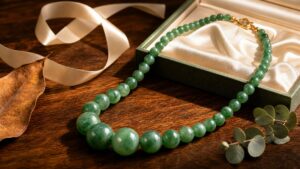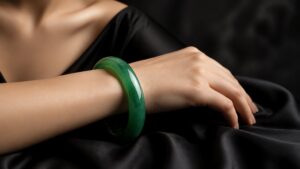
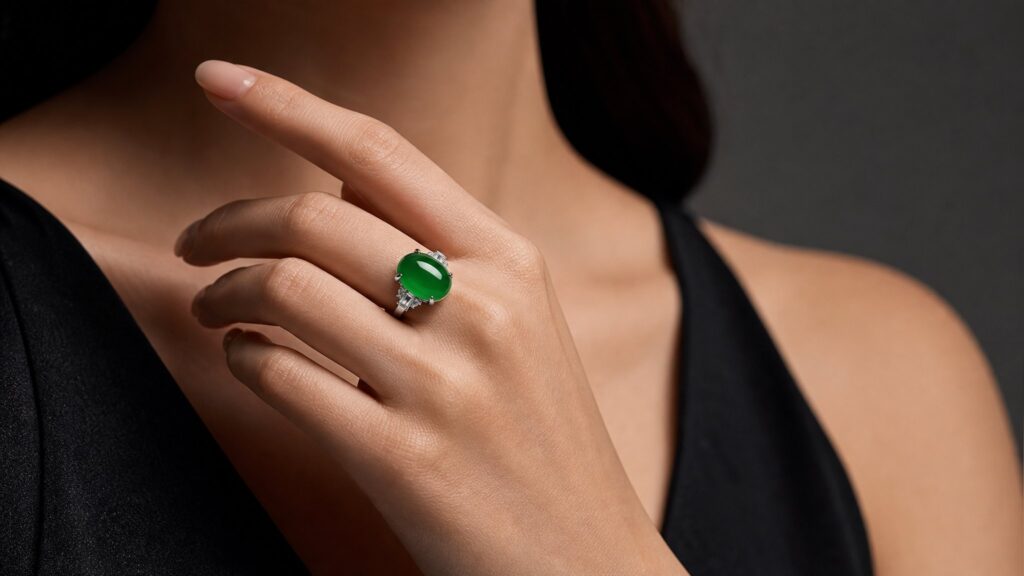
Jadeite rings blend timeless elegance with profound cultural meaning. Whether set as a smooth cabochon or carved into a classic saddle shape, each piece tells a story of nature’s artistry. For collectors and first-time buyers alike, understanding the nuances of quality and style is essential to making a confident purchase. This guide walks you through the key factors—color, texture, transparency, and craftsmanship—that define a fine jadeite ring, with real product examples to illustrate your choices.
Introduction
For centuries, jadeite has been revered as a symbol of virtue, purity, and prosperity. Rings, in particular, are cherished as personal talismans and heirloom pieces. Unlike many gemstones, jadeite’s value is not determined by a single standard of brilliance but by a harmonious interplay of color, texture, and translucency. Whether you are drawn to the vibrant full-green of a traditional saddle ring or the ethereal violet of an ice-type cabochon, knowing what to look for ensures you invest in a piece that resonates with your style and lasts for generations.
Understanding Quality
Quality in jadeite is assessed through several interdependent factors, often referred to as the “Three T’s” plus color. According to GIA’s jade quality grading, the most prized jadeite possesses an intense, even color, a fine and compact texture, and high translucency. Below we break down these elements as they apply to rings.
Color
Color is the most visible attribute. Imperial green commands the highest prices, but other hues—lavender, white, yellow, and three-color combinations—are also highly sought. In rings, the color should be evenly distributed and saturated. For example, the Natural Full-Green Jadeite Saddle Ring exhibits a dense, even green with a warm vitreous luster, demonstrating the richness prized by collectors. In contrast, the Natural Ice-type Violet Jadeite Cabochon Ring Set features a vivid violet hue with excellent transparency, a rarer color that offers a delicate alternative to green.
Texture and Transparency
Texture refers to the internal grain or “feel” of the stone. Fine-textured jadeite appears smooth and compact, often with a glassy or oily sheen. Transparency ranges from opaque to translucent. Ice-type jadeite—like the violet cabochon mentioned above—is prized for its near-transparent, cool clarity. Even in less translucent pieces, a smooth, lustrous surface indicates high quality. The Natural Jadeite Saddle Ring with Floating Green balances moderate transparency with floating green patches on a light base, showcasing how texture and pattern can create visual depth without full translucency.
Craftsmanship and Setting
A well-cut jadeite ring maximizes the stone’s natural beauty. Cabochon cuts—domed and polished without facets—are traditional for jadeite because they best display its color and internal structure. Saddle rings, carved from a single piece of jadeite, require skill to shape the curved top to fit comfortably. Settings also matter: metals like 18K white gold and accents such as diamonds or sapphires enhance the stone without overpowering it, as seen in the violet cabochon ring set.
Types & Styles
Jadeite rings come in several classic styles, each with its own character.
Cabochon Rings
The cabochon cut is the most traditional for jadeite. A smooth, rounded dome—often oval or round—highlights the stone’s color and any internal patterns. Cabochon rings can be simple solitaires or framed by diamonds and other gems. The Natural Ice-type Violet Jadeite Cabochon Ring Set exemplifies this style, with its oval cabochon set in 18K white gold and accented by sapphires and diamonds, creating a contemporary yet timeless look.
Saddle Rings
Saddle rings—also called horse-bit rings—feature a curved top carved from a single piece of jadeite, inspired by traditional Chinese jade carvings. They are typically wider than cabochon rings and worn as statement pieces. The Natural Full-Green Jadeite Saddle Ring and the Natural Jadeite Saddle Ring with Floating Green both showcase this style—the former with an even green hue, the latter with floating green patterns on a lighter base. Saddle rings offer a modern twist on ancient craftsmanship, making them versatile for both formal and casual wear.
How to Choose the Right Size & Fit
Proper fit is crucial for comfort and to prevent the ring from spinning or slipping. Jadeite rings are typically available in standard ring sizes. For example, the violet cabochon ring is size 15, the full-green saddle ring is size 24, and the floating green saddle ring is size 26 (these measurements correspond to generic sizing systems). Always measure your finger at the end of the day when it is slightly larger, and consider the width of the band—wider rings like saddle styles may require a slightly larger size for comfort. If you are unsure, consult a jeweler for professional sizing.
Price & Value
What drives the price of a jadeite ring? The most influential factors are color richness, transparency, texture, and the rarity of the stone. Rings with intense, even green or vivid violet command premium prices. The presence of additional gemstones and precious metal settings also add value. For instance, the full-green saddle ring is priced at $2437, reflecting its dense color and substantial weight (9.5g). In contrast, the floating green saddle ring at $719 offers an entry point into authentic jadeite with attractive patterns at a lower weight (13.5g but less intense color?). The ice-type violet cabochon set at $1926 combines high transparency with a designer setting. For reference, natural jadeite bead bracelets and necklaces in the jadeite collection range from entry-level to premium, demonstrating the breadth of the market.
It is important to note that treated or synthetic jadeite can mimic natural pieces at lower prices, but only natural jadeite retains long-term value. Christie’s collecting guide emphasizes that natural, untreated stones are the most desirable for collectors.
Common Mistakes to Avoid
- Confusing jadeite with nephrite: Both are jade, but jadeite is rarer and more valuable, especially in bright colors. Always verify the gemological identification.
- Assuming all green jade is high quality: Color must be evaluated alongside transparency and texture. A dark, opaque green may be less valuable than a lighter, translucent piece with fine texture.
- Ignoring treatments: Many jadeites are dyed or polymer-impregnated to improve color or stability. Request a certificate stating the stone is natural and untreated.
- Choosing the wrong size: Saddle rings have a wider band; if they are too loose, they will spin. Always try on or measure carefully.
- Overlooking the setting: Poorly set jadeite can chip or loosen. Inspect prongs and bezels, and ensure the metal complements the stone without forcing the design.
Top Picks
Based on the current collection, here are three standout jadeite rings for different preferences:
- Natural Full-Green Jadeite Saddle Ring – Best for collectors who desire a classic, even green with a solid feel. The saddle shape is iconic, and the weight (9.5g) offers a satisfying presence without being heavy. Ideal for those who appreciate traditional Chinese jade carving and want a ring that commands attention.
- Natural Jadeite Saddle Ring with Floating Green – Best for buyers who love pattern and subtlety. The floating green patches on a light base create a unique, painterly effect. At $719, it is an accessible entry point into natural jadeite rings while still offering a substantial feel (13.5g). Perfect for daily wear and casual elegance.
- Natural Ice-type Violet Jadeite Cabochon Ring Set with 18K White Gold, Sapphires, and Diamonds – Best for those who want a modern, luxurious statement. The combination of high-transparency violet jadeite with diamonds and sapphires in a 18K white gold setting makes this a standout piece for special occasions. At only 4g, it is lightweight but visually striking.
Final Tips
When buying a jadeite ring, always purchase from a reputable seller who provides clear information about the stone’s origin, treatment status, and measurements. Natural jadeite is a finite, precious material—treat it with care. Store your ring separately to avoid scratches, and clean it gently with a soft cloth. Whether you choose a cabochon or saddle style, a jadeite ring is more than an accessory; it is a piece of cultural heritage and natural wonder that will bring you joy for a lifetime.
For further reading, the Gem Society’s jade buying guide offers additional insights into distinguishing jadeite from nephrite and understanding treatments.
FAQ
How can I tell if a jadeite ring is natural?
Look for a certificate from a recognized gemological lab stating that the jadeite is natural and untreated. Natural jadeite often has slight color variations or internal texture, whereas treated stones may appear overly uniform or have an unnatural dye. A reputable seller will disclose any treatments.
What is the difference between a cabochon and a saddle jadeite ring?
A cabochon ring features a dome-shaped, polished stone (usually oval or round) set in a metal band. A saddle ring is carved from a single piece of jadeite into a curved top that resembles a horse saddle, often with a wider band. Both styles highlight the jadeite’s color and texture differently.
What ring size should I choose for a jadeite saddle ring?
Saddle rings typically have a wider band, so you may need a half or full size larger than your usual ring size to ensure a comfortable fit. It’s best to measure the exact circumference of your finger where the ring will sit and consult the seller’s size chart.
Are jadeite rings suitable for daily wear?
Yes, jadeite is a tough gemstone (7 on Mohs scale), but it can chip if struck hard. For daily wear, choose a protective setting like a bezel or thick metal band. Avoid wearing during heavy physical work or activities that might cause impact.