Introduction: Why the Clasp Matters More Than You Think
When buyers shop for a jadeite bracelet, most attention goes to color, transparency, and bead size. The clasp or cord, however, is the component you interact with every single day. It determines how easily the bracelet goes on, how secure it feels on the wrist, and even how the jadeite beads sit against the skin. A beautiful strand of jadeite on a poorly chosen closure can feel awkward, while a simple cord matched to the right bead weight feels effortless.
It also helps to understand what you are actually buying. Jadeite is graded on color, clarity, and cut, and buyers should always confirm whether a piece is Type A (untreated) or has been treated, as explained in this GIA guide to jadeite quality factors. The clasp does not change the gem’s grade, but it does shape the wearing experience and the long-term durability of the piece.
At VirtuCasa, our jadeite bracelets are built around different closure approaches, from simple elastic cord to traditional knotting. This guide walks through each type, explains the trade-offs, and helps you match a closure to your lifestyle, wrist size, and budget.
Understanding Quality: What to Evaluate Before the Clasp
Closure type is a practical decision, but it should never come at the expense of gem quality. Evaluate the jadeite first, then choose the closure that supports it.
Color and Tone
Color is the single most influential value factor in jadeite. Lavender-white, deep green, and multicolor combinations each appeal to different tastes. Our Natural Jadeite Bracelet, for example, presents a soft lavender-white hue with a gentle vitreous luster, while the Natural Three-Color Jadeite Bracelet combines yellow, white, and light green in one strand. Color preference is personal, but consistency and saturation matter.
Transparency and Texture
Ice-type jadeite is prized for its transparent, delicate structure and cool glassy sheen. The Natural Ice-type Jadeite Bracelet with Floating Green Patterns illustrates this well, with floating green patterns set against an icy base. Finer texture and higher transparency generally signal a higher-quality stone.
Bead Size and Uniformity
Bead diameter affects both presence and weight. Smaller beads feel lighter and more everyday; larger beads feel substantial and more formal. Uniform sizing across a strand is a mark of careful selection. Buyers comparing multiple pieces should note differences in color, clarity, imperfections, and price, a point reinforced in this practical guide to buying jade online.
Types & Styles: The Main Closure Options
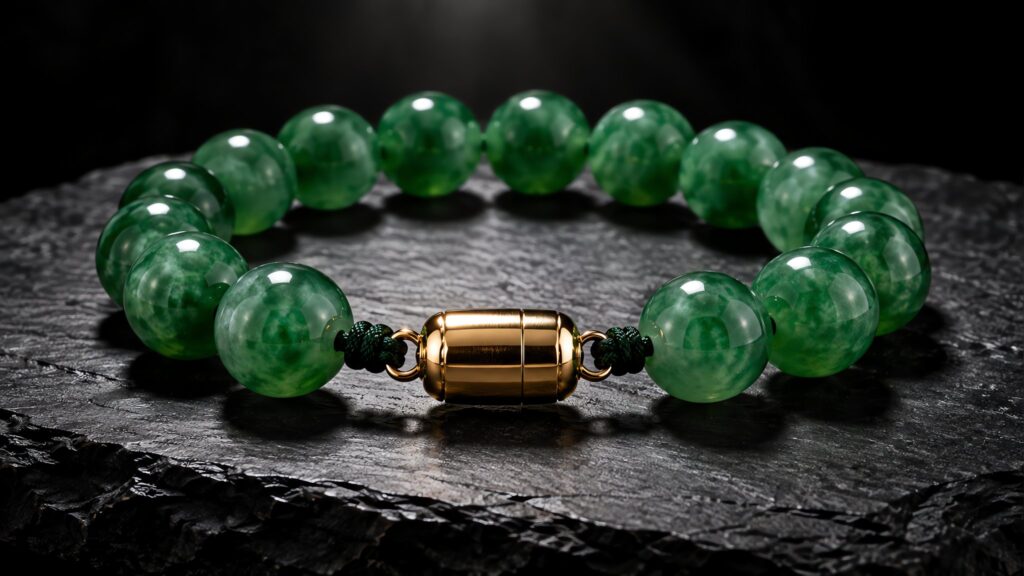
The most common closure for a jadeite bead bracelet is no metal clasp at all. Instead, the beads are threaded onto an elastic cord or a traditional knotted rope. This preserves the clean, uninterrupted look of a jadeite strand and avoids metal hardware that can scratch or compete with the stone.
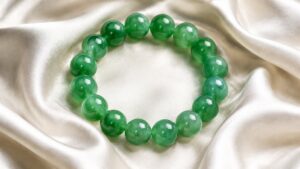
Elastic cord is the most user-friendly option. It slips over the hand without a fastener and adapts to minor wrist size variation. Our Natural Jadeite Bracelet is composed of 19 round beads, each approximately 10mm in diameter, forming a flexible bracelet with a total circumference of about 18cm. The Natural Three-Color Jadeite Bracelet uses the same approach with 16 spherical beads, each approximately 12mm in diameter, and an adjustable elastic cord.
Traditional knotting is the other major style. Here, beads are strung on a durable cord and finished with hand-tied knots rather than elastic. This is common in necklaces such as the Natural Ice-type Tricolor Jade Necklace, which is strung on durable brown cord with traditional knotting. Knotting offers a more artisanal, secure feel and suits buyers who prefer a fixed, non-stretch fit.
A third category is the fully carved piece with no separate closure at all. Saddle rings like the Natural Full-Green Jadeite Saddle Ring are carved entirely from a single piece of jadeite, so there is no cord or clasp to consider. If you want zero hardware and maximum simplicity, this style is worth exploring.
How to Choose the Right Size & Fit
Fit is where closure type and measurements meet. Elastic cord bracelets are the most forgiving because they stretch slightly over the hand. A bracelet with a total circumference of about 18cm, like our Natural Jadeite Bracelet, is described as suitable for wrists with a circumference of 16-19cm. That range gives you a comfortable buffer without the strand feeling loose.
For knotted or fixed-cord pieces, fit is less adjustable, so measuring your wrist before buying matters more. Use a soft tape measure around the wrist bone, then compare against the product’s stated circumference or bead count. Bead diameter also changes how a bracelet sits: a strand of 12mm beads occupies more of the wrist than one of 10mm beads, even when the total length is similar.
Weight is the third fit factor. A lightweight strand is easy to forget you are wearing, while a heavier one makes a statement. Our Natural Jadeite Bracelet weighs approximately 30g, and the Natural Three-Color Jadeite Bracelet weighs approximately 35g. For buyers who want a substantial feel, the Natural Ice-type Jadeite Bracelet with Floating Green Patterns weighs 101g across 13 round beads of 16mm diameter each. A bracelet buying guide from a jade bracelet buying guide also recommends checking bead size, jade quality, craftsmanship, and treatment disclosure before you commit.
Price & Value: What Drives Cost
In jadeite, price tracks quality far more than closure type. Entry-level pieces are typically smaller, less transparent, or more lightly colored, while premium pieces show higher transparency, stronger saturation, and larger, more uniform beads. Our collection spans that spectrum: the Natural Three-Color Jadeite Bracelet is $668, the Natural Jadeite Bracelet is $1008, and the Natural Ice-type Jadeite Bracelet with Floating Green Patterns is $1517.
Closure choice has a modest effect on cost. Elastic cord and simple rope knotting are economical and keep the focus on the stones, which is why they appear on many bead bracelets. Metal settings and gold-plated components add material and labor cost, as seen in the Natural Jadeite Tassel Earrings, where the jadeite beads are connected to 18K gold-plated chains.
When comparing value, weigh the gem factors first, then the closure. A well-matched closure that suits your wrist and daily routine will make a piece feel worth more than a technically higher-grade strand that is uncomfortable to wear. You can browse the full range on our jadeite category page.
Common Mistakes to Avoid
- Choosing a closure before measuring your wrist, then discovering the fit is too tight or too loose.
- Assuming a metal clasp is automatically better; for bead bracelets, cord and knotting often suit the design best.
- Ignoring bead diameter and weight, which affect comfort as much as circumference does.
- Overlooking treatment disclosure and failing to confirm whether jadeite is Type A (untreated).
- Buying on color alone without checking texture, transparency, and uniformity across the strand.
- Forgetting that elastic cord can relax over time and may eventually need restringing.
Top Picks: Matching a Bracelet to Your Needs
If you want an easy, everyday bracelet that slips on without a fastener, the Natural Jadeite Bracelet is an excellent starting point. Its 19 beads of approximately 10mm each, roughly 18cm circumference, and 30g weight suit wrists of 16-19cm and a relaxed daily routine.
For buyers who love multicolor jadeite and want an adjustable fit, the Natural Three-Color Jadeite Bracelet pairs yellow, white, and light green in 16 beads of approximately 12mm, with an elastic cord that adapts to most wrist sizes. It is a strong choice for someone who wants visual variety without extra hardware.
If you prefer a substantial, high-transparency statement piece, the Natural Ice-type Jadeite Bracelet with Floating Green Patterns offers 13 beads of 16mm each and a 101g presence. It suits buyers who want their jadeite to be the focal point of an outfit.
For a fully carved option with no cord or clasp at all, the Natural Full-Green Jadeite Saddle Ring is carved from a single piece of jadeite in a traditional saddle style, ideal for those who value clean, hardware-free design.
Finally, if you are building a coordinated set, the Natural Ice-type Tricolor Jade Necklace uses traditional rope knotting, offering a secure, artisanal finish that complements a knotted or elastic bracelet.
Final Tips and Conclusion
The best jadeite bracelet clasp is the one that matches how you actually wear your jewelry. Elastic cord wins on convenience and adjustability. Traditional knotting wins on security and craftsmanship. Fully carved pieces win on simplicity. None of these is inherently superior; each serves a different buyer.
Whatever you choose, start with the stone. Confirm color, transparency, texture, and bead uniformity, and always check treatment disclosure. Then confirm the fit using the stated circumference, bead diameter, and weight, and pick the closure that supports your daily routine. With those steps, a jadeite bracelet becomes not just a purchase but a piece you will reach for again and again.
FAQ
What is the most common clasp type for a jadeite bracelet?
Most jadeite bead bracelets use no metal clasp at all. The beads are threaded onto an elastic cord or a traditional knotted rope, which keeps the strand clean and comfortable to wear.
Is an elastic cord or a knotted cord better for a jadeite bracelet?
Elastic cord is easier to put on and adapts to minor wrist size variation, while traditional knotting offers a more secure, fixed, artisanal fit. The right choice depends on your preference for convenience versus a non-stretch fit.
How do I know which jadeite bracelet size will fit my wrist?
Measure your wrist with a soft tape measure, then compare it to the product’s stated circumference, bead diameter, and weight. For example, our Natural Jadeite Bracelet has a total circumference of about 18cm and is suitable for wrists of 16-19cm.
Does the clasp type affect the price of a jadeite bracelet?
Only modestly. Price is driven mainly by the jadeite’s color, transparency, texture, and bead size and uniformity. Closures such as elastic cord and simple rope knotting are economical, while gold-plated or metal components add cost.