Why the Shower Question Matters More Than You Think
If you own a jadeite bangle or pendant, you have probably faced this exact moment: you are about to step into the shower, and you wonder whether you should take your jade off first or simply leave it on. It seems like a small decision, but it comes up every single day, and the answer affects both the beauty and the long-term value of a piece you may have spent a great deal of care choosing.
Jadeite is a durable stone, and that durability is part of its appeal. Yet durability is not the same as invincibility. Repeated exposure to hot water, soap, shampoo, and the physical knocks of a slippery bathroom can gradually dull a polished surface, loosen a setting, or stress a string. Understanding exactly what happens to jadeite in the shower helps you make a confident, informed choice rather than guessing.
In this article you will learn how jadeite interacts with water, heat, and chemicals, why some pieces tolerate daily wear better than others, and the practical habits that keep jade jewelry looking its best for decades. Whether you own a jadeite bracelet or a small pendant you never take off, the same principles apply.
Background and Key Concepts
Before deciding whether to shower with your jade, it helps to understand what jadeite actually is and why it behaves the way it does around water and heat. These fundamentals explain most of the advice that follows.
What Jadeite Is (and Is Not)
Jadeite is one of the two minerals commonly called jade, the other being nephrite. Jadeite is a pyroxene mineral that forms under high pressure and is prized for its toughness, its ability to take a high polish, and the range of colors it can display, from near-white to deep green. That toughness is measured in terms of resistance to breaking, not resistance to scratching or to chemicals, and the distinction matters when you think about daily wear.
Because jadeite is a natural material, no two pieces are identical. Some are dense and fine-grained; others contain more visible internal structure. This natural variation is one reason collectors value jadeite so highly, and it is also why care advice should be applied thoughtfully rather than as a single blanket rule. A guide such as this jade bracelet buying guide notes that buyers should look for smooth drilling, consistent polishing, and secure stringing, all of which are exactly the features that determine how well a piece handles everyday conditions.
Water, Heat, and Chemicals: Three Different Risks
It is useful to separate the shower into three distinct hazards. Plain water itself is generally not harmful to jadeite; the stone is not water-soluble and does not dissolve or degrade simply from being wet. Heat is a different matter, because sudden or prolonged temperature changes can stress a stone, particularly one that already has fine internal fractures. And chemicals, including soap, shampoo, conditioner, and hard-water mineral deposits, can leave residues that dull the surface or accumulate in crevices.
When people ask whether jadeite can go in the shower, they are usually really asking about the combination of all three at once: hot water plus soap plus a hard surface to fall onto. Recognizing these as separate risks makes the practical advice much easier to apply.
Type A, B, and C: Why Treatment Status Changes the Answer
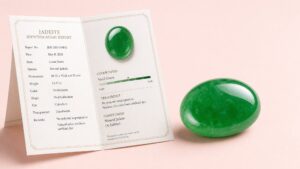
Not all jadeite on the market is untreated. The trade generally distinguishes between Type A jadeite, which is natural and not chemically treated, and treated material that has been bleached, impregnated with polymer, or dyed. Treated stones may be more vulnerable to heat and solvents because the treatment itself can be affected. If you are unsure which category your piece belongs to, our guide to jadeite bracelet Type A, B, and C explains the differences and why they affect both value and care.
The Main Body: What Actually Happens in the Shower
With the fundamentals in place, we can work through the shower scenario step by step and reach a clear, practical answer for different kinds of jewelry.
Does Water Damage Jadeite?
Short answer: plain water by itself does not damage natural jadeite. The stone is dense and non-porous enough that a brief rinse will not harm it, and many wearers find that a quick wash with clean water is actually a gentle way to remove surface oils. The problem is not the water; it is everything the water carries and the conditions surrounding it.
Where water becomes a concern is when it traps residues. Soap scum, shampoo, and dissolved minerals in hard water can settle into drilled holes, around prongs, and along the string channel of a beaded bracelet. Over time these deposits can make a stone look cloudy or dull, and they can be surprisingly difficult to remove without proper cleaning.
Heat, Steam, and Temperature Shock
Hot showers generate steam and rapid temperature changes. If a stone has any internal fractures, which are common and often invisible to the naked eye, thermal expansion and contraction can widen them over time. This is a gradual process rather than an instant failure, but it is one of the more persuasive reasons to avoid prolonged exposure to very hot water.
Temperature shock is most relevant when a piece moves quickly from a hot shower to a cold countertop, or from a warm bathroom to a cold outdoor environment. Letting jade adjust gradually is a simple habit that reduces unnecessary stress on the stone.
Soap, Shampoo, and Hard Water
Cleaning products are the most consistent threat in the shower. Soaps and shampoos can leave a film that reduces the surface luster that makes jadeite so attractive. Conditioners and oils are particularly good at clinging to drilled beads and settings. Hard water adds mineral deposits on top of that film, and the combination can make even a high-quality stone look tired.
For silver-set jade, the metal adds another consideration. Silver can tarnish more quickly when exposed to moisture and sulfur compounds, and repeated wetting accelerates that process. General care guidance for jade jewelry often recommends removing silver-set pieces before showering, sleeping, or using a sauna, precisely because moisture and heat work against both the stone and the setting.
Physical Risk: Slipping, Knocking, and Snagging
The bathroom is a hard, slippery environment. A bangle that slides off a soapy wrist can strike tile or stone, and jadeite, tough as it is, can chip or crack under a sharp impact. A pendant can catch on a loofah or towel. A ring can slip off wet fingers. These accidents are far more common than any gradual chemical effect, and they are the strongest practical argument for removing jade before you step in.
This is also where construction quality matters. A well-strung bracelet with secure knots and evenly matched beads is more resilient in daily wear, and our jadeite bead size and color matching guide explains what to look for so you can judge whether a piece is built for frequent wear.
So Should You Wear It or Not?
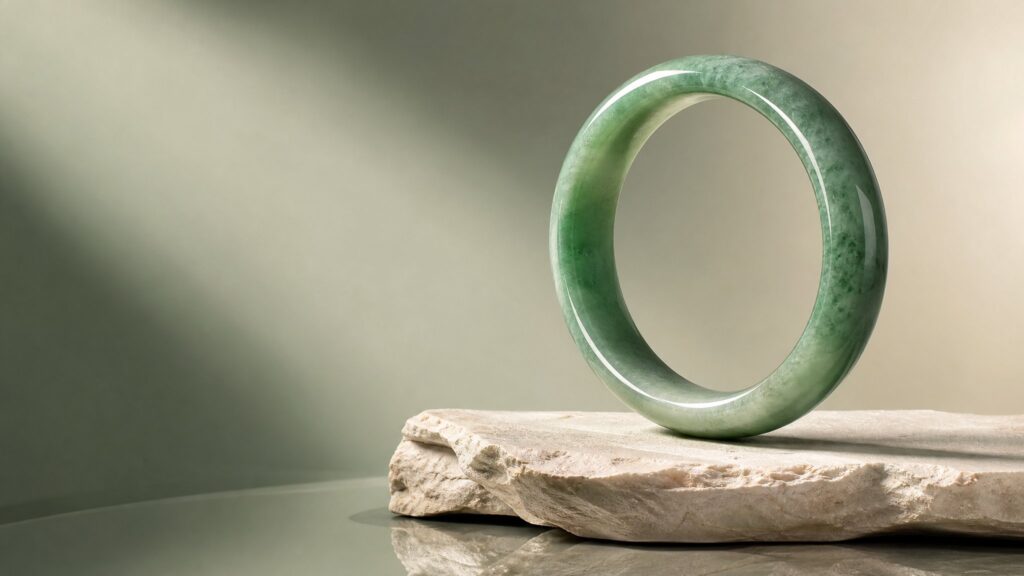
A reasonable rule of thumb is this: brief, occasional contact with water is unlikely to harm natural, untreated jadeite, but routine showering with jade is not ideal. If your piece is a simple, untreated bangle with no metal setting and you occasionally forget to remove it, there is no need to panic. If your piece is silver-set, strung on cord or thread, treated, or especially valuable to you, removing it before the shower is the safer and simpler choice.
Many experienced wearers treat the shower as a natural boundary: jade goes on when they dress and comes off before bathing, swimming, or sleeping. That single habit eliminates most of the risks discussed above without requiring any special equipment. If you want a fuller set of daily-wear guidelines, our article on whether you can shower with jade jewelry walks through the same questions in more detail.
Practical Tips for Living With Jadeite
The goal is not to treat your jade like fragile glass, but to build a few easy habits that keep it beautiful. Consider the following:
- Remove jade before showering, swimming, bathing, or using a sauna, and set it in a dry, padded spot rather than on a wet countertop.
- Take off rings and bangles before washing hands with harsh soap, doing dishes, or applying lotion, which can leave films on the stone.
- Clean gently with lukewarm water and a soft cloth when needed, then dry thoroughly; avoid harsh detergents and ultrasonic cleaners unless a jeweler confirms they are safe for your piece.
- Inspect stringing, knots, and prongs periodically, since moisture and wear affect the setting as much as the stone.
- Store jade separately in a soft pouch or lined box to prevent scratches from harder stones and metal.
- Wear jade for daily activities it handles well, such as office work or light errands, and remove it for gardening, gym sessions, and heavy housework.
If you are building a collection, it also helps to understand how different pieces behave. A jadeite collection often includes both everyday pieces and more delicate ones, and treating them differently is entirely reasonable.
Common Mistakes to Avoid
Most jade care problems come from a handful of repeated errors. Watch out for these:
- Assuming that because jadeite is tough, it is immune to heat, chemicals, and impact; toughness against breaking is not the same as resistance to everything.
- Leaving silver-set jade on in the shower, where moisture accelerates tarnishing and loosens settings over time.
- Using hot water, steam, or harsh cleaners to brighten a dull stone, which can stress fractures and strip surface luster.
- Storing wet jewelry in a closed container, which traps moisture against the stone and metal.
- Wearing a bangle during swimming, saunas, or heavy physical activity, where slipping and impact are most likely.
- Ignoring loose string or a wobbly setting until a bead or stone is lost.
Conclusion and Key Takeaways
Jadeite is a remarkable material, and it is genuinely durable enough for regular wear. The shower, however, combines several mild risks at once: hot water and steam, soap and mineral residues, and a hard, slippery surface. Individually these are manageable; together they make a strong case for taking your jade off before you step in.
The practical takeaway is simple. Occasional splashes are not a crisis, but routine showering is best avoided, especially for silver-set, strung, treated, or especially valuable pieces. Remove jade before bathing, clean it gently when needed, inspect its setting and stringing regularly, and store it dry and separate. Follow those habits and your jadeite will keep the luster and depth that made you choose it in the first place.
FAQ
Can I wear my jadeite bracelet in the shower?
You can, but it is not recommended as a daily habit. Plain water is not harmful to natural jadeite, but hot water, soap, shampoo, and hard-water minerals can dull the surface, and the slippery bathroom floor increases the risk of chips or cracks from impact. Removing your bracelet before showering is the safer choice.
Does water damage jadeite?
Water alone does not damage natural jadeite, since the stone is dense and not water-soluble. The concern is what the water carries: soap scum, shampoo, and mineral deposits can build up in drilled holes and settings, making the stone look cloudy over time.
Is it safe to wear silver-set jade in the shower?
It is generally better to remove silver-set jade before showering. Moisture and heat accelerate silver tarnishing and can gradually loosen settings, so keeping silver-set pieces dry helps preserve both the metal and the stone.
How should I clean jadeite if it looks dull?
Use lukewarm water and a soft cloth, then dry the piece thoroughly. Avoid hot water, harsh detergents, and ultrasonic cleaners unless a jeweler confirms they are safe for your specific piece, since heat and chemicals can stress treated stones and existing fractures.