Why the Jadeite Tri-Color Necklace vs Bracelet Decision Matters
Few materials in the jewelry world carry as much cultural weight and quiet prestige as natural jadeite. For centuries it has been treasured across East Asia as a symbol of purity, protection, and enduring beauty, and today it is equally at home with a silk blouse and with a plain white tee. If you are shopping for your first serious jadeite piece, you have probably narrowed your choice to two of the most versatile formats: a tri-color necklace or a beaded bracelet. Both can be worn daily, both photograph beautifully, and both hold their charm for decades. Yet they differ in how they sit on the body, how they interact with your wardrobe, and how much material goes into each piece.
The tri-color category is especially appealing to new collectors. Jadeite naturally occurs in a remarkable range of hues, and when a single strand or bracelet brings several of those tones together, you get a piece that looks alive and layered without any added gemstones. The rare combination of yellow, green, and white, sometimes with hints of orange, is prized because it showcases the stone’s natural color variation rather than hiding it. That variation is exactly what makes jadeite so collectible, and it is why tri-color pieces tend to draw attention even in a crowded jewelry box.
This guide compares the two formats directly so you can decide which to buy first. We will look at what actually determines quality, how the main styles differ, how to choose a fit you will not regret, what drives price, and which specific pieces from the VirtuCasa collection make the strongest first purchase. Along the way we will lean on established gemological guidance so your decision rests on facts, not folklore.
Understanding Jadeite Quality: What Actually Matters
Before comparing necklaces and bracelets, it helps to understand why two jadeite pieces of similar size can sit at very different points on the price spectrum. The Gemological Institute of America, whose jadeite quality-factor guidance is the industry benchmark, ranks the three most important qualities in order of their impact on market value as color, transparency, and texture. Everything else, including the format you choose, is secondary to those three factors.
Color
Color is the single biggest driver. Saturated, even, vivid green commands the highest premiums, but the tri-color category plays by slightly different rules: here, the appeal lies in the harmony and contrast between hues rather than the dominance of one. A strand that blends yellow, green, and white into a pleasing rhythm is valued for that balance. Look for colors that feel lively rather than muddy, and check that the transitions between them look natural rather than forced.
Transparency
Transparency, often described as ‘water’ in the trade, separates ordinary jadeite from the most desirable material. Ice-type jadeite is the term used for beads with a clear, almost glassy quality that lets light pass through, giving the stone a cool, luminous look. Even a small increase in transparency can transform a piece from flat to glowing, which is why ice-type material is so sought after in both necklaces and bracelets.
Texture
Texture refers to the fineness and smoothness of the stone’s internal structure. Fine, compact texture produces a soft vitreous luster and a surface that feels silky to the touch. Coarse texture looks duller and can feel dry. When you shop online, ask for close-up images in natural light and, where possible, video, since texture is difficult to judge from a single photograph. Reputable educational resources such as this guide to buying jade online and identifying natural A-jade can help you ask the right questions before you commit.
Types & Styles: Necklaces and Bracelets Compared
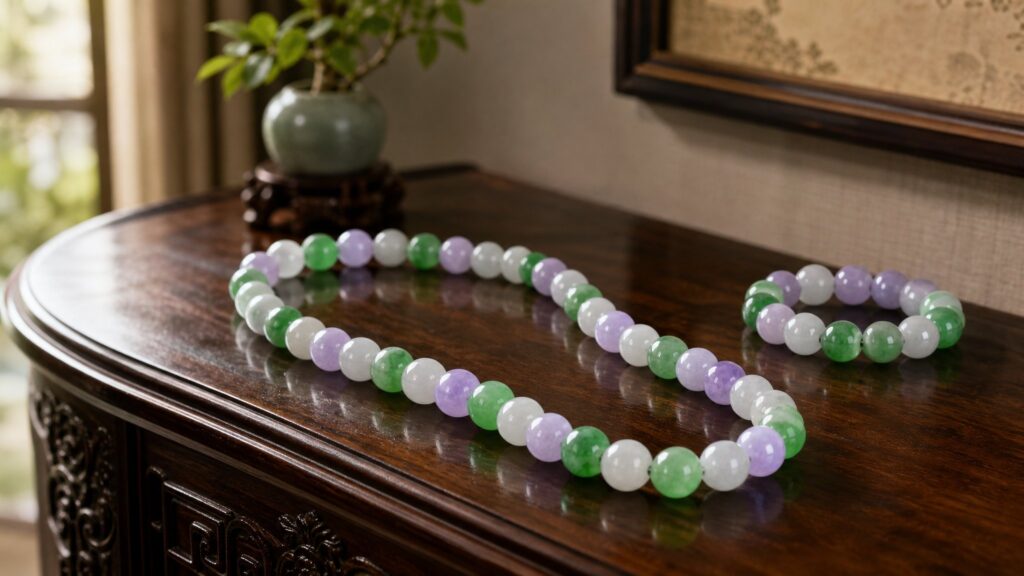
The most direct comparison in the current collection is between two ice-type tri-color necklaces and a three-color bracelet. The Natural Ice-type Tricolor Jade Necklace is built from beads measuring 5.3 mm in diameter, with the rare three-color combination of yellow, green, and white interwoven naturally. At 25.8 g, it is lightweight and comfortable for daily wear, and the uniform bead sizing creates a harmonious, elegant line. A second option, the Natural Ice-type Tricolor Jade Necklace in a different configuration, uses 3.5 mm beads strung in a continuous strand, with harmonious transitions of green, yellow, and orange. At just 10.4 g, it is the subtler of the two and ideal for layering or for anyone who prefers a refined, understated look.
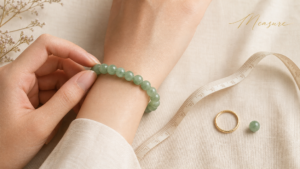
On the bracelet side, the Natural Three-Color Jadeite Bracelet offers the same tri-color concept in a bolder format. It is composed of 16 spherical beads, each approximately 12 mm in diameter, with an adjustable elastic cord that suits most wrist sizes. At roughly 35 g, it has a balanced, substantial feel. The colors, yellow, white, and light green, blend harmoniously with a warm, gentle luster. Compared with the necklaces, the bracelet reads as more casual and more tactile, and its larger beads make the color variation easier to appreciate up close.
It is worth noting that the collection also includes single-color and other jadeite styles, such as the Natural Jadeite Bracelet in a soft lavender-white hue, the Natural Ice-type Jadeite Bracelet with Floating Green Patterns, and the dramatic Natural Ice-type Violet Jade Bead Necklace. Browsing the full jadeite collection is a good way to calibrate your eye for color and transparency before deciding on a tri-color piece.
How to Choose the Right Size & Fit
Fit is where necklaces and bracelets diverge most in practice. A necklace’s wearability depends on bead size and overall length. The 5.3 mm necklace at 25.8 g sits comfortably for most people as a standalone piece and works well with both open and high necklines. The 3.5 mm strand at 10.4 g is lighter still and is particularly good for layering with other chains or for wearing under a collar. Because both are strung on cord rather than metal, they drape softly and feel cool against the skin.
Bracelets, by contrast, live or die by circumference. The Natural Three-Color Jadeite Bracelet uses an elastic cord design that adjusts to most wrist sizes, which removes much of the guesswork. Its 12 mm beads give it presence, so if you are not used to wearing beaded bracelets, expect a noticeable but comfortable weight at roughly 35 g. For reference, the Natural Jadeite Bracelet in the collection is composed of 19 round beads of about 10 mm each, forming a flexible bracelet with a total circumference of about 18 cm, suitable for wrists of 16 to 19 cm. That kind of explicit sizing information is exactly what you should look for when shopping online.
A practical rule: if you want a piece you can put on and forget about, a lighter necklace wins. If you want something you will notice and touch throughout the day, a beaded bracelet is more satisfying. Neither is better; they simply suit different habits.
Price & Value: What Drives Cost
In the current collection, the tri-color necklaces sit at $825 and $740, while the Natural Three-Color Jadeite Bracelet is $668. That places all three in the accessible-to-mid range of jadeite, which makes them sensible first purchases. For comparison, the Natural Jadeite Bracelet is $1008 and the Natural Ice-type Jadeite Bracelet with Floating Green Patterns is $1517, reflecting the premium that higher transparency and larger bead sizes can command. At the upper end of the collection, the Natural Ice-type Violet Jade Bead Necklace is $6649, a reminder that exceptional ice-type material with substantial bead sizes occupies a different tier entirely.
What drives these differences? First, material quality: color saturation, transparency, and texture, as discussed above. Second, size and quantity of material: a necklace with 68 beads in the 10 to 12 mm range, like the violet piece, uses far more stone than a delicate 3.5 mm strand. Third, workmanship and setting: pieces finished with 18K gold plating or more elaborate construction, such as the Natural Jadeite Tassel Earrings at $852, carry additional value. When you compare tri-color pieces, focus on the stone itself rather than the format, since a well-chosen strand of any kind will outlast trends.
Common Mistakes to Avoid
- Buying on color alone and ignoring transparency and texture, which together determine how a piece looks in real light.
- Assuming bigger is always better. A delicate 3.5 mm strand can be more elegant and more wearable than a heavy one.
- Skipping the fit check. Confirm bead diameter, strand length, and, for bracelets, the wrist circumference range before ordering.
- Overlooking how the piece will be worn. A statement bracelet may sit in the drawer if your daily style is minimal.
- Comparing prices across formats without accounting for the amount of jadeite involved. A bracelet and a necklace of similar price can contain very different quantities of stone.
- Rushing a first purchase. Take time to study the collection and ask questions about color, transparency, and texture.
Top Picks: Which to Buy First
If you want the most balanced introduction to the tri-color category, start with the Natural Three-Color Jadeite Bracelet at $668. Its 12 mm beads make the yellow, white, and light green tones easy to see and enjoy, the elastic cord fits most wrists, and the roughly 35 g weight feels reassuring without being heavy. It suits someone building a first jadeite wardrobe who wants a piece that works with casual outfits.
For a more formal, everyday-elegant option, the Natural Ice-type Tricolor Jade Necklace at $825 is the strongest all-rounder. The 5.3 mm beads and 25.8 g weight make it comfortable for long wear, and the yellow, green, and white blend is the classic tri-color combination. It suits buyers who dress for work or occasions and want a single piece that elevates an outfit.
If subtlety is your priority, the Natural Ice-type Tricolor Jade Necklace at $740 is the lightest option at 10.4 g, with 3.5 mm beads and green, yellow, and orange transitions. It is ideal for layering and for anyone who prefers jewelry that whispers rather than shouts. And if you would rather begin with a single, calming color before exploring tri-color, the Natural Jadeite Bracelet at $1008 offers a soft lavender-white hue in a 19-bead, 10 mm format that is easy to wear every day.
Final Tips and Conclusion
There is no universally correct first purchase, but there is a correct first purchase for you. If you value versatility and visibility, the tri-color bracelet is the more immediate pleasure. If you want a piece that reads as refined and works across more of your wardrobe, a tri-color necklace is the better long-term investment. Whichever you choose, judge the stone by color, transparency, and texture first, confirm the fit second, and let the format follow your lifestyle rather than the other way around.
Take your time, compare a few pieces side by side, and do not be afraid to start with the more affordable option and build from there. Jadeite rewards patience, and a well-chosen first piece often becomes the anchor of a collection that grows for years.
FAQ
Is a jadeite tri-color necklace or a bracelet better for a first purchase?
It depends on how you wear jewelry. A tri-color necklace such as the Natural Ice-type Tricolor Jade Necklace is more versatile for work and occasions, while a bracelet like the Natural Three-Color Jadeite Bracelet is more casual and lets you appreciate the color variation up close. Both are excellent first pieces.
What does ‘tri-color’ mean in jadeite?
Tri-color refers to a single piece that combines three distinct natural hues, most commonly yellow, green, and white, and sometimes with orange tones. The appeal lies in the harmonious blend of colors rather than the dominance of one shade.
How do I choose the right size for a jadeite bracelet?
Check the bead diameter and the wrist circumference range. The Natural Three-Color Jadeite Bracelet uses an adjustable elastic cord that suits most wrist sizes, while the Natural Jadeite Bracelet fits wrists of 16 to 19 cm. Always confirm these details before ordering.
What factors most affect jadeite value?
According to established gemological guidance, color, transparency, and texture are the three most important quality factors, in that order. Size, quantity of material, and setting also influence price, which is why pieces in the same collection can range from entry-level to premium.