Jadeite has been treasured for millennia, and its value continues to rise. But as demand grows, so does the risk of encountering treated or imitation jade. For buyers, knowing how to verify jadeite authenticity at home is essential—not just to protect your investment, but to ensure you’re wearing a piece with true natural beauty. This guide will walk you through practical, reliable methods to assess jadeite yourself, while also helping you understand what makes natural jadeite so special.
Introduction: Why Authenticity Matters
Jadeite is one of the most valuable gemstones in the world, with the finest imperial green pieces fetching millions at auction. But unlike diamonds, jadeite is not routinely certified by a single global authority. This means buyers must be vigilant. A piece that looks like jadeite could actually be nephrite, serpentine, or even glass. Worse, many jadeite stones are treated with polymer resin or acid bleaching to improve their appearance—a process that can dramatically reduce their durability and value.
At VirtuCasa, we focus on natural jadeite, and we believe that transparency builds trust. That’s why we encourage every buyer to learn the basics of authentication. Even if you’re shopping with a trusted seller, knowing how to verify jadeite authenticity at home gives you confidence and helps you appreciate the craftsmanship behind each piece.
Understanding Quality: Key Factors That Define Natural Jadeite
Color and Transparency
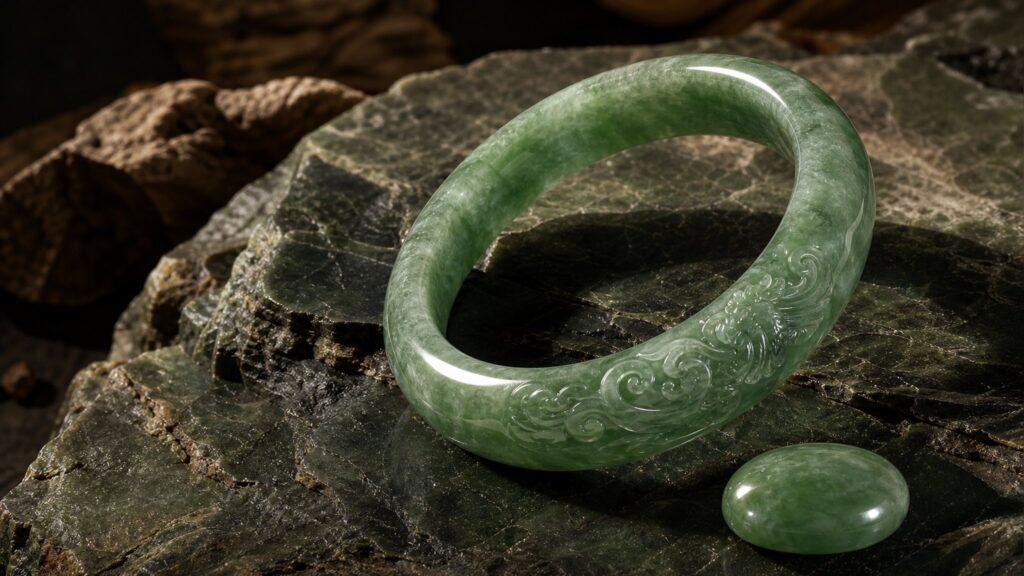
Color is the first thing most people notice. Natural jadeite ranges from deep imperial green to lavender, white, yellow, and even three-color combinations. High-quality jadeite often has a translucent or semi-transparent quality, sometimes described as ‘ice-type’—like the Natural Ice-type Jadeite Bracelet with Floating Green Patterns, which features a cool, glassy sheen with subtle green veins. The most prized colors are vivid and evenly distributed, though some collectors appreciate the unique patterns of ‘floating green’ or tricolor stones.
Texture and Luster
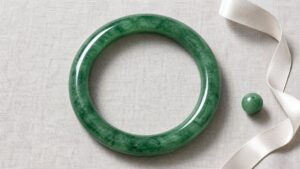
Authentic jadeite has a fine, compact texture that feels smooth and dense. When light hits it, you’ll see a soft, vitreous (glassy) luster—not a plastic shine. This is a key differentiator from imitations. For example, the Natural Jadeite Bracelet is described as having a delicate, smooth texture with a gentle vitreous luster, which is typical of quality natural jadeite.
Internal Structure
Under magnification, natural jadeite often shows a fine, fibrous interlocking crystal structure. This is a hallmark of genuine jadeite and is difficult to replicate. Treated jadeite may show a more mottled or cloudy appearance, especially after resin filling.
Types & Styles: What to Look For
Jadeite comes in many forms, each with its own appeal. Beaded bracelets are among the most popular—like the Natural Three-Color Jadeite Bracelet, which showcases yellow, white, and light green in a harmonious blend. These bracelets are often strung on elastic cords, making them easy to wear and versatile.
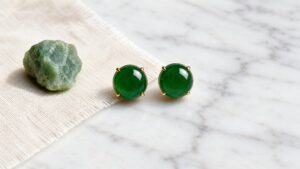
Rings, especially the saddle style, are another classic. The Natural Full-Green Jadeite Saddle Ring is carved from a single piece of jadeite, with a rich, even green color that’s highly prized. Earrings and necklaces, such as the Natural Jadeite Tassel Earrings, offer a more delicate way to wear jadeite, often combined with gold or other metals.
Each style has its own authentication nuances. For example, beaded pieces allow you to examine individual beads for consistency, while carved pieces may hide treatments in intricate details.
How to Verify Jadeite Authenticity at Home
The Visual Inspection
Start with your eyes. Hold the piece up to a bright light and look for a natural, uneven color distribution. Natural jadeite often has subtle variations, while dyed or treated stones may show unnaturally uniform color, especially in cracks. Also, look for a ‘glassy’ luster—if it looks waxy or plastic, it may not be jadeite.
The Sound Test
Gently tap the jadeite with a metal object or another piece of jade. Natural jadeite produces a clear, resonant, bell-like tone, while resin-filled or imitation stones often sound dull or thud-like. This test works best with beads or bangles, and it’s a quick way to spot obvious fakes.
The Scratch Test
Jadeite is a hard stone (6.5–7 on the Mohs scale), so it should not be easily scratched by a steel knife. However, this test can damage the piece, so use it cautiously. A better approach is to test a less visible area or rely on other methods.
The Density Test
Natural jadeite has a relatively high density (about 3.33 g/cm³). You can perform a simple water displacement test at home to measure density, but it requires precision. If you’re not confident, rely on professional certification instead.
How to Choose the Right Size & Fit
When buying jadeite jewelry, fit is crucial for comfort and wearability. For bracelets, pay attention to bead diameter and total circumference. For example, the Natural Jadeite Bracelet is composed of 19 beads, each about 10mm in diameter, with a total circumference of about 18cm—suitable for wrists between 16 and 19cm. The Ice-type bracelet uses larger 16mm beads and weighs 101g, giving a more substantial feel.
For rings, sizes are indicated by a number (e.g., 24, 26, 15). The Full-Green Saddle Ring is a size 24, while the Floating Green Saddle Ring is a size 26. Always measure your finger or wrist before ordering, and remember that jadeite doesn’t stretch, so a comfortable fit is essential.
Price & Value: What Drives the Cost
Jadeite pricing is complex, but a few factors dominate: color, transparency, texture, and size. The most expensive pieces are those with vivid, even color and high translucency. For example, the Natural Ice-type Violet Jade Bead Necklace is priced at $6649, reflecting its large size (68 beads, 10–12mm each) and high-quality ice-type material. In contrast, the Natural Ice-type Tricolor Jade Necklace at $740 offers a more accessible entry point with smaller beads (3.5mm).
Other examples: the Three-Color Bracelet is $668, while the larger tricolor necklace is $825. The Violet Jadeite Cabochon Ring Set at $1926 includes 18K white gold, sapphires, and diamonds, showing how metalwork and additional gemstones add value. Rings like the Full-Green Saddle Ring at $2437 command a premium for their solid, even color.
Common Mistakes to Avoid
- Relying solely on the ‘sound test’—it’s a good indicator, but not foolproof.
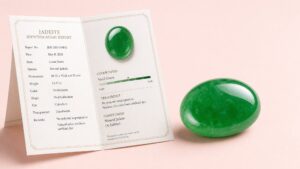
- Ignoring the possibility of resin treatment—always ask for certification or a return policy.
- Buying based on price alone—a low price often signals a lower-quality or treated stone.
- Assuming all green stones are jadeite—other minerals like aventurine or serpentine can look similar.
- Skipping the scratch test on an inconspicuous area—just be careful not to damage the piece.
Top Picks: Recommended Natural Jadeite Pieces
If you’re ready to add a natural jadeite piece to your collection, here are some standout options from VirtuCasa:
- Natural Jadeite Bracelet ($1008) — Perfect for those who love a classic, versatile look. The lavender-white hue and 10mm beads make it ideal for everyday wear.
- Natural Ice-type Jadeite Bracelet with Floating Green Patterns ($1517) — A bold statement piece for collectors who appreciate high transparency and a substantial feel (101g).
- Natural Full-Green Jadeite Saddle Ring ($2437) — For those who want a rich, even green color in a classic ring style. A true investment piece.
- Natural Jadeite Tassel Earrings ($852) — Elegant and lightweight (8g), these earrings are perfect for adding a touch of jade to any outfit.
- Natural Ice-type Tricolor Jade Necklace ($740) — A budget-friendly entry into natural jadeite with a unique three-color design.
Final Tips & Conclusion
Verifying jadeite authenticity at home is a valuable skill, but it’s not a substitute for professional certification. Always ask for a certificate from a reputable gemological laboratory, and buy from sellers who clearly describe their products as ‘natural’ and ‘untreated.’ At VirtuCasa, we’re committed to offering natural jadeite jewelry, and we encourage you to explore our jadeite collection with confidence.
Remember, the best way to protect your purchase is to combine your own observations with expert verification. By understanding the key quality factors and using the simple tests outlined here, you’ll be well on your way to choosing a piece that brings lasting beauty and value.
FAQ
What is the easiest way to test jadeite authenticity at home?
The sound test is a good starting point—gently tap the jadeite and listen for a clear, bell-like tone. However, it’s not definitive. Combine it with a visual inspection for natural color variations and a glassy luster, and consider professional certification for high-value pieces.
Can I use a scratch test on jadeite?
Yes, but with caution. Jadeite is hard (6.5–7 on Mohs scale), so it shouldn’t scratch easily with steel. Test an inconspicuous area to avoid damaging the piece, and remember that this test alone isn’t conclusive.
What does ‘ice-type’ jadeite mean?
‘Ice-type’ refers to jadeite with high transparency and a cool, glassy appearance, similar to ice. It’s considered premium quality. Examples include the Natural Ice-type Jadeite Bracelet with Floating Green Patterns and the Natural Ice-type Violet Jade Bead Necklace.
Why are some jadeite pieces more expensive than others?
Price is driven by color, transparency, texture, size, and craftsmanship. For instance, the Natural Ice-type Violet Jade Bead Necklace at $6649 is large and highly translucent, while smaller or less transparent pieces like the Natural Ice-type Tricolor Jade Necklace at $740 are more affordable.