Why a Jadeite Bracelet Deserves Careful Choosing
A jadeite bracelet is one of the few pieces of jewelry that works as both an everyday companion and a meaningful heirloom. In Chinese culture jade carries associations of purity, protection and good fortune, and a bangle or bead bracelet is often the first serious jade purchase a collector makes. That emotional weight is exactly why the buying decision should be made with clear eyes rather than impulse.
The market is also genuinely complicated. Jadeite ranges from translucent, gem-like material to opaque stone, and it may be sold untreated or after bleaching and polymer impregnation. Two bracelets that look similar in a photograph can differ enormously in durability and long-term value. Understanding the language of jade grading — treatment type, color, clarity and cut — turns a confusing purchase into a confident one.
This guide walks through the factors that matter when you buy a jadeite bracelet, how to translate bead and bangle measurements into a comfortable fit, and which pieces in the VirtuCasa collection suit different wearers. You can browse the full jadeite jewelry collection alongside this article to see the principles applied to real pieces.
Understanding Quality: The Factors That Matter
Treatment Type: Type A, B and C
The single most important question about any jadeite bracelet is whether it is Type A — natural, untreated jadeite that has only been cut and polished. Type B jadeite has been bleached and impregnated with polymer to improve clarity, and Type C has been dyed. Treated stones can look attractive at first but may discolor or become brittle over time, and they hold far less value. Reputable sellers state treatment status plainly; established jade jewelers consistently advise buyers to insist on natural A jade and to ask for documentation. Every bracelet described in this guide is natural jadeite.
Color
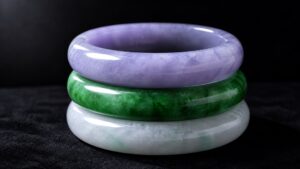
Color is the most visible value driver. Saturated, even green is the classic ideal, but lavender, yellow, white and multi-color combinations all have devoted collectors. What matters is that the hue looks natural and lively rather than flat or artificially uniform, and that color is distributed the way the stone’s structure suggests. Multi-color jadeite, sometimes called tricolor or “three colors,” is prized precisely because natural color variation is difficult to find in harmonious balance.
Clarity and Texture
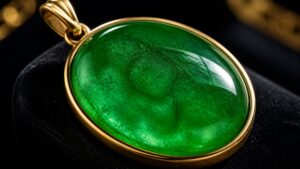
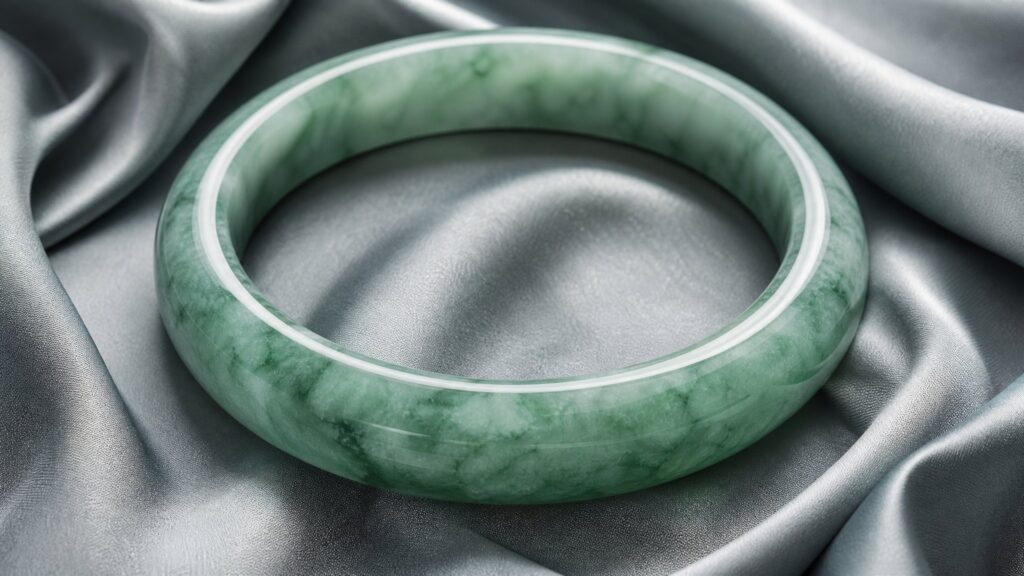
Clarity in jadeite is about internal texture as much as transparency. Fine, compact grains give a smooth vitreous or glassy luster; coarse structure looks dull. “Ice-type” describes highly transparent jadeite with a cool, glassy sheen, while other pieces may be translucent or gently opaque. Small natural inclusions are normal and should be evaluated for whether they weaken the stone, not simply for their presence. As online jade buying guidance explains, comparing color, clarity and imperfections side by side is the surest way to judge relative quality.
Cut and Craftsmanship
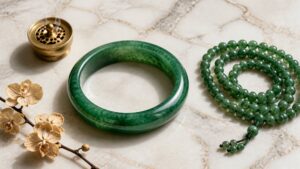
For bead bracelets, look for uniformly rounded beads, consistent drilling and a smooth polish. For bangles and saddle rings, the carving should follow the stone’s natural grain, with a comfortable inner curve and no sharp edges. Simplicity is a virtue: many fine bead bracelets are strung on elastic cord or traditional knotted rope with no metal setting at all, letting the jade speak for itself.
Types and Styles of Jadeite Bracelets
Bead bracelets are the most accessible entry point and the most versatile. They range from delicate small-bead strands to bold, large-bead pieces, and the color story changes completely between them. A soft lavender-white example is the Natural Jadeite Bracelet, composed of 19 round beads of approximately 10mm each, strung on elastic cord with a total circumference of about 18cm. Its gentle vitreous luster and even color make it an easy everyday piece.
At the opposite end of the spectrum, multi-color and ice-type jadeite offer more visual drama. The Natural Three-Color Jadeite Bracelet combines yellow, white and light green in 16 spherical beads of about 12mm, with an elastic cord for an adjustable fit. For collectors who want transparency as the headline feature, the Natural Ice-type Jadeite Bracelet with Floating Green Patterns presents 13 round beads of 16mm with a cool glassy sheen and green patterns floating through the icy base.
Bracelets are not the only way to wear jadeite on the wrist and hand. Saddle rings, such as the full-green and floating-green styles in the collection, offer a sculptural alternative, while bead necklaces in ice-type tricolor and violet jadeite let you build a coordinated look. The broader jadeite category shows how these pieces relate in color and scale.
How to Choose the Right Size and Fit
Fit is where online jadeite buying most often goes wrong, so measure before you compare. For bead bracelets, the key figure is the total circumference and the bead diameter. The Natural Jadeite Bracelet, at roughly 18cm around with 10mm beads, is described as suitable for wrists of 16–19cm. Larger beads — 12mm or 16mm — create a bolder look and add weight, which changes how the bracelet sits on the wrist.
Elastic-cord construction gives useful flexibility. The three-color bracelet’s elastic cord provides an adjustable circumference, and the ice-type floating-green bracelet’s flexible fit is described as suitable for various wrist sizes. Still, a 101g bracelet of 16mm beads feels very different from a 30g strand of 10mm beads, so consider whether you want a light, unobtrusive piece or a substantial statement.
For rings, ring size is the governing measurement. The full-green saddle ring is listed at size 24 and the floating-green saddle ring at size 26, both carved from a single piece of jadeite in the traditional saddle shape. If you are between sizes or unsure, ask the seller for guidance rather than guessing; a well-fitted saddle ring should rest comfortably without pinching.
Price and Value: What Drives Cost
Jadeite pricing follows quality, not size alone. Treatment status comes first — natural, untreated jadeite commands a premium over treated material. Then color saturation and evenness, then transparency and fineness of texture, then craftsmanship. A highly transparent ice-type piece with vivid color will generally sit well above an opaque or pale one of similar dimensions.
Within the VirtuCasa collection you can see this spectrum clearly. Entry-level and mid-range bead bracelets include the Natural Three-Color Jadeite Bracelet at $668 and the Natural Jadeite Bracelet at $1008. The Natural Ice-type Jadeite Bracelet with Floating Green Patterns, at $1517, reflects the premium placed on high transparency and larger beads. At the upper end, the Natural Ice-type Violet Jade Bead Necklace at $6649 shows how rare color combined with fine ice-type texture and substantial bead count drives value far above simpler strands.
Value also depends on versatility. A piece you wear weekly delivers more per dollar than one reserved for special occasions. A $668 three-color bracelet or a $740 ice-type tricolor necklace may be the smarter first purchase for someone building a wardrobe, while a collector may prefer to concentrate budget on a single exceptional piece. For a broader view of grading conventions, jade bracelet buying guides from specialist dealers are a useful cross-check on terminology.
Common Mistakes to Avoid
- Buying without confirming treatment type — always verify that a piece is natural, untreated jadeite rather than Type B or C.
- Judging only from photographs — ask about luster, internal texture and any visible inclusions before committing.
- Ignoring bead size and weight — a 16mm, 101g bracelet wears very differently from a 10mm, 30g strand.
- Guessing your wrist or ring size instead of measuring, especially with non-adjustable pieces.
- Assuming greener always means better — hue, evenness and transparency matter as much as color family.
- Overlooking the cord or setting — elastic and knotted constructions need care and occasional restringing.
- Treating price alone as a quality signal — compare color, clarity, cut and treatment together.
Top Picks for Different Buyers
For a first jadeite bracelet or a gift, the Natural Jadeite Bracelet at $1008 is a balanced choice. Its soft lavender-white hue, even color and 10mm beads suit wrists of 16–19cm, and its light 30g weight makes it comfortable for daily wear.
For someone who loves color and a bolder silhouette, the Natural Three-Color Jadeite Bracelet at $668 offers yellow, white and light green in 12mm beads with an adjustable elastic fit — an approachable way to own multi-color jadeite.
Collectors seeking transparency should consider the Natural Ice-type Jadeite Bracelet with Floating Green Patterns at $1517. Its 16mm beads and 101g weight give it real presence, and the floating green patterns against an icy base are the kind of detail ice-type jadeite is valued for.
If you prefer a ring, the Natural Full-Green Jadeite Saddle Ring at $2437 offers even full-green color in a classic saddle shape at size 24, while the Natural Jadeite Saddle Ring with Floating Green at $719 is a more accessible way to try the style at size 26.
Final Tips for Buying a Jadeite Bracelet
Start with treatment status, then evaluate color, clarity and cut in that order. Measure your wrist or ring size before you shop, and compare bead diameter and weight so you know whether a piece will feel light or substantial. Ask questions about luster, internal texture and cord construction, and keep records of what the seller states.
Finally, buy for how you will actually wear the piece. A jadeite bracelet is meant to be worn, and the right one is the one whose color, fit and presence you enjoy every day. Explore the VirtuCasa jadeite collection to compare these pieces in detail and choose with confidence.
FAQ
What does Type A jadeite mean?
Type A jadeite is natural, untreated jadeite that has only been cut and polished. Type B has been bleached and polymer-impregnated, and Type C has been dyed. Natural, untreated jadeite is the standard to look for when buying a bracelet.
How do I know if a jadeite bracelet will fit?
Check the bracelet’s total circumference and bead diameter against your wrist measurement. For example, the Natural Jadeite Bracelet is about 18cm around with 10mm beads and is described as suitable for wrists of 16–19cm. Elastic-cord styles offer adjustable fit.
Is greener jadeite always more valuable?
Not automatically. Value depends on treatment type, color saturation and evenness, transparency, texture and craftsmanship together. Lavender, yellow and multi-color jadeite can be highly desirable, so judge the whole piece rather than color family alone.
What is ice-type jadeite?
Ice-type describes jadeite with high transparency and a cool, glassy sheen, often with a fine, delicate internal texture. Pieces such as the Natural Ice-type Jadeite Bracelet with Floating Green Patterns are valued for that transparency and luster.