Why Jadeite Bracelet Color Deserves a Closer Look
Few gem materials change character as dramatically as jadeite. A beaded bracelet that looks soft and lavender-white in a shop window can read cooler and more translucent in daylight, then turn deeper and richer under warm indoor lamps. For buyers, this is not a minor curiosity — it is the single most practical thing to understand before spending money on a jadeite bracelet. The color you see is a product of the stone, the light source, the background, and even the skin tone of the wearer.
This matters because color is one of the strongest drivers of jadeite value. According to GIA’s jadeite quality factors, the three most important qualities — in order of impact on market value — are color, transparency, and texture. A buyer who evaluates only under one lighting condition is effectively judging a third of the story. A buyer who understands lighting can compare bracelets fairly, ask better questions, and avoid disappointment when a piece arrives at home.
At VirtuCasa, our natural jadeite bracelets are described by their germplasm, bead dimensions, and luster rather than by exaggerated color claims. The product descriptions establish that the pieces are crafted from natural jadeite, but they do not independently certify every listing as Type A (untreated). That distinction matters, and we will return to it. For now, the goal is simpler: teach you how light shapes what you see, so your expectations match reality.
Understanding Quality: What You Are Actually Judging
Color: Hue, Saturation, and Evenness
Jadeite color is usually described in three parts: hue (green, lavender, yellow, white, and combinations), saturation (how vivid or muted), and evenness (whether the color is uniform or patterned). A bracelet described as a soft lavender-white hue with a gentle vitreous luster will look different from one with deep green beads and a glassy luster. Neither is inherently better; they suit different wardrobes and budgets. What matters is that you judge the color under more than one light source.
Evenness is where lighting tricks are most common. Diffused overhead light can make a slightly uneven strand appear uniform, while direct sunlight reveals variation between beads. When you shop, ask to see the bracelet in daylight, in warm indoor light, and against a neutral background. If you are buying online, compare the product photos with the written description and treat the description as the more stable reference.
Transparency and Texture
Transparency ranges from opaque to highly translucent. A bracelet described as ice-type with a transparent, delicate texture and a cool glassy sheen will behave very differently from an opaque, finely textured strand. Transparency interacts with color: a translucent stone tends to glow from within, while an opaque stone relies more on surface luster. Texture — how fine and smooth the material feels and looks — affects both luster and perceived quality.
Be cautious about judging transparency from a single bright photo. Backlighting can make almost any translucent bead look more luminous than it will on your wrist. A reputable educational overview of jadeite grading, such as this jade bracelet buying guide covering quality evaluation and Type A jade, is useful background reading, but remember that no third-party guide can confirm the treatment status of a specific listing — only the seller’s documentation can.
Treatment Status and Honest Expectations
“Type A” refers to jadeite that has not been bleached or polymer-impregnated. Our product data states that pieces are crafted from natural jadeite, but it does not independently certify Type A status for every item. If treatment status is important to you, ask the seller directly and request documentation before purchase. Avoiding overclaiming is part of buying responsibly — and it protects you from sellers who promise more than their paperwork supports.
Types and Styles: Matching Color to Occasion
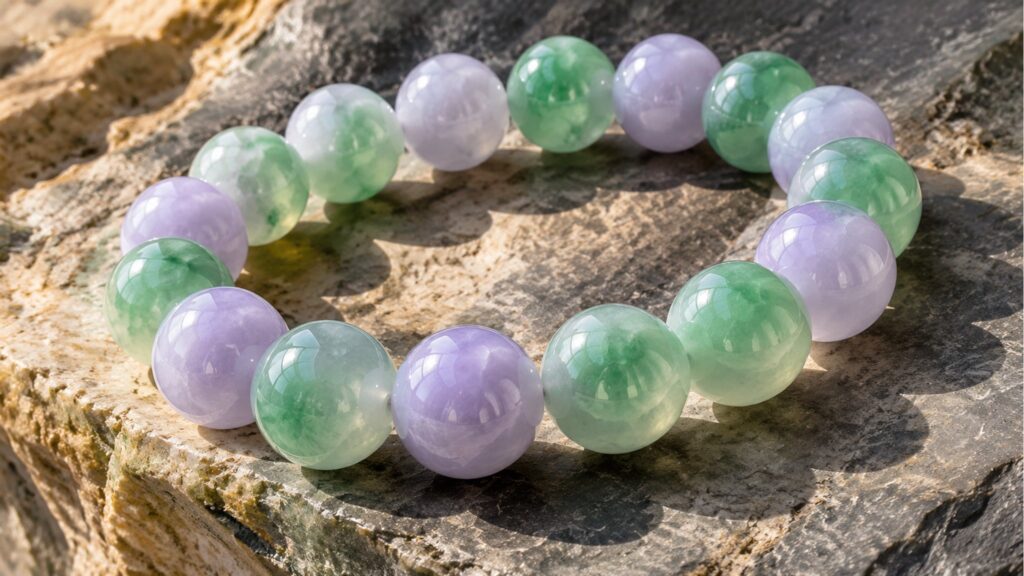
The jadeite category spans beaded bracelets, necklaces, rings, and earrings, and color strategy differs by format. Beaded bracelets are the most popular entry point because they show color repeatedly across many beads. The Natural Jadeite Bracelet is a good example: 19 round beads of approximately 10mm, a soft lavender-white hue, gentle vitreous luster, and a total circumference of about 18cm. Its uniform color distribution makes it a calm, versatile choice.
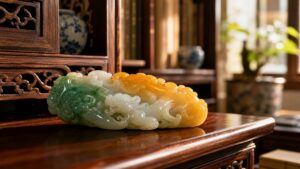
For stronger color, consider the Natural Three-Color Jadeite Bracelet, which combines yellow, white, and light green across 16 spherical beads of approximately 12mm. Multi-color strands are more visually active and can shift in mood depending on which hue catches the light. At the translucent end, the Natural Ice-type Jadeite Bracelet with Floating Green Patterns uses 13 round beads of 16mm with floating green patterns on an icy base — a substantial piece where transparency and pattern do most of the talking.
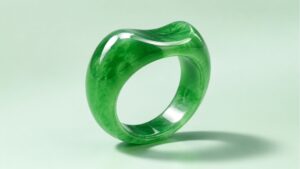
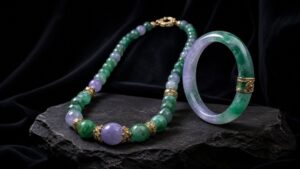
Color also matters outside the bracelet category. The Natural Ice-type Violet Jade Bead Necklace shows how a lavender hue reads at necklace scale, while the Natural Full-Green Jadeite Saddle Ring demonstrates dense, even green in a carved format. Browsing the full jadeite collection helps you compare how the same color family behaves across different pieces.
How to Choose the Right Size and Fit
Fit is easier to judge than color, so it is worth getting right first. Beaded bracelets are typically sized by bead diameter and total circumference. The Natural Jadeite Bracelet, for instance, is about 18cm in circumference and suits wrists of roughly 16–19cm. Elastic-cord designs, like the Natural Three-Color Jadeite Bracelet, offer adjustable circumference for most wrist sizes. Larger beads create a bolder look but reduce flexibility, so a 16mm-bead bracelet will feel different from a 10mm one even at similar circumference.
Weight also affects comfort. A lightweight strand is easy for daily wear, while a substantial piece makes a visual statement but may feel heavy over long periods. Check the listed weight and bead count together: more beads at a larger diameter usually means more mass. If you are between sizes, favor the elastic or adjustable design, and remember that a bracelet should sit comfortably without pressing into the wrist bone.
Price and Value: What Drives Cost
Jadeite pricing follows quality, not marketing. Color intensity and evenness, transparency, texture, and bead size all push cost upward. Among our listed bracelets, the Natural Three-Color Jadeite Bracelet is $668 and the Natural Jadeite Bracelet is $1008, while the Natural Ice-type Jadeite Bracelet with Floating Green Patterns is $1517 — a spread that reflects differences in transparency, bead size, and material character rather than brand markup.
Value is not the same as the lowest price. A mid-range piece with even color and a comfortable fit may deliver more everyday satisfaction than a premium piece you rarely wear. Compare like with like: a translucent ice-type strand and an opaque lavender strand are not competing on the same criteria. Use the written specifications as your anchor and treat lighting-dependent impressions as secondary.
Common Mistakes to Avoid
- Judging color under a single light source, especially bright shop lighting that flatters translucency.
- Assuming every listing is certified Type A — ask for documentation instead of inferring it.
- Ignoring bead size and weight when choosing a bracelet for daily wear.
- Comparing pieces of different transparency and texture as if they were equivalent.
- Relying on photos alone when a written description gives more stable specifications.
- Overlooking how your own skin tone changes the perceived color of a strand.
Top Picks
Best for everyday versatility: the Natural Jadeite Bracelet ($1008) pairs a soft lavender-white hue with 10mm beads and a comfortable 18cm fit. It suits buyers who want a calm, wearable piece that works with most outfits.
Best for color lovers: the Natural Three-Color Jadeite Bracelet ($668) offers yellow, white, and light green in 12mm beads with an adjustable fit — ideal if you enjoy pattern and variation.
Best for transparency seekers: the Natural Ice-type Jadeite Bracelet with Floating Green Patterns ($1517) is a substantial 13-bead strand with an icy base and floating green. It suits buyers who value glow and presence.
Best for a coordinated set: the Natural Ice-type Violet Jade Bead Necklace ($6649) extends the lavender palette to necklace scale for buyers building a matched look.
Final Tips and Conclusion
Jadeite bracelet color is never a fixed fact — it is a relationship between stone, light, and wearer. Train your eye by viewing pieces in daylight and warm light, read specifications carefully, and ask about treatment status rather than assuming it. For broader beginner context, community discussions such as these practical jade jewelry buying tips can help you frame the right questions. Choose a jadeite bracelet color that you enjoy in ordinary daylight, confirm the fit and specifications, and let the piece reveal its subtler shifts over time.
FAQ
Why does my jadeite bracelet look different at home than in the store?
Jadeite color and apparent transparency change with the light source. Bright shop lighting can make beads look more luminous, while daylight and warm indoor lamps reveal different hues and evenness. Judge the piece under several light conditions before deciding.
Does VirtuCasa certify every jadeite bracelet as Type A?
Our product descriptions establish that pieces are crafted from natural jadeite, but they do not independently certify Type A untreated status for every listing. If treatment status matters to you, ask for documentation before purchase.
How do I choose between a lavender and a green jadeite bracelet?
Consider how often you will wear it and what colors you wear most. Lavender-white strands tend to read soft and versatile, while deeper greens are richer and more traditional. Compare transparency, bead size, and fit alongside color.
What size jadeite bracelet should I buy?
Check the listed circumference and bead diameter. For example, the Natural Jadeite Bracelet is about 18cm and suits wrists of roughly 16–19cm, while elastic designs offer adjustable fit. Choose a size that sits comfortably without pressing on the wrist bone.