How to Identify Dyed vs. Natural Rutilated Quartz
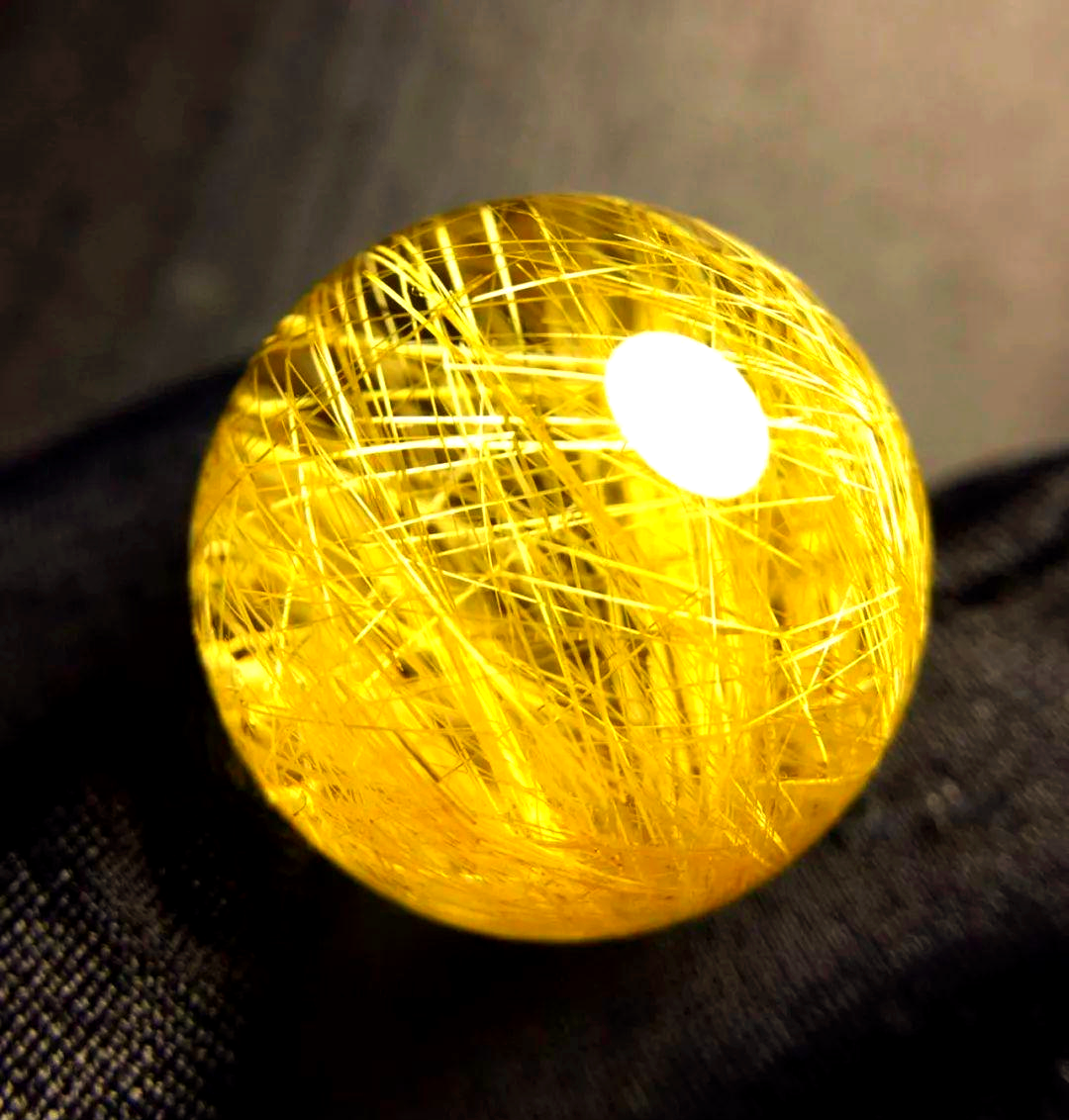
Rutilated quartz, often called “angel hair quartz,” has long been a favorite among gemstone collectors. Among quartz varieties such as citrine, amethyst, and rose quartz, rutilated quartz stands out for its distinctive needle-like inclusions. In Eastern culture, these inclusions are believed to carry auspicious meanings, adding to the stone’s mystique.
During routine gemological examinations, I frequently come across rutilated quartz samples with unusually vibrant colors. A comparative analysis with natural specimens reveals clear differences that point to artificial dye treatments. Understanding these differences will help you make informed purchases, whether you’re a seasoned collector or a first-time buyer.
Characteristics of Natural Rutilated Quartz
Natural rutilated quartz displays needle-like inclusions in columnar, acicular, bundled, or fibrous formations. Common inclusion colors include white, black, yellow, reddish-brown, brownish-yellow, and green. Key varieties exhibit these distinctive features:
- Epidote: Stem-like formations with a pale green hue
- Brookite: Orthorhombic titanium oxide crystals showing bright orange
- Ferrohornblende: Silver-white needle or blade-shaped clusters
- Tourmaline: Larger columnar crystals, typically black or green
- Actinolite: Silver-white fine needles often forming fiber bundles
- Goethite: Yellow/brown needles with metallic luster
- Rutile: Golden, deep red, or brownish-yellow with strong metallic sheen
Identifying Dyed Rutilated Quartz
Comparative analysis reveals four key indicators of artificial dyeing. By keeping these in mind, you can quickly differentiate between a natural treasure and a treated imitation.
1. Inclusion Color
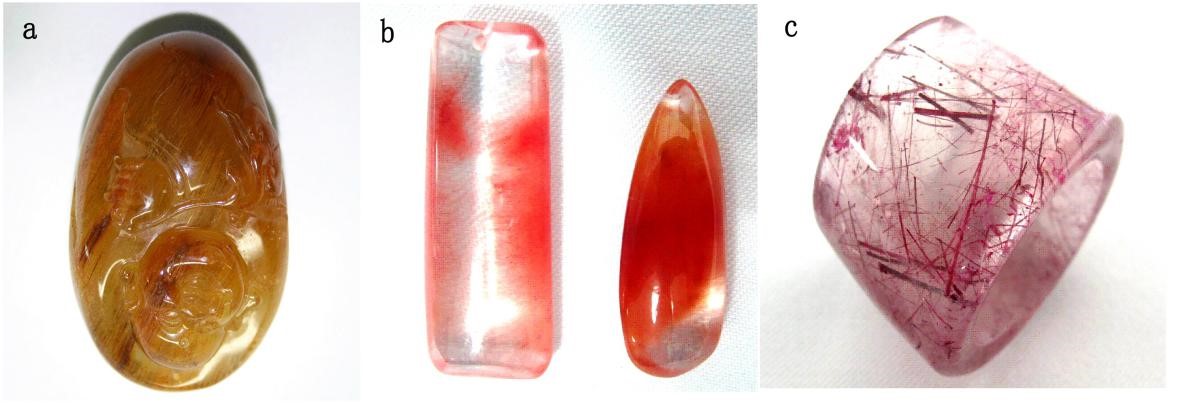
- Dyed: Unnaturally vibrant reds, yellows, or purples with high saturation (Fig 1a-c)
- Natural: Subdued white, black, yellow, or earth tones
2. Color Distribution
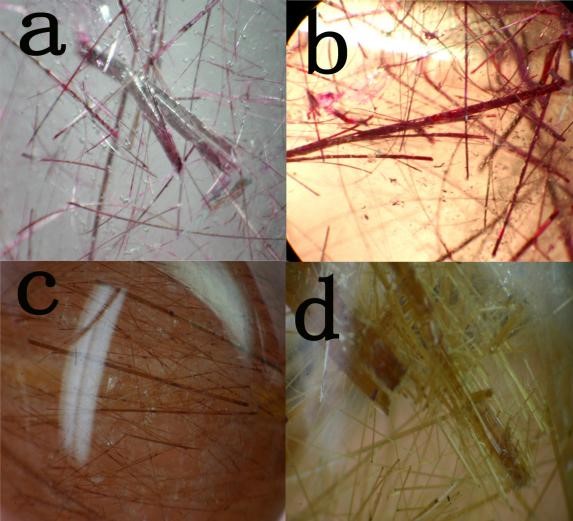
- Dyed: Uneven, patchy coloration; darker at the surface (Fig 2a-c)
- Natural: Consistent color limited to the inclusions (Fig 2d)
3. Surface Luster
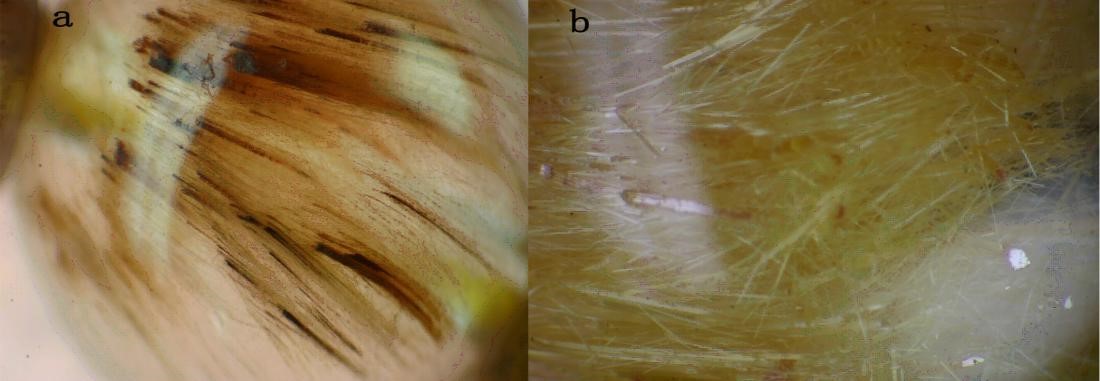
- Dyed: Dull metallic appearance from dye coating (Fig 3a)
- Natural: Strong metallic reflection (Fig 3b)
4. Secondary Indicators
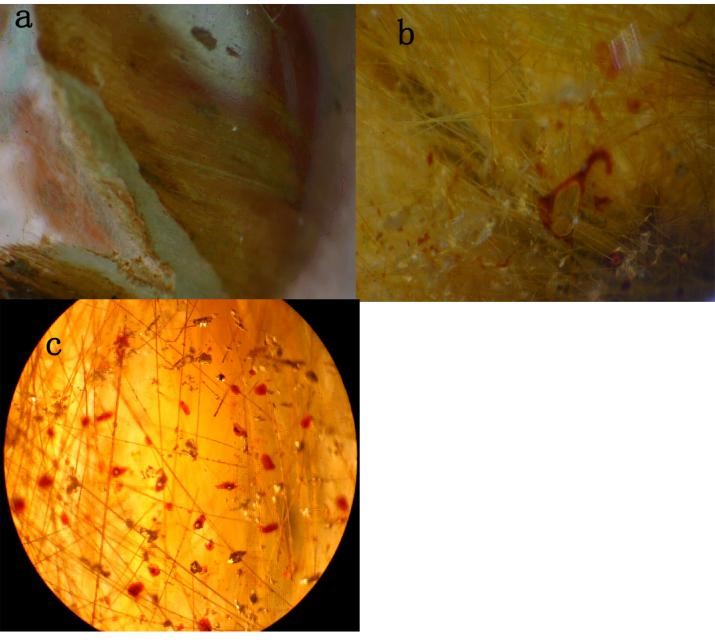
Dyed specimens often show:
- Color concentration in fractures
- Pigment pooling in surface pits
- Dye accumulation around crystal inclusions
Consumer Advisory
Our market research and dyeing experiments reveal the following:
- Simple dyeing techniques have flooded wholesale markets.
- Finer, evenly distributed inclusions take dye best.
- Careful magnification reveals most treatments.
As dye methods evolve, detection becomes more challenging. VirtuCasa recommends:
- Purchasing from reputable dealers
- Insisting on gemological certification
- Using magnification tools for inspection
All VirtuCasa suppliers must provide authentication certificates — shop with confidence at virtucasa.com. Browse our jadeite jade collection and Chinese antiques for more naturally sourced treasures.
FAQ
What is the easiest way to spot dyed rutilated quartz?
Look for unnaturally vivid colors, uneven color distribution, and dye pooling in cracks under magnification. Natural pieces have subdued, consistent colors only in the inclusions.
Is dyed rutilated quartz less valuable?
Yes. Natural rutilated quartz is prized for its authentic formations and metaphysical properties. Dyed stones are generally considered lower quality and may fade over time.
Can I return dyed rutilated quartz if I accidentally buy it?
Reputable sellers like VirtuCasa offer clear return policies. Always check the certificate of authenticity and ask about the return window before purchasing.
View original
Read More