Why a Jadeite Bracelet Deserves Careful Buying
A jadeite bracelet is one of the few pieces of jewelry that carries both everyday wearability and genuine cultural weight. In Chinese tradition, jade is valued not just for beauty but for the qualities it is said to represent — resilience, purity, and quiet strength. That makes a jadeite bracelet a meaningful purchase, whether you are buying your first piece or adding to a collection.
The challenge is that jadeite quality varies enormously, and so does price. Two bracelets that look similar in a photo can differ dramatically in transparency, texture, and color saturation. This guide walks through what actually drives value, so you can shop confidently at any budget — from entry-level to premium.
At VirtuCasa, every piece is described in detail, including germplasm, bead count, dimensions, and weight. That transparency is exactly what you need to compare options. You can browse the full jadeite collection to see how different grades and styles are presented side by side.
Understanding Jadeite Quality
Before comparing prices, it helps to understand the handful of factors that separate an ordinary bracelet from an exceptional one. These factors are consistent across the market, and they apply whether you are looking at a modest bead strand or a statement piece.
Type A, B, and C Treatment
The single most important question is whether the jadeite is Type A, B, or C. Type A jadeite is untreated — it has only been cut and polished, with no chemical bleaching or polymer filling. Type B has been bleached and impregnated with resin, and Type C has been dyed. For buyers seeking natural beauty and long-term value, Type A is the standard to look for. Reputable jade artisans recommend confirming treatment status before any purchase, especially online.
Color, Clarity, and Cut
Beyond treatment, the classic “Three Cs” apply. Color refers to hue, saturation, and evenness — a rich, vivid green is generally more valuable than a pale or muddy tone, though lavender and multicolor combinations have their own devoted following. Clarity describes internal texture: fine, compact, smooth material is prized over coarse or cloudy jade. Cut covers shape, polish, and proportion — well-matched beads and a smooth, even finish signal careful craftsmanship. Buying guides consistently emphasize that these three factors, together with treatment type, determine both appearance and value.
Transparency and “Ice” Type
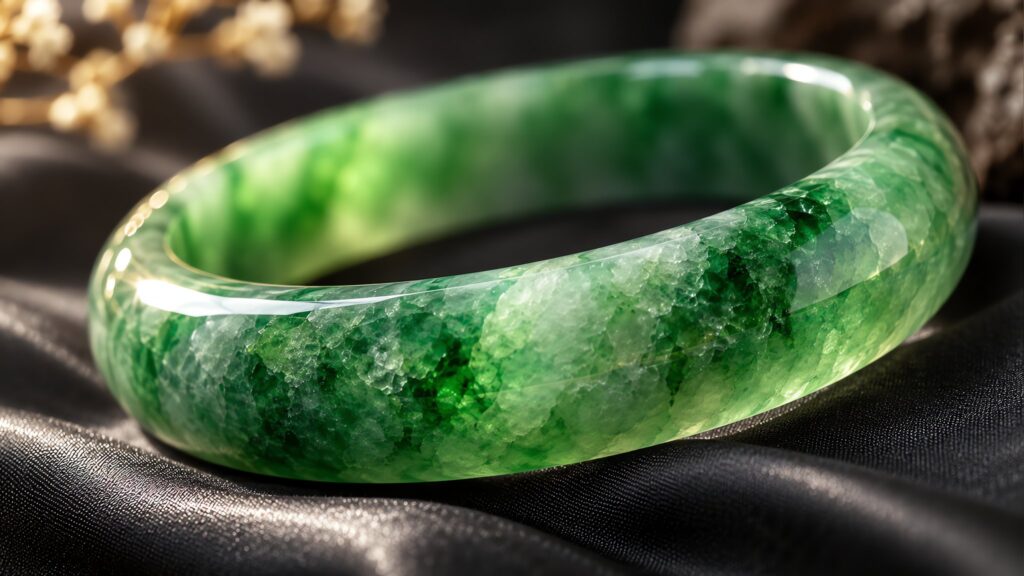
Transparency is a major differentiator. Ice-type jadeite is notably transparent and delicate, with a cool, glassy sheen that many collectors consider the most desirable look. A bracelet described as ice-type will typically show light passing through the beads, creating depth and luminosity that opaque jade cannot match. This characteristic often justifies a higher price, because truly transparent jadeite is rarer.
Types and Styles of Jadeite Bracelets
Jadeite bracelets come in several recognizable styles, and the style you choose affects both the look and the price. Bead bracelets are the most accessible entry point. A Natural Jadeite Bracelet made from 19 round beads of approximately 10mm each, with a soft lavender-white hue and a gentle vitreous luster, is a classic example. It weighs about 30g and has a total circumference of about 18cm, making it comfortable for wrists of 16–19cm.
For those who prefer multicolor character, a Natural Three-Color Jadeite Bracelet combines yellow, white, and light green in 16 spherical beads of approximately 12mm, weighing about 35g. The elastic cord makes it adjustable for most wrists. Multicolor jade is prized for the natural interplay of hues, and it offers a distinctive alternative to single-color strands.
At the premium end, ice-type bracelets stand apart. A Natural Ice-type Jadeite Bracelet with Floating Green Patterns features 13 round beads of 16mm each, weighing 101g. Its transparent, delicate texture and floating green patterns illustrate why ice-type material commands attention. This is a substantial, statement-making piece rather than a subtle everyday bracelet.
How to Choose the Right Size and Fit
Fit matters as much as appearance, especially for a bracelet you plan to wear often. Bead bracelets are typically measured by total circumference and bead diameter. The Natural Jadeite Bracelet, for instance, has a total circumference of about 18cm and suits wrists of 16–19cm. If your wrist falls outside that range, an elastic-cord design — like the one used in the Natural Three-Color Jadeite Bracelet — offers more flexibility because it adjusts to most wrist sizes.
Bead diameter also affects how a bracelet reads on the wrist. Smaller beads create a finer, more delicate look, while larger beads feel more substantial. The Natural Ice-type Jadeite Bracelet with Floating Green Patterns uses 16mm beads, which gives it considerable presence. Weight is another practical consideration: a 30g bracelet feels light and easy for daily wear, while a 101g piece is noticeably heavier and better suited to occasional or statement wear.
Finally, consider how the bracelet will be worn. If you layer jewelry, a slimmer, lighter strand may work better. If you want a single focal piece, a larger-bead bracelet delivers more visual impact. Matching the piece to your actual wearing habits prevents a beautiful bracelet from sitting unworn in a drawer.
Price and Value: What Drives Cost
Price in jadeite reflects a combination of treatment type, transparency, color saturation, texture, and bead size. Entry-level pieces are typically smaller, more opaque, or simpler in color. Mid-range pieces show better translucency and more even color. Premium pieces combine high transparency, desirable color, and larger, well-matched beads.
Within VirtuCasa’s collection, you can see this spectrum clearly. The Natural Three-Color Jadeite Bracelet is priced at $668, making it an accessible entry point with genuine multicolor character. The Natural Jadeite Bracelet is $1008, offering a soft lavender-white palette and a comfortable, everyday fit. The Natural Ice-type Jadeite Bracelet with Floating Green Patterns is $1517, reflecting its ice-type transparency and larger 16mm beads.
For buyers who want to explore beyond bracelets, related pieces help put value in context. A Natural Ice-type Tricolor Jade Necklace at $740 and a Natural Jadeite Tassel Earrings at $852 show how different forms and bead sizes affect pricing. At the higher end, a Natural Ice-type Violet Jade Bead Necklace at $6649 reflects the rarity of large, translucent, uniformly colored beads. Market reporting on jadeite pricing notes that top-grade material has continued to rise while mid-tier pieces have become more accessible — good news for budget-conscious buyers.
Common Mistakes to Avoid
- Assuming all green jade is jadeite. Color alone does not indicate type or quality.
- Ignoring treatment status. Type A, B, and C jadeite behave and appreciate very differently.
- Buying based on photos alone without checking dimensions and weight.
- Choosing a bracelet that does not match your wrist size or wearing habits.
- Overlooking bead uniformity — mismatched beads reduce both beauty and value.
- Assuming a higher price automatically means better fit for your personal style.
Top Picks for Different Buyers
If you want an accessible first jadeite bracelet with real character, the Natural Three-Color Jadeite Bracelet at $668 is a strong starting point. Its yellow, white, and light green beads and adjustable elastic cord suit most wrists.
For an everyday piece with a soft, elegant palette, the Natural Jadeite Bracelet at $1008 offers a lavender-white hue, 19 beads of about 10mm, and a comfortable 30g weight.
If you are ready for a statement bracelet with high transparency, the Natural Ice-type Jadeite Bracelet with Floating Green Patterns at $1517 delivers ice-type clarity and substantial 16mm beads.
For a coordinated look, consider the Natural Jadeite Tassel Earrings at $852, whose deep green beads and 18K gold-plated chains pair well with a green or multicolor bracelet.
Final Tips for Buying a Jadeite Bracelet
Start with treatment type, then weigh transparency, color, and texture against your budget. Confirm dimensions and weight so the fit is right, and choose a style you will actually wear. Whether you spend at the entry level or invest in a premium ice-type piece, buying from a seller who documents every detail makes the decision far easier. Explore the full jadeite collection to compare real options and find the bracelet that fits both your wrist and your goals.
FAQ
What is the difference between Type A, B, and C jadeite?
Type A jadeite is natural and untreated, only cut and polished. Type B has been bleached and filled with resin, and Type C has been dyed. Type A is generally the standard for buyers seeking natural beauty and long-term value.
How do I know if a jadeite bracelet will fit my wrist?
Check the listed circumference and bead diameter. For example, the Natural Jadeite Bracelet has a total circumference of about 18cm and suits wrists of 16–19cm. Elastic-cord designs, like the Natural Three-Color Jadeite Bracelet, adjust to most wrist sizes.
Why do some jadeite bracelets cost much more than others?
Price reflects treatment type, transparency, color saturation, texture, and bead size. Ice-type jadeite with high transparency and larger, well-matched beads typically costs more than more opaque, smaller-bead pieces.
Can I wear a jadeite bracelet every day?
Yes, if the fit and weight suit you. Lighter pieces such as the 30g Natural Jadeite Bracelet are comfortable for daily wear, while heavier statement pieces like the 101g ice-type bracelet are better suited to occasional wear.