Jadeite vs. Nephrite Bracelets: Which Is Better? 5 Key Comparison Points
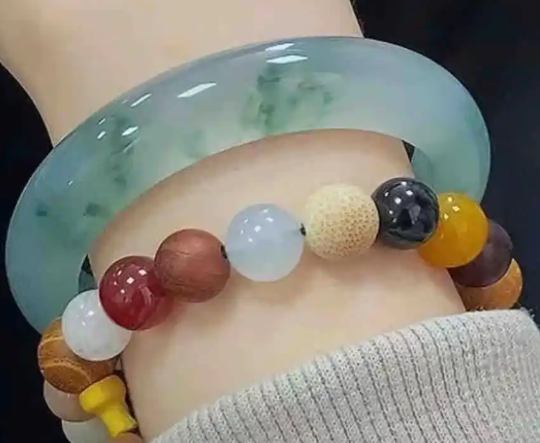
A bracelet dancing on a woman’s wrist embodies timeless elegance, its gentle chime creating a melody of sophistication. When selecting the perfect bracelet, many face the delightful dilemma of choosing between seemingly similar yet fundamentally different materials – particularly jadeite and nephrite jade. This comprehensive guide examines five crucial dimensions to help you make an informed decision based on personal preference, style, and budget.
1. Physical Properties: The Hardness Factor
The most significant scientific distinction lies in hardness. Jadeite registers 6.5-7 on the Mohs scale, while nephrite measures 6-6.5. This seemingly minor difference explains why jadeite qualifies as “hard jade” while nephrite represents “soft jade.” Greater hardness makes jadeite more resistant to scratches and daily wear, though both require careful handling. This durability advantage makes jadeite particularly suitable for frequently worn pieces.
2. Color Spectrum: A Rainbow of Possibilities
Both materials offer stunning color variations but follow different aesthetic principles. Jadeite colors follow the industry saying: “red jadeite, green emerald, purple precious,” with yellow varieties recently gaining popularity and value. White, transparent, and black jadeite remain more accessible. Nephrite celebrates “first red, second yellow, third black, fourth white, no blue-green,” while actually encompassing sophisticated shades like spinach green, lotus root powder, and Tang dynasty white. Nephrite generally offers broader color diversity, though jadeite’s vibrant transparency creates unique visual depth.
3. Texture and Sensation: Cool Elegance vs. Warm Comfort
The tactile experience differs remarkably. Jadeite exhibits luminous transparency with a cool, crystalline beauty that feels refreshing against the skin. Its clear, bell-like chime when struck adds auditory pleasure. Nephrite embodies subtle refinement with a warmer, silkier texture that seems to generate comforting warmth upon contact. Its matte, greasy luster (known as yùzhé) represents the classic “warm like jade” quality cherished in Chinese culture. Jadeite dazzles with brilliant clarity while nephrite comforts with understated elegance.
4. Availability and Sources: Global vs. Local
Sourcing quality bracelet material reveals another contrast. Jadeite primarily comes from Myanmar, with political factors and export restrictions creating market volatility despite relatively abundant deposits. Nephrite’s most prized specimens originate from Xinjiang’s Hotan region, where centuries of mining have significantly depleted resources. This increasing scarcity continuously elevates premium Hotan jade values. While both face supply challenges, nephrite’s limited sources create different market dynamics than jadeite’s import-dependent availability.
5. Price Considerations: Investment vs. Accessibility
Current markets show jadeite prices maintaining strong upward trajectories. High-quality jadeite bracelets with good transparency (“zhong”) and color typically reach six-figure sums, representing significant investment pieces. Nephrite offers greater accessibility, with excellent quality bracelets often available in five-figure ranges. While both materials appreciate, jadeite generally commands higher premiums, particularly for pieces with vibrant green coloration and glass-like clarity. Nephrite provides exceptional value for collectors seeking traditional beauty at more accessible price points.
Ultimately, the “better” choice depends entirely on personal connection. Some are captivated by jadeite’s brilliant sparkle and modern luxury, while others prefer nephrite’s ancient wisdom and subtle warmth. The perfect bracelet isn’t determined by specifications alone, but by that immediate emotional response when it graces your wrist – whether jadeite or nephrite, true value lies in finding the piece that speaks directly to your heart.
翡翠手鐲 vs 玉手鐲:哪個更好?五大關鍵比較點
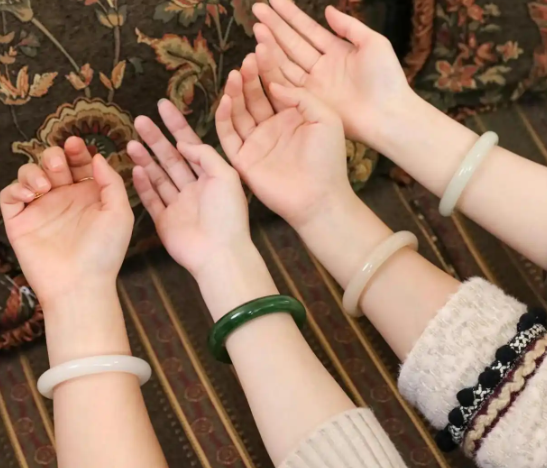
手鐲在女性手腕間舞動展現永恆優雅,其輕柔聲響譜寫出精緻的旋律。在選擇完美手鐲時,許多人面臨著在看似相似卻本質不同的材質間做出選擇的甜蜜難題——特別是翡翠與軟玉。本綜合指南從五個關鍵維度進行分析,幫助您根據個人偏好、風格和預算做出明智決定。
一、物理特性:硬度因素
最重要的科學區別在於硬度。翡翠在莫氏硬度標準中達到6.5-7,而軟玉則為6-6.5。這個看似微小的差異解釋了為何翡翠屬於「硬玉」,而軟玉代表「軟玉」。更高的硬度使翡翠更耐刮擦和日常佩戴,儘管兩者都需要小心保護。這種耐久性優勢使翡翠特別適合經常佩戴的首飾。
二、顏色光譜:繽紛的可能性
兩種材質都提供令人驚艷的顏色變化,但遵循不同的美學原則。翡翠顏色遵循業界俗語:「紅翡綠翠紫為貴」,黃色品種近年也備受青睞且價值攀升。白色、透明和黑色翡翠則相對容易入手。軟玉推崇「一紅二黃三黑四白無青花」,實際卻涵蓋菠菜綠、藕粉、唐白等典雅色調。軟玉通常提供更廣泛的顏色多樣性,而翡翠的鮮明透明度創造出獨特的視覺深度。
三、質感與觸覺:清涼優雅 vs 溫暖舒適
觸感體驗明顯不同。翡翠展現瑩透光澤,帶著清涼的水晶般美感,接觸肌膚時令人清新振奮。敲擊時清澈如鐘鳴的聲響更添聽覺享受。軟玉體現細膩精緻,帶著更溫暖柔滑的質地,接觸時似乎能產生舒適暖意。其啞光油脂光澤(稱為玉轍)代表了中國文化中珍視的經典「溫潤如玉」特質。翡翠以璀璨澄澈令人驚艷,軟玉則以含蓄優雅帶來慰藉。
四、產量與來源:全球 vs 地域
採購優質手鐲原料揭示另一項對比。翡翠主要產自緬甸,儘管礦藏相對豐富,但政治因素和出口限制造成市場波動。最珍貴的軟玉標本來自新疆和田地區,數世紀的開採已大幅耗竭資源。這種日益稀缺不斷推升優質和田玉的價值。雖然兩者都面臨供應挑戰,軟玉的有限來源創造了與翡翠依賴進口的可用性不同的市場動態。
五、價格考量:投資價值 vs 入手門檻
當前市場顯示翡翠價格保持強勁上升趨勢。具有良好種水(透明度)和顏色的高品質翡翠手鐲通常達到六位數,屬於重要投資品。軟玉提供更高的入手門檻,優質手鐲通常位於五位數範圍。雖然兩種材質都會增值,但翡翠通常要求更高溢價,特別是顏色鮮陽、玻璃種的藏品。軟玉為追求傳統美學與合理預算的收藏家提供卓越價值。
最終,「更好」的選擇完全取決於個人情感聯繫。有人為翡翠的璀璨光華和現代奢華所傾倒,有人則偏愛軟玉的古老智慧與含蓄溫潤。完美手鐲不僅由規格決定,更取決於它輕撫您手腕時那份即刻的情感共鳴——無論翡翠還是軟玉,真正的價值在於找到那件直接與您心靈對話的珍品。
SHOP NOW
- Demo2 products
- Antiques56 products
- Classical Chinese Antiques4 products
- Jade Jewelry Collection4 products
- Jadeite138 products
- Jadeite Bracelets43 products
- Jadeite Earrings8 products
- Jadeite Necklaces7 products
- Jadeite Pendants64 products
- Jadeite Rings16 products