Silver Jewelry: The Timeless Precious Metal with Antimicrobial Magic
Elemental Profile of Silver
Chemical Symbol: Ag | Atomic Number: 47 | Atomic Weight: 107.868
Density: 10.5 g/cm³ | Mohs Hardness: 2.7 | Natural Color: White
Melting Point: 960.8°C | Boiling Point: 2212°C | Electrical Conductivity: 59
Luster: Silver-white
I. Physical Properties
Silver (Ag) ranks among the most celebrated precious metals alongside gold. Pure silver displays brilliant white coloration with smooth, lustrous texture, though its softness allows even nails or hard objects to leave visible scratches. As the best electrical conductor among metals and an excellent thermal conductor, silver offers remarkable malleability and ductility—easily drawn into fine wires or hammered into ultra-thin sheets without breaking.
II. Chemical Characteristics
Silver demonstrates significant chemical instability, readily reacting with atmospheric sulfur compounds to form black silver sulfide tarnish. It also darkens when exposed to acidic substances, inspiring the folk wisdom: “Silver that doesn’t darken isn’t real silver.”
III. Natural Antimicrobial Properties
Beyond jewelry and currency applications, silver possesses remarkable disinfectant qualities. Silver ions demonstrate powerful bactericidal effects—water stored in silver containers remains potable for months. Scientific studies confirm that just 500 millionths of a gram of silver ions per kilogram of water effectively eliminates waterborne pathogens.
IV. Authenticating Silver Coinage
1. Sound Testing
Gently hold a silver coin at its center between fingertips and strike its edge with another coin. Genuine silver produces clear, resonant tones. Alternatively, blow sharply across the coin’s edge and listen for characteristic humming vibrations. Sharp, short sounds indicate high copper content or counterfeits, while silence confirms fake coins.
2. Weight Verification
Standard silver coins typically weigh 26.5 grams. Underweight specimens suggest alteration methods like acid washing (nitric/sulfuric acid surface etching), edge filing with re-engraved teeth, or filled cores (lead/tin interiors with silver plating). These fakes often show blurred patterns, thin edges, and pale coloring.
3. Composition Analysis
Rub the coin on a touchstone to create silver particles. Apply 1:1 dilute nitric acid followed by 1/10 saline solution. Copper impurities dissolve while silver content leaves milky residue: under 50% silver shows minimal milky liquid with green tint; 70%+ yields abundant milky liquid with reduced green; 90%+ produces copious milky liquid with faint green hints; over 95% transforms from milky white to rough rice color.
V. Silver Jewelry Authentication
Silver content primarily identifies through hallmarks: Ag925 indicates 92.5% silver, while Ag800 denotes 80% silver (traditionally called “90% silver” or “80% silver”). Categories include:
- Pure Silver (99.99%): Highest purity, brilliant white, soft texture
- Sterling Silver (90%+): Primary jewelry material
- Silver Alloy (70-80%): Silver-copper/aluminum blends enabling diverse designs
Authentication Methods:
1. Color Analysis
Genuine high-purity silver appears bright white and lustrous. Lower purity shows yellowish/grayish tones: 85%=slightly red; 75%=red-yellow; 60%=red; 50%=black. Copper additions create: 80%=gray-white; 70%=gray; under 50%=black-gray. Brass alloys increase yellowness with decreasing silver content.
2. Flexibility Testing
High-purity silver bends easily without breaking. Counterfeits (lead/aluminum alloys) resist bending or break. Silver-plated items crack when bent or lightly hammered.
3. Nitric Acid Testing
Apply nitric acid to filed surfaces: high purity shows beige/light green; low purity displays dark green/black with possible bubbling.
4. Bounce Testing
Genuine heavy silver produces dull “thud” when dropped; light counterfeits create brighter, higher-bouncing sounds.
5. Density Calculation
Using specific gravity measurements: Silver density=10.5 g/cm³, Copper=8.92 g/cm³. Formula: 10.5X + 8.92Y = Z(X+Y). Example: measured density=10.447 g/cm³ yields 96.46% silver content.
VI. Silver Jewelry Maintenance
Silver’s historical significance in Chinese jewelry, especially among ethnic minorities (“wearing gold and silver”), demands careful maintenance due to its tarnishing tendency.
1. Tarnishing Causes
Silver’s reactivity with sulfur compounds creates black silver sulfide film. Zinc/tin additives in alloys also discolor easily. Avoid exposure to: perfumes, strong odors, alkalis, century eggs, stinky tofu, bromides, iodides, sulfides, and sulfur soaps.
2. Tarnish Removal
- Polish with toothpaste/detergent paste using soft cloth
- Soak in baking soda solution (3-5 tablets dissolved)
- Clean with soapberry foam (natural saponin)
- Polish with Chinese bellflower root solution
- Soak in 50% oxalic acid solution
- Heat in sodium carbonate solution with aluminum scraps (hydrogen reduction process)
- Clean with 1% hot soap solution
- Use commercial silver polish
- Mild tarnish responds well to toothpaste cleaning
3. Spot Removal from Moisture
Heat vinegar, dip cloth, and rub affected areas before rinsing.
4. New Silver Protection
Apply clear nail polish to create oxygen barrier, preserving shine and preventing oxidation.
Regular cleaning and proper storage remain essential for maintaining silver’s natural beauty, as some darkening over time represents normal oxidation rather than quality deterioration.
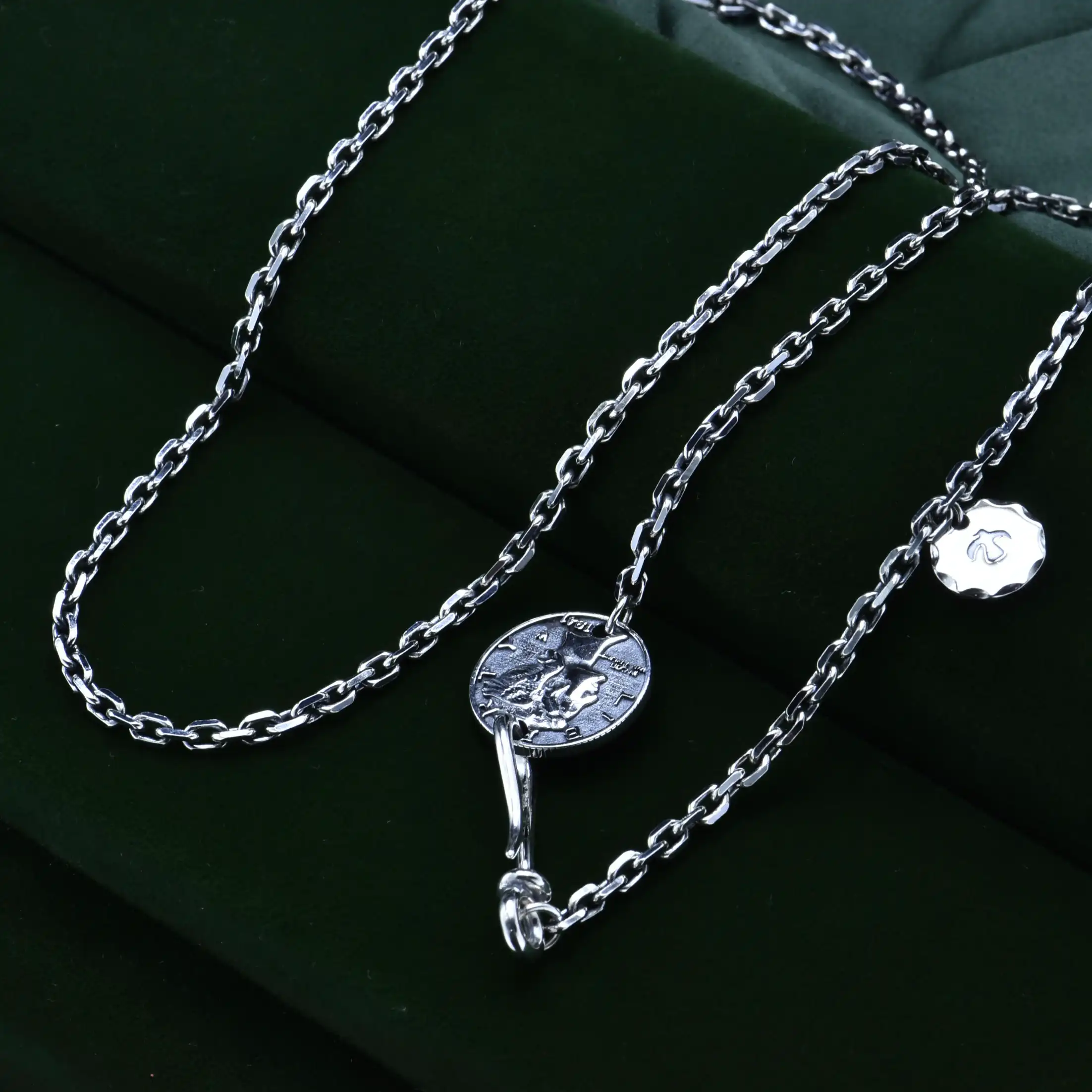
銀首飾:具有抗菌魔力的永恆貴金屬
銀元素檔案
化學符號:Ag | 原子序數:47 | 原子量:107.868
密度:10.5 g/cm³ | 莫氏硬度:2.7 | 天然顏色:白色
熔點:960.8°C | 沸點:2212°C | 導電性:59
光澤:銀白色
一、物理特性
銀(Ag)與黃金同屬最著名的貴金屬之列。純銀呈現明亮的白色,具有光滑、有光澤的質地,儘管其柔軟度允許甚至指甲或硬物留下可見劃痕。作為金屬中最佳的電導體和優良的熱導體,銀具有卓越的延展性和韌性——易於拉成細絲或錘打成超薄片而不斷裂。
二、化學特性
銀表現出顯著的化學不穩定性,容易與大氣中的硫化合物反應形成黑色的硫化銀鏽層。暴露於酸性物質時也會變暗,衍生出民間智慧:「不會變黑的銀不是真銀。」
三、天然抗菌特性
除了珠寶和貨幣應用外,銀具有卓越的消毒特性。銀離子表現出強大的殺菌效果——儲存在銀容器中的水數月仍可飲用。科學研究證實,每公斤水中僅需5億分之一克的銀離子即可有效消除水生病原體。
四、銀幣真偽鑑定
1. 聲音測試
用指尖輕輕握住銀幣中心,用另一枚銀幣敲擊其邊緣。真銀產生清晰、共鳴的音調。或者,用力吹過銀幣邊緣並聆聽特有的嗡嗡振動。尖銳、短促的聲音表示高銅含量或偽幣,而寂靜則確認是假幣。
2. 重量驗證
標準銀幣通常重26.5克。重量不足的樣本暗示改動方法,如酸洗(硝酸/硫酸表面蝕刻)、邊緣銼削重新雕刻齒紋,或填充核心(鉛/錫內芯鍍銀)。這些假幣通常顯示模糊圖案、薄邊和蒼白顏色。
3. 成分分析
在試金石上摩擦銀幣產生銀顆粒。滴加1:1稀硝酸,然後滴加1/10鹽水溶液。銅雜質溶解而銀含量留下乳白色殘留物:低於50%銀顯示最少乳白色液體帶綠色調;70%以上產生大量乳白色液體,綠色減少;90%以上產生豐富乳白色液體帶微弱綠色暗示;超過95%從乳白色轉變為糙米色。
五、銀首飾真偽鑑定
銀含量主要通過印記識別:Ag925表示92.5%銀,而Ag800表示80%銀(傳統稱為「九成銀」或「八成銀」)。類別包括:
- 純銀(99.99%):最高純度,亮白色,質地柔軟
- 紋銀(90%以上):主要首飾材料
- 銀合金(70-80%):銀銅/鋁混合物,實現多樣化設計
鑑定方法:
1. 顏色分析
真正高純度銀呈現亮白色和有光澤。較低純度顯示黃/灰色調:85%=微紅;75%=紅黃;60%=紅;50%=黑。添加銅造成:80%=灰白;70%=灰;50%以下=黑灰。黃銅合金隨銀含量降低而增加黃色。
2. 柔韌性測試
高純度銀容易彎曲而不斷裂。假貨(鉛/鋁合金)抗彎曲或斷裂。鍍銀物品彎曲或輕敲時開裂。
3. 硝酸測試
在銼口處滴加硝酸:高純度顯示米色/淺綠色;低純度顯示深綠/黑色,可能起泡。
4. 彈跳測試
真正的重銀掉落時產生沉悶的「砰」聲;輕的假貨產生更亮、彈跳更高的聲音。
5. 密度計算
使用比重測量:銀密度=10.5 g/cm³,銅=8.92 g/cm³。公式:10.5X + 8.92Y = Z(X+Y)。範例:測得密度=10.447 g/cm³得出96.46%銀含量。
六、銀首飾保養
銀在中國珠寶中的歷史意義,特別是在少數民族中(「披金戴銀」),由於其易變色特性需要仔細維護。
1. 變色原因
銀與硫化合物的反應性產生黑色硫化銀膜。合金中的鋅/錫添加劑也容易變色。避免接觸:香水、強烈氣味、鹼、皮蛋、臭豆腐、溴化物、碘化物、硫化物和硫磺藥皂。
2. 鏽斑去除
- 用軟布沾牙膏/清潔劑擦拭
- 浸泡在小蘇打溶液中(溶解3-5片)
- 用皂角泡沫清洗(天然皂苷)
- 用桔梗溶液擦拭
- 浸泡在50%草酸溶液中
- 在碳酸鈉溶液中與鋁屑一起加熱(氫氣還原過程)
- 用1%熱肥皂水清洗
- 使用商業銀器擦亮劑
- 輕微鏽斑用牙膏清洗效果良好
3. 潮濕斑點去除
加熱醋,沾濕布料,摩擦受影響區域後沖洗。
4. 新銀保護
塗抹透明指甲油形成氧氣屏障,保持光澤並防止氧化。
定期清潔和適當存放對於保持銀的自然美至關重要,因為隨時間推移的某些變暗代表正常氧化而非質量劣化。