Introduction
Jadeite, the rarer and more precious of the two jade varieties, has captivated collectors and jewelry lovers for centuries. Its exquisite colors, delicate textures, and cultural significance make it a highly sought-after gemstone. However, with popularity comes imitation. From resin fakes to glass and even treated stones, the market is flooded with substitutes. For buyers, learning to spot real jadeite is essential to making a confident purchase. At VirtuCasa, an online marketplace specializing in natural jadeite jewelry and Chinese antiques, every piece is crafted from genuine jadeite. This guide will walk you through the key quality factors, common imitations, and practical tips to ensure you invest in authentic natural jadeite.
Understanding Quality
The value of jadeite is determined by three primary factors: color, transparency (often called “water”), and texture. These elements work together to create a stone’s overall beauty and rarity. According to the Gemological Institute of America (GIA), color is the most important factor, followed by transparency and texture. Understanding these will help you identify genuine jadeite versus imitations.
Color
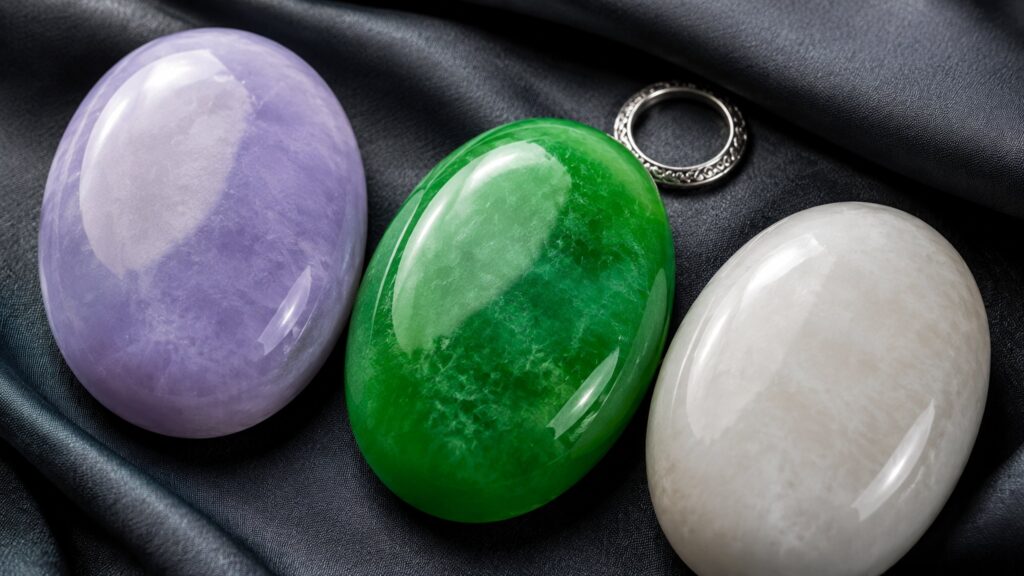
Natural jadeite occurs in a spectrum of colors, including green, lavender, yellow, white, and the rare “three-color” combinations. The most prized is a rich, even green known as “imperial green.” However, other vibrant hues are also highly valued. For example, the Natural Jadeite Bracelet features a soft lavender-white hue with gentle vitreous luster, while the Natural Jadeite Tassel Earrings boast a deep, vibrant green. Imitations often have an unnatural, uniform color that looks “flat” or overly saturated. Real jadeite displays subtle variations in tone and depth, especially when viewed under different lighting.
Transparency
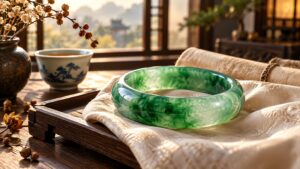
Transparency refers to how much light passes through the stone. In jadeite, the best quality is “ice-type” or “glassy,” where the material is highly translucent to semi-transparent. The Natural Ice-type Jadeite Bracelet with Floating Green Patterns exemplifies this with its cool, lustrous glassy sheen and floating green patterns. Imitations, such as glass or plastic, often appear too clear or contain bubbles. As noted by Pala International’s buying guide, a jadeite’s translucency is a key indicator of authenticity and quality.
Texture
Texture describes the internal grain structure. Fine-textured jadeite feels smooth and has a waxy or vitreous luster. The Natural Full-Green Jadeite Saddle Ring is noted for its fine and smooth texture with a warm vitreous sheen. Coarse or granular textures often indicate lower quality or imitations. Real jadeite should feel cool to the touch and have a slight heft due to its density (specific gravity around 3.3). The weight of a piece can be a quick test: as mentioned in a helpful jade buying guide from SageStone, jadeite feels heavier than glass or plastic of the same size.
Types & Styles
VirtuCasa offers a range of jadeite jewelry that showcases different types and styles, each with unique characteristics.
- Bead Bracelets: The Natural Three-Color Jadeite Bracelet (yellow, white, light green) and the Natural Ice-type Tricolor Jade Necklace (yellow, green, white) highlight multi-hued patterns in translucent ice-type jadeite. These are versatile for daily wear.
- Rings: Saddle rings are a classic style, fully carved from a single piece of jadeite. The Natural Jadeite Saddle Ring with Floating Green (size 26, 13.5g) and the Natural Full-Green Jadeite Saddle Ring (size 24, 9.5g) offer distinct green patterns.
- Earrings: The Natural Jadeite Tassel Earrings (6cm length, 8g) combine 18K gold-plated chains with deep green beads.
- Pendant/Ring Sets: The Natural Ice-type Violet Jadeite Cabochon Ring Set (size 15, 4g) features a vivid violet cabochon set in 18K white gold with sapphires and diamonds, showcasing premium design.
- Necklaces: The Natural Ice-type Violet Jade Bead Necklace (68 beads, 10-12mm, 158g) offers a substantial lavender hue ideal for statement wear.
How to Choose the Right Size & Fit
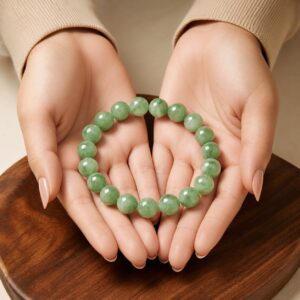
Jadeite jewelry comes in specific dimensions, so knowing your measurements is key. VirtuCasa provides detailed sizing for each piece. For example, the Natural Jadeite Bracelet has 19 beads of 10mm diameter and a total circumference of about 18cm, fitting wrists 16-19cm. The Natural Ice-type Jadeite Bracelet uses 13 beads of 16mm diameter, 101g — a bolder fit. Rings come in specific sizes: the Saddle Ring with Floating Green is size 26, while the Full-Green Saddle Ring is size 24. Weights are given (e.g., 9.5g, 13.5g) to help you assess comfort. Always measure your wrist, finger, or neck circumference before purchasing, and note that elastic cords allow some flexibility on bracelets.
Price & Value
Several factors drive jadeite pricing: color intensity, transparency, texture, size, and craftsmanship. At VirtuCasa, you’ll find a range from entry-level pieces to premium investments. For example, the Natural Three-Color Jadeite Bracelet is priced at $668, offering a harmonious blend of colors in a 35g piece — excellent value for a unique multicolor jadeite. The Natural Ice-type Tricolor Jade Necklace (10.4g) at $740 is a lightweight, refined option. At the mid-range, the Natural Jadeite Bracelet ($1008) gives you a classic lavender-white bead bracelet with 19 beads of 10mm. For high-end collections, the Natural Ice-type Violet Jade Bead Necklace ($6649) features 68 beads totaling 158g — a substantial, near-ice-type violet piece. The Violet Cabochon Ring Set ($1926) combines premium jadeite with diamonds and sapphires, reflecting the cost of fine metalwork. Remember, the most expensive pieces often have the greatest depth of color and transparency. Always compare quality, not just price.
Common Mistakes to Avoid
- Ignoring transparency: Opaque jadeite may be dyed or of low quality. Look for translucency like the ice-type pieces.
- Overlooking texture: Imitations often feel overly smooth or waxy. Real jadeite has a fine, granular feel and a vitreous luster.
- Relying solely on color: Bright green can be artificially enhanced. Check for natural color variations.
- Neglecting weight: Jadeite is dense. If a piece feels too light for its size, it may be plastic or glass.
- Buying without documentation: Always purchase from a reputable seller like VirtuCasa, which clearly states “natural jadeite” in its product descriptions.
- Forgetting about treatment: Some jadeite is treated with polymer or dye. VirtuCasa’s products are described as natural, but always verify the seller’s policy.
Top Picks
Based on our products, here are three top recommendations for different buyers:
- For the First-Time Buyer: The Natural Three-Color Jadeite Bracelet ($668) offers a unique multicolor piece at an accessible price. Its 12mm beads and 35g weight are substantial yet comfortable, making it an ideal introduction to natural jadeite.
- For the Everyday Elegance Seeker: The Natural Ice-type Tricolor Jade Necklace ($740) is lightweight (10.4g) with small 3.5mm beads, perfect for subtle layering. Its ice-type translucency and tricolor design add sophistication.
- For the Investor/Collector: The Natural Ice-type Violet Jade Bead Necklace ($6649) is a showpiece with 68 beads of graduated size (10-12mm) and 158g weight. Its vivid lavender hue and ice-type clarity represent top-tier jadeite.
- For Statement Style: The Natural Ice-type Jadeite Bracelet with Floating Green Patterns ($1517) features large 16mm beads and a dramatic glassy luster, ideal for those who want a bold piece.
- For Ring Lovers: The Natural Jadeite Saddle Ring with Floating Green ($719) is a classic, comfortable fit (size 26, 13.5g) with elegant green patches.
Final Tips
Spotting real jadeite comes down to experience and knowledge. Always examine the stone under both fluorescent and incandescent light, as recommended by GIA. Feel its weight and temperature. Look for natural inclusions and subtle color shifts. Purchase only from trusted sellers like VirtuCasa, which offers a full collection of natural jadeite jewelry with transparent product details. By following this guide, you’ll be equipped to make a confident, informed purchase and enjoy the timeless beauty of authentic jadeite.
FAQ
What is the easiest way to test if jadeite is real at home?
Perform a weight check: real jadeite has a specific gravity around 3.3, so it feels noticeably heavier than glass or plastic of the same size. Also, check for a cool-to-the-touch feel and vitreous luster.
Can jadeite be dyed or treated, and how can I tell?
Yes, some jadeite is dyed or polymer-treated. Look for unnatural color concentration in cracks or cavities. Natural jadeite like VirtuCasa’s products has even color without artificial enhancement. Always buy from a seller that specifies ‘natural jadeite’.
What does ‘ice-type’ jadeite mean?
Ice-type jadeite refers to a high degree of transparency, similar to ice. It has a cool, glassy luster and lets light pass through, revealing internal patterns. VirtuCasa’s ice-type pieces, such as the Natural Ice-type Jadeite Bracelet, exhibit this quality.
Are VirtuCasa’s jadeite pieces guaranteed natural?
Yes, VirtuCasa states in each product description that their jadeite is natural. For example, the Natural Jadeite Bracelet is described as ‘crafted from natural jadeite beads.’ You can trust the provided details about germplasm, size, and weight.