The Eastward Journey of Jade: Hetian Jade’s Path to the Qing Imperial Court
This article continues our series exploring the “Jade from the Kunlun Mountains” exhibition at the Beijing Palace Museum, which delves into the culture of Hetian (also spelled Hotan) jade within the Qing Dynasty Imperial Court. In the Chinese cultural consciousness, Hetian jade is synonymous with fine jade itself. Since the Warring States and Han dynasties, the vast majority of exquisite jade carvings have been crafted from this revered material.
本文延續我們探索北京故宮博物院「玉出昆岡」特展的系列,深入探討清代宮廷中的和闐玉文化。在中國文化意識中,和闐玉是美玉的同義詞。自戰國、漢代以來,絕大多數精美的玉雕皆由這種受尊崇的材料製成。
Hetian is located in the southern region of China’s Xinjiang Uygur Autonomous Region. Historically known as “Yutian” or “Hetian,” its name means “the place where jade is produced.” It stands as the most significant source of jade material in Chinese history.
和闐位於中國新疆維吾爾自治區南部。歷史上稱為「于闐」或「和闐」,其名意為「產玉之地」。它是中國歷史上最重要的玉料產地。
Scientifically, Hetian jade refers to a mineral aggregate primarily composed of tremolite-actinolite minerals. It possesses a typical fibrous interlocking structure and meets the quality standard to be classified as true nephrite jade.
從科學上講,和闐玉是指主要由透閃石-陽起石類礦物組成的礦物集合體。它具有典型的纖維交織結構,並達到被歸類為真正軟玉的品質標準。
Archaeological evidence indicates that the mining of Xinjiang nephrite (including Hetian jade) dates back to the Neolithic period. However, jade objects from this early era were primarily simple tools and utilitarian items.
考古證據表明,新疆軟玉(包括和闐玉)的開採可追溯至新石器時代。但這一早期時期的玉器主要是簡單的工具和實用物品。
After the Han Dynasty, Xinjiang Hetian jade material began to be transported to the Central Plains of China. During the Tang Dynasty, the famed Silk Road facilitated faster and more convenient transportation of jade.
漢代以後,新疆和闐玉料開始輸往中原。唐代,著名的絲綢之路促進了玉石更快、更便捷的運輸。
From the Song Dynasty onward, the mining and trade of Hetian jade continued uninterrupted, gradually becoming a crucial source of jade for the Central Plains.
自宋代起,和闐玉的開採與貿易持續不斷,逐漸成為中原用玉的重要來源。
The Ming Dynasty marked the beginning of true mining for Hetian mountain jade material.
明代標誌著和闐山料玉真正開採的開始。
Following the Qing Emperor Qianlong’s consolidation of control over the Xinjiang region in 1759, high-quality Hetian jade was regularly sent as tribute to the Imperial Court. It subsequently became the primary source of jade material for the Qing imperial workshops.
清乾隆皇帝於1759年鞏固對新疆地區的控制後,優質和闐玉開始定期作為貢品送入宮廷。其後,它成為清代宮廷玉作的主要玉料來源。
Exploring the Exhibition: Masterpieces Across Dynasties
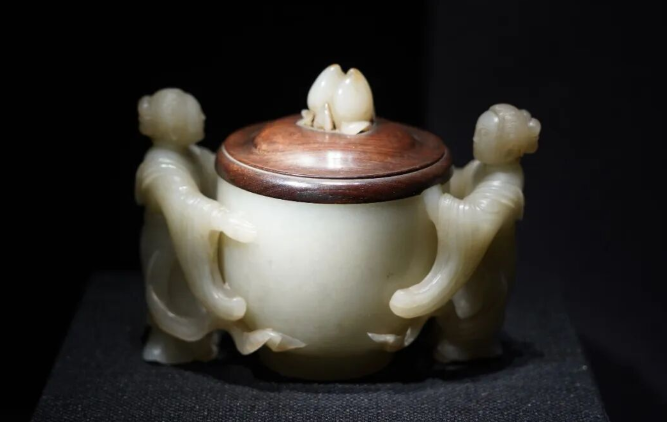
White Jade Censer with Twin Figure Handles, Ming Dynasty, Palace Museum Collection
This piece exemplifies the archaic and robust style characteristic of the Ming period. Upon close observation, one notes the jade has a slightly greyish hue, indicating it had not yet reached the pinnacle of quality. During the Ming Dynasty, the Hetian region was not under direct control of the Central Plains government, making the acquisition of premium jade material significantly more difficult compared to the mid-Qing period.
白玉雙立人耳爐,明代,故宮博物院藏
此器體現了明代古拙、渾厚的典型風格。仔細觀察,可見玉質略帶灰色調,表明其尚未達到頂級品質。明代時,和闐地區不在中原政權直接控制之下,獲取優質玉料相比清中期要困難得多。
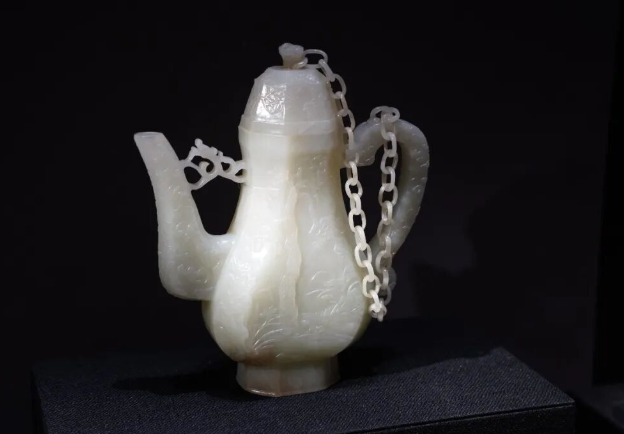
White Jade Ewer with Ganoderma and ‘Fu Shou’ (Blessing and Longevity) Motifs, Ming Dynasty, Palace Museum Collection
Carved from a single block of jade, this ewer showcases the bold and vigorous Ming aesthetic. Its decorative motifs carry auspicious meanings—a tradition that has persisted from that time to the present day.
白玉靈芝福壽紋執壺,明代,故宮博物院藏
此執壺由整塊玉料雕琢而成,展現了明代粗獷雄健的審美。其紋飾寓意吉祥——這一傳統從那時起一直延續至今。
Grayish-Green Jade ‘Ear Cup’ with Flying Dragon Motif, Song to Yuan Dynasty, Palace Museum Collection
Made of a greyish-green jade, this cup features vigorous and powerful carving. The craftsman skillfully utilized the natural russet skin of the jade (the outer layer altered by oxidation) in a technique known as “qiaodiao” or clever carving.
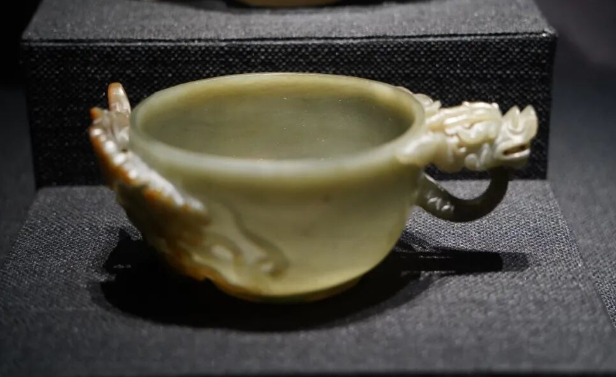
青玉飛龍紋耳杯,宋至元代,故宮博物院藏
此杯為青灰色玉質,雕工雄健有力。工匠巧妙地利用了玉料的天然皮色(外層因氧化而變色),運用了「巧雕」技藝。
White Jade ‘Jade Xiaoyao’ Ornament with Peony Design, Jin Dynasty, Palace Museum Collection
After the Tang Dynasty, symmetrical patterns frequently appeared in jade carving designs, such as paired cranes, birds, or floral motifs. These pieces typically used high-quality jade and often expressed themes of harmony and auspiciousness. A similar ornament was discovered sewn onto the headdress of a princess consort in the tomb of Jin Dynasty prince Wanyan Yan (excavated in Acheng, Heilongjiang, 1988). Scholar Sun Ji identified this type of artifact based on records in the History of Jin, which describes elderly noblewomen wearing headscarves adorned with jade pieces called “yu xiaoyao” (jade carefree). Therefore,此类玉器應稱為玉逍遙,為金代貴族婦女頭巾上的玉飾。
白玉牡丹紋「玉逍遙」,金代,故宮博物院藏
唐代以後,對稱圖案常出現於玉雕設計中,如對鶴、對鳥或對稱花卉等。此類器物通常採用優質玉料,常表達和諧祥瑞之意。一件類似飾物發現於金代齊國王完顏晏墓(1988年黑龍江阿城發掘)其王妃頭飾上。學者孫機根據《金史》記載考證,描述老年貴族婦女佩戴綴有稱為「玉逍遙」玉飾的頭巾。因此,此類玉器應定名為「玉逍遙」,是金代貴族婦女頭巾上的玉飾。
White Jade ‘Spring Water’ Pendant, Jin Dynasty, Palace Museum Collection
The term “Spring Water” originates from the spring hunting excursions of Jin Dynasty nobility, activities described as “like spring water.” The hunt involved using gyrfalcons (Haidingqing) to capture swans or wild geese. The gyrfalcon is a small, agile, and fierce raptor, noted for being “small yet robust.” During the Liao, Jin, and Yuan periods, northern ethnic groups greatly enjoyed this form of falconry. Its depiction is common in Jin and Yuan jade carvings, collectively known as “Spring Water jade.”
白玉「春水」圖佩,金代,故宮博物院藏
「春水」一詞源於金代貴族春季的狩獵活動,形容其「如春水」。狩獵時使用海東青來捕捉天鵝或大雁。海東青是一種體型小巧、敏捷兇猛的鷹隼,以「小而健」著稱。遼、金、元時期,北方民族十分喜愛這種獵鵝活動。其場景常見於金、元玉雕,統稱為「春水玉」。
White Jade Spoon, Tang Dynasty, Palace Museum Collection
The Tang Dynasty style is characterized by its full, rounded, and substantial forms—a quality perfectly captured in this simple yet elegant spoon.
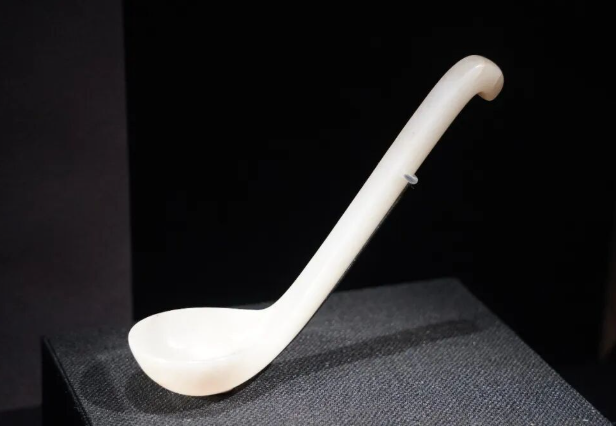
白玉勺,唐代,故宮博物院藏
唐代風格以其飽滿、圓潤、渾厚的造型為特徵——這把簡約而優雅的勺子完美體現了這一品質。
White Jade Square Belt Plaque with ‘Tribute Bearer’ Design, Tang Dynasty, Palace Museum Collection
Belt plaques are classic Tang Dynasty jade artifacts, representing a single piece from a complete jade-decorated belt. This plaque is carved with a design of a foreign tribute bearer presenting treasures—a snapshot of the prosperous trade along the Silk Road during the glorious Tang era.
白玉獻寶圖方帶板,唐代,故宮博物院藏
帶板是經典的唐代玉器,是完整玉帶中的一件。此帶板雕刻胡人獻寶圖案——是輝煌唐代絲綢之路繁榮貿易的一個剪影。