The Ultimate Guide to Authenticating Antique Porcelain Crackles: Everything You Need to Know
鑑別真假古瓷開片,看這篇就夠了!
The production of porcelain during the Song Dynasty broke free from the Tang Dynasty’s binary structure of “southern celadon and northern white ware.” Ceramic products became increasingly diverse, with a continuous emergence of new glaze colors and painted varieties. Yet, within the Song porcelain’s crackle “layering” and the “texture” of its jade-like quality lies a profound understanding and pursuit of ceramic aesthetics that was uniquely Song.
宋代瓷器的生產突破了唐代「南青北白」的二元結構,產品逐漸趨向多元化,不斷湧現新的釉色和彩繪品種。然而宋瓷開片的「層次」、青玉的「質感」,滲透著宋人對於陶瓷美學的理解與追求。
Throughout history, the phenomenon of crackles on porcelain has been subject to a myriad of interpretations. Even today, various curious legends circulate about the origins and meanings of these seemingly fragile networks of lines. From a technical perspective of ceramic production, however, crackles—known in Chinese as kaipian—are fundamentally a manufacturing flaw.
關於瓷器的開片問題,從古至今有各種不同的解讀,直至今日依然有各種關於開片的稀奇古怪的傳說。從瓷器製作的技術角度上來說,開片屬於工藝缺陷。
Porcelain consists of two main parts: the body (tai) and the glaze (you). During firing, if the body and glaze undergo different rates of expansion or contraction, cracking can occur in the glaze layer or even in the body itself. If the coefficient of expansion of the glaze is significantly higher than that of the body, the glaze layer will form a network of cracks upon cooling. If the body is very thin, this stress can even cause the vessel to fracture. To avoid crackles, one must carefully select a glaze with an expansion coefficient that is compatible with the body. Conversely, if the glaze’s expansion coefficient is much smaller than the body’s, compressive stress occurs, potentially causing the glaze to peel away from the body.
瓷器是由胎、釉兩個部分組成,燒製時胎體與釉料,如果出現不同的膨脹或收縮率,就會出現釉面或者胎體開裂。如果釉的膨脹係數比坯大得多,那麼冷卻時,使得釉層上形成發裂現象。如果坯為薄胎時,甚至使坯體破裂;如果不想開片,要選配與坯體相適應的釉膨脹係數。如果釉的膨脹係數比坯要小得多,那麼就會發生張應力,致使釉與坯體發生剝離。
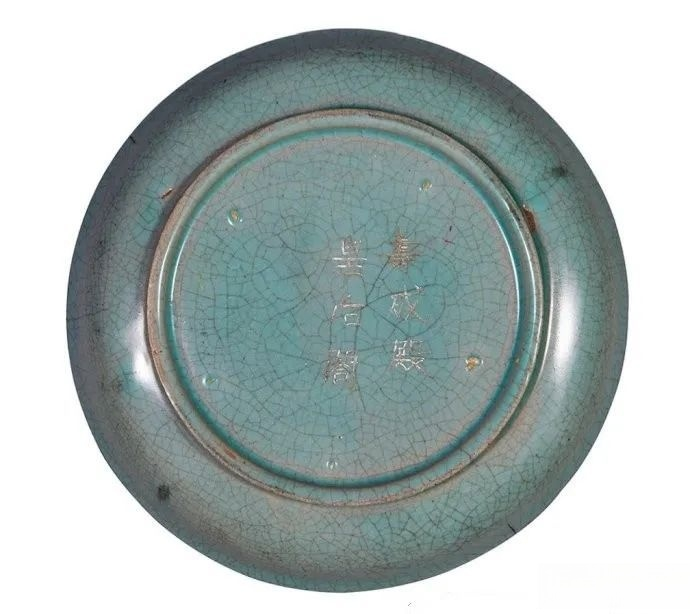
The phenomenon of crackling exists across various kilns and product types. It appears whenever there is a mismatch between the expansion coefficients of the body and the glaze. Furthermore, crackle formation is not limited to the kiln; it can continue to develop over time. The crackles we observe in daily life fall into two main categories: natural crackles (ziran kaipian) and artificially induced crackles (renwei kaipian).
陶瓷的開片現象存在於各個窯口、各類產品中,只要胎釉膨脹係數不同就會出現,並長期持續。我們日常看到的開片有兩種,一種是自然開片,另一種是人為開片。
The Aesthetics of Imperfection: Crackle as Art
不完美的美學:作為藝術的開片
The Ming dynasty author Cao Zhao, in his seminal work Gegu Yaolun (Essential Criteria of Antiquities), wrote: “Among Ru ware… those with ‘crab-claw crackles’ are genuine; those without any crackles are especially excellent.” This statement from the 14th century reflects Cao’s own aesthetic judgment based on the observed patterns of crackles on ceramics. However, at its core, the ice crackles (bingliewen) and crab-claw crackles (xiezhaowen) of Ru ware are merely the result of differential expansion rates between the body and glaze.
明代曹昭《格古要論》裡說:「汝窯器…..有蟹爪紋者真,無紋者尤好。」這是明代人曹昭從陶瓷開片的形態,得出的審美情趣而已。追根究底,汝窯的冰裂紋、蟹爪紋也好,不過就是因為器物胎和釉面膨脹係數有差異,而形成的開片效果而已。
When artisans recognized that this unintended effect had become a desirable aesthetic feature sought after by the market, they began to deliberately induce crackles and even enhance them. This marked the transition from a technical flaw to an intentional decorative technique. Various shapes of crackles became common in ceramics, from the fine, dense networks to larger, sparser patterns.
當工匠意識到開片受到當時市場的歡迎後,就人為製造開片,並且強化這種開片效果。從技術缺陷到有意為之的裝飾手法,這標誌著開片美學的正式確立。大小開片在陶瓷當中很常見,形態各異,從細密緊湊的網格到疏朗大氣的紋理,不一而足。
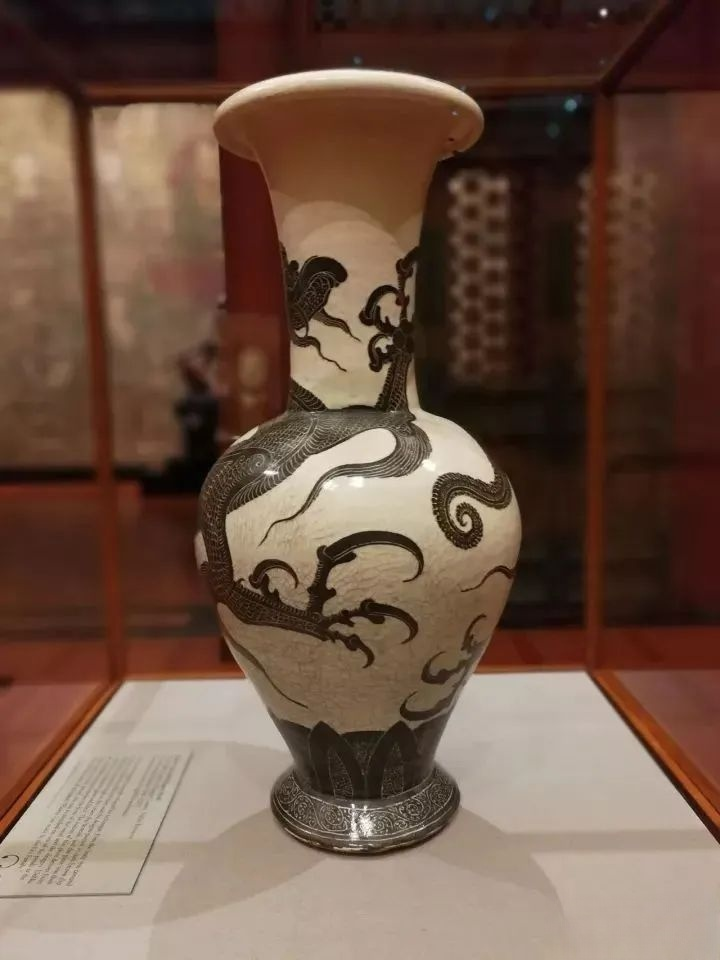
The Distinctive Fish-Scale Crackle: A Signature of Layered Glazes
獨特的魚鱗紋:厚釉層的標誌
Among the various crackle patterns, one particularly distinctive type is the fish-scale crackle (yulinzhuang kaipian). This pattern occurs exclusively on vessels with thick, layered glazes. Fish-scale crackles are characterized by overlapping, tiered layers distributed throughout the glaze thickness. Their纹理 (wenli, textures) manifest as irregular forms—slanted straight lines, straight curves, and arc curves—creating a complex, organic pattern.
在眾多開片紋理中,有一種特別獨特的類型——魚鱗狀開片。這種開片只發生在釉層肥厚的器物上。魚鱗狀的開片層層疊疊分佈在釉層之中,紋理呈現出斜直、直曲、弧曲等不規則的形態。
This effect is the result of multiple glaze applications. When each layer is applied with varying thickness, the stress between the layers differs. During cooling, fractures occur between the layers, creating this distinct, three-dimensional crackle pattern. A classic example is the Southern Song Dynasty Jiaotanxia Guan ware incense burner in the collection of the Palace Museum, which displays this exquisite layered fish-scale effect.
這是多次上釉加之各層釉面之間薄厚不均,層間應力不同,在層間產生斷裂而形成的。北京故宮博物院所藏的南宋郊壇下官窑灰青弦紋奩爐,便展現了這種精美的層疊魚鱗紋效果,堪稱典範。
Secondary Crackles: The Voice of Time
二次開片:時間的聲音
Not all crackles appear immediately after firing. Some develop much later, sometimes centuries after the ceramic was made. Crackles that form on the glaze surface at different periods after the initial firing are called secondary crackles (erci kaipian). Natural weathering processes can cause changes to the glaze surface, leading to secondary cracking. Similarly, excavated artifacts—depending on the degree of soil permeation and chemical alteration they have undergone—may develop new crackle patterns as they emerge from their burial environment. These later-developing cracks are another layer in the complex story of the object’s journey through time.
並非所有開片都在燒成後立即出現。有些開片會在器物製成很久以後,甚至數百年後才逐漸形成。陶瓷釉面在不同時期產生的開片,叫二次開片。自然風化會使釉面發生變化而出現二次開片。出土器物因受沁程度不一,釉表亦會發生變化而出現新的開裂。這些後期形成的裂紋,是器物穿越時光旅程中又一個複雜的故事層面。
Crackles as a Tool for Authentication: The Art of Observation
開片作為鑑定工具:觀察的藝術
If one were to rely solely on the presence or absence of crackles, or on their specific pattern, to date a ceramic piece, the conclusions would be of limited significance. However, when combined with the overall assessment of the glaze’s氧化效果 (yanghua xiaoguo, oxidation effects), crackles become a crucial component of visual authentication for antique ceramics. The key is not just the crackle itself, but how the crackle has aged in concert with the glaze over centuries.
如果單獨拿陶瓷的開片來鑑定器物年代,意義不大。然而,綜合釉面的氧化效果卻是古瓷目鑑斷代的重要方法之一。關鍵不僅在於開片本身,更在於開片與釉面在數百年間共同老化的痕跡。
As centuries pass, the various minerals within the glaze undergo physical and chemical changes in the natural environment. Year by year, they oxidize and age. The vitality and energy of the glaze gradually diminish. The glaze layer begins to show signs of age, becoming熟旧温润 (shoujiu wenrun, mature, old, and lustrous). This process imbues the ceramic with a distinctive texture that resembles fine jade. The surface loses its raw, new shine and acquires a soft, inner glow that only time can bestow.
隨著歲月的增長,釉中的各種礦物質在自然界當中的物理、化學作用下,逐年的氧化老化,其活力、能量也逐年的減弱,釉層開始老化變舊,釉面開始逐漸的熟舊溫潤,呈現出一種玉質感。
It is precisely this predictable, systematic change in the light-reflecting quality of the glaze that provides collectors and experts with a reliable foundation—both theoretical and practical—for authenticating and dating ancient ceramics. The interplay between the crackle network and the overall patina of the glaze tells a coherent story. A genuinely aged crackle will show the same signs of oxidation and wear as the surrounding glaze. Its edges will be softened, not sharp; its interior will have accumulated subtle traces of age, from minute dirt particles to a subtle change in refractive index. This is where the art of observation truly lies.
正是這種規律的光感變化,給我們對古瓷鑑真斷代提供了可靠的理論和實踐依據。開片網絡與釉面整體包漿之間的相互作用,訴說著一個連貫的故事。真正自然老化的開片,會呈現出與周圍釉面一致的氧化與磨損痕跡。其邊緣會變得柔和而非鋒利;其內部會積累微妙的歲月痕跡——從細微的塵埃顆粒到折射率的細膩變化。這正是目鑑之藝術的真正精髓所在。
Read More
- The Ultimate Guide to Authenticating Antique Porcelain Crackles: Everything You Need to Know
- The Cobalt Code of Millennia: Decoding the Chromatic DNA of Blue-and-White Porcelain Across Dynasties
- Nanhong Agate and the Sacred Sites of Tibetan Buddhism: The Crimson Spirit of the Snowy Land
- The Collector’s Essential Guide: 5 Key Details for Authenticating Ming & Qing Yixing Teapots
- Gilded Glory: A Journey into the Gold and Silver Jewelry of the Tang Dynasty