Topaz: The Versatile Gemstone of Many Colors
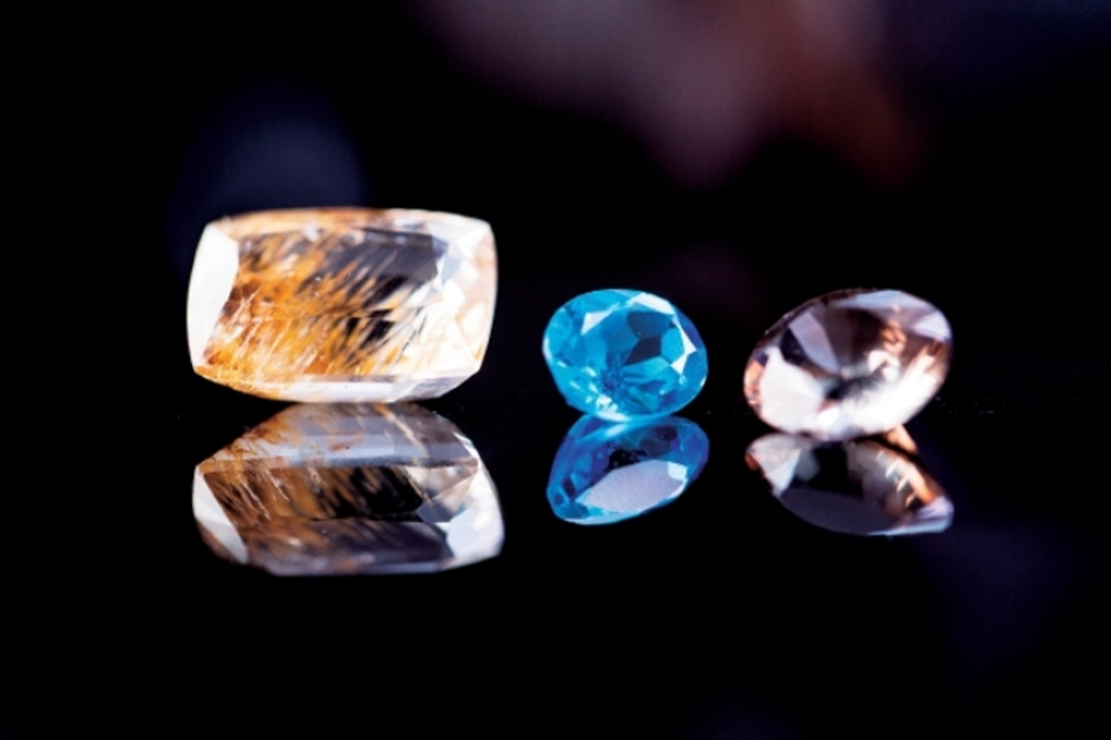
Topaz, often called “Imperial Topaz” in its precious golden forms, represents one of gemology’s most versatile and historically significant stones. While commonly associated with yellow hues, this aluminum fluorosilicate mineral actually occurs in a remarkable spectrum from colorless to vivid blues and rare reds. Its excellent hardness (8 on the Mohs scale) and brilliant luster have made it a cherished collector’s gem for centuries.
Mineral Profile:
Chemical Formula: Al₂SiO₄(F,OH)₂
Mohs Hardness: 8
Specific Gravity: 3.52-3.57 g/cm³
Colors: Colorless, yellow, orange, red, blue, brown, green
Crystal System: Orthorhombic, typically forming striated prismatic crystals
Cleavage: Perfect basal cleavage
Fracture: Conchoidal
Refractive Index: 1.619-1.627
Luster: Vitreous
Dispersion: 0.014
I. Geological Formation
Topaz primarily crystallizes in:
- Pegmatite veins within granite formations
- Vugs and cavities in rhyolite and other acidic igneous rocks
- Hydrothermal quartz veins associated with tungsten and tin deposits
- Alluvial deposits where weathering and erosion have transported crystals
The gem’s formation requires fluorine-rich environments at moderate temperatures and pressures, creating its characteristic well-defined crystal habits.
II. Color Varieties and Treatments
Imperial Topaz (Red/Orange)
The most prized variety displays reddish-orange to pinkish-orange hues. While naturally occurring sherry-colored stones exist, most commercial “imperial” topaz results from heat treatment of brownish material—a permanent and widely accepted enhancement.
Yellow Topaz
Ranging from pale yellow to deep golden tones, often with reddish or orange modifiers. These generally represent excellent value compared to their rarer orange-red counterparts.
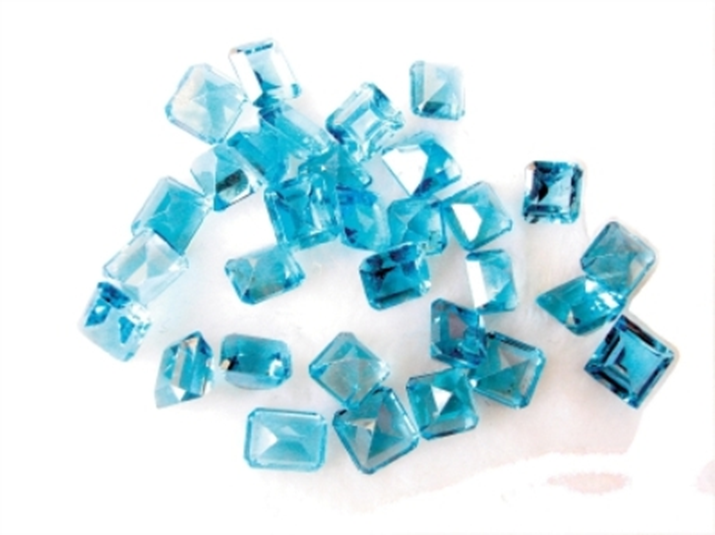
Blue Topaz
The most commercially available variety, created through irradiation and heat treatment of colorless stones. Ranging from sky blue to Swiss blue intensities, these offer affordable alternatives to aquamarine with similar visual appeal.
III. Distinctive Characteristics
Topaz’s combination of properties creates unique identifiers:
- High Specific Gravity: Noticeably heavy for its size compared to similar-looking gems
- Perfect Cleavage: Can split cleanly along one crystallographic direction
- Internal Reflections: Multiple reflective surfaces visible within stones
- Gas Inclusions: Characteristic two-phase inclusions help distinguish natural stones
- Pleochroism: Often shows different color intensities when viewed from different angles
IV. Global and Chinese Sources
Notable International Specimens:
- American Museum of Natural History: 308ct and 120ct grey-blue topaz crystals
- British Museum: 117kg Brazilian crystal (43×41×40cm), world’s largest documented specimen
Chinese Production Areas:
- Yunnan Province (Yuanyang, Luquan, Gongshan regions)
- Xinjiang Uygur Autonomous Region (producing crystals up to 6kg)
- Tibet Autonomous Region
V. Authentication Considerations
The similarity between colorless topaz and glass requires careful examination:
- Weight Test: Topaz feels substantially heavier than glass of equal volume
- Thermal Conductivity: Topaz remains cool to touch longer than glass
- Inclusion Analysis: Natural topaz contains characteristic fluid/gas inclusions
- Hardness Testing: Topaz scratches quartz while glass does not
Topaz’s enduring popularity stems from its exceptional combination of durability, brilliance, and color diversity. From the legendary “Imperial” hues cherished by royalty to the accessible blue varieties enjoyed worldwide, this multifaceted gem continues to offer collectors both aesthetic beauty and geological fascination across its complete color spectrum.
托帕石:多色多樣的寶石
托帕石,在其珍貴的金色形式中通常被稱為「帝王托帕石」,代表了寶石學中最多功能和歷史重要的寶石之一。雖然通常與黃色調相關,但這種氟矽酸鋁礦物實際上出現在從無色到鮮豔藍色和稀有紅色的顯著光譜中。其卓越的硬度(莫氏標度8)和燦爛的光澤使其成為幾個世紀以來珍貴的收藏家寶石。
礦物檔案:
化學式:Al₂SiO₄(F,OH)₂
莫氏硬度:8
比重:3.52-3.57 g/cm³
顏色:無色、黃色、橙色、紅色、藍色、棕色、綠色
晶系:斜方晶系,通常形成條紋稜柱晶體
解理:完全底面解理
斷口:貝殼狀
折射率:1.619-1.627
光澤:玻璃光澤
色散:0.014
一、地質形成
托帕石主要在以下環境中結晶:
- 偉晶岩脈 在花崗岩構造內
- 晶洞和空洞 在流紋岩和其他酸性火成岩中
- 熱液石英脈 與鎢和錫礦床相關
- 沖積礦床 風化和侵蝕已搬運晶體的地方
寶石的形成需要富含氟的環境,在中等溫度和壓力下,創造其特徵性的明確晶體習性。
二、顏色品種和處理
帝王托帕石(紅/橙)
最珍貴的品種顯示紅橙色至粉橙色的色調。雖然存在天然雪利酒色寶石,但大多數商業「帝王」托帕石是棕色材料熱處理的結果——一種永久且廣泛接受的增強。
黃色托帕石
從淡黃色到深金色調,通常帶有紅色或橙色修飾色。與其更稀有的橙紅色對應物相比,這些通常代表卓越的價值。
藍色托帕石
最商業可用的品種,通過無色寶石的輻照和熱處理創造。從天藍色到瑞士藍色強度,這些提供與海藍寶石類似視覺吸引力的實惠替代品。
三、獨特特徵
托帕石特性的組合創造了獨特的識別特徵:
- 高比重:與外觀相似的寶石相比,其尺寸明顯重
- 完全解理:可以沿一個結晶方向乾淨分裂
- 內部反射:在寶石內可見多個反射面
- 氣態內含物:特徵的兩相內含物有助於區分天然寶石
- 多色性:從不同角度觀看時通常顯示不同的顏色強度
四、全球和中國來源
著名的國際樣本:
- 美國自然歷史博物館:308克拉和120克拉灰藍色托帕石晶體
- 大英博物館:117公斤巴西晶體(43×41×40釐米),世界上最大記錄樣本
中國生產區:
- 雲南省(元陽、祿勸、貢山地區)
- 新疆維吾爾自治區(生產晶體達6公斤)
- 西藏自治區
五、鑑定注意事項
無色托帕石和玻璃之間的相似性需要仔細檢查:
- 重量測試:托帕石感覺比同等體積的玻璃重得多
- 導熱性:托帕石保持涼爽觸感時間比玻璃長
- 內含物分析:天然托帕石含有特徵的流體/氣體內含物
- 硬度測試:托帕石劃傷石英而玻璃不劃傷
托帕石的持久流行源於其耐久性、火彩和顏色多樣性的卓越組合。從皇室珍視的傳奇「帝王」色調到全球享受的可及藍色品種,這種多面寶石繼續在其完整顏色光譜中為收藏家提供美學美麗和地質迷戀。