Introduction
For thousands of years, jade has held a sacred place in Chinese civilization — far more than a decorative stone, it is a symbol of virtue, status, and cosmic harmony. But not all jade is alike in meaning. The color of a jade piece carries its own distinct symbolism, influencing everything from personal energy to gift-giving choices. Whether you are drawn to the vibrant green of Imperial jadeite or the milky purity of white nephrite, understanding jade color symbolism in Chinese culture can deepen your connection to this timeless gemstone and help you select pieces that resonate with your intentions. In this guide, we will explore the traditional meanings behind each major jade color, offer practical buying advice, and highlight common myths to avoid.
Background / Key Concepts
The Cultural Importance of Jade
Jade has been treasured in China since the Neolithic period, often called the ‘Stone of Heaven.’ Confucius famously attributed eleven virtues to jade, including wisdom, justice, and compassion. Modern guides on jade meaning explain that the stone is still considered more precious than gold in traditional Chinese contexts. The color of jade adds another layer: it can represent the Five Elements (wood, fire, earth, metal, water) or specific blessings like longevity, prosperity, and protection.
Jadeite vs. Nephrite: A Color Distinction
It is important to note that jade comprises two distinct minerals: jadeite and nephrite. While both are culturally significant, jadeite offers a broader spectrum of vivid colors due to trace elements like chromium (green) and manganese (lavender). Nephrite is typically found in creamy white, green, or black. In Chinese art history, nephrite was the primary jade until the 18th century, when Burmese jadeite became available. Today, both are prized, but color symbolism applies across both types.
The Main Body
Green Jade: The Icon of Harmony and Vitality
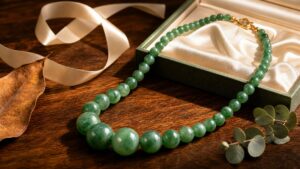
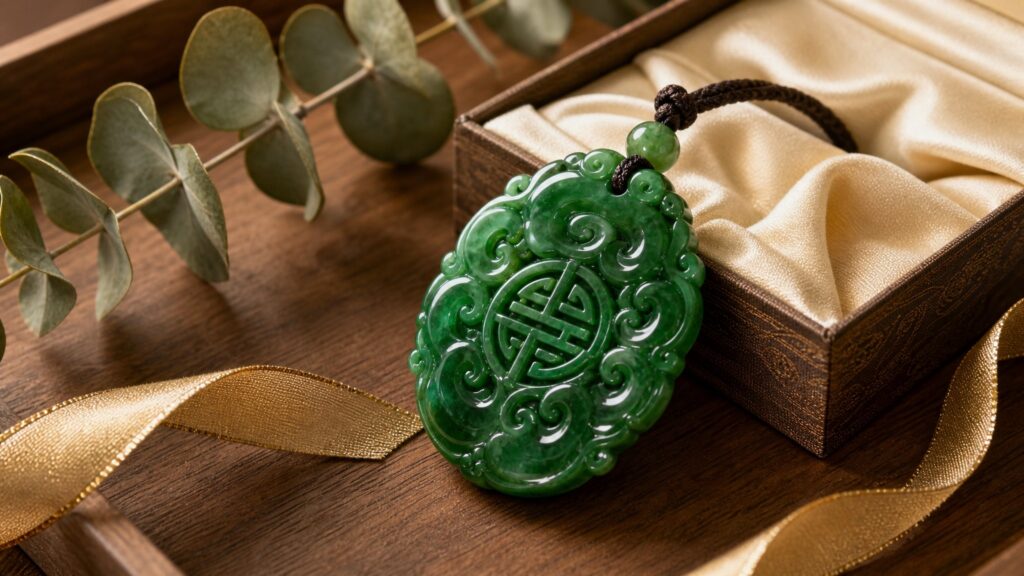
Green is the most recognized jade color, symbolizing life, renewal, and harmony. The deeper and more saturated the green, the more auspicious the stone. Imperial green — a vivid, slightly translucent emerald — was reserved exclusively for the emperor and represents supreme power and high virtue. Apple green and spinach green are also beloved for their calming, growth-oriented energy. In practice, green jade is often given to promote family unity, career success, and health.
White and Milky Jade: Purity and Gentleness
White jade (especially ‘mutton-fat’ nephrite) is synonymous with purity, modesty, and a tranquil spirit. It is linked to the concept of yi (righteousness) in Confucian philosophy. Because of its clean, soft appearance, white jade is frequently used in ceremonial objects and jewelry meant for meditation or as a protective talisman for children. It also represents the metal element in Chinese metaphysics.
Lavender (Purple) Jade: Love and Spiritual Insight
Lavender jade, a color unique to jadeite, carries the energy of romance, intuition, and spiritual growth. In Chinese culture, purple was historically associated with royalty and the North Star (Zǐwēi). Lavender jade is less common than green, making it both rare and deeply symbolic. It is often chosen for gifts celebrating love or for individuals seeking to enhance their psychic awareness.
Yellow and Golden Jade: Prosperity and Imperial Favor
Yellow jade, ranging from pale butter to vibrant canary, symbolizes the earth element and the center of the universe. In imperial China, yellow was the emperor’s color, representing supreme authority. Yellow jade is believed to attract wealth, stability, and protective energies. It is a favorite for amulets that guard against misfortune.
Black Jade: Protection and Mystery
Black jade (often a deep green-black nephrite or jadeite) is associated with the water element and the north direction. It is worn for grounding, shielding from negative energy, and fostering resilience. In Feng Shui, black jade can absorb negative influences, making it a powerful protective stone. Feng Shui practitioners often recommend black jade for people in high-stress environments.
Red and Brown Jade: Courage and Longevity
Red jade (extremely rare in nature) is associated with the fire element, vitality, and the south. It symbolizes courage, passion, and good fortune. Brown jade, or ‘cinnamon’ jade, is linked to the earth element and represents steadfastness and longevity. Both colors are highly prized for carving talismans that invite success and overcome obstacles.
Practical Tips
- Choose by intention: If you seek career growth, opt for deep green jade. For love, consider lavender. For protection, black or yellow jade works well.
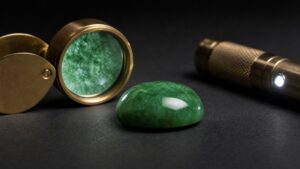
- Verify authenticity: Color alone does not prove a stone is jade. Always request a certificate from a reputable lab. Learn how to read a jadeite certification report to ensure you are buying genuine, untreated material.
- Consider undertones: Many jade pieces have secondary hues. A green jade with a hint of yellow can be seen as especially lucky, as it combines growth and prosperity.
- Match to skin tone: Lavender jade flatters lighter complexions; intense green suits all skin tones. Ultimately, choose the color that speaks to you personally.
- Explore associated shapes: The symbolism of color can be amplified by the cut — for example, a green jadeite bangle (a protective circle) is a classic choice. Refer to our jadeite bangle shape guide for more.
Common Mistakes to Avoid
- Treating all jade as the same: Color matters. A light green nephrite has a different energy and value than a vivid imperial green jadeite. Don’t assume all ‘green jade’ carries identical symbolism.
- Ignoring treatment status: Dyed or polymer-impregnated jade may look like a desirable color, but its spiritual and monetary worth is lower. Always confirm Type A jadeite identification for natural, unenhanced pieces.
- Assuming rare colors are always valuable: While lavender and red are rare, their condition (crack-free, translucency) matters more than color alone.
- Forgetting cultural context in modern settings: Some colors (like yellow) are traditionally reserved for older generations or specific occasions. Give thoughtful consideration before gifting a very yellow piece to a young child.
Conclusion / Key Takeaways
The jade color symbolism in Chinese culture is a rich tapestry woven from millennia of philosophy, art, and devotion. From the life-affirming green to the protective black, each hue carries a distinct blessing. When you choose a piece of jade — whether a pendant, bangle, or carving — you are not just selecting a gemstone; you are embracing a set of ancient meanings that can support your life’s journey. For a deeper dive into authentic jadeite, explore our curated collections of jadeite pendants, bracelets, and rings. And if you are considering an investment, our Imperial jadeite buying guide offers expert insights. Let the colors of jade guide your path to harmony and prosperity.
FAQ
What does green jade symbolize in Chinese culture?
Green jade symbolizes harmony, growth, vitality, and high virtue. The most prized shade is Imperial green, which was historically reserved for emperors. It is also associated with the wood element and is believed to promote family unity and career success.
Which jade color is best for love and relationships?
Lavender jade is traditionally linked to love, romance, and spiritual insight. It is a rare color unique to jadeite and is often given as a gift to deepen romantic bonds or enhance intuition.
Is white jade valuable?
Yes, white jade (especially mutton-fat nephrite) is highly valued for its purity and gentle energy. It represents modesty and righteousness in Confucian philosophy and is often used in ceremonial or protective jewelry. Its value depends on its texture, translucency, and lack of cracks.
Can a single jade piece contain multiple meaningful colors?
Yes, multicolored jade is considered especially auspicious. For example, green and white jade together symbolize a balance of life energy and purity. These unique pieces are rare and often command high prices in antique and fine jewelry markets.