Introduction
Jadeite bead necklaces are among the most cherished forms of jade jewelry, valued for their versatility, tactile beauty, and deep cultural resonance. Unlike carved pendants or bangles, a strand of beads showcases the stone in its purest, most repetitive form—each bead a miniature canvas of color and translucency. For collectors and first-time buyers alike, understanding how to grade these beads is essential to making a confident, informed purchase.
At VirtuCasa, we specialize in natural jadeite jewelry and Chinese antiques, offering a curated selection that spans from delicate daily-wear strands to substantial collector pieces. This guide will walk you through the key quality factors—color, translucency, texture, and craftsmanship—so you can evaluate any jadeite bead necklace with a discerning eye.
Understanding Quality
Grading jadeite beads is both an art and a science. While gemological laboratories use standardized criteria, the visual and tactile experience remains paramount. The most authoritative framework comes from the Gem Society’s jade buying guide, which outlines the importance of color, transparency, and texture in determining value. Here are the core factors to consider when examining beads.
Color
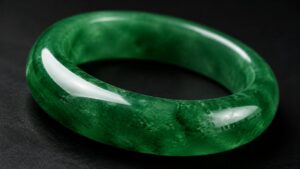
Color is the first attribute that catches the eye, and it often carries the most weight in valuation. The finest jadeite displays a vivid, even green—often described as “imperial green”—but the stone also occurs in lavender, yellow, white, and even tricolor combinations. When grading color, look for uniformity across the strand: beads should match closely in hue and saturation, without sudden patches or dull zones. A necklace with consistent color distribution, such as the Natural Jadeite Bracelet with its soft lavender-white hue, demonstrates careful selection.
Translucency and Texture
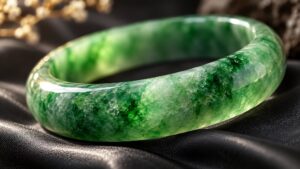
Translucency refers to how much light passes through the stone. High-quality jadeite is often described as “ice-type”—semi-transparent with a cool, glassy sheen. The Natural Ice-type Jadeite Bracelet with Floating Green Patterns exemplifies this, with a transparent, delicate texture that allows light to glow from within. Texture is equally important: fine, compact grains produce a smooth surface and a vitreous luster, while coarser textures appear dull or grainy.
Craftsmanship
The way beads are cut, drilled, and strung affects both aesthetics and durability. Uniform bead size and perfectly centered drill holes indicate skilled manufacturing. Traditional knotting—where silk or cord is tied between each bead—not only prevents loss if the strand breaks but also adds a classic, handcrafted feel. Look for secure knots and consistent spacing; these details elevate a simple strand into a heirloom-quality piece.
Types & Styles
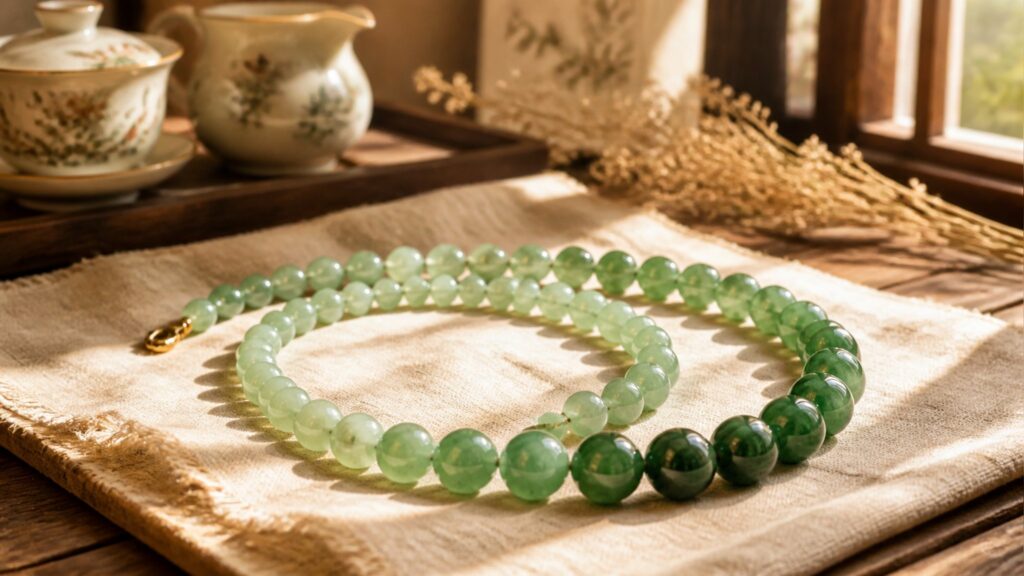
Jadeite bead necklaces come in a variety of styles, each with its own character. The most common is the single-strand necklace, where beads are strung in a continuous line. These can range from petite, refined strands like the Natural Ice-type Tricolor Jade Necklace with 3.5mm beads—perfect for layering—to more substantial pieces with larger beads that make a statement.
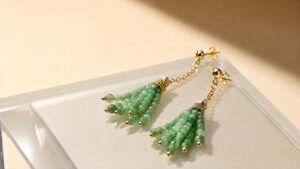
Tricolor necklaces, such as the Natural Ice-type Tricolor Jade Necklace featuring yellow, green, and white, are prized for their rarity and artistic appeal. The interwoven colors create a unique, organic pattern that no two pieces can replicate. Multi-strand or adjustable designs offer versatility, allowing the wearer to adapt the necklace to different necklines and occasions. For those who prefer a more modern look, jadeite beads are also used in bracelets and earrings, as seen in the Natural Jadeite Tassel Earrings, which combine cylindrical beads with 18K gold-plated chains.
When choosing a style, consider your wardrobe and lifestyle. A delicate strand with small beads is ideal for daily office wear, while a bold, large-bead necklace can serve as the centerpiece of an evening ensemble. The Natural Ice-type Violet Jade Bead Necklace, with its 68 beads ranging from 10mm to 12mm, offers both single-strand and multi-layered wearing options, making it a versatile investment.
How to Choose the Right Size & Fit
Necklace length and bead size dramatically affect how a piece drapes and feels. A standard princess length (about 18 inches) sits just below the collarbone and suits most necklines. Choker lengths (14–16 inches) hug the neck and work well with off-shoulder tops. Matinee lengths (20–24 inches) fall to the bust and are ideal for business attire, while opera lengths (28–36 inches) can be worn doubled for a layered look.
Bead diameter also matters. Smaller beads, around 3–4mm, create a delicate, understated look that layers beautifully. Medium beads (6–8mm) are the most versatile, suitable for both casual and formal settings. Large beads (10mm and above) make a bold statement and are often favored by collectors for their presence and weight. For example, the Natural Three-Color Jadeite Bracelet uses 12mm beads to create a substantial, harmonious feel.
When trying on a necklace, ensure it hangs comfortably without twisting. The weight should be balanced—not so heavy that it strains the neck, nor so light that it feels insubstantial. If you plan to wear the necklace daily, opt for a lighter piece; for special occasions, a heavier, more luxurious strand may be appropriate.
Price & Value
The price of jadeite bead necklaces varies widely based on quality, size, and rarity. Entry-level pieces, such as the Natural Ice-type Tricolor Jade Necklace at $740, offer an accessible way to own natural jadeite. Mid-range options like the Natural Ice-type Tricolor Jade Necklace at $825 provide a balance of quality and affordability. Premium pieces, such as the Natural Ice-type Violet Jade Bead Necklace at $6649, represent significant investments, reflecting the rarity of fine lavender ice-type jadeite.
What drives these price differences? Color is the primary factor—vivid, even green commands the highest premiums, followed by rare colors like lavender and tricolor. Translucency and texture also play crucial roles; ice-type jadeite with a glassy luster is more valuable than opaque, chalky material. Bead size and uniformity add to the cost, as larger, well-matched beads require more raw material and careful cutting. Finally, craftsmanship—such as traditional knotting and secure settings—contributes to the overall value.
When evaluating price, always consider the piece’s provenance and authenticity. Natural jadeite is scarce, and treated or synthetic imitations are common. A reputable seller, like VirtuCasa, provides detailed descriptions and often offers certificates of authenticity. As noted in recent market analyses of jade investment trends, the value of high-quality jadeite has historically appreciated, making it both a beautiful accessory and a potential store of value.
Common Mistakes to Avoid
- Ignoring bead uniformity: A strand with visibly mismatched beads—different sizes, colors, or drill hole placements—loses visual harmony and value. Always check for consistency.
- Overlooking translucency: Some buyers focus solely on color and neglect translucency. A translucent bead with a lively glow is far more valuable than an opaque one, even if the color is similar.
- Assuming all green is imperial: Deep green jadeite is prized, but the term “imperial green” refers specifically to a vivid, emerald-like hue with high translucency. Not all green jadeite qualifies.
- Forgetting about craftsmanship: Poorly drilled beads or weak knots can compromise the necklace’s durability. Inspect the stringing and knots before purchase.
- Buying without certification: Natural jadeite should come with a gemological certificate. If a seller cannot provide one, be wary of treated or synthetic material.
Top Picks
Based on our collection, here are three standout jadeite bead necklaces, each suited to different tastes and budgets.
For the everyday minimalist, the Natural Ice-type Tricolor Jade Necklace at $740 is ideal. Its 3.5mm beads are delicate and lightweight, making it perfect for layering or subtle standalone wear. The tricolor blend of green, yellow, and orange adds a touch of uniqueness without overwhelming the outfit.
If you seek a balanced mid-range investment, the Natural Ice-type Tricolor Jade Necklace at $825 offers a slightly larger bead size (5.3mm) and a classic three-color combination of yellow, green, and white. Its uniform sizing and traditional rope-knotting make it a versatile piece that transitions from office to evening.
For the serious collector, the Natural Ice-type Violet Jade Bead Necklace at $6649 is a statement of refined taste. With 68 beads ranging from 10mm to 12mm, this substantial piece (158g) offers both visual impact and tactile luxury. The soft lavender hue and ice-type translucency are hallmarks of premium jadeite, making it a centerpiece worthy of any collection.
Final Tips / Conclusion
Grading jadeite beads is a skill that improves with practice. Start by examining color consistency and translucency, then move on to texture and craftsmanship. Don’t rush—visit reputable dealers like VirtuCasa, ask for certificates, and compare pieces side by side when possible.
Remember that jadeite is a natural treasure, formed over millions of years. Each bead carries its own unique story, and a well-chosen necklace can become a cherished heirloom. Whether you’re drawn to the serene lavender of ice-type jade or the vibrant energy of tricolor strands, let your personal taste guide you—but always ground your decision in the quality factors outlined above.
Explore our full jadeite collection to discover more pieces that speak to you. With careful consideration, you’ll find a necklace that not only enhances your wardrobe but also stands the test of time.
FAQ
What is the most important factor in grading jadeite beads?
Color is often considered the most important factor, with vivid, even green being the most prized. However, translucency and texture are also crucial—a stone with good color but poor translucency will be less valuable.
How can I tell if a jadeite bead necklace is natural?
Natural jadeite should have a certificate from a reputable gemological laboratory. Additionally, look for subtle variations in color and texture, which are signs of natural stone. Be wary of unnaturally uniform pieces that may be treated or synthetic.
Are larger beads always more valuable?
Not necessarily. While larger beads require more raw material and are often rarer, value also depends on color, translucency, and uniformity. A strand of smaller, perfectly matched high-quality beads can be more valuable than a larger, lower-quality strand.
What does ‘ice-type’ mean in jadeite?
Ice-type jadeite is semi-transparent with a cool, glassy luster, resembling ice. It is highly prized for its translucency and is often used in high-quality jewelry. The term refers to the stone’s clarity and light-transmitting properties.