Introduction: Why Jadeite Stands Apart
When shopping for green gemstone jewelry, few stones carry the cultural weight and visual mystique of jadeite. Unlike emeralds, peridots, or green tourmalines, jadeite is prized not for a single flash of brilliance but for its subtle, internal glow — a soft, vitreous luster that seems to emanate from within the stone. For centuries, jadeite has been revered in Chinese culture as a symbol of purity, protection, and status, making it a meaningful choice for collectors and everyday wearers alike.
However, the market is crowded with stones that look similar at a glance. This guide will help you understand what makes natural jadeite unique, how to assess its quality, and how to choose pieces that genuinely reflect your style. Whether you are drawn to the icy transparency of a Natural Ice-type Jadeite Bracelet with Floating Green Patterns or the classic elegance of a saddle ring, knowing the difference between jadeite and other green gems is your first step toward a confident purchase.
Understanding Quality: The Key Factors
Jadeite is graded differently from most other gemstones. While diamonds are judged on the 4 Cs, jadeite relies on a different set of criteria. According to GIA’s jade quality factors, the three most important qualities, in order of their impact on market value, are color, transparency, and texture. Color and texture are particularly influential in determining the stone’s desirability.
Color: The First Impression
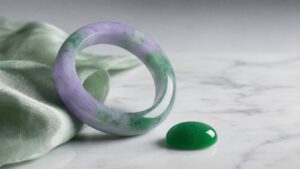
Color is the most immediately noticeable attribute of jadeite. The most prized hue is a vivid, even green sometimes called “imperial green.” However, jadeite also occurs in lavender, white, yellow, and even orange. VirtuCasa’s collection showcases this diversity, from the Natural Jadeite Bracelet with its soft lavender-white hue to the Natural Full-Green Jadeite Saddle Ring with its dense, rich green coloration. The best color is saturated, evenly distributed, and not too dark or too pale.
Transparency and Texture
Transparency, often described as “ice-type” or “glassy,” refers to how much light passes through the stone. High-quality jadeite is semi-transparent to translucent, allowing light to penetrate and create a soft, internal glow. Texture refers to the fineness of the stone’s crystal structure. A fine, compact texture produces a smooth, polished surface with a high luster. The Natural Ice-type Violet Jadeite Cabochon Ring Set exemplifies this with its vivid violet hue and excellent transparency. When comparing jadeite to other green gems, note that jadeite’s luster is typically described as vitreous (glassy) rather than the fiery brilliance of a faceted emerald.
Types & Styles: From Beads to Cabochons
Jadeite is a versatile gemstone that lends itself to a variety of jewelry styles. One of the most common forms is the bead bracelet or necklace, where round beads are strung together to create a flexible, tactile piece. VirtuCasa offers several examples, including the Natural Three-Color Jadeite Bracelet which features a unique combination of yellow, white, and light green beads, each approximately 12mm in diameter. For a more delicate look, the Natural Ice-type Tricolor Jade Necklace uses smaller 3.5mm beads to create a refined, layered effect.
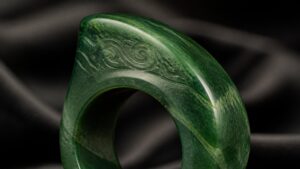
Beyond beads, jadeite is often carved into cabochons or saddle shapes. The saddle ring is a traditional Chinese design, typically carved from a single piece of jadeite. The Natural Jadeite Saddle Ring with Floating Green is a classic example, featuring elegant green patches floating on a lighter base. These styles highlight the stone’s natural patterns and are often preferred by those who appreciate the organic, unenhanced beauty of the mineral.
How to Choose the Right Size & Fit
Choosing the right size for your jadeite jewelry is crucial for both comfort and aesthetics. For bracelets, pay attention to the bead diameter and the total circumference. A bracelet with larger beads, such as the Natural Ice-type Jadeite Bracelet with Floating Green Patterns which features 16mm beads, will have a more substantial presence on the wrist. In contrast, a bracelet with smaller beads like the Natural Jadeite Bracelet (10mm beads) offers a more delicate and understated look. Most bracelets use an elastic cord, which provides some flexibility in fit, but you should still check the total circumference against your wrist measurement.
For rings, the fit is more precise. VirtuCasa lists ring sizes such as 15, 24, and 26. The saddle ring design, with its curved top surface, is meant to rest comfortably on the finger. If you are between sizes, consider the weight of the stone; a heavier ring, like the 13.5g saddle ring, may feel more secure on a larger finger. For necklaces, consider the bead size and the overall length. A necklace with 5.3mm beads, like the Natural Ice-type Tricolor Jade Necklace, sits closer to the collarbone and works well with both casual and formal attire. Always prioritize a fit that feels secure without being tight.
Price & Value: What Drives the Cost
The price of jadeite is determined by the same factors that define its quality: color, transparency, and texture. A piece with an even, vivid green color and high transparency will command a premium. For example, the Natural Ice-type Violet Jade Bead Necklace is priced at $6649, reflecting its fine texture and translucent, glossy appearance. In contrast, entry-level pieces like the Natural Three-Color Jadeite Bracelet at $668 offer a more accessible way to own natural jadeite, with a warm luster and harmonious color blending.
Mid-range options include the Natural Jadeite Tassel Earrings at $852, which combine deep green jadeite beads with 18K gold-plated chains, and the Natural Ice-type Tricolor Jade Necklace at $825. The most expensive pieces, such as the $2437 Natural Full-Green Jadeite Saddle Ring, are valued for their even “full green” coloration and dense, translucent structure. When comparing prices, remember that you are paying for the rarity of the natural stone’s characteristics, not just its size. A smaller piece with exceptional color and transparency can be worth more than a larger piece with duller color.
Common Mistakes to Avoid
- Confusing jadeite with nephrite: While both are called “jade,” jadeite is rarer and generally more valuable. Nephrite is more common and has a different chemical composition.
- Assuming all green stones are jadeite: Emeralds, green aventurine, and serpentine can look similar but have very different properties. Always check the specific gemstone type.
- Overlooking transparency: A stone that is completely opaque may be lower quality. Look for some degree of translucency, which indicates a finer internal structure.
- Ignoring the setting: For pieces like earrings or rings, the metal and craftsmanship matter. The Natural Jadeite Tassel Earrings use 18K gold-plated chains, which enhance the overall value and durability.
- Skipping size checks: A beautiful bracelet that doesn’t fit is a wasted investment. Measure your wrist or finger before purchasing.
Top Picks: Find Your Perfect Piece
To help you navigate the collection, here are five standout pieces from VirtuCasa, each suited to different preferences.
For the Traditionalist: The Natural Full-Green Jadeite Saddle Ring ($2437) is a classic choice. Its even, rich green color and traditional saddle shape make it a timeless addition to any collection. It’s ideal for those who appreciate the cultural heritage of jadeite.
For the Modern Minimalist: The Natural Jadeite Bracelet ($1008) offers a subtle lavender-white hue that pairs well with contemporary outfits. Its 10mm beads are comfortable for daily wear, making it a versatile staple.
For the Collector Seeking Rarity: The Natural Ice-type Violet Jade Bead Necklace ($6649) is a statement piece. With 68 beads ranging from 10mm to 12mm, it offers a substantial presence and a rare lavender hue that is highly sought after.
For the Romantic: The Natural Jadeite Tassel Earrings ($852) combine deep green jadeite with gold-plated chains, creating a graceful, swinging effect. These are perfect for special occasions or adding a touch of elegance to any ensemble.
For the Value Seeker: The Natural Three-Color Jadeite Bracelet ($668) offers the unique appeal of yellow, white, and light green in one piece. Its 12mm beads are substantial yet comfortable, making it an excellent entry point into jadeite ownership.
Final Tips & Conclusion
When comparing jadeite to other green gems, remember that jadeite is not just a color — it’s an experience. The stone’s internal glow, its cool touch, and its deep cultural resonance set it apart from more conventional gemstones. As gemological experts explain, jadeite’s value is deeply tied to its texture and transparency, which are best appreciated in person. If you are new to jadeite, start with a piece that speaks to you visually, and don’t be afraid to ask questions about the stone’s origin and treatment.
Finally, always buy from a reputable source that clearly labels its products as natural jadeite. VirtuCasa’s entire jadeite collection features natural stones, each with unique characteristics. Whether you choose a bracelet, ring, or necklace, you are investing in a piece of natural history that can be passed down through generations. Trust your eye, understand the quality factors, and you’ll find a piece that brings you joy for years to come.
FAQ
What is the main difference between jadeite and other green gems like emerald?
Jadeite is a silicate mineral prized for its fine texture, translucency, and vitreous luster, while emerald is a beryl gemstone known for its brilliant green color and often contains visible inclusions. Jadeite is also more durable and has a different cultural significance, particularly in Chinese tradition.
How can I tell if jadeite is natural (Type A) and not treated?
Natural jadeite (Type A) has not been treated with polymers or dyes. It typically shows a subtle, even color distribution and a natural glassy luster. Look for official certification or buy from a reputable dealer like VirtuCasa that clearly states the stones are natural.
What does ‘ice-type’ jadeite mean?
Ice-type jadeite refers to a jadeite with high transparency, allowing light to pass through the stone, creating a cool, glassy appearance. It is considered higher quality and more valuable than opaque jadeite. Examples include the Natural Ice-type Violet Jade Bead Necklace.
Are larger jadeite beads always more expensive?
Not necessarily. While larger beads require more raw material, the price is primarily driven by color, transparency, and texture. A smaller bead with vivid, even color and high translucency can be worth more than a larger, duller bead.