Introduction
When shopping for natural jadeite jewelry, one of the most important decisions you’ll make is choosing between ice-type and classic jadeite. These two quality categories differ significantly in transparency, texture, and overall aesthetic. Ice-type jadeite is prized for its translucent, glass-like appearance, while classic jadeite offers a more traditional, opaque vitreous luster with rich, solid colors. Understanding these distinctions helps you select a piece that matches your style, budget, and collecting goals. At VirtuCasa’s jadeite collection, we offer a curated selection of both types, each with its own unique charm.
This guide explains the key quality factors, popular styles, and how to evaluate value. We’ll also reference specific products and expert collecting guides from Christie’s to give you a comprehensive understanding.
Understanding Quality
Transparency
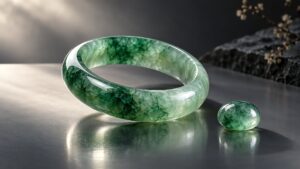
Transparency is the most defining factor that separates ice-type from classic jadeite. Ice-type jadeite exhibits high translucency, allowing light to pass through the stone and creating a cool, glassy sheen. For example, the Natural Ice-type Jadeite Bracelet with Floating Green Patterns is described as having a ‘transparent and delicate texture.’ In contrast, classic jadeite ranges from semi-transparent to opaque, with a softer, warm vitreous luster, as seen in the Natural Jadeite Bracelet which exhibits a ‘gentle vitreous luster.’ Reputable gemological sources, such as Bluejadeite’s 2026 buyer’s guide, emphasize that transparency is one of the primary indicators of jadeite quality.
Color
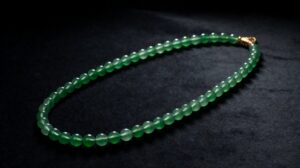
Classic jadeite often features uniform, saturated colors like lavender-white, full green, or three-color combinations (yellow, white, light green). The Natural Full-Green Jadeite Saddle Ring is a prime example of a rich, even green hue. Ice-type jadeite, on the other hand, displays floating or subtle color patterns within a translucent base. The Natural Ice-type Tricolor Jade Necklace combines yellow, green, and white in a harmonious, interwoven way that benefits from the stone’s transparency. Color intensity and distribution affect value, but personal preference plays a large role.
Texture and Luster
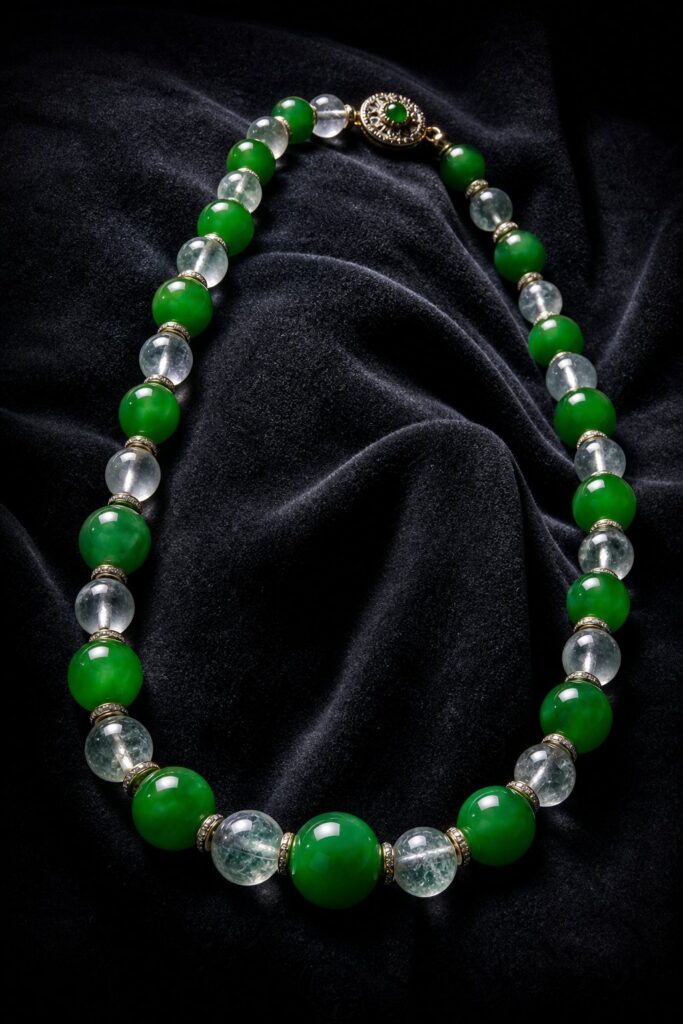
Ice-type jadeite is known for its fine, delicate internal structure that gives a ‘cool and lustrous glassy sheen.’ Classic jadeite has a compact, smooth texture with a ‘warm, gentle luster.’ Both types are natural jadeite with no treatments beyond cutting and polishing. The feel of the stone—its density and smoothness—can be assessed by handling pieces like the substantial Natural Ice-type Violet Jade Bead Necklace (158g) or the balanced Natural Three-Color Jadeite Bracelet (35g).
Types & Styles
Jadeite jewelry comes in many forms, from bracelets and necklaces to earrings and rings. Ice-type jadeite is especially popular for modern, minimalist designs that emphasize translucency, such as bead necklaces with uniform diameters and cabochon rings set in precious metals. The Natural Ice-type Violet Jadeite Cabochon Ring Set pairs a vivid violet cabochon with 18K white gold, sapphires, and diamonds. Classic jadeite suits traditional styles like saddle rings, tassel earrings, and bangles that highlight the stone’s solid color and smooth finish. The Natural Jadeite Tassel Earrings combine deep green beads with gold-plated chains for a classic look.
How to Choose the Right Size & Fit
Fit is crucial for comfort and wearability. For bracelets, bead diameter and circumference matter. The Natural Jadeite Bracelet uses 10mm beads on an 18cm strand, suitable for wrists 16-19cm. The Ice-type Bracelet uses larger 16mm beads for a more substantial feel. Necklaces like the Ice-type Tricolor Jade Necklace (3.5mm or 5.3mm beads) are lightweight (10.4g or 25.8g) and ideal for layering. Rings come in specific sizes: the Natural Full-Green Jadeite Saddle Ring is size 24, while the Ice-type Violet Cabochon Ring is size 15. Always refer to the product’s listed dimensions and weight to ensure a proper fit. If you’re unsure, consult our detailed jadeite buying guide on sizing.
Price & Value
Several factors influence jadeite pricing: transparency, color rarity, size, and setting. Ice-type jadeite often commands a premium due to its higher transparency and crystalline structure. For example, the Natural Ice-type Violet Jade Bead Necklace is priced at $6649, reflecting its large size (158g) and rare lavender hue. Classic jadeite offers a range of entry-level to mid-range choices, such as the Natural Three-Color Jadeite Bracelet at $668 or the Natural Jadeite Saddle Ring with Floating Green at $719. Mid-range options include the Natural Jadeite Bracelet ($1008) and the Natural Ice-type Tricolor Jade Necklace ($740 or $825). Premium pieces like the Natural Full-Green Jadeite Saddle Ring ($2437) and the Ice-type Violet Cabochon Ring Set ($1926) represent top-tier craftsmanship and materials. Always compare similar pieces within your budget, and remember that untreated natural jadeite holds its value better than treated stones.
Common Mistakes to Avoid
- Confusing jadeite with jade: Jadeite is one of two types of jade (the other being nephrite). Ensure you’re buying natural jadeite, not imitation or treated stone.
- Ignoring transparency: Ice-type jadeite’s value depends on its translucency; cloudy or opaque pieces are not true ice-type.
- Overlooking size and weight: A larger piece isn’t always better if it’s uncomfortable. Check bead diameters, ring sizes, and total weight against your preference.
- Assuming all green jadeite is equally valuable: Color saturation, evenness, and transparency all matter. Floating green patterns in ice-type jadeite can be highly desirable.
- Skipping seller reputation: Buy from trusted sources like VirtuCasa that provide detailed product descriptions and authentic natural jadeite.
Top Picks
Based on our range, here are five recommended pieces for different buyer profiles:
For the ice-type enthusiast: The Natural Ice-type Jadeite Bracelet with Floating Green Patterns ($1517) offers a stunning translucent base with elegant green accents. Its 16mm beads give a substantial yet refined look.
For the value-seeking collector: The Natural Ice-type Tricolor Jade Necklace ($740) provides a delicate, lightweight option with unique color transitions and a refined 3.5mm bead size.
For the classic jadeite lover: The Natural Jadeite Bracelet ($1008) features soft lavender-white beads with a gentle luster, perfect for everyday elegance.
For the bold statement seeker: The Natural Full-Green Jadeite Saddle Ring ($2437) is carved from a single piece of rich green jadeite, offering a timeless, powerful look.
For the sophisticated minimalist: The Natural Ice-type Violet Jade Bead Necklace ($6649) is a multi-strand piece that combines icy translucency with rare lavender color—an investment piece for discerning collectors.
Final Tips
Whether you’re drawn to the icy clarity of translucent jadeite or the classic warmth of opaque jade, always verify the stone’s natural origin and avoid treated or dyed pieces. Examine product details like transparency, color distribution, and setting quality. If possible, request additional photos or videos to see the stone’s natural luster. Use reputable educational resources like beginner guides to strengthen your knowledge. Finally, trust your instinct—the best jadeite piece is one that resonates with you and fits your lifestyle. Explore the full VirtuCasa jadeite collection to find your perfect match.
FAQ
What is the main difference between ice-type and classic jadeite?
Ice-type jadeite is highly translucent with a glassy, cool luster, while classic jadeite is more opaque with a warm, vitreous sheen. Ice-type often features floating color patterns, whereas classic jadeite has solid, uniform colors.
Is ice-type jadeite more expensive than classic jadeite?
Generally yes, because high transparency is rarer and more prized. However, classic jadeite with exceptional color saturation or size can also be very valuable. Prices vary widely depending on individual qualities.
How can I tell if a jadeite piece is natural?
Look for detailed product descriptions that specify ‘natural jadeite.’ Reputable sellers provide information on germplasm, texture, luster, and occasionally include weight and dimensions. Avoid pieces that are labeled as ‘jade’ without specifying jadeite, as they may be nephrite or imitation.
Can I wear ice-type jadeite daily?
Yes, ice-type jadeite is durable (hardness 6.5-7 on Mohs scale) but should be handled with care to avoid hard impacts. Many ice-type pieces, like the Natural Ice-type Tricolor Jade Necklace, are lightweight and comfortable for daily wear.