Why Knowing If Your Chinese Bronze Is Antique Matters
Chinese bronze vessels, sculptures, and ritual objects have fascinated collectors for centuries. Their rich patinas and intricate designs speak to a civilization that mastered bronze casting over three thousand years ago. But with the market flooded by reproductions and clever fakes, the question ‘Is my Chinese bronze antique?’ becomes crucial—not just for value, but for authenticity and cultural appreciation. Whether you inherited a piece, found one at an estate sale, or are considering a purchase, understanding the physical clues of age can save you from costly mistakes.
This guide outlines seven key signs that experts use to identify antique Chinese bronze. From the depth of the patina to the evidence of ancient casting techniques, these indicators will help you make a more informed assessment. Remember, authentication is rarely based on a single feature—it’s the combination of several signs that builds confidence. As you explore, you might also appreciate the artistry of other Chinese collectibles, such as authentic Chinese antiques available at VirtuCasa.
Background: The Art and Science of Chinese Bronze
A Legacy of Ritual and Power
Chinese bronze casting reached its zenith during the Shang (c. 1600–1046 BCE) and Zhou (1046–256 BCE) dynasties, producing ritual vessels for ancestor worship and ceremonial feasts. These bronzes were not merely utilitarian—they were symbols of political authority and spiritual connection. Later periods, including the Han and Tang, created bronzes for daily use, religious figures, and decorative art. Understanding this historical context helps you anticipate what features to look for in a genuine antique.
The Nature of Bronze and Patina
Bronze is an alloy primarily of copper and tin. Over centuries, exposure to moisture, soil chemicals, and air causes a natural corrosion process, forming a patina—a thin layer of oxidation on the surface. This patina is a primary indicator of age. As Christie’s collecting guide on ancient Chinese bronzes explains, the depth, color, and texture of this corrosion layer are critical clues for connoisseurs. Fakes often try to imitate patina, but they rarely achieve the complexity of natural aging.
Why Authentication Is Challenging
Authenticating Chinese bronze requires a trained eye. Forgers have become sophisticated, using techniques to simulate ancient corrosion and casting marks. However, they often miss subtle details—such as the crystalline structure of the patina or the presence of certain burial minerals. By learning the seven signs below, you’ll be better equipped to spot the difference between a genuine antique and a well-made reproduction.
The 7 Signs Your Chinese Bronze Is Antique
1. Depth and Variety of Patina
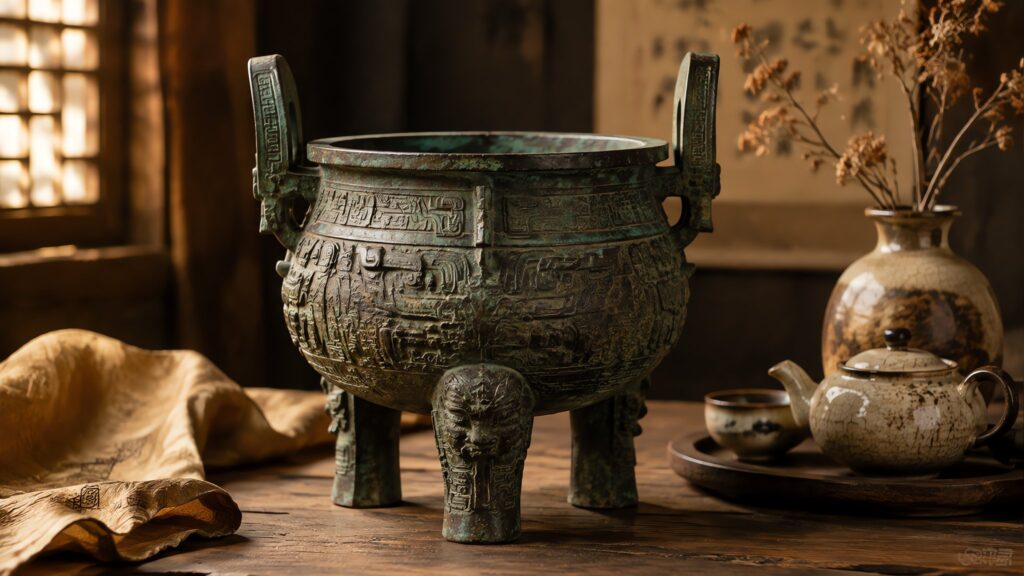
The most telling indicator of age is the patina. On truly ancient bronzes, the patina is deep and often layered, with colors ranging from malachite green to azurite blue, and sometimes a reddish-brown cuprite layer beneath. This corrosion is not superficial; it penetrates the surface and sometimes forms crystalline structures. As noted in expert discussions on bronze authentication, genuine malachite formations stick firmly to the surface and cannot be scraped off easily—unlike fakes where the patina may flake or dissolve. Look for irregular, natural transitions between colors and a matte, non-glossy texture.
2. Evidence of Ancient Casting Methods
Antique Chinese bronzes were typically cast using the piece-mold technique, which left distinctive marks. Look for subtle seams or irregular lines where mold sections joined, as well as sprue marks where molten metal was poured. These marks are often partially obscured by patina but can still be felt. Modern reproductions, on the other hand, may show evidence of sand casting or lost-wax casting, which produce different surface textures. If you see perfectly smooth surfaces with no mold marks, it may be a newer piece.
3. Chemical Composition and Metal Quality
Without laboratory testing, you can’t verify the exact alloy, but certain clues are visible. Ancient bronze often contains trace elements like lead, which can cause a dark, earthy tone. Over time, the metal may develop a slight brittleness or crystalline structure. If you can examine an unpatinated edge, look for a dark, reddish-brown color (due to cuprite) rather than a bright copper color. However, be cautious—this test is destructive and should only be done by a professional.
4. Inscriptions and Decorative Style
Inscriptions on antique bronzes, when present, are often cast or engraved with a style consistent with the period. For example, Shang and early Zhou inscriptions are typically concise and pictographic, while later periods may have longer dedicatory texts. The decorative motifs—taotie masks, dragons, and geometric patterns—also evolved over time. Compare your piece to known examples in museum catalogs or authoritative references. A style that doesn’t match any historical period is a red flag.
5. Patina of the Interior and Hard-to-Reach Areas
Forgers often focus on the exterior, neglecting the interior of vessels or the undersides of sculptures. Genuine antique bronzes will have a natural patina inside the vessel, often darker and less colorful due to limited oxygen. If the interior looks artificially cleaned or has a uniform patina that doesn’t match the exterior, it may be a later addition. Also, check crevices and under rims—these areas should show signs of age consistent with the rest of the piece.
6. Weight and Sound
Ancient bronze tends to feel heavier than modern reproductions of the same size because of higher lead content and denser casting. When gently tapped, an antique may produce a dull, thudding sound rather than a clear ring, due to internal corrosion and metal fatigue. However, this is a subtle test and not definitive, as some modern alloys can mimic these properties. Use this sign in conjunction with others.
7. Provenance and Documentation
While not a physical sign, provenance is crucial. A documented history of ownership, publication, or exhibition adds immense confidence to authenticity. Pieces with a clear lineage from a reputable collection or auction house are more likely to be genuine. Conversely, a bronze with no history and sold at a suspiciously low price should raise doubts. As expert guides on identifying antique Chinese bronze emphasize, examining a combination of factors—including provenance—is the most reliable approach.
Practical Tips for Evaluating Bronze
- Use a magnifying loupe to inspect the patina for natural cracks and crystals vs. painted or lacquered surfaces.
- Gently rub an inconspicuous area with a cotton swab dipped in acetone—if color transfers, it’s likely a fake patina.
- Consult a specialist or a reputable auction house for an opinion before making a significant purchase.
- Study museum collections and authoritative books to familiarize yourself with authentic styles and patinas.
- If you own a piece, consider professional conservation to preserve its patina and value.
Common Mistakes to Avoid
- Relying on a single sign: No one indicator is foolproof; always look for multiple signs of age.
- Ignoring the interior: Forgers often overlook inner surfaces, so always inspect them.
- Over-cleaning: Removing patina can drastically reduce value and destroy evidence of authenticity.
- Trusting a shiny surface: Many fakes are polished to look old, but genuine ancient bronzes rarely have a glossy finish.
- Buying without provenance: A lack of history should be a caution, not a reason to assume authenticity.
Conclusion: Beyond Bronze—The VirtuCasa Approach
Authenticating Chinese bronze is both an art and a science. By examining patina depth, casting marks, inscriptions, and provenance, you can make a more educated judgment. Remember, when in doubt, seek professional appraisal. The same due diligence applies to other Chinese antiques and collectibles. At VirtuCasa, we apply rigorous standards to our offerings, from jadeite pendants to jadeite bracelets, ensuring that every piece is described with transparency. If you’re drawn to the beauty of ancient Chinese art, explore our curated collection of antiques and learn more about the cultural significance of jade in Chinese culture.
Key takeaways: Always combine multiple signs, be wary of flawless pieces, and trust your instincts—if a deal seems too good to be true, it probably is. With these seven signs, you’re now better prepared to identify a true antique Chinese bronze and appreciate the craftsmanship of a bygone era.
FAQ
What is the most reliable sign that a Chinese bronze is antique?
The most reliable sign is the depth and chemical composition of the patina. Genuine ancient bronzes develop a complex, multi-layered patina that is difficult to fake. Expert discussions highlight that natural malachite formations adhere firmly to the surface and cannot be scraped off easily, unlike fakes where patina may flake or dissolve.
Can I test the patina at home to see if it’s fake?
A simple test is to gently rub an inconspicuous area with a cotton swab dipped in acetone or alcohol. If the color transfers to the swab, it likely indicates a painted or lacquered patina, which is a sign of a reproduction. However, this test can damage the piece, so proceed with caution and ideally consult a professional.
Are all Chinese bronzes with inscriptions valuable?
Not necessarily. Inscriptions can add value if they are authentic and historically significant, but many fakes include inscriptions to mimic ancient pieces. The style and content of the inscription must match the period, and it should be evaluated alongside other signs of age, such as patina and casting marks.
Should I clean the patina off my Chinese bronze?
No. The patina is a crucial indicator of authenticity and age, and removing it can drastically reduce the value and historical integrity of the piece. If you are concerned about preservation, consult a professional conservator who can advise on safe care without damaging the patina.