Introduction
Following our exploration of jade’s contested definitions (see Jade vs. Yushi: A Cultural-Mineralogical Divide), we now turn to its transformation into artifacts. As the ancient Chinese adage states: “Jade uncut will never become a vessel” (玉不琢不成器). This article deciphers how raw jade evolves into cultural treasures through human intervention. For collectors and enthusiasts alike, understanding this journey is crucial—whether you are selecting a piece from VirtuCasa’s jadeite jewelry collection or studying antique carvings.
I. The Traditional Criteria for Jade Artifacts
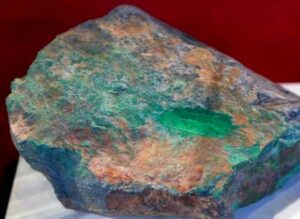
1. Material Standards: The “Beautiful Stone” Threshold
As scholar Zhao Ming notes in Ancient Jade Artifacts, a jade object must:
- Meet era-specific aesthetic norms:
- Neolithic: Serpentine (xiuyan yu) for ritual bi discs.
- Qing Dynasty: Imperial green jadeite for court seals.
- Pass mineralogical tests:
- Hardness ≥ 6 Mohs (to withstand carving).
- Stable structure (no fissures compromising integrity).
Example: A Hongshan culture pendant (3500 BCE) made of nephrite would qualify, while a modern soapstone carving would not.
2. Form & Technique: Beyond Stone Tools
- Signature shapes: Cong tubes, huang pendants, and zong ritual blades.
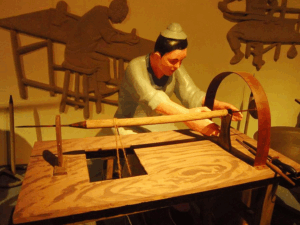
- Specialized tools:
- Neolithic: Quartz drills (evidenced by spiral marks).
- Ming Dynasty: Iron rotary wheels for openwork.
Microscopic ID Tip: Genuine antique jade shows:
- Uneven polish from hand-grinding.
- “Orange peel” texture under 40x magnification.
II. Jade vs. Jade Artifacts: Key Differences
| Aspect | Raw Jade (玉石) | Jade Artifact (玉器) |
|---|---|---|
| State | Natural mineral deposit | Carved object with cultural intent |
| Value Drivers | Rarity, color, transparency | Age, craftsmanship, provenance |
| Testing Focus | FTIR spectroscopy (composition) | Tool marks, patina, stylistic analysis |
Case Study:
A Han Dynasty burial jade suit:
- Material: Nephrite (mineralogical “true jade”).
- Artifact status: Confirmed by gold-wire threading technique and funerary soil traces.
III. Modern Challenges in Authentication
1. Reproduction vs. Forgery
- Ethical reproductions: Clearly marked with “仿古” (fanggu, “archaistic”).
- Fraudulent copies: Acid-treated to mimic burial patina; detectable via:
- UV fluorescence (modern epoxy fills glow blue-white).
- X-ray diffraction (reveals synthetic pigments).
2. Legal & Cultural Considerations
- UNESCO 1970 Protocol: Bans trade in looted artifacts.
- Red flags: Lack of excavation records for “Shang Dynasty” items suddenly appearing in markets.
IV. Collecting Guidance
For Investors:
- Prioritize museum-published pieces (e.g., Palace Museum auction catalog items).
- Demand dual documentation:
- Gemological report (e.g., GIA for material).
- Art historical appraisal (e.g., Sotheby’s expert review).
For Enthusiasts:
- Start with Republican-era (1912–1949) items—less faked, rich in Art Deco fusion styles.
- Study craft lineages: Suzhou carvers vs. Beijing court workshops. Explore authentic pieces at VirtuCasa’s Chinese antiques collection to see these traditions in practice.
Conclusion: Jade Artifacts as Living History
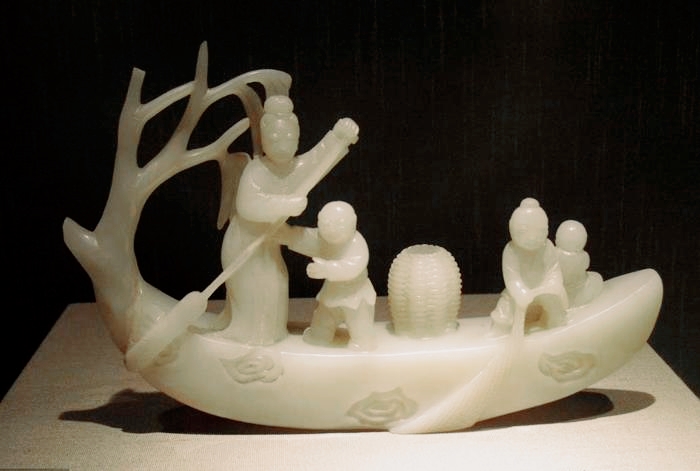
True jade artifacts embody three dialogues:
- Human & Nature: Transforming stone into meaning.
- Past & Present: Continuity of techniques.
- East & West: Global appreciation of Chinese gongyi (工艺) traditions.
FAQ
Q1: What is the difference between jade and jadeite?
Jade is a cultural term that includes two minerals: nephrite and jadeite. Nephrite is the traditional Chinese jade used for millennia, while jadeite, introduced in the 18th century, is prized for its vivid greens and is the source of Imperial jade.
Q2: How can I tell if a jade artifact is antique or a modern reproduction?
Look for signs of hand carving such as uneven polish or microscopic “orange peel” texture. Antique pieces often show a natural patina from age and handling. Always request a provenance or laboratory tests (like UV fluorescence) to detect modern treatments.
Q3: Are modern jade carvings considered artifacts?
Yes, if they are created with cultural intent and skill. Contemporary jade carvings that follow traditional techniques and themes can become valuable artifacts over time, especially when made by recognized masters.
Q4: What is the best way to start collecting jade artifacts?
Begin with items from the Republican era (1912–1949), as they are less likely to be forged and offer a beautiful blend of Chinese and Western styles. Also, educate yourself on regional carving schools, such as those from Suzhou or Beijing, to better assess craftsmanship.