Diamond Characteristics: The Ultimate Guide to Nature’s Perfect Gemstone
Elemental Profile of Diamond
Chemical Symbol: C | Density: 3.52 g/cm³ | Mohs Hardness: 10
Luster: Adamantine | Refractive Index: 2.417 | Dispersion: 0.044
Fluorescence: Weak to shortwave | Thermal Conductivity: 0.35 cal/cm·sec·°C
Crystal System: Isometric | Crystal Habits: Octahedral, Tetrahedral, Dodecahedral
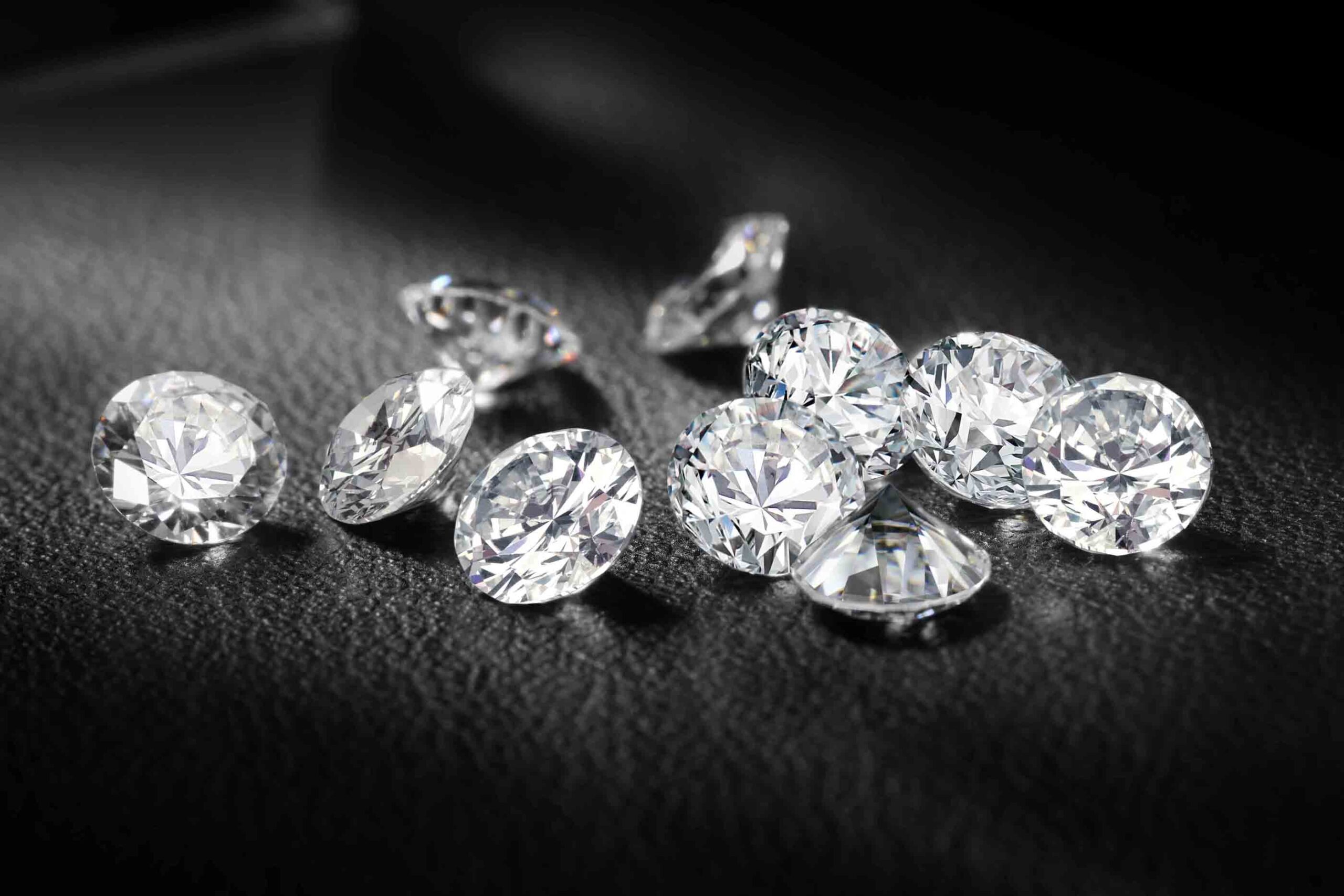
Diamond, the world’s hardest gemstone, represents one of Earth’s rarest and most precious treasures. Its legendary durability and scarcity have established it as the ultimate symbol of eternal love, immortalized in the famous phrase “A diamond is forever.” Beyond its romantic symbolism, diamond serves as a remarkable store of value—historical analysis of 400 years of pricing data reveals consistent appreciation, outperforming gold’s cyclical fluctuations.
I. Geological Formation Process
Diamonds form in kimberlite pipes within volcanic necks, crystallizing under extreme conditions of 40,000-60,000 atmospheres and temperatures of 1100-1600°C at depths of 120-200 kilometers. These carbon crystals journey to Earth’s surface through volcanic eruptions and geological upheavals over billions of years. The diamond you wear today represents nature’s patient artistry—carbon atoms arranged in perfect cubic structures through unimaginable timescales and pressures.
II. Physical and Chemical Properties
As Earth’s hardest natural material, diamond defines the maximum 10 on the Mohs hardness scale. Surprisingly composed of pure carbon—the same element found in pencil graphite—diamond’s extraordinary hardness stems from its three-dimensional tetrahedral atomic structure. Unlike graphite’s layered arrangement that allows slippage, diamond’s interlocked carbon atoms create an indestructible lattice, making it approximately 140 times harder than its carbon cousin.
III. Crystal Structures and Clarity
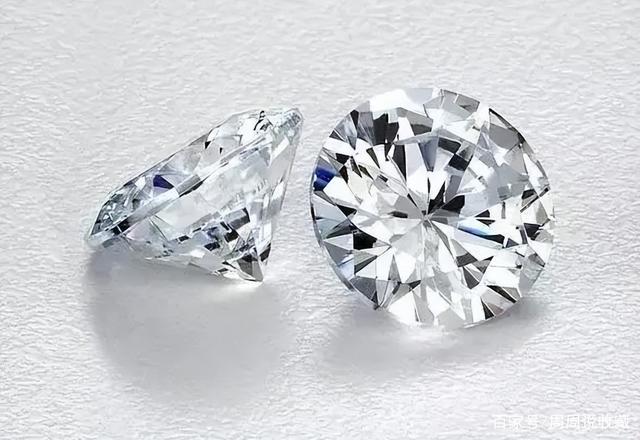
Diamonds develop distinct crystal habits depending on formation conditions. Stable environments with ample space and carbon supply produce well-defined octahedral, dodecahedral, or cubic crystals. Constricted, unstable conditions yield irregular, distorted forms. Clarity directly correlates with formation stability—optimal conditions create flawless stones while turbulent environments produce included, cloudy specimens with reduced transparency.
IV. The Diamond Color Spectrum
While most diamonds appear colorless, trace elements create nature’s rainbow:
- Iron (Fe²⁺): Yellow, brown, red, pink hues
- Manganese (Mn³⁺): Blue, green, violet tones
Color intensity depends on impurity concentration, with higher elemental content producing deeper, more saturated colors prized by collectors.
V. International Grading Systems
Modern diamond evaluation employs standardized grading under 10x magnification:
Color Grading
- GIA System: D (colorless) to Z (light yellow/brown)
- Chinese System: 100 (colorless) to <85 (distinct color)
Both systems progress from exceptional whiteness through increasing yellow/brown tones.
Clarity Grading
- GIA: FL (flawless) to I3 (heavily included)
- Chinese: LC (loupe-clean) to P3 (eye-visible inclusions)
Grading considers size, number, position, and nature of internal characteristics.
Carat Weight Categories
- Melee: <0.04 ct | Small: 0.29-0.48 ct
- Medium: 0.5-0.99 ct | Large: >1 ct
Price per carat increases exponentially with weight, as demonstrated by 2004 pricing where 0.5-0.7 ct diamonds traded at ¥3,500/ct while 1+ ct stones commanded ¥25,000/ct.
VI. Weight Estimation Formulas
Without precision scales, approximate using these calculations:
- Round Brilliant: Diameter² × Height × 0.0061
- Oval: [(Long+Short)/2]² × Height × 0.0062
- Pear: Length × Width × Height × 0.00615
- Marquise: Length × Width × Height × 0.00565
- Emerald: Length × Width × Height × 0.0080
Reference tables convert millimeter measurements to estimated carat weights.
VII. Factors Driving Diamond Value
1. Extreme Rarity
Diamond’s combination of hardness, brilliance, durability, and scarcity creates unparalleled desirability among gemstones.
2. Historical Symbolism
Throughout history, diamonds represented invincibility, power, and status—associations that continue to influence modern perception and pricing.
3. Exploration Challenges
Diamond prospecting requires massive investment with low success rates. Decades of searching in China’s Yunnan province, for example, have yielded no significant discoveries despite substantial expenditure.
4. Low Ore Concentration
Mining approximately 250 tons of kimberlite ore typically produces just 1 carat of rough diamond—an extraction ratio far lower than most gemstones.
5. Complex Extraction
Despite supreme hardness, diamonds cleave easily along crystal planes. Mining demands sophisticated equipment and meticulous handling to prevent damage, significantly increasing operational costs.
6. Labor-Intensive Processing
Diamond cutting employs diamond powder to shape rough stones—a painstaking process where a single stone may pass through 2 million hands from mine to consumer, justifying premium pricing through extraordinary craftsmanship and labor investment.
Diamond’s enduring appeal rests on this unique combination of scientific marvel, historical significance, and emotional resonance—making it both a geological wonder and humanity’s most cherished gemstone.
鑽石特性:大自然完美寶石的終極指南
鑽石元素檔案
化學符號:C | 密度:3.52 g/cm³ | 莫氏硬度:10
光澤:金剛光澤 | 折射率:2.417 | 色散:0.044
熒光:短波弱熒光 | 導熱率:0.35 cal/cm·sec·°C
晶系:等軸晶系 | 晶體習性:八面體、四面體、十二面體
鑽石,世界上最堅硬的寶石,代表著地球最稀有珍貴的寶藏之一。其傳奇的耐久性和稀缺性使其成為永恆愛情的最終象徵,並因「鑽石恆久遠,一顆永留傳」的著名短語而不朽。超越其浪漫象徵意義,鑽石作為卓越的價值儲存手段——對400年定價數據的歷史分析顯示持續升值,勝過黃金的周期性波動。
一、地質形成過程
鑽石形成於火山頸部的金伯利岩管中,在40,000-60,000大氣壓和1100-1600°C溫度的極端條件下於120-200公里深處結晶。這些碳晶體通過火山噴發和地質變動歷經數十億年旅程到達地球表面。您今天佩戴的鑽石代表了大自然的耐心藝術——碳原子在難以想像的時間尺度和壓力下排列成完美的立方結構。
二、物理和化學特性
作為地球最硬的天然材料,鑽石定義了莫氏硬度標度的最高值10。令人驚訝的是由純碳組成——與鉛筆石墨相同的元素——鑽石的非凡硬度源自其三維四面體原子結構。與石墨允許滑移的層狀排列不同,鑽石的互鎖碳原子創造了堅不可摧的晶格,使其硬度比其碳表親高出約140倍。
三、晶體結構與淨度
鑽石根據形成條件發展出獨特的晶體習性。具有充足空間和碳供應的穩定環境產生明確的八面體、十二面體或立方體晶體。受限、不穩定的條件產生不規則、扭曲的形態。淨度直接與形成穩定性相關——最佳條件創造無瑕寶石,而動盪環境產生內含物多、透明度降低的朦朧樣本。
四、鑽石顏色光譜
雖然大多數鑽石呈現無色,但微量元素創造大自然的彩虹:
- 鐵 (Fe²⁺):黃色、棕色、紅色、粉色調
- 錳 (Mn³⁺):藍色、綠色、紫色調
顏色強度取決於雜質濃度,較高的元素含量產生更深受收藏家珍視的飽和顏色。
五、國際分級系統
現代鑽石評估採用10倍放大鏡下的標準化分級:
顏色分級
- GIA系統:D(無色)至 Z(淺黃/棕色)
- 中國系統:100(無色)至 <85(明顯顏色)
兩個系統都從特殊白色進展到增加的黃/棕色調。
淨度分級
- GIA:FL(無瑕)至 I3(嚴重內含)
- 中國:LC(放大鏡無瑕)至 P3(肉眼可見內含物)
分級考慮內部特徵的大小、數量、位置和性質。
克拉重量類別
- 碎鑽:<0.04 ct | 小鑽:0.29-0.48 ct
- 中鑽:0.5-0.99 ct | 大鑽:>1 ct
每克拉價格隨重量指數增長,如2004年定價所示,0.5-0.7 ct鑽石交易價格為3,500元/ct,而1+ ct寶石價格為25,000元/ct。
六、重量估算公式
無精密天平時,使用這些計算近似值:
- 圓形明亮式:直徑² × 高度 × 0.0061
- 橢圓形:[(長+短)/2]² × 高度 × 0.0062
- 梨形:長 × 寬 × 高度 × 0.00615
- 馬眼形:長 × 寬 × 高度 × 0.00565
- 祖母綠形:長 × 寬 × 高度 × 0.0080
參考表格將毫米測量值轉換為估計克拉重量。
七、驅動鑽石價值因素
1. 極端稀有性
鑽石結合硬度、火彩、耐久性和稀缺性,在寶石中創造無與倫比的吸引力。
2. 歷史象徵意義
縱觀歷史,鑽石代表無敵、權力和地位——這些關聯繼續影響現代認知和定價。
3. 勘探挑戰
鑽石勘探需要大量投資且成功率低。例如在中國雲南數十年的搜索儘管支出巨大卻未產生重大發現。
4. 低礦石濃度
開採約250噸金伯利礦石通常僅生產1克拉鑽石原石——提取比率遠低於大多數寶石。
5. 複雜開採
儘管具有最高硬度,鑽石沿晶面容易解理。開採需要精密設備和細緻處理以防止損壞,顯著增加運營成本。
6. 勞動密集型加工
鑽石切割使用鑽石粉塑造原石——一個艱苦的過程,單一寶石從礦山到消費者可能經過200萬雙手,通過非凡工藝和勞動投資證明溢價合理性。
鑽石的持久吸引力在於這種科學奇蹟、歷史意義和情感共鳴的獨特結合——使其既是地質奇觀又是人類最珍愛的寶石。