Introduction
Jadeite, the imperial gemstone revered for centuries in Chinese culture, is one of the most imitated gems on the market. For collectors and jewelry lovers alike, learning how to spot real jadeite from fake is essential to making a confident purchase. At VirtuCasa’s jadeite collection, every piece is labeled as natural, untreated jadeite, but knowing what distinguishes genuine jadeite from glass, resin, or treated stones empowers you to buy with assurance. This guide walks you through the key indicators of authenticity, from texture and luster to color consistency and weight.
Unlike diamonds or gold, jadeite does not have a universally standardized grading system. Its value depends on a combination of color, translucency, and texture, as noted by jade buying guides for beginners. By understanding these factors, you can distinguish the subtle beauty of natural jadeite from clever counterfeits.
Understanding Quality
Color
Natural jadeite occurs in a spectrum of colors—lavender, green, white, yellow, and even three-color combinations. The most prized is an even, vivid green known as “imperial green,” but other hues like vibrant violet also command high value. For instance, Natural Ice-type Violet Jadeite Cabochon Ring Set showcases a vivid violet hue with excellent transparency. When examining color, look for natural variations; man-made fakes often have unnaturally uniform or neon tones. According to Pala International’s jadeite buying guide, intensity of green combined with translucency is key.
Transparency
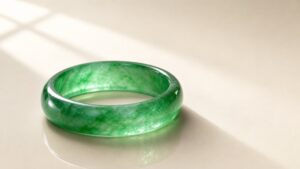
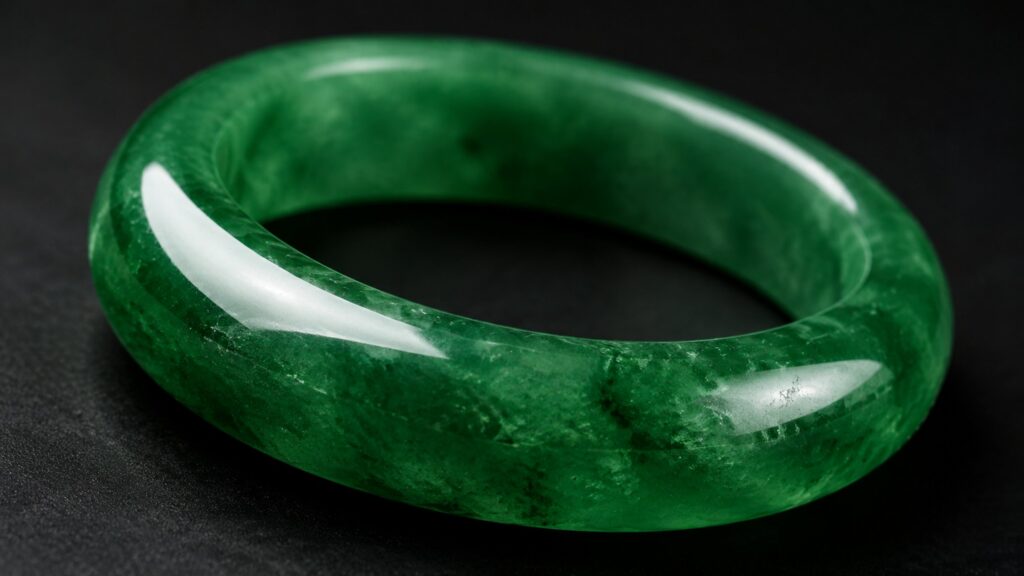
Jadeite ranges from opaque to highly translucent. Ice-type jadeite, like the Natural Ice-type Jadeite Bracelet with Floating Green Patterns, has a glassy, semi-transparent appearance that allows light to pass through. Fakes often appear milky or completely transparent without the internal grain. Real jadeite shows subtle fibrous or granular textures when backlit.
Texture and Luster
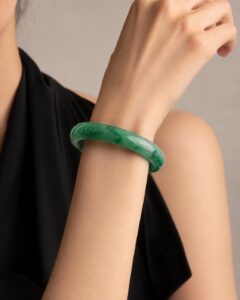
Genuine jadeite feels cool to the touch and has a smooth, dense surface. It exhibits a vitreous to greasy luster, not a plastic shine. The Natural Jadeite Bracelet is described as having a gentle vitreous luster and delicate texture. Counterfeits often feel warm and lightweight. As recommended by essential jadeite buying tips from Jewea, inspect the carving quality—natural jadeite carvings are crisp and fine, while fakes may have rounded edges or bubbles.
Types & Styles
VirtuCasa offers a range of jadeite styles, from classic bead bracelets to intricate rings. Beaded pieces, like the Natural Three-Color Jadeite Bracelet, allow you to examine the consistency of color and texture across multiple stones. Saddle rings, such as the Natural Full-Green Jadeite Saddle Ring, are carved from a single piece, revealing the stone’s internal character. Earrings and necklaces incorporate fine metalwork, like the Natural Jadeite Tassel Earrings with 18K gold-plated chains, adding a layer of elegance. Multi-color pieces are especially sought after; the Natural Ice-type Tricolor Jade Necklace (with yellow, green, and white) exemplifies the rare beauty of natural jade color variations.
How to Choose the Right Size & Fit
Jadeite jewelry is not one-size-fits-all. Bracelets often list bead diameter and circumference. The Natural Jadeite Bracelet has 19 beads of about 10mm each, total circumference 18cm, fitting wrists 16-19cm. The Natural Three-Color Jadeite Bracelet uses 16mm beads with adjustable elastic cord. Rings come in specific sizes: the Natural Full-Green Jadeite Saddle Ring is size 24, while the Natural Ice-type Violet Cabochon Ring is size 15. When ordering, measure your finger or wrist against the product specs. Necklaces vary in bead size and weight; the Natural Ice-type Violet Jadeite Bead Necklace consists of 68 beads from 10-12mm, heavy at 158g, making a statement. Lightweight options like the Natural Ice-type Tricolor Jade Necklace (3.5mm beads, 10.4g) are perfect for daily wear.
Price & Value
What drives the price of natural jadeite? Color, clarity, and size are primary. A piece with rare lavender hue and high ice-type translucency, like the Natural Ice-type Violet Jadeite Bead Necklace at $6649, commands premium pricing. In contrast, smaller or less translucent items, such as the Natural Jadeite Saddle Ring with Floating Green at $719 or the Natural Three-Color Jadeite Bracelet at $668, offer entry-level entry into natural jadeite. Mid-range options like the Natural Ice-type Tricolor Jade Necklace at $740 or $825 provide excellent value. High-end translucent green pieces, such as the Natural Ice-type Jadeite Bracelet with Floating Green at $1517, and the Natural Full-Green Jadeite Saddle Ring at $2437, represent investment-grade pieces. Every dollar reflects the natural origin and quality of the stone.
Common Mistakes to Avoid
- Relying solely on color: Fakes can mimic color; always check texture and temperature.
- Ignoring weight: Natural jadeite is dense; a piece that feels too light may be resin or glass.
- Not checking for bubbles: Glass fakes often have tiny air bubbles under magnification.
- Assuming all green jade is imperial: Many green jadeites are dyed or lower grade; natural green should have subtle variations.
- Buying without a trusted source: Always purchase from reputable sellers like VirtuCasa that specify natural jadeite.
- Overlooking documentation: Natural jadeite from established sellers should come with authenticity assurance.
Top Picks
To help you start your collection, here are five recommended pieces from VirtuCasa:
- Natural Jadeite Bracelet ($1008): A classic lavender-white bead bracelet with delicate luster, ideal for first-time buyers seeking versatile elegance.
- Natural Ice-type Tricolor Jade Necklace ($740): Lightweight three-color beads perfect for layering or daily accent — excellent mid-range value.
- Natural Jadeite Saddle Ring with Floating Green ($719): A timeless Eastern design with natural floating green patches, ideal for ring enthusiasts.
- Natural Full-Green Jadeite Saddle Ring ($2437): For collectors desiring a rich, even green in a classic saddle style.
- Natural Ice-type Violet Jadeite Cabochon Ring Set ($1926): A premium gem-set piece with vivid violet hue, perfect for special occasions.
Final Tips / Conclusion
Spotting real jadeite comes down to observation and knowledge. Look for natural color variations, a cool touch, high density, and a subtle fibrous texture. If possible, view the stone under natural light. Remember that natural jadeite often exhibits imperfections — minor inclusions or color streaks — that authentic counterfeits try to eliminate. For beginners, start with a well-priced piece like the Natural Three-Color Jadeite Bracelet at $668 to gain hands-on experience. Always buy from a trusted source that explicitly states “natural jadeite” and avoid deals that seem too good to be true. With these tools, you can confidently build a collection of genuine jadeite that will last a lifetime.
FAQ
What is the easiest way to tell if jadeite is real?
The easiest method is the touch test: real jadeite feels cool to the touch and warms slowly. It also has a dense, smooth texture and a vitreous or greasy luster, unlike plastic or glass which feel warm and lightweight.
Can I scratch a jadeite to test its hardness?
While jadeite ranks about 6.5-7 on the Mohs scale, scratching is not recommended as it can damage the surface. Instead, use a 10x loupe to look for bubbles (indicating glass) or a plastic-like texture (indicating resin).
Are all green jadeite stones natural?
No. Many green jadeite stones are dyed or treated. Natural green jadeite shows subtle color variation and a fibrous texture. Avoid stones with unnaturally uniform, bright colors, which may indicate dyeing.
Does VirtuCasa sell only natural jadeite?
Yes. All jadeite pieces listed on VirtuCasa are described as natural jadeite, such as the Natural Jadeite Bracelet and Natural Ice-type Jadeite products. Each product page specifies the germplasm and natural origin.