Why Authenticity Matters in Jadeite
Jadeite has been treasured for centuries, not only for its beauty but for its cultural significance and investment potential. However, the market is flooded with treated or imitation stones, making it essential for buyers to know how to spot Type A jadeite—the natural, untreated form that holds the highest value. Whether you are a seasoned collector or a first-time buyer, understanding the hallmarks of natural jadeite protects you from costly mistakes and ensures you own a piece that will endure.
At VirtuCasa, we specialize in natural jadeite jewelry and Chinese antiques, offering a curated selection of bracelets, necklaces, rings, and earrings. Each piece in our collection is described with transparency, so you know exactly what you are purchasing. This guide will walk you through the key factors that define Type A jadeite, how to evaluate quality, and what to look for when shopping online.
Understanding Quality
Color
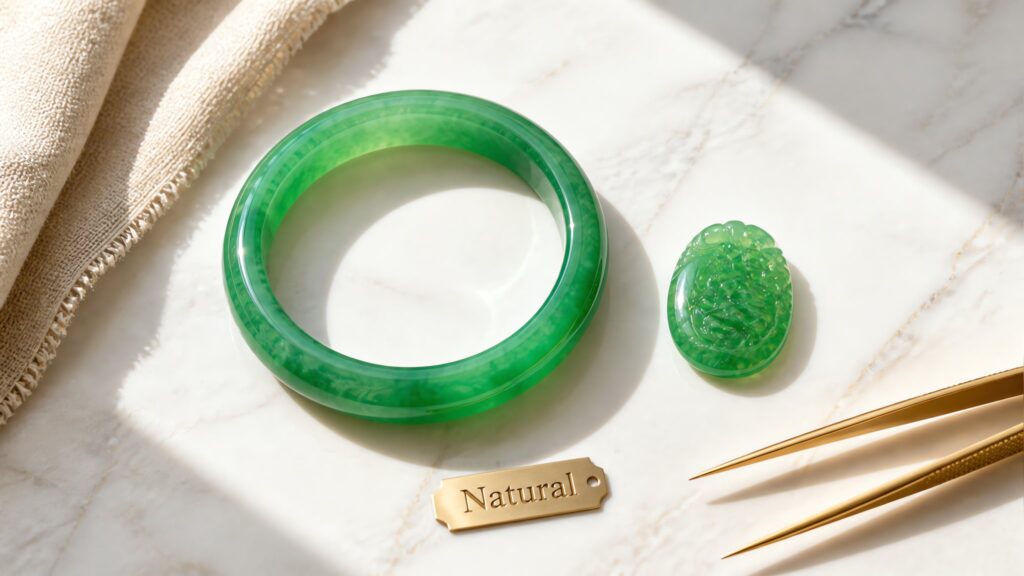
Color is often the first thing buyers notice. In natural jadeite, the most prized color is a vivid, even green, but lavender, white, yellow, and even tricolor combinations can be equally stunning. According to GIA’s jadeite quality factors, color is judged under both fluorescent and incandescent light, as the stone can appear different in various lighting. Look for a color that is saturated, uniform, and pleasing to the eye.
For example, the Natural Full-Green Jadeite Saddle Ring features an even “full green” coloration that is dense yet translucent—a classic example of high-quality natural jadeite. Similarly, the Natural Ice-type Violet Jade Bead Necklace displays a soft lavender hue, showcasing the variety that natural jadeite offers.
Clarity and Texture
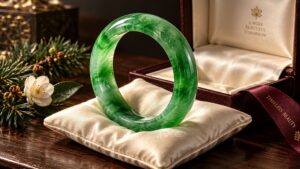
Clarity refers to the absence of inclusions, cracks, or blemishes. Natural jadeite often has some internal features, but high-quality pieces are relatively clean. Texture is also crucial: a fine, smooth texture with a vitreous luster indicates good quality. The Natural Ice-type Jadeite Bracelet with Floating Green Patterns is described as having a transparent and delicate texture with a cool, lustrous glassy sheen, reflecting its premium clarity.
Be cautious of jadeite that appears too perfect—it may be treated. Type A jadeite is natural, and slight imperfections are expected. As this guide on buying jade online advises, comparing multiple pieces helps you notice differences in color, clarity, and imperfections, which is key to identifying natural stones.
Cut and Carving
The cut of jadeite affects how light interacts with the stone. Traditional shapes like cabochons, beads, and saddle rings are popular. A well-cut piece will have smooth surfaces and symmetrical proportions. The Natural Ice-type Violet Jadeite Cabochon Ring Set features an oval cabochon with excellent transparency, demonstrating how a good cut enhances the stone’s natural beauty.
Types & Styles
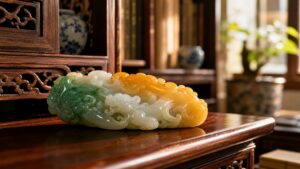
Jadeite comes in various types and styles, each with its own appeal. The most common forms are bracelets, necklaces, rings, and earrings. Beaded bracelets are versatile and can be worn daily, while carved rings are often statement pieces. The Natural Jadeite Bracelet is a classic example, featuring 19 round beads in a soft lavender-white hue. For a more colorful option, the Natural Three-Color Jadeite Bracelet combines yellow, white, and light green in a harmonious blend.
Necklaces range from delicate strands to bold statements. The Natural Ice-type Tricolor Jade Necklace features beads of 3.5 mm, perfect for layering, while the Natural Ice-type Tricolor Jade Necklace with 5.3 mm beads offers a more substantial look. Earrings like the Natural Jadeite Tassel Earrings add a touch of elegance with their deep green beads and gold-plated chains.
How to Choose the Right Size & Fit
When buying jadeite jewelry, especially bracelets and rings, size is crucial for comfort and wearability. For bracelets, measure your wrist circumference. The Natural Jadeite Bracelet fits wrists 16-19 cm, while the Natural Ice-type Jadeite Bracelet with Floating Green Patterns has a flexible fit suitable for various wrist sizes. Always check the product description for specific measurements.
Rings come in standard sizes. The Natural Full-Green Jadeite Saddle Ring is a size 24, while the Natural Jadeite Saddle Ring with Floating Green is a size 26. If you are unsure of your size, consult a jeweler or use a ring sizer. For necklaces, consider the length and bead size. The Natural Ice-type Violet Jade Bead Necklace offers 68 beads ranging from 10 to 12 mm, allowing for versatile layering.
Price & Value
The price of jadeite is influenced by color, clarity, texture, and size. Natural, untreated Type A jadeite commands a premium. In our collection, prices range from entry-level pieces like the Natural Three-Color Jadeite Bracelet at $668 to premium pieces like the Natural Ice-type Violet Jade Bead Necklace at $6649. Mid-range options include the Natural Jadeite Tassel Earrings at $852 and the Natural Ice-type Tricolor Jade Necklace at $825.
Remember that higher prices often reflect better quality, but it is essential to evaluate each piece individually. A piece with exceptional color or clarity may be worth the investment. As this jadeite buying guide notes, the “Three Cs”—color, clarity, and cut—are the primary factors in determining value.
Common Mistakes to Avoid
- Ignoring the Type: Always confirm the jadeite is Type A (natural, untreated). Type B and C have been treated with acid or dye, reducing their value.
- Skipping the Return Policy: Buy from reputable sellers with clear return policies in case the piece does not meet your expectations.
- Not Comparing Pieces: Compare color, clarity, and price across multiple pieces to develop an eye for quality.
- Overlooking Measurements: Check size specifications carefully to avoid buying a bracelet or ring that does not fit.
- Believing “Perfect” is Natural: Natural jadeite often has minor inclusions; excessive perfection may indicate treatment.
Top Picks
Based on our collection, here are our top recommendations for different preferences:
- For the Classic Collector: Natural Full-Green Jadeite Saddle Ring ($2437) – This ring’s even green color and traditional design make it a timeless investment.
- For Everyday Elegance: Natural Jadeite Bracelet ($1008) – A versatile lavender-white bracelet that suits daily wear with its comfortable fit.
- For the Modern Minimalist: Natural Ice-type Tricolor Jade Necklace ($740) – A delicate strand with subtle color transitions, perfect for layering.
- For the Statement Maker: Natural Ice-type Jadeite Bracelet with Floating Green Patterns ($1517) – A bold, substantial piece that showcases high transparency.
- For the Luxurious Gift: Natural Ice-type Violet Jadeite Cabochon Ring Set ($1926) – A stunning ring set with 18K white gold, sapphires, and diamonds, ideal for special occasions.
Final Tips
Spotting Type A jadeite requires knowledge and attention to detail. Always buy from reputable sources that provide clear descriptions and certifications. At VirtuCasa, we are committed to offering natural jadeite jewelry, and we encourage you to explore our full jadeite collection to find the perfect piece. Remember to trust your instincts, compare options, and invest in quality that will last a lifetime.
FAQ
What is Type A jadeite?
Type A jadeite is natural jadeite that has not been treated with acid, dye, or polymer impregnation. It is the most valuable and sought-after form of jadeite.
How can I tell if jadeite is Type A?
Look for a certificate from a reputable gemological lab. Additionally, natural jadeite often has minor inclusions and a vitreous luster. Be wary of pieces that are overly bright or have unnatural colors.
What does ‘ice-type’ jadeite mean?
Ice-type jadeite refers to a translucent, high-quality jadeite that resembles ice. It has a cool, glassy appearance and is highly prized for its clarity and transparency.
Why is jadeite so expensive?
Jadeite is rare and durable, and high-quality pieces with intense color and clarity are scarce. The value is also influenced by cultural significance and demand, particularly in East Asian markets.