Introduction
Jadeite, the most prized form of jade, has captivated collectors and jewelry lovers for centuries. Its translucent glow, vibrant colors, and cultural significance make it a timeless investment. However, the market is fraught with treated and imitation stones, making it essential for buyers to understand the difference between jadeite Type A, B, and C. This guide will help you verify authenticity before you buy, ensuring you invest in natural, untreated jadeite that holds its value and beauty.
At VirtuCasa’s jadeite collection, we offer a range of natural jadeite pieces, from delicate bead bracelets to statement rings. Each item is crafted from genuine jadeite, but we understand that as a buyer, you need to know how to distinguish the real from the treated. This article provides the knowledge you need to shop with confidence.
Understanding Quality
The Three Types: A, B, and C
Jadeite is classified into three main types based on treatment. Type A jadeite is natural and untreated, with only a surface wax coating applied for luster. Type B jadeite has been acid-bleached to remove impurities, then polymer-impregnated to improve transparency. Type C jadeite is artificially dyed to enhance or change its color. Some stones are both B and C, meaning they are bleached, polymer-filled, and dyed.
Understanding these distinctions is crucial because treatment affects durability and value. Type A jadeite is the most valuable and sought-after, while treated stones are significantly less valuable and may degrade over time. According to gemological grading standards from the Gemological Institute of America (GIA), color, transparency, and texture are key quality factors that buyers should evaluate under both fluorescent and incandescent light.
Quality Factors: Color, Clarity, and Cut
When evaluating jadeite, the “Three Cs” apply: color, clarity, and cut. Color is the most important factor. The finest jadeite is a vivid, intense green, but other colors like lavender, yellow, and white are also prized. Clarity refers to the absence of inclusions and fractures. High-quality jadeite is translucent and has a smooth, even texture. Cut and polish affect the stone’s luster and how light interacts with it.
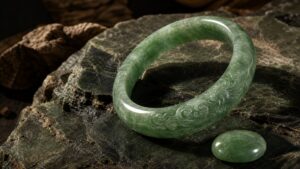
For example, the Natural Ice-type Jadeite Bracelet with Floating Green Patterns showcases high transparency and a cool, glassy sheen, indicating excellent clarity. The Natural Jadeite Bracelet features a soft lavender-white hue with a gentle vitreous luster, demonstrating how color and texture combine to create beauty.
Types & Styles
Jadeite jewelry comes in various styles, each highlighting the stone’s natural beauty. Bead bracelets and necklaces are classic choices, offering versatility and a tactile connection to the stone. The Natural Three-Color Jadeite Bracelet features a unique combination of yellow, white, and light green, showcasing jadeite’s multi-hued patterns. For a more refined look, the Natural Ice-type Tricolor Jade Necklace presents yellow, green, and white in a delicate 5.3mm bead strand.
Earrings and rings allow for more intricate designs. The Natural Jadeite Tassel Earrings combine deep green jadeite beads with 18K gold-plated chains, creating a graceful swinging effect. Saddle rings, like the Natural Full-Green Jadeite Saddle Ring, are carved from a single piece of jadeite, offering a classic and elegant silhouette.
How to Choose the Right Size & Fit
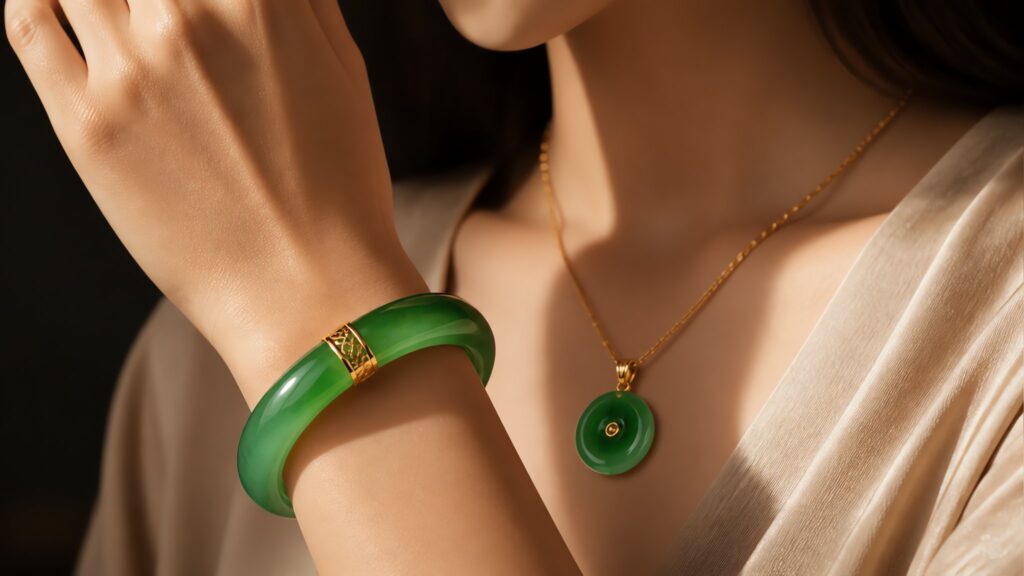
When buying jadeite jewelry, size and fit are crucial for comfort and wearability. For bracelets, consider the circumference of your wrist. The Natural Jadeite Bracelet has a total circumference of about 18cm, suitable for wrists measuring 16-19cm. The Ice-type bracelet offers a flexible fit with 13 round beads, each 16mm in diameter, accommodating various wrist sizes.
For rings, size is indicated by ring size numbers. The Full-Green Saddle Ring is a size 24, while the Floating Green Saddle Ring is a size 26. Always measure your finger accurately before purchasing. Necklaces come in various lengths; the Violet Jade Bead Necklace offers versatility with 68 beads ranging from 10mm to 12mm, suitable for multi-layered or single-strand wearing.
Price & Value
Jadeite prices vary greatly depending on type, color, transparency, and craftsmanship. Type A jadeite commands premium prices, while treated stones are more affordable. In our collection, you’ll find entry-level pieces like the Natural Three-Color Jadeite Bracelet at $668, and mid-range options like the Natural Ice-type Tricolor Jade Necklace at $740. Premium pieces, such as the Natural Ice-type Violet Jade Bead Necklace, can reach $6649, reflecting the rarity and quality of the stone.
When comparing prices, consider the quality factors discussed earlier. A higher price often indicates better color, clarity, and craftsmanship. However, always verify authenticity, as treated jadeite may be overpriced. As expert advice on buying jade online suggests, compare multiple pieces and pay attention to differences in color, clarity, imperfections, and price.
Common Mistakes to Avoid
- Assuming all green jade is jadeite: Nephrite jade and other green stones like serpentine can look similar. Always check for the characteristic translucency and texture.
- Ignoring treatment disclosure: Some sellers do not disclose treatments. Always ask for a certificate or guarantee of authenticity.
- Overlooking the importance of color: Color is subjective, but vivid, even color is generally more valuable. Be wary of unnaturally intense colors, which may indicate dyeing.
- Neglecting to check for cracks: Cracks can affect durability. Use a magnifying glass to inspect for fractures or fissures.
- Buying without a return policy: Always purchase from reputable sellers who offer returns or guarantees.
Top Picks
Here are our top recommendations for different buyers:
- For the classic collector: The Natural Jadeite Bracelet ($1008) is a timeless piece with a soft lavender-white hue and gentle luster, perfect for everyday elegance.
- For the connoisseur of color: The Natural Ice-type Tricolor Jade Necklace ($825) showcases rare yellow, green, and white in a delicate strand, ideal for those who appreciate unique color combinations.
- For the statement maker: The Natural Ice-type Jadeite Bracelet with Floating Green Patterns ($1517) features high transparency and floating green patterns, making it a conversation starter.
- For the minimalist: The Natural Ice-type Tricolor Jade Necklace ($740) with 3.5mm beads is lightweight and refined, perfect for subtle daily wear.
- For the investor: The Natural Ice-type Violet Jade Bead Necklace ($6649) is a premium piece with substantial weight and exceptional translucency, a worthy addition to any serious collection.
Final Tips / Conclusion
Buying jadeite is both an art and a science. By understanding the differences between Type A, B, and C, and by evaluating quality factors like color, clarity, and craftsmanship, you can make informed decisions. Always request certification, inspect the piece carefully, and buy from reputable sources. As you explore VirtuCasa’s jadeite collection, remember that natural, untreated jadeite is an investment in beauty and heritage. With the right knowledge, you can confidently choose a piece that will be treasured for generations.
FAQ
What is the difference between jadeite Type A, B, and C?
Type A jadeite is natural and untreated, with only surface wax. Type B has been acid-bleached and polymer-impregnated to improve clarity. Type C is artificially dyed to enhance color. Type B+C is both bleached and dyed. Type A is the most valuable and durable.
How can I verify if jadeite is Type A at home?
At-home tests include checking for a consistent color, listening for a clear, ringing sound when tapped, and using a magnifying glass to look for signs of dye or polymer. However, professional testing with a refractometer or spectroscopy is the only way to be certain.
Why is Type A jadeite more expensive?
Type A jadeite is rarer and retains its natural integrity, making it more durable and valuable. Treated jadeite may degrade over time and is less prized by collectors and investors.
Are all green jade stones jadeite?
No, other stones like nephrite, serpentine, and aventurine can look similar. Jadeite has a distinctive translucency and texture. Always check for certification from a reputable gemological laboratory.