Jade Carving Equipment: From Ancient Pedal-Powered Tools to Modern Techniques
Jade carving is an art form that demands not only skill and patience but also specialized equipment. From the primitive pedal-powered “water benches” of antiquity to today’s electric tools, the evolution of jade carving machinery reflects both technological progress and the enduring principles of this ancient craft.
The Water Bench (水凳): The Ancient Pedal-Powered Lathe
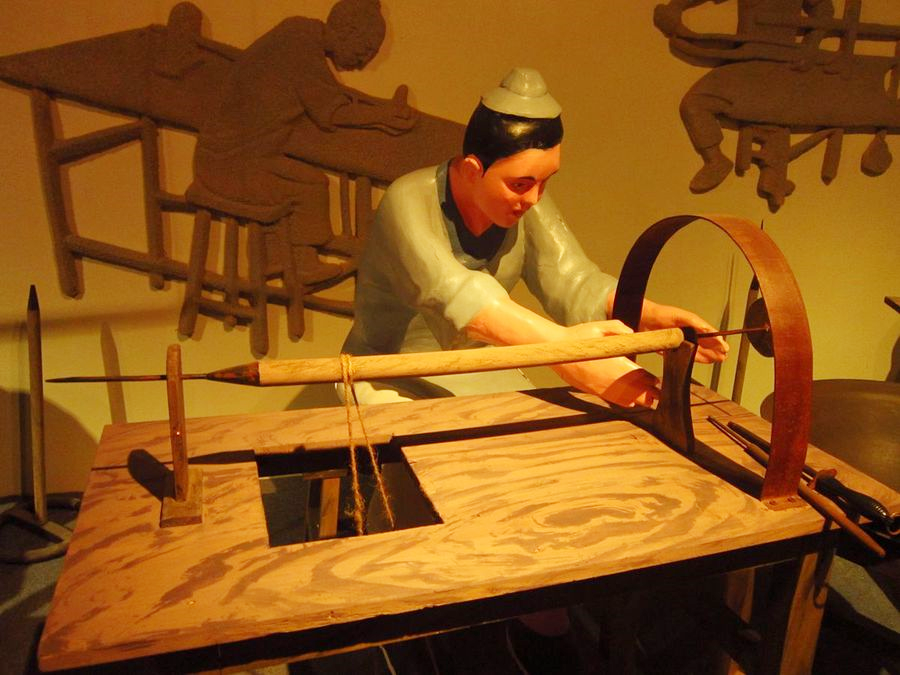
The water bench (known as “陀機” in southern China and “水凳” in the north) was the cornerstone of traditional jade carving. This ingenious wooden device, resembling a table, stood about one meter tall and featured a horizontal rotating shaft. Artisans powered it by rhythmically pressing a foot pedal, which drove a leather belt to spin the shaft. A jade-cutting tool (陀子) attached to the shaft would then grind and shape the raw jade.
Key Features:
- Low, Adjustable Speed: The rotation was slow and bidirectional, creating a distinctive back-and-forth grinding motion.
- Cooling System: A water bucket dripped coolant onto the jade to prevent overheating.
- Versatility: By swapping tools (e.g., cutting discs, grinding heads), the water bench could perform slicing, drilling, and polishing.
Historical Insight:
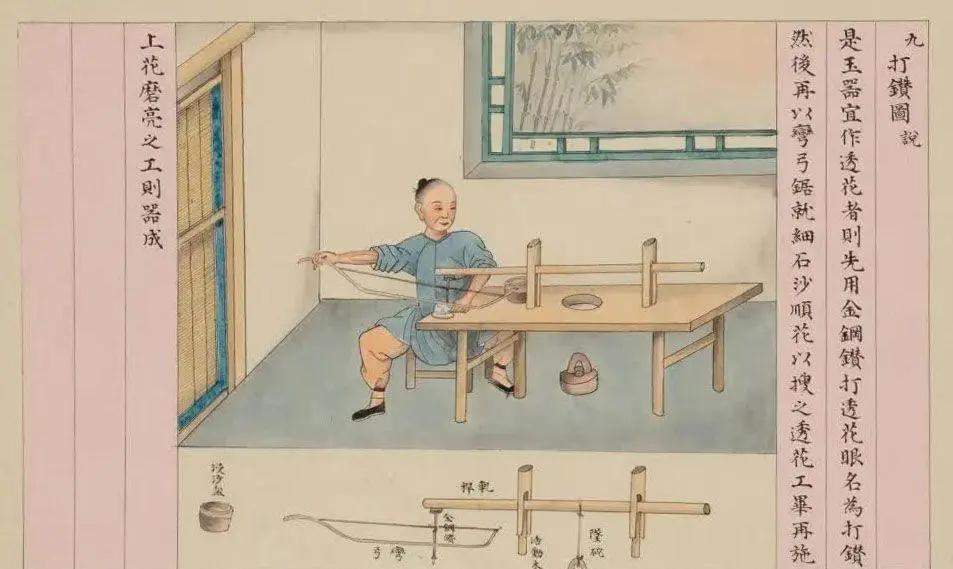
While its exact origins are lost to time, evidence suggests rudimentary versions existed during the Liangzhu Culture (Neolithic period). The Tiangong Kaiwu (《天工開物》) and Qing-era Jade Working Illustrations (《玉作圖》) depict nearly identical designs, proving its enduring utility until the 20th century.
Cutting Tools: Slicing Through Stone
1. Circular Saws (圓盤鋸)
- Function: Cutting large jade blocks into workable pieces.
- Operation: A disc-shaped blade (100–300 mm diameter) mounted on the water bench, fed with abrasive slurry (解玉砂). Larger jade required two-handed handling or lever-assisted support.
- Cooling: Water was essential to prevent blade damage.
2. Long Saws (長條鋸) & Wire Saws
- Toothless Blades: Ancient saws relied on abrasives, not sharp teeth, to gradually wear through jade.
- Precision: Ideal for intricate cuts and thin slices.
Carving & Engraving: Shaping the Art
Carving refined the rough-cut jade into detailed forms. The water bench, fitted with grinding heads or turning tools, enabled:
- 轮磨 (Lún mó): Coarse shaping with grinding wheels.
- 擦磨 (Cā mó): Smoothing surfaces.
- 砂磨 (Shā mó): Fine detailing.
Traditional Techniques:
- 铡 (Zhá): Trimming excess material.
- 勾 (Gōu): Incising lines.
- 镂空 (Lòu kōng): Openwork carving.
Horizontal vs. Vertical Axes:
- Horizontal: Better for irregular shapes.
- Vertical: Preferred for flat surfaces like plaques.
Polishing: The Final Masterstroke
Polishing transformed rough carvings into luminous art. Using felt, leather, or cloth wheels mounted on the water bench, artisans applied:
- Diamond powder: For hard stones like nephrite.
- Iron oxide (紅粉子): A classic, affordable choice.
- Cerium oxide: For delicate materials like crystal.
Pro Tip:
“Polishing isn’t just about shine—it’s about erasing microscopic scratches until the surface reflects light like still water.”
Modern Evolution: From Foot Pedals to Electricity
Today’s jade tools retain the water bench’s essence but replace:
- Human power → Electric motors.
- Natural abrasives → Synthetic diamonds.
- Wooden components → Steel alloys.
Yet, the core philosophy remains: Precision is born from patience.
Why This Matters
Understanding these tools bridges the gap between ancient artistry and modern craftsmanship. Whether you’re a student of history, an aspiring lapidary, or simply curious, these innovations remind us that every jade masterpiece begins with the right machine—and a master’s touch.
Explore More on VirtuCasa.com
Where tradition meets technology.
Read More
- Jadeite Bracelet Bead Size & Color Matching GuideJadeite bracelet bead size & color matching guide: learn how bead diameter, hue, and wrist fit affect comfort and value before you buy natural jadeite.
- Jadeite Tri-Color Necklace vs Bracelet: Which to Buy First?Jadeite tri-color necklace vs bracelet: compare quality, fit, and value to decide which natural jadeite piece to buy first. A practical buyer’s guide.
- Jadeite Color Under Different Light: Why Your Bracelet ShiftsWhy does jadeite color change under different light? Learn the gemology behind color shift and how to judge jadeite color before you buy.
- How to Read Ming Dynasty Reign Marks on PorcelainLearn how to read Ming dynasty reign marks on porcelain: the six-character format, kaishu script, double rings, and the clues that reveal later copies.
- Jadeite Bracelet on a Budget: What $200 vs $2,000 BuysShopping for a jadeite bracelet? Learn what separates entry-level from premium jadeite, plus real picks from VirtuCasa’s natural jadeite collection.
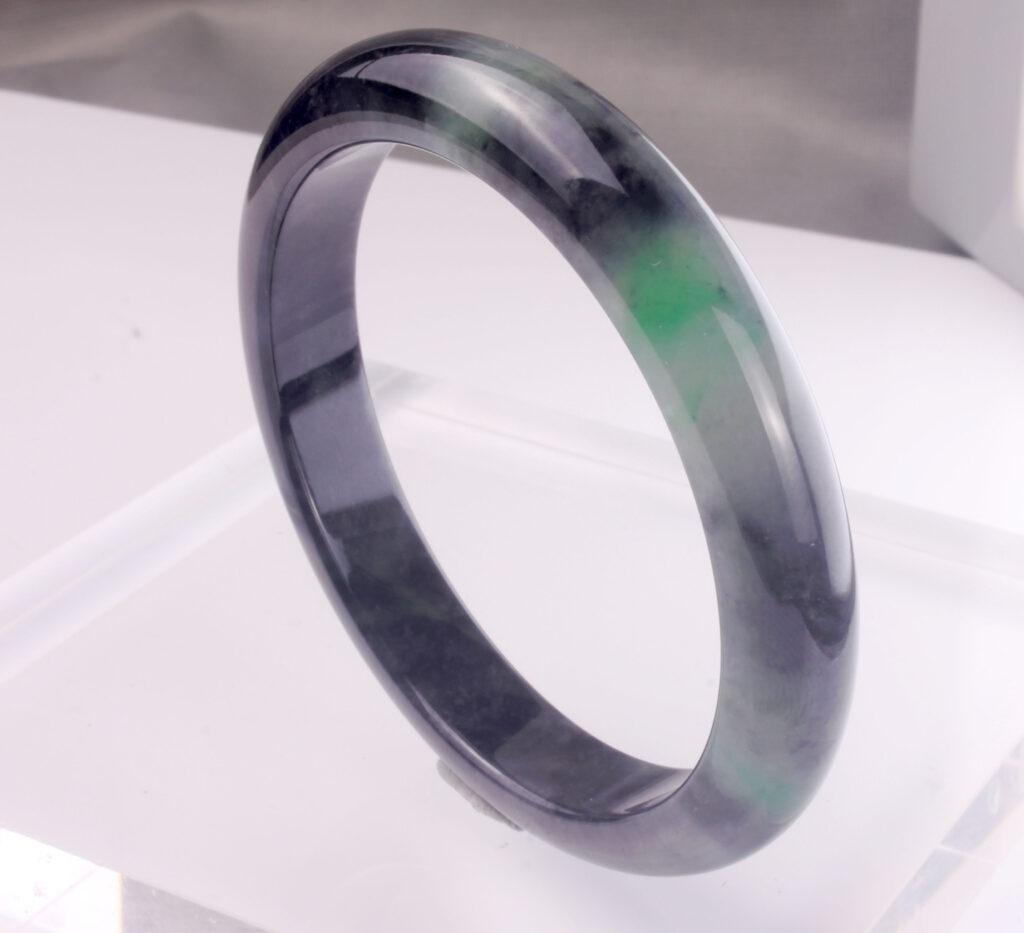
Natural Emerald Ice – Green and Black – Spotted Jade Bracelet
- USD: $4,605.00