Introduction
Jadeite, the most precious form of jade, has captivated collectors and jewelry lovers for centuries. Unlike many gemstones, its value is not determined by a simple grading scale but by a nuanced interplay of color, transparency, and texture. For buyers exploring natural jadeite jewelry, understanding these visual keys is essential to making a confident purchase. This guide will walk you through the criteria that define high-quality jadeite, drawing on expertise from gemological standards set by GIA and industry insights from Pala International.
Whether you are drawn to the serene lavender-white of a classic bracelet or the vivid green of a statement ring, knowing what to look for—and what to avoid—will help you find a piece that brings lasting joy. VirtuCasa offers a curated selection of untreated, natural jadeite, ensuring each item reflects the true beauty of this ancient gemstone.
Understanding Quality
Jadeite quality is primarily evaluated through three interrelated factors: color, transparency, and texture. Among these, color is often the first and most impactful attribute, followed closely by transparency, which determines how light interacts with the stone. Texture, or the fineness of the crystalline structure, contributes to the jade’s polish and internal clarity.
Color: The Heart of Jadeite
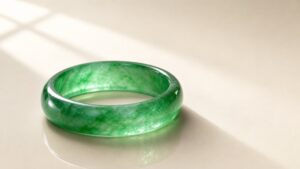
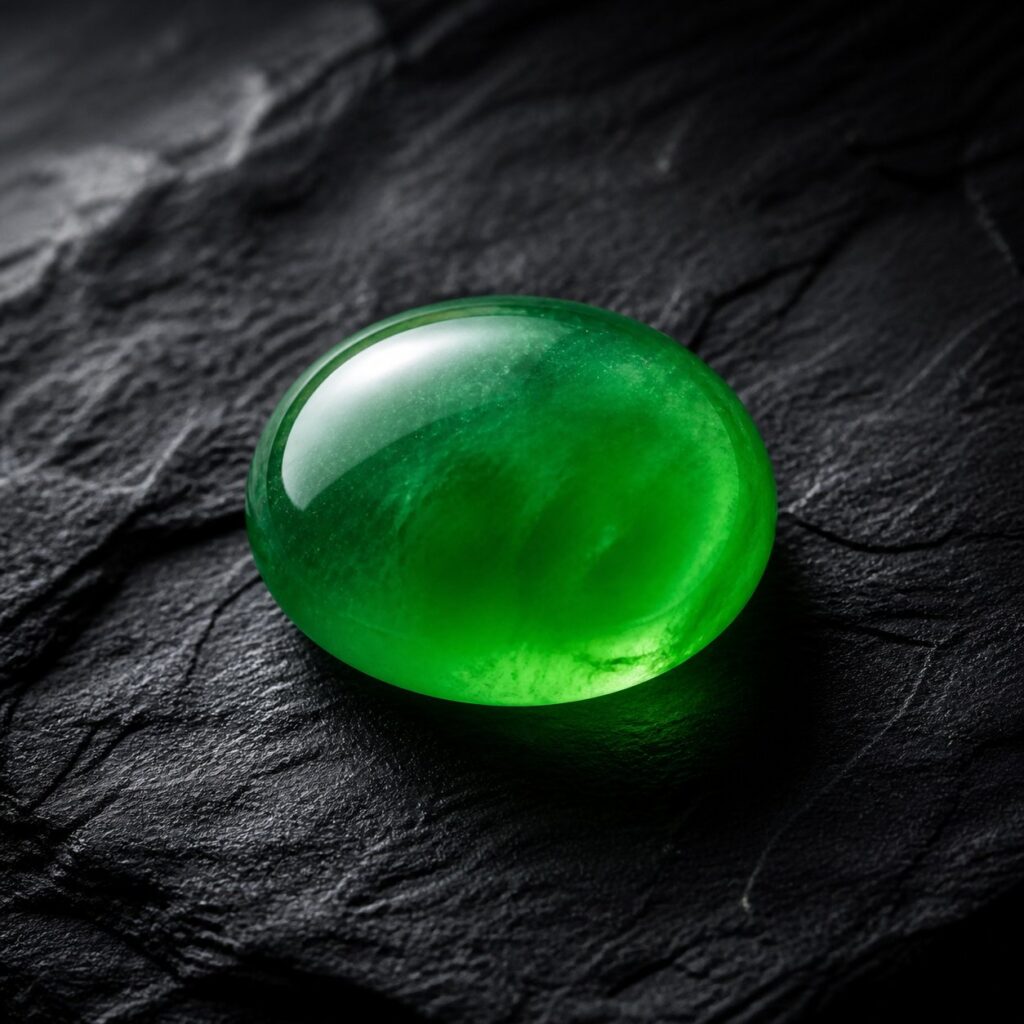
Color in jadeite ranges from imperial green to lavender, yellow, white, and even multicolored combinations. The most prized hues are intense, even, and saturated. For green jadeite, a vibrant emerald tone with no gray or brown undertones commands the highest premiums. However, softer pastels like lavender and white also hold appeal for their elegance and versatility. As noted in the 2026 Jade Buying Guide for Beginners, color distribution should be uniform to the eye, without stark patches of lighter or darker areas.
Transparency: From Opaque to Ice-Type
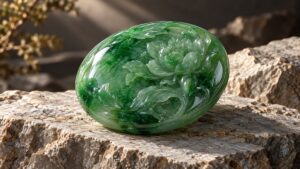
Transparency in jadeite ranges from nearly opaque to translucent. The term ‘ice-type’ describes jadeite with high translucency, allowing light to pass through and create a cool, glassy sheen. This quality is highly sought after, especially when paired with vivid green ‘floating’ patterns or subtle lavender tones. More translucent jadeite often feels livelier and displays greater depth, while opaque varieties emphasize surface color and carving detail.
Texture: The Feel of Quality
Fine-textured jadeite has a smooth, compact crystalline structure that polishes to a high luster. When you run a finger across a well-finished bead or cabochon, it should feel almost buttery. Coarser textures may appear dull or granular. All VirtuCasa products highlight fine texture, such as the ‘fine and compact’ structure described in the Natural Jadeite Tassel Earrings.
Types & Styles
Jadeite is often categorized by its visual characteristics. Below are common types found in the VirtuCasa collection, each with distinct appeal.
Ice-Type Jadeite: Known for its transparent, icy base, this variety often features floating green or delicate lavender patterns. Examples include the Natural Ice-type Jadeite Bracelet with Floating Green Patterns (16mm beads, 101g) and the Natural Ice-type Tricolor Jade Necklace (5.3mm beads, 25.8g). These pieces showcase high transparency with lively color accents.
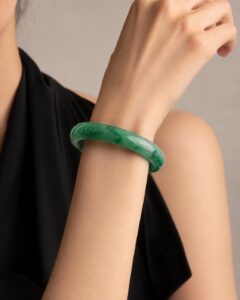
Full-Color Jadeite: Pieces with solid, even coloration are highly prized. The Natural Full-Green Jadeite Saddle Ring ($2437) offers a rich, even green with a vitreous luster, while the Natural Jadeite Bracelet ($1008) presents a soft lavender-white hue with uniform color distribution.
Multicolor Jadeite: Jadeite that naturally displays two or more colors, such as yellow, white, and green, creates a unique ‘three-color’ effect. The Natural Three-Color Jadeite Bracelet ($668) and the Natural Ice-type Tricolor Jade Necklace ($740) are excellent examples of how color variation adds character.
Violet Jadeite: Lavender or violet tones are rare and highly desirable, especially when combined with ice-type transparency. The Natural Ice-type Violet Jade Bead Necklace ($6649) and the Natural Ice-type Violet Jadeite Cabochon Ring Set ($1926) demonstrate premium quality in this category.
How to Choose the Right Size & Fit
Jadeite jewelry is often worn daily, so comfort and proper fit are crucial. For bracelets, bead size and circumference matter. The Natural Jadeite Bracelet has 19 beads of 10mm diameter, with a total circumference of about 18cm, fitting wrists 16-19cm. The Three-Color Bracelet uses 12mm beads and adjusts via elastic cord. Always measure your wrist or use comparison guides.
For rings, the saddle style fits differently than cabochon rings. The Natural Full-Green Saddle Ring is a size 24, while the Floating Green Saddle Ring is size 26. The Violet Cabochon Ring Set is a size 15. Check your ring size before purchase. Necklaces vary in bead diameter and length; smaller beads (3.5mm or 5.3mm) give a delicate look, while larger beads (10-12mm) create bolder statements. The Ice-type Violet necklace, with 68 beads of 10-12mm, offers versatility for layering.
Weight is another consideration: heavier pieces like the Ice-type Jadeite Bracelet (101g) have a substantial feel, while earrings at 8g total are light for all-day wear. Consider your comfort preferences.
Price & Value
Jadeite pricing is driven by color, transparency, size, and setting complexity. The most significant factor is the combination of vivid, even color with high translucency. Ice-type pieces with pure green or violet command higher prices, as seen in the Ice-type Violet Necklace ($6649). Conversely, multicolor and softer-toned pieces offer entry points at $668, $740, or $825.
All VirtuCasa prices are for natural, untreated jadeite. The products range from entry-level to premium. The Full-Green Saddle Ring at $2437 illustrates the value of a single piece of jadeite with even color and fine texture. Remember that setting materials (like 18K gold and diamonds in the ring set at $1926) also affect price. Avoid comparing prices across different treatment types—always verify that a piece is natural jadeite, as treated stones can be significantly cheaper but lack long-term value.
Common Mistakes to Avoid
- Focusing only on color: While vivid color is desirable, ignoring transparency can lead to buying a dull stone. Look at how light passes through.
- Confusing jadeite with jade: Jadeite is rarer and more valuable than nephrite. Always confirm the gemological name—VirtuCasa clearly labels ‘jadeite’ for authenticity.
- Overlooking texture: A coarse surface can indicate lower quality, even if the color is good. Run your finger along the piece; it should feel smooth and compact.
- Assuming all green jadeite is equally valuable: Deep, even green without gray or brown is most prized. Also be aware that ‘full green’ does not imply high transparency—some pieces combine both.
- Neglecting size and fit: A beautiful bracelet that is too tight or a ring that spins will not be comfortable. Always check dimensions and weight.
Top Picks
Based on the criteria of color and transparency, here are recommended pieces from the VirtuCasa collection for different preferences:
- For transparency lovers: The Natural Ice-type Jadeite Bracelet with Floating Green Patterns ($1517) offers a cool, icy base with floating green accents—a perfect showcase of high translucency and fine texture.
- For vibrant green enthusiasts: The Natural Jadeite Tassel Earrings ($852) feature deep green beads with a glassy luster, combined with elegant 18K gold-plated chains for a luxurious everyday piece.
- For a colorful statement: The Natural Three-Color Jadeite Bracelet ($668) blends yellow, white, and light green in harmonious patterns—ideal for those who appreciate natural color variation.
- For premium violet rarity: The Natural Ice-type Violet Jade Bead Necklace ($6649) is a substantial piece (158g) with translucent lavender beads—a collector’s choice for rare ice-type violet jadeite.
- For classic elegance: The Natural Jadeite Bracelet ($1008) in soft lavender-white offers uniform color, translucent quality, and a comfortable fit—perfect for everyday wear or gifting.
Final Tips
When shopping for jadeite, trust your eye and compare multiple pieces. Color and transparency are the most reliable indicators of quality, but always verify that the material is natural jadeite (not treated or dyed). VirtuCasa ensures all items are natural, giving you peace of mind. Consider your personal style: do you prefer icy translucency, solid color, or multicolor patterns? Visit the full Jadeite collection to explore and find the piece that resonates with you. Remember that jadeite is an investment in beauty—choose a piece you will love wearing for years.
FAQ
What is the difference between ‘ice-type’ and regular jadeite?
Ice-type jadeite has high translucency, allowing light to pass through and creating a cool, glassy sheen. Regular jadeite may be more opaque. Ice-type, especially with floating color patterns, is highly valued.
How do I know if a jadeite piece is natural and not treated?
Natural jadeite is untreated—no dyes, polymers, or heat treatments. VirtuCasa explicitly labels all items as ‘natural jadeite’. Request a certificate from a gemological lab for further verification.
Does a higher price always mean better transparency?
Not always. Price reflects a combination of color, transparency, size, and setting. Some opaque pieces with vivid full green (like the Full-Green Saddle Ring at $2437) are also highly priced due to color saturation.
Can I wear jadeite jewelry every day?
Yes, jadeite is durable (7 on Mohs scale) but can chip if struck hard. Daily wear is fine, but avoid harsh chemicals or extreme impacts. Many VirtuCasa pieces are designed for comfortable daily use.