Introduction
When shopping for natural jadeite jewelry, two of the most important factors to understand are color and transparency. These qualities directly influence beauty, rarity, and value. Whether you are drawn to the soft lavender-white hues of a jadeite bracelet or the deep vibrant green of earrings, knowing how to assess these characteristics helps you make an informed purchase. In this guide, we will walk you through the key factors gemologists use to evaluate jadeite, with real examples from the VirtuCasa collection.
Understanding Quality
Color
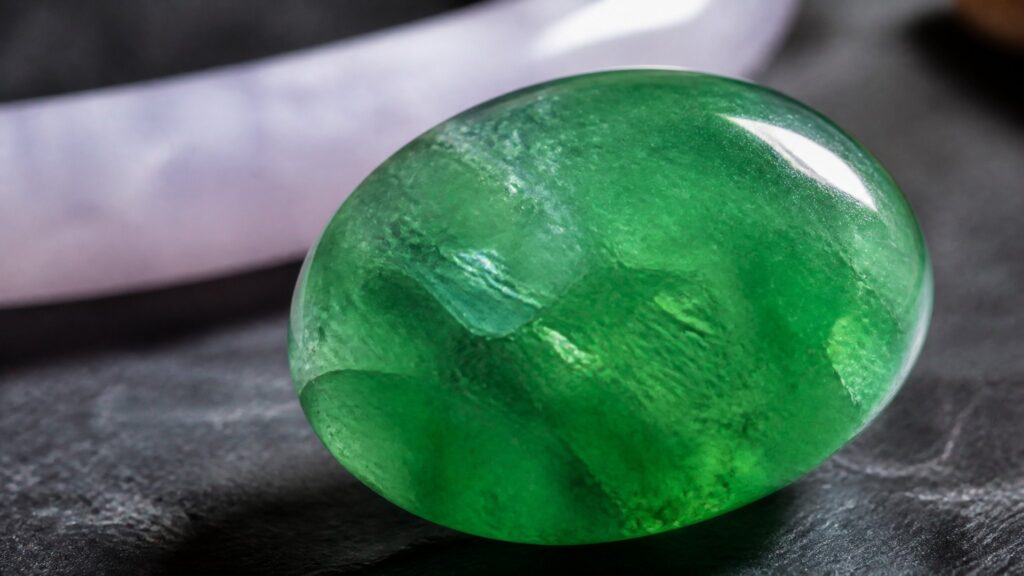
Color is the single most important quality factor in jadeite. According to GIA gemological standards, jadeite’s color is evaluated under both fluorescent and incandescent light. The most valuable colors are vivid, evenly distributed, and free of gray or brown modifiers. For green jadeite, a pure, rich green (often called “imperial green”) commands the highest prices. However, other colors like lavender, yellow, orange, and white can also be highly prized when saturated and uniform. Pala International’s jadeite buying guide notes that intensity combined with translucency determines value, and stones that are too dark or too opaque are less desirable. VirtuCasa’s collection includes a Natural Full-Green Jadeite Saddle Ring ($2437) with an even “full green” coloration that is dense yet translucent—exactly the kind of color that connoisseurs seek.
Transparency
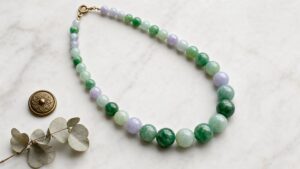
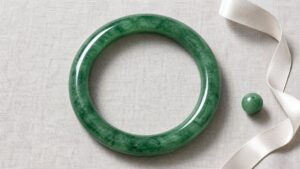
Transparency refers to how much light passes through the stone. Jadeite ranges from completely opaque to almost transparent. The highest grade—ice-type jadeite—is translucent with a cool, glassy sheen. Professional trade guides use terms like “ice-type” or “glassy” to describe this desirable clarity. VirtuCasa offers several ice-type pieces, such as the Natural Ice-type Jadeite Bracelet with Floating Green Patterns ($1517) and the Natural Ice-type Violet Jade Bead Necklace ($6649), where high transparency allows the floating green or soft lavender hues to shine with a luminous quality.
Texture
Texture describes the internal grain structure. Fine, compact texture produces a smooth feel and a vitreous luster. Coarse texture can look dull. VirtuCasa’s product descriptions highlight “fine and compact texture” for pieces like the Natural Jadeite Tassel Earrings, which exhibit a refined glassy luster.
Types & Styles
Jadeite jewelry comes in many forms, from classic bead bracelets to elaborate rings. VirtuCasa’s collection includes a range of styles to suit different tastes. For example, the Natural Jadeite Bracelet ($1008) features delicate lavender-white beads with uniform color and translucent quality—ideal for everyday elegance. The Natural Three-Color Jadeite Bracelet ($668) combines yellow, white, and light green in a harmonious blend, showcasing jadeite’s natural multicolored patterns. For those who prefer earrings, the Natural Jadeite Tassel Earrings ($852) offer deep green beads with a refined glassy luster. Rings include the Natural Ice-type Violet Jadeite Cabochon Ring Set ($1926), which combines high transparency with a vivid violet hue, set in 18K white gold with sapphires and diamonds.
How to Choose the Right Size & Fit
Size and fit are crucial for comfort. VirtuCasa provides detailed measurements for each piece. For bead bracelets, check the bead diameter and total circumference. The Natural Jadeite Bracelet uses 10mm beads with an 18cm circumference, suitable for wrists 16–19cm. The Natural Ice-type Jadeite Bracelet uses larger 16mm beads and weighs 101g, offering a substantial feel. Rings come with specific ring sizes (e.g., size 15 for the violet cabochon ring, size 26 for the floating green saddle ring). Necklaces like the Natural Ice-type Tricolor Jade Necklace have bead diameters as small as 3.5mm for a delicate look, or 5.3mm for a more defined chain. Always compare your measurements to the product details to ensure a comfortable fit.
Price & Value
Several factors drive jadeite prices. Color saturation and evenness are paramount—full, vivid green commands premium prices. Transparency significantly boosts value, with ice-type pieces being more expensive than opaque ones. Size and weight also matter; larger beads or heavier necklaces often cost more. Rarity of color combinations, like three-color or lavender, can increase value. In VirtuCasa’s inventory, entry-level pieces such as the three-color bracelet are among the most affordable at $668, while premium items like the violet jade bead necklace at $6649 represent the high end. Mid-range options include the ice-type bracelet with floating green ($1517) and the cabochon ring set ($1926).
Common Mistakes to Avoid
- Ignoring lighting: Always view jadeite under natural daylight and indoor light to see true color. Fluorescent and incandescent light can change how green or lavender appears.
- Overlooking texture: A coarse texture can make even a good color look dull. Check product descriptions for terms like “fine and compact” or “glassy luster.”
- Confusing treatments: Many jadeites are treated (dyed, polymer-impregnated). VirtuCasa specifies “natural jadeite” so you can trust the authenticity.
- Neglecting size: A bracelet that is too loose or a ring that is too tight is unwearable. Always verify bead diameters and ring sizes.
- Forgetting certification: Reputable sellers provide documentation. Look for independent lab reports when investing in high-value pieces.
Top Picks
Based on overall quality and value, here are our top recommendations from VirtuCasa:
- Natural Ice-type Jadeite Bracelet with Floating Green Patterns ($1517) – Best for collectors who want excellent transparency with elegant green accents. Ice-type texture and large 16mm beads make this a standout piece.
- Natural Full-Green Jadeite Saddle Ring ($2437) – Ideal for those who prioritize even, saturated green color. The traditional saddle design is classic and comfortable.
- Natural Ice-type Violet Jade Bead Necklace ($6649) – Perfect for someone seeking a statement piece. The translucent lavender hue and substantial weight (158g) offer luxury.
- Natural Three-Color Jadeite Bracelet ($668) – Great for entry-level buyers wanting a multicolored piece with good value. The harmonious color blend is unique.
- Natural Ice-type Violet Jadeite Cabochon Ring Set ($1926) – For those who love modern elegance with high-quality jadeite. The vivid violet color and 18K gold setting with sapphires make it a versatile accessory.
Final Tips / Conclusion
Evaluating jadeite color and transparency takes practice, but focusing on evenness of hue, degree of translucency, and fineness of texture will guide you to the best choices. Always buy from a trusted source like VirtuCasa’s jadeite collection, where all pieces are labeled as natural and detailed descriptions help you compare. Whether you are a first-time buyer or a seasoned collector, understanding these quality factors ensures your jadeite jewelry will bring lasting beauty and value.
FAQ
What is the difference between jadeite and nephrite jade?
Jadeite and nephrite are two different minerals. Jadeite is rarer and more valuable, with a wider range of colors (including green, lavender, yellow, and white). Nephrite is typically a darker green or white. Both are considered jade, but jadeite’s finer grain and higher translucency make it more sought after in gem-quality jewelry.
How can I tell if jadeite color is natural or treated?
Natural jadeite color should be evenly distributed without sharp lines or unnatural bright spots. Treated jadeite (dyed or polymer-impregnated) may show color concentration in cracks or around beads. Buying from a reputable seller who explicitly states “natural” and provides certification is the safest approach.
Why is ice-type jadeite more expensive?
Ice-type jadeite refers to material with high transparency and a smooth, crystalline structure that resembles ice. This translucency allows light to pass through, enhancing the depth of color and giving a luminous glow. Its rarity and beauty drive up its value significantly compared to opaque jadeite.
What is the best lighting to evaluate jadeite color?
Professionals recommend viewing jadeite under both fluorescent (cool white) and incandescent (warm yellow) light, as well as natural daylight. This helps reveal any color shifts due to lighting conditions. A neutral gray or white background also aids in accurate color assessment.